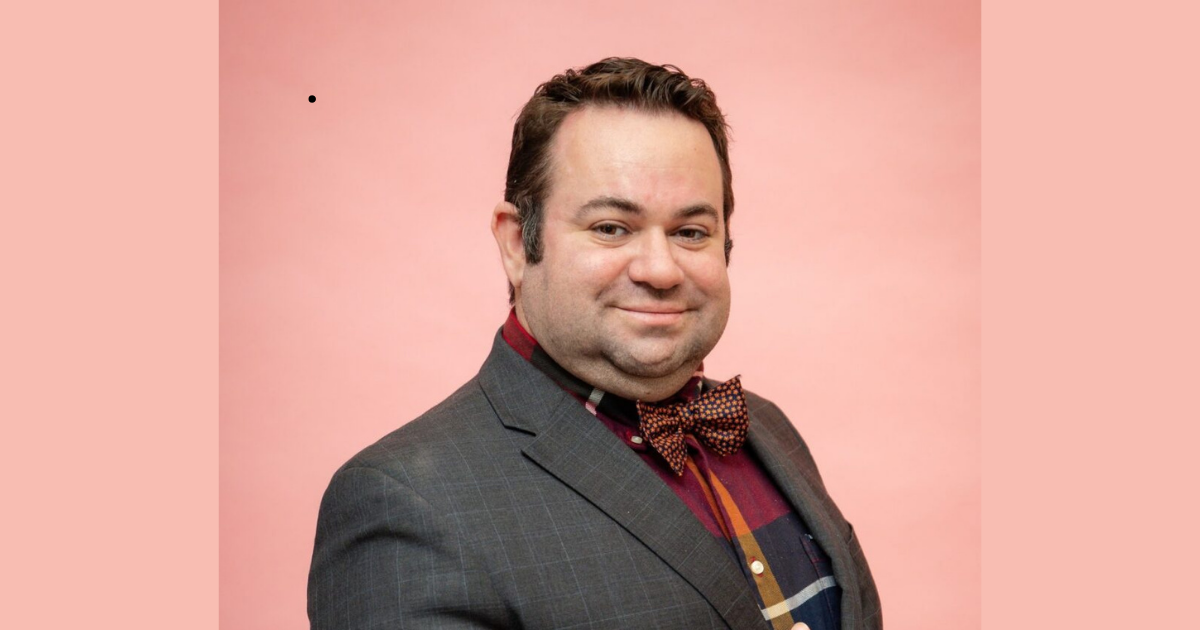
Frank Poe is the founder and attorney at Poe Law PLLC, a New York-based firm he launched in December 2023 to serve the Creator Economy. Through his practice, Frank represents talent agencies, management companies, creators, and brands in influencer partnerships, intellectual property matters, equity deals, and disputes. His mission is “to professionalize the Creator Economy.”
“There’s so much work to be done across the board,” Frank says. “It’s not just at the top with the biggest brands and biggest creators. It’s across the Creator Economy.”
After serving as General Counsel and Head of Business Affairs at Creators Entertainment Group from 2019 to 2023, Frank saw firsthand how quickly brand budgets were flowing into influencer marketing and how uneven the legal infrastructure supporting those deals remained. Rather than rejoin another firm when that chapter closed, he built one designed specifically for digital talent.
“Instead of sending my resume out to companies, why don’t I hang my own shingle and start my own practice?”
Legal Infrastructure for a New Media Era
Frank’s path into the Creator Economy began in traditional entertainment. During law school, he completed a summer internship at United Talent Agency. After graduating, he later worked as a talent agent in New York at Central Entertainment Group, handling live appearances and DJs, before moving into litigation defending companies including Home Depot and Harley-Davidson. But in 2019, while traveling in Germany, he received a call from his former agency.
“‘We need you to quit your law firm,’” he recalls being told. “‘We need you to come back here as our general counsel and build up a legal team, because we’re doing all influencer now.’”
The shift was immediate. “When I returned, I was hit with, ‘Here’s the Creator Economy.’”
At the time, influencer marketing was scaling quickly. Agencies were signing creators at high volume. Brands were experimenting aggressively. Contracts were changing in real time. During COVID, the pace only intensified.
By late 2023, after years of structuring deals and resolving disputes internally, Frank recognized an opportunity to serve the market independently. He called former agents who had launched their own management companies and asked if they needed legal counsel. They did. Poe Law PLLC began representing both sides of the table: agencies, managers, creators, and occasionally brands.
Payment Risk and Contract Imbalance
Despite the industry’s growth, Frank notes that certain challenges persist.
“Collections is probably the least legally interesting. It’s: we agreed to a payment, and you didn’t pay.”
Payment timing continues to create tension. Creators often seek net-30 terms, while brands push for net-60 or net-90 terms. For smaller creators without structured operations, delayed payments can create cash-flow strain.
Beyond payment, Frank focuses heavily on contract balance. He resists extreme positioning. “Most of my red lines aren’t very talent-sided. They’re middle-of-the-road. I like to throw a lasso around the agreement and pull it to the middle.”
He sees many contracts drafted with heavy brand protections, particularly around morality clauses, termination rights, and force majeure.
“Brands like to be paternalistic and say, ‘Creator, you know, I’m wagging my finger at you. You can’t do all these things.’”
Yet reputational risk now runs both ways. “Brands are getting in trouble, too.”
His role, he says, is not to escalate but to normalize fairness: mutual termination clauses, mutual force majeure protections, clearer usage rights, and realistic payment structures.
When Legal Structure Should Begin
Frank offers a lighter insight: “My joke is that most people need a lawyer when it smells like money.” But he advises building a legal structure earlier. One of the first steps: forming a legal entity. “It doesn’t cost much to have an entity. A couple of hundred bucks and you can file online very quickly.”
Operating through an LLC creates separation between personal and business liability, simplifies tax reporting, and professionalizes negotiations. “It creates distance between you and the requirements of the LLC.”
He also emphasizes financial hygiene, particularly for managers handling client funds. “You should have a separate dedicated client account.”
As creator income becomes less hobbyist and more operational, those distinctions matter, particularly in situations involving taxes, partnerships, or even divorce proceedings, where valuation of a creator’s business may become relevant.
Intellectual Property and Right of Publicity
Much of Frank’s work centers on rights – not only content ownership but the broader commercial value of a creator’s identity.
“The right of publicity is state law. All 50 states have different laws and rules.”
Unlike federal copyright law, Frank notes that right-of-publicity protections vary by jurisdiction, making consistency difficult to achieve. For creators monetizing nationally or globally, this patchwork can create uncertainty.
“We’re still developing the law on this,” he says. “There’s still a lot of short-sightedness.”
Frank encourages creators to protect brand identifiers where appropriate (trademarks, domains, and structured licensing), while recognizing that community trust remains foundational.
Collaboration Before Ownership
As creators mature, many explore launching products or taking equity stakes. Frank advises a phased approach.
“Do a few collabs first,” he says. “Understand how the sausage is made before things go to market.”
Collaboration agreements allow creators to learn supply chains, fulfillment structures, and pricing mechanics without bearing full operational risk.
Frank frequently sees confusion when collaboration rights and promotional rights are combined improperly. “The brand will take ownership of the IP in the product. But the marketing is different,” he says.
He stresses that a creator’s name, likeness, and promotional rights must remain carefully structured, even within co-branded arrangements.
When creators launch their own products, operational risks increase: sourcing, manufacturing, co-packers, and regulatory compliance. “People get lost in the details because they want to get to the cool part, waving the bottle in front of everyone.”
Frank also warns that product ownership may limit future brand deals within that vertical. “You may have shut yourself out to that.”
Strength in Numbers
A recurring theme in Frank’s philosophy is collective leverage.
“I believe in strength in numbers,” he states.
If one brand fails to pay, he often investigates whether others are affected. Coordinated action can reduce legal costs and increase pressure. “It saves the brand from defending against each of you individually, and it saves you legal costs,” he notes.
Frank maintains informal communication with other creator-focused attorneys to track behavioral patterns. “If one brand isn’t paying, why would I encourage another client to enter a deal with them?”
Over time, he hopes to see more formalized industry standards.
“There’s a way of treating creators as small businesses and forming a coalition to set general standards.”
From ‘Wild West’ to Infrastructure
Frank describes the early Creator Economy as loosely structured.
“There was a ‘Wild West’ kind of feel,” he says. Money moved quickly. Contracts were signed without review. Legal support was scarce.
Today, he sees progress: “There are fewer loose threads than there were.”
As more lawyers, accountants, and financial tools enter the space, Frank believes that friction may increase, but for constructive reasons. “You may see more friction because people are fighting back instead of just signing and hoping for the best.”
He cautions against viewing disputes as a decline. “It’s not a light switch. It’s not like yesterday was the ‘Wild West,’ and today it isn’t.”
Instead, he sees gradual institutionalization.
“People are warming up to the idea that there’s more long-term value in having a better system in place.”
Toward a More Standardized Future
In the coming years, Frank hopes negotiations will continue to move toward equitable norms and clearer standards. He is currently developing a book on Creator Economy law, structured around real contract provisions, aimed at educating creators, managers, and young attorneys entering the field.
For him, the work is both technical and cultural; building legal literacy within an industry still defining itself.
“It’s interesting to see an industry grow and evolve this way,” Frank concludes.
David Adler is an entrepreneur and freelance blog post writer who enjoys writing about business, entrepreneurship, travel and the influencer marketing space.














Frank Poe is the founder and attorney at Poe Law PLLC, a New York-based firm he launched in December 2023 to serve the Creator Economy. Through his practice, Frank represents talent agencies, management companies, creators, and brands in influencer partnerships, intellectual property matters, equity deals, and disputes. His mission is “to professionalize the Creator Economy.”
“There’s so much work to be done across the board,” Frank says. “It’s not just at the top with the biggest brands and biggest creators. It’s across the Creator Economy.”
After serving as General Counsel and Head of Business Affairs at Creators Entertainment Group from 2019 to 2023, Frank saw firsthand how quickly brand budgets were flowing into influencer marketing and how uneven the legal infrastructure supporting those deals remained. Rather than rejoin another firm when that chapter closed, he built one designed specifically for digital talent.
“Instead of sending my resume out to companies, why don’t I hang my own shingle and start my own practice?”
Legal Infrastructure for a New Media Era
Frank’s path into the Creator Economy began in traditional entertainment. During law school, he completed a summer internship at United Talent Agency. After graduating, he later worked as a talent agent in New York at Central Entertainment Group, handling live appearances and DJs, before moving into litigation defending companies including Home Depot and Harley-Davidson. But in 2019, while traveling in Germany, he received a call from his former agency.
“‘We need you to quit your law firm,’” he recalls being told. “‘We need you to come back here as our general counsel and build up a legal team, because we’re doing all influencer now.’”
The shift was immediate. “When I returned, I was hit with, ‘Here’s the Creator Economy.’”
At the time, influencer marketing was scaling quickly. Agencies were signing creators at high volume. Brands were experimenting aggressively. Contracts were changing in real time. During COVID, the pace only intensified.
By late 2023, after years of structuring deals and resolving disputes internally, Frank recognized an opportunity to serve the market independently. He called former agents who had launched their own management companies and asked if they needed legal counsel. They did. Poe Law PLLC began representing both sides of the table: agencies, managers, creators, and occasionally brands.
Payment Risk and Contract Imbalance
Despite the industry’s growth, Frank notes that certain challenges persist.
“Collections is probably the least legally interesting. It’s: we agreed to a payment, and you didn’t pay.”
Payment timing continues to create tension. Creators often seek net-30 terms, while brands push for net-60 or net-90 terms. For smaller creators without structured operations, delayed payments can create cash-flow strain.
Beyond payment, Frank focuses heavily on contract balance. He resists extreme positioning. “Most of my red lines aren’t very talent-sided. They’re middle-of-the-road. I like to throw a lasso around the agreement and pull it to the middle.”
He sees many contracts drafted with heavy brand protections, particularly around morality clauses, termination rights, and force majeure.
“Brands like to be paternalistic and say, ‘Creator, you know, I’m wagging my finger at you. You can’t do all these things.’”
Yet reputational risk now runs both ways. “Brands are getting in trouble, too.”
His role, he says, is not to escalate but to normalize fairness: mutual termination clauses, mutual force majeure protections, clearer usage rights, and realistic payment structures.
When Legal Structure Should Begin
Frank offers a lighter insight: “My joke is that most people need a lawyer when it smells like money.” But he advises building a legal structure earlier. One of the first steps: forming a legal entity. “It doesn’t cost much to have an entity. A couple of hundred bucks and you can file online very quickly.”
Operating through an LLC creates separation between personal and business liability, simplifies tax reporting, and professionalizes negotiations. “It creates distance between you and the requirements of the LLC.”
He also emphasizes financial hygiene, particularly for managers handling client funds. “You should have a separate dedicated client account.”
As creator income becomes less hobbyist and more operational, those distinctions matter, particularly in situations involving taxes, partnerships, or even divorce proceedings, where valuation of a creator’s business may become relevant.
Intellectual Property and Right of Publicity
Much of Frank’s work centers on rights – not only content ownership but the broader commercial value of a creator’s identity.
“The right of publicity is state law. All 50 states have different laws and rules.”
Unlike federal copyright law, Frank notes that right-of-publicity protections vary by jurisdiction, making consistency difficult to achieve. For creators monetizing nationally or globally, this patchwork can create uncertainty.
“We’re still developing the law on this,” he says. “There’s still a lot of short-sightedness.”
Frank encourages creators to protect brand identifiers where appropriate (trademarks, domains, and structured licensing), while recognizing that community trust remains foundational.
Collaboration Before Ownership
As creators mature, many explore launching products or taking equity stakes. Frank advises a phased approach.
“Do a few collabs first,” he says. “Understand how the sausage is made before things go to market.”
Collaboration agreements allow creators to learn supply chains, fulfillment structures, and pricing mechanics without bearing full operational risk.
Frank frequently sees confusion when collaboration rights and promotional rights are combined improperly. “The brand will take ownership of the IP in the product. But the marketing is different,” he says.
He stresses that a creator’s name, likeness, and promotional rights must remain carefully structured, even within co-branded arrangements.
When creators launch their own products, operational risks increase: sourcing, manufacturing, co-packers, and regulatory compliance. “People get lost in the details because they want to get to the cool part, waving the bottle in front of everyone.”
Frank also warns that product ownership may limit future brand deals within that vertical. “You may have shut yourself out to that.”
Strength in Numbers
A recurring theme in Frank’s philosophy is collective leverage.
“I believe in strength in numbers,” he states.
If one brand fails to pay, he often investigates whether others are affected. Coordinated action can reduce legal costs and increase pressure. “It saves the brand from defending against each of you individually, and it saves you legal costs,” he notes.
Frank maintains informal communication with other creator-focused attorneys to track behavioral patterns. “If one brand isn’t paying, why would I encourage another client to enter a deal with them?”
Over time, he hopes to see more formalized industry standards.
“There’s a way of treating creators as small businesses and forming a coalition to set general standards.”
From ‘Wild West’ to Infrastructure
Frank describes the early Creator Economy as loosely structured.
“There was a ‘Wild West’ kind of feel,” he says. Money moved quickly. Contracts were signed without review. Legal support was scarce.
Today, he sees progress: “There are fewer loose threads than there were.”
As more lawyers, accountants, and financial tools enter the space, Frank believes that friction may increase, but for constructive reasons. “You may see more friction because people are fighting back instead of just signing and hoping for the best.”
He cautions against viewing disputes as a decline. “It’s not a light switch. It’s not like yesterday was the ‘Wild West,’ and today it isn’t.”
Instead, he sees gradual institutionalization.
“People are warming up to the idea that there’s more long-term value in having a better system in place.”
Toward a More Standardized Future
In the coming years, Frank hopes negotiations will continue to move toward equitable norms and clearer standards. He is currently developing a book on Creator Economy law, structured around real contract provisions, aimed at educating creators, managers, and young attorneys entering the field.
For him, the work is both technical and cultural; building legal literacy within an industry still defining itself.
“It’s interesting to see an industry grow and evolve this way,” Frank concludes.
Subscribe to Our Newsletter
Check Out Our Podcast