



Talent Collectives
The Case Against Mega-Influencer Budgets: How Dawson Marie Is Empowering The Creators Brands Overlook

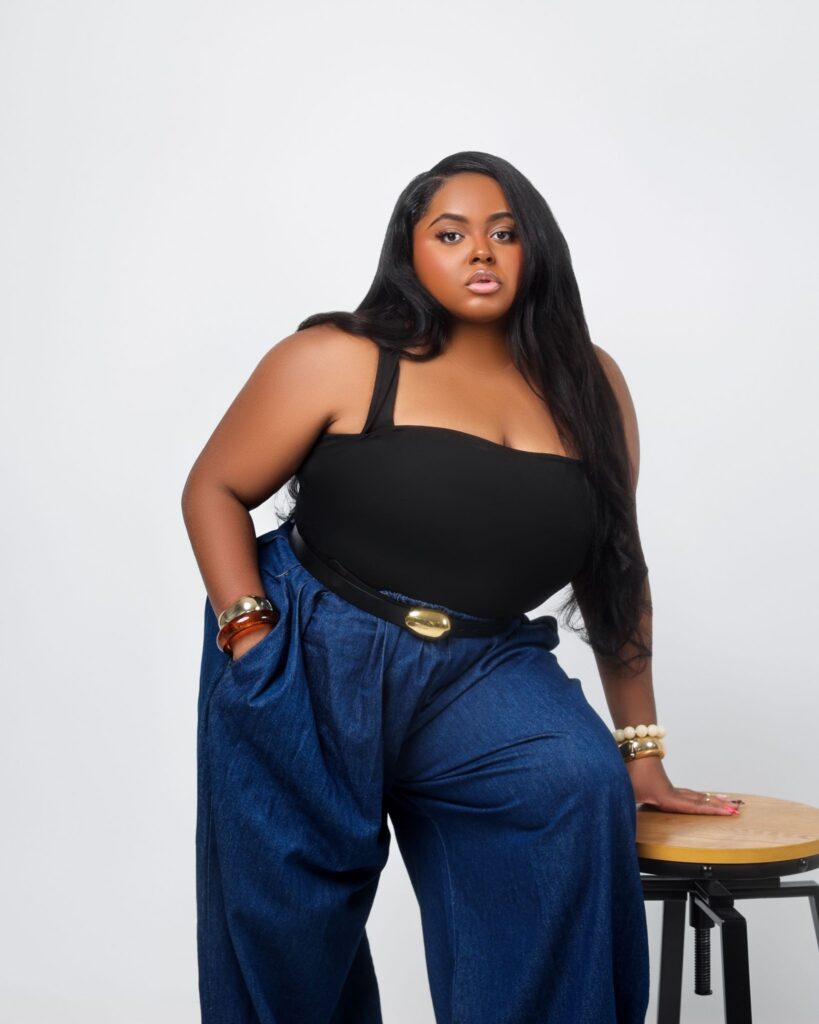
Ashlynn Racquel works both sides of the influencer deal. As the founder of Dawson
Marie, a Houston talent agency, she negotiates on behalf of creators; in a corporate brand role, she sits in on the same decisions from the client side. That dual position forms the basis of an argument she makes consistently: the creators brands spend the most on are not necessarily the ones converting.
“Any creator that genuinely has built a community first and then became an influencer,” she says, “those are the ones that are winning on the brand side.”
Launched in February 2025, Dawson Marie is a boutique talent management firm built around what Ashlynn describes as “white glove” service: a small, intentionally curated roster, clients reachable around the clock, and strategy embedded in every management agreement.
Ashlynn spent several years inside brand marketing organizations before founding the agency, including time at TubeScience and The Public Good Projects, as well as a popular e-commerce brand, and observed pay disparities between Black and Brown creators and their white peers. That positioning on the brand side led her to a conclusion she now builds every creator strategy around: brands are rewarding follower count over the community depth that actually drives conversion.
Beyond the agency, she maintains a corporate Influencer Marketing role she declines to identify publicly, a position that gives her visibility most talent managers lack: how brands budget, evaluate creators, and decide what they are willing to spend. Dawson Marie now manages more than 25 creators and has surpassed $400,000 in brand partnerships in its first year, according to Ashlynn.
Why the Best-Converting Creators Often Have Fewer Followers
The case Ashlynn makes for mid-tier creators is grounded in what she observes from both sides of the brand-creator relationship. Creators in the 100,000-to-500,000 follower range maintain a closer connection with their audiences than many larger accounts do, she argues, and that closeness shows up in how communities respond to sponsored content.
“The mid and a little bit of micro tier all the way up to that 500K still really value their community, their input, how they’re seen, how they’re viewed,” she says. “I’ve seen that conversion really show in both the brand side as well as the campaign side.”
The dynamic is partly structural. Some mega-influencers lose the community orientation that built their following, though Ashlynn is careful to note the problem is not universal. Audiences have also grown more skeptical of influencer content broadly, a saturation effect she says favors creators who built genuine communities before running sponsored campaigns. The conversion advantage she observes extends down into the micro tier as well, with creators approaching 100,000 followers. Engagement quality, in her framework, matters more than scale, a distinction she says most brand evaluation processes still fail to capture.

Why Brands Keep Setting the Follower Threshold Too High
The mechanism behind brands’ creator evaluation problem, Ashlynn argues, is partly technological. Many brands run creator discovery through automated tools that filter candidates by minimum follower counts, screening out higher-converting mid-tier and micro creators before anyone evaluates their engagement or audience quality.
“I have several creators that do really good engagement-wise,” she says. “But you would probably categorize them differently based on their following not hitting a certain threshold.”
Her proposed adjustment is simple: reduce the follower minimum incrementally, dropping from 100,000 to 70,000 when a creator fits every other criterion. The result, she says, is often a better-converting campaign at a lower fee, because the creator is still growing and hasn’t priced ahead of its demonstrated value.
The broader barrier is time. Brands running high-volume campaigns through AI-assisted discovery tools don’t have the workflow to evaluate every candidate manually, so the follower filter becomes a quality signal, even when it is not measuring quality. “If they’re using an AI system or a bigger tool, they’re just going to filter to what works,” Ashlynn says.
Over-Briefing Is How Brands Undermine Campaigns
Even when brands identify the right creator, Ashlynn says, they often damage the campaign before it starts. Over-briefing, as she defines it, is when a brand controls not just the guidelines but the creative concept, dictating how the creator should speak, frame content, and position the product.
“Over-briefing is when the creator cannot create,” she says. “It comes down to control.”
Ashlynn notes that the outcome is predictable: content audiences recognize as scripted, which they skip. She traces the problem to a disconnect between Influencer Marketing practitioners and the senior executives who approve briefs. “I think it’s a mix of higher-ups in corporate roles not understanding how influencing actually works,” she says.
The briefs she finds most effective are minimal or reference-based, pointing the creator to examples of their own prior content rather than prescribing new behavior. The phrase she cites most often as a working model: follow the brand guidelines, but have fun.
Brand communication around pricing adds a separate layer of friction. Ashlynn says a growing number of brands request creator rates to hold in planning decks, with no active campaign behind the inquiry, without disclosing that distinction. The result is creators waiting for a follow-up that never comes, sometimes concluding their management is overpriced or has made a mistake.
“It causes doubt,” she says, noting the knock-on effect: creators question themselves, then their management, sometimes leaving the agency over a situation that originated with a brand never being upfront about its intentions. She has adapted by asking brands early whether an inquiry is an active campaign or a rate pull, so she can set accurate expectations from the start.
LinkedIn Is Rising. TikTok Is Saturating. Brands May Be Missing the Shift
On platform allocation, Ashlynn’s view runs against the prevailing consensus. TikTok, she says, is where brands are overspending relative to what they are getting back.
“Brands just keep trying to invest in that, and it’s always hit or miss,” she says, noting that the platform’s algorithm appears to be shifting following its U.S. ownership transition, pushing creators to rethink strategy and producing inconsistent results for brand campaigns.
The underutilized platform, in her view, is LinkedIn. A growing class of creators with professional backgrounds, people who want to build audiences without stepping away from corporate careers, is establishing communities there and generating real brand interest. Starbucks, she notes, has moved into employee-focused creator programs, while LinkedIn is increasingly attracting professionals who build audiences around their working lives.
“LinkedIn is becoming the next equivalent of worker creators,” Ashlynn says, adding that early movers are “seeing so much success just by talking about software they use or things that they use.”
She positions YouTube as a slower-converting but more durable channel, driven
by SEO and long-form engagement depth. “It is a conversion that is slow but
mighty,” she says.
Bad Representation Damages Creator Careers More Than Any Algorithm
Ashlynn has been public about a view that cuts against the dominant anxiety in
the Creator Economy: artificial intelligence is not the most pressing threat to
creator careers. Bad management is.
The failure modes she cites are operational: delayed responses leave brands waiting long enough to move on, and the creator takes the reputational hit. Slow content delivery after a contract is signed gives a brand a negative impression of a creator who may have been ready on time. Most critically, managers who filter incoming rate offers before passing them to clients leave creators unaware of opportunities they never had a chance to evaluate.
“Oftentimes, more than not,” Ashlynn says, “that’s the reason you didn’t get a deal versus you just not being a good creator. It’s typically your management.”
Her advice to creators is to audit their managers directly: ask to be copied on future correspondence, or request examples of past communications to see how the agency presents them to brands. She says she welcomes that scrutiny from her own clients and responds to every inbound message within 24 hours.
The case for AI, in her framing, is that it can accelerate logistics. What it cannot do is build the personal relationship between a manager and a brand contact that determines whether a creator makes the shortlist in the first place.
Bringing Personality Back to Brand Campaigns
Looking five years out, Ashlynn wants Dawson Marie to move further into brand strategy work, designing campaigns from concept through execution rather than representing talent within campaigns others have structured.
The aspiration connects to a broader critique she makes of where Influencer Marketing has landed aesthetically. She references 90s and early 2000s advertising as a benchmark for what the industry has lost: campaigns with distinct visual and tonal personality, brands that looked and felt unmistakably different from each other. “Every campaign had its own feel,” she says. “There was so much personality in each brand. And I think we’re kind of losing that.”
For creators, the path to sustainability she outlines runs through diversification. Across her current roster, she sees the pattern developing: creators building monthly subscriptions, pivoting into styling, launching physical retail. The logic she applies is both commercial and creative.
Ashlynn concludes: “I think that diversifying is how you don’t get burnt out because you can stay consistent with creativity without it being the one thing that both brings you income and is also supposed to bring you joy. I think being able to diversify and get income from different places allows you to have some freedom and some fun.”
Subscribe to Our Newsletter
Check Out Our Podcast