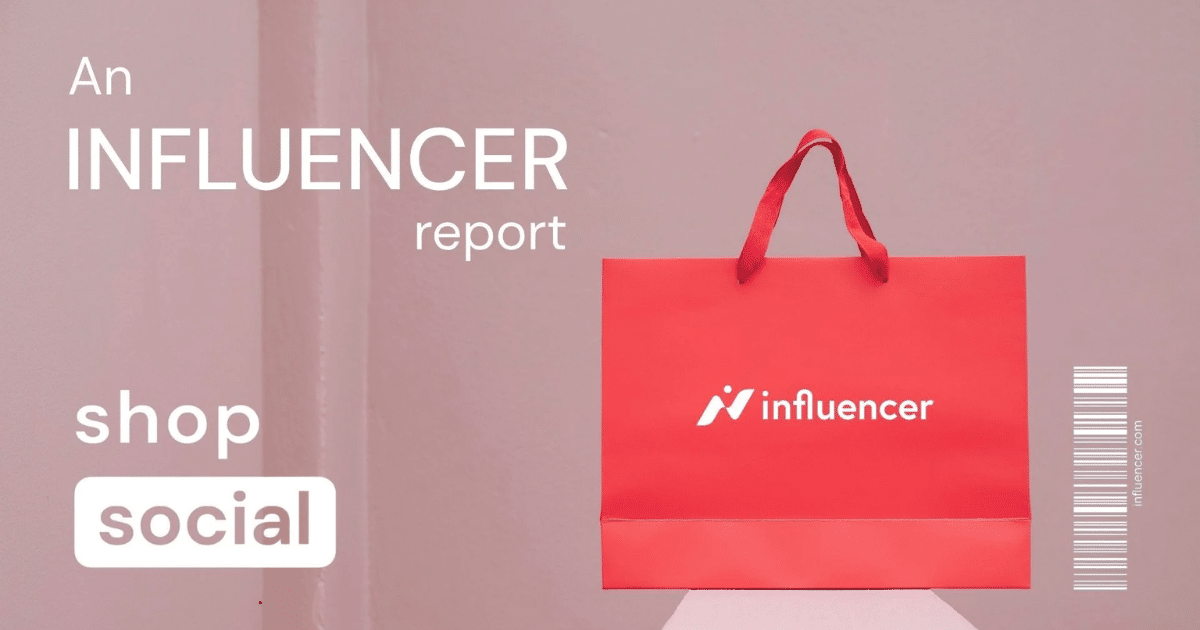
Creator-powered social commerce is growing at four times the rate of traditional e-commerce, with global social commerce value projected to reach $8.5 trillion by 2030, according to a report published by Influencer, a global creator marketing agency. The report, titled “Shop Social,” draws on third-party research, platform data, and brand case studies across the beauty, fashion, and Fast-Moving Consumer Goods (FMCG) categories.
TikTok Shop data cited in the report shows social platforms growing at 32% compared with 8% for traditional e-commerce. According to Impact.com and Forrester research also cited in the report, mature full-funnel partnership ecosystems drive 28% of total company revenue.
Consumer Discovery and Purchase Converge on Social Platforms
Consumer data compiled in the report shows that discovery, evaluation, and purchase are occurring within the same social environments. According to Sprout Social, 49% of consumers make purchases at least once a month as a result of creator posts. TikTok Shop data cited in the report shows that 88% of users have discovered brands they want to buy on the platform, the highest share of any platform surveyed. GWI data shows 43% of consumers globally use social media to actively research brands and products, with the UK figure at 27%. Bazaarvoice data shows 46% prefer short-form video for product discovery and evaluation. DV data shows that 30% of consumers have made a direct purchase through a social platform in the past year, and that 54% say influencers affect their purchase decisions.
Affiliate and Influencer Integration Produces Measurable Uplift
Brands that activate influencer and affiliate programs simultaneously see a 46% sales uplift compared with either channel alone, according to 2025 Impact.com data cited in the report. The report includes a case study on Resident, the direct-to-consumer bedding company behind NectarSleep and DreamCloud. In a test comparing ad formats, a traditionally produced brand spot scored 0.89 on Resident’s return on ad spend index. An ad built from creator-generated content, with no production cost beyond a gifted mattress, scored 1.08. Resident’s VP of Affiliates, Influencers, and Partnerships, Jennifer Bentz, reported that integrating both channels and aligning paid media strategy accordingly doubled the value of each post and video.
Three-Tier Creator Framework
The report describes a tiered approach to structuring creator commerce programs. Hayden Bowler, VP of Commerce, North America at Influencer, summarizes the model: “Brands need to build a three-tier creator system: Ambassadors for demand creation, Tastemakers for conversion, Accelerators for always-on sales, and run them as a single connected engine.”
Ambassadors are VIP or macro creators, compensated via flat fees and focused on demand creation and brand elevation at scale. Tastemakers, the middle tier, receive a reduced flat fee plus commission, designed to convert brand awareness into purchase intent. Accelerators are micro and nano creators running commission-only programs for continuous product discovery and sales. The report notes that a creator with 15,000 followers generating $10,000 in monthly sales represents more commercial value in the Accelerator tier than a creator with ten times that audience converting at a lower rate.
Health and beauty accounts for 79.3% of TikTok Shop sales in the United States. Consumers now spend an average of $120 annually on beauty products through the platform, a 68% year-over-year increase. K-beauty recorded 219% growth in GMV in 2025. The report notes that 34.5% of TikTok Shop beauty buyers are 55 or older. Garnier’s 2025 TikTok Shop campaign for its Vitamin C line achieved 286% of its GMV target across 50 hours of live shopping content using a layered creator strategy spanning celebrity talent, mid-tier creators, and community creators.
In the FMCG category, prebiotic soda brand OLIPOP built a program with nearly 1,900 creators, including 82 registered dietitians. By 2024, the creator channel contributed 12% of OLIPOP’s total sales, with an average ROAS of 982% across the program. The highest ROAS recorded in a single campaign reached 1,200%, according to an Impact.com case study cited in the report.
Creator Partnership Gap Persists
The report identifies a structural gap in long-term creator relationship management. According to data cited in the report, 72% of creators want long-term brand partnerships, while 54% currently have them. Emily Eldridge, Director of Commerce, EMEA at Influencer, notes in the report: “The challenge is operational: it requires alignment across merchandising, content, partnerships, and data.”
Influencer, which produced the report, operates as an Official Global Marketing Partner of TikTok, YouTube, Pinterest, Snap, Meta, and Twitch.
Cecilia Carloni, Interview Manager at Influence Weekly and writer for NetInfluencer. Coming from beautiful Argentina, Ceci has spent years chatting with big names in the influencer world, making friends and learning insider info along the way. When she’s not deep in interviews or writing, she's enjoying life with her two daughters. Ceci’s stories give a peek behind the curtain of influencer life, sharing the real and interesting tales from her many conversations with movers and shakers in the space.











Creator-powered social commerce is growing at four times the rate of traditional e-commerce, with global social commerce value projected to reach $8.5 trillion by 2030, according to a report published by Influencer, a global creator marketing agency. The report, titled “Shop Social,” draws on third-party research, platform data, and brand case studies across the beauty, fashion, and Fast-Moving Consumer Goods (FMCG) categories.
TikTok Shop data cited in the report shows social platforms growing at 32% compared with 8% for traditional e-commerce. According to Impact.com and Forrester research also cited in the report, mature full-funnel partnership ecosystems drive 28% of total company revenue.
Consumer Discovery and Purchase Converge on Social Platforms
Consumer data compiled in the report shows that discovery, evaluation, and purchase are occurring within the same social environments. According to Sprout Social, 49% of consumers make purchases at least once a month as a result of creator posts. TikTok Shop data cited in the report shows that 88% of users have discovered brands they want to buy on the platform, the highest share of any platform surveyed. GWI data shows 43% of consumers globally use social media to actively research brands and products, with the UK figure at 27%. Bazaarvoice data shows 46% prefer short-form video for product discovery and evaluation. DV data shows that 30% of consumers have made a direct purchase through a social platform in the past year, and that 54% say influencers affect their purchase decisions.
Affiliate and Influencer Integration Produces Measurable Uplift
Brands that activate influencer and affiliate programs simultaneously see a 46% sales uplift compared with either channel alone, according to 2025 Impact.com data cited in the report. The report includes a case study on Resident, the direct-to-consumer bedding company behind NectarSleep and DreamCloud. In a test comparing ad formats, a traditionally produced brand spot scored 0.89 on Resident’s return on ad spend index. An ad built from creator-generated content, with no production cost beyond a gifted mattress, scored 1.08. Resident’s VP of Affiliates, Influencers, and Partnerships, Jennifer Bentz, reported that integrating both channels and aligning paid media strategy accordingly doubled the value of each post and video.
Three-Tier Creator Framework
The report describes a tiered approach to structuring creator commerce programs. Hayden Bowler, VP of Commerce, North America at Influencer, summarizes the model: “Brands need to build a three-tier creator system: Ambassadors for demand creation, Tastemakers for conversion, Accelerators for always-on sales, and run them as a single connected engine.”
Ambassadors are VIP or macro creators, compensated via flat fees and focused on demand creation and brand elevation at scale. Tastemakers, the middle tier, receive a reduced flat fee plus commission, designed to convert brand awareness into purchase intent. Accelerators are micro and nano creators running commission-only programs for continuous product discovery and sales. The report notes that a creator with 15,000 followers generating $10,000 in monthly sales represents more commercial value in the Accelerator tier than a creator with ten times that audience converting at a lower rate.
Beauty Category Leads, FMCG Presents Distinct Challenges
Health and beauty accounts for 79.3% of TikTok Shop sales in the United States. Consumers now spend an average of $120 annually on beauty products through the platform, a 68% year-over-year increase. K-beauty recorded 219% growth in GMV in 2025. The report notes that 34.5% of TikTok Shop beauty buyers are 55 or older. Garnier’s 2025 TikTok Shop campaign for its Vitamin C line achieved 286% of its GMV target across 50 hours of live shopping content using a layered creator strategy spanning celebrity talent, mid-tier creators, and community creators.
In the FMCG category, prebiotic soda brand OLIPOP built a program with nearly 1,900 creators, including 82 registered dietitians. By 2024, the creator channel contributed 12% of OLIPOP’s total sales, with an average ROAS of 982% across the program. The highest ROAS recorded in a single campaign reached 1,200%, according to an Impact.com case study cited in the report.
Creator Partnership Gap Persists
The report identifies a structural gap in long-term creator relationship management. According to data cited in the report, 72% of creators want long-term brand partnerships, while 54% currently have them. Emily Eldridge, Director of Commerce, EMEA at Influencer, notes in the report: “The challenge is operational: it requires alignment across merchandising, content, partnerships, and data.”
Influencer, which produced the report, operates as an Official Global Marketing Partner of TikTok, YouTube, Pinterest, Snap, Meta, and Twitch.
Image source: Influencer
Get the full report here
Subscribe to Our Newsletter
Check Out Our Podcast