


Influencer
Rachel Barker On Building ‘Girl Horror’ And A Career That Puts Craft Before Hype

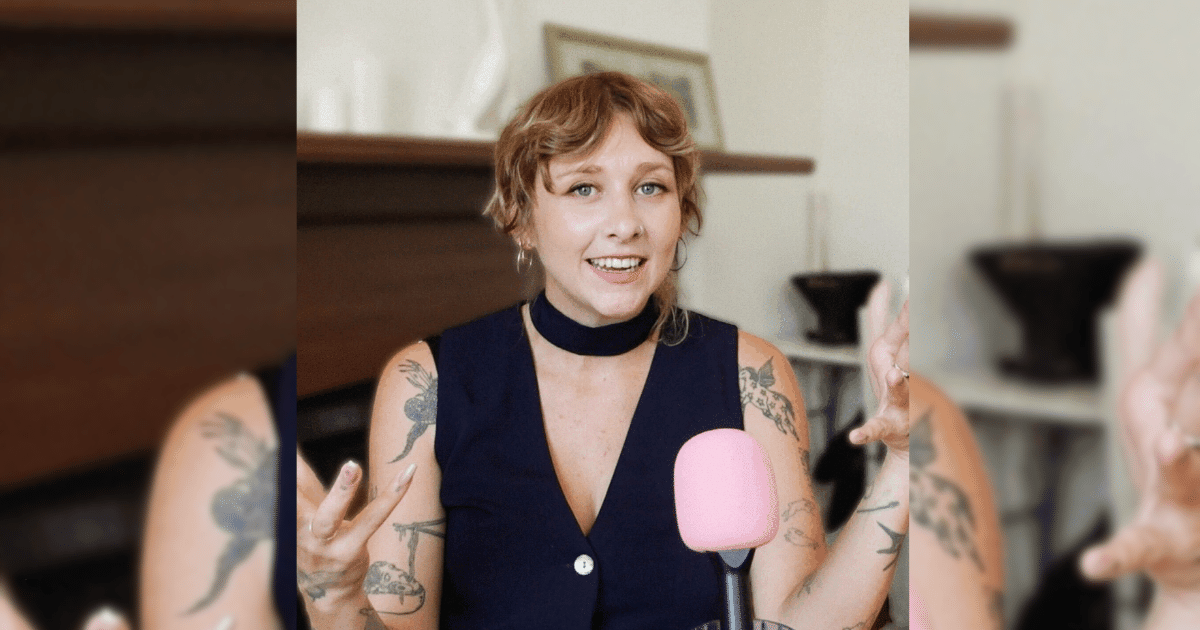
Rachel Barker is a New Zealand-born writer, editor, and filmmaker whose YouTube channel, “Girl On Film,” has carved out a niche in the intersection of horror, femininity, and film theory. Known for her long-form video essays and storytelling, Rachel approaches content creation with the discipline of a journalist and the curiosity of a critic.
She did not launch her channel to chase trends. She started it to talk about the films that shaped her and those that still keep her thinking. Before YouTube, Rachel worked behind the scenes as a video editor, then shifted into writing as the New Zealand staff writer for VICE, covering arts and culture while also producing video.
“I had quite a typical journey of knowing I loved film, deciding to do a media degree, but then realizing that a media degree doesn’t really get you work in film,” she says. “I was really lucky to start picking up work as a video editor,” a skillset that later made the jump to YouTube far less intimidating.
Barker grew up in New Zealand, moved to London for opportunity, and kept one constant through every role: a fixation on stories. She recalls an upbringing steeped in fairy tales, with “Narnia” on cassette in the car, and the discovery as a teenager of darker cinema that would ultimately shape her creative lens.
“I almost exclusively watch horror movies,” she said. “It’s not exactly what I do online, but that has had a big ripple effect on who I am as a content creator.”
Alongside newsroom roles at VICE and TVNZ’s Re: News, and writing work for New Zealand’s Ministry of Social Development, Rachel began publishing long-form video essays on her YouTube channel. She now lives in London and maintains a portfolio that spans writing, presenting, editing, and brand building.
A Slow, Deliberate Start
Rachel waited until she felt she had something worth saying. “I always wanted to do YouTube, but for a really long time, I didn’t really have anything interesting to contribute,” she says.
At 27, she wrote a script in her notes app, filmed the video, and saw enough traction to keep going. “It got maybe 500 views in a week. Five hundred people having clicked felt like an amazing feat.”
She did not sprint out of the gate. In the first year, she published only a handful of essays, prioritizing quality over cadence. “What was important to me was the quality and that I was making work that I was really proud of and only expressing beliefs that I really earnestly held,” she says. The approach set a tone with viewers that she protects. “People know when you’re being earnest, and people know when you’re doing something for the love of it.”
The ‘Girl Horror’ Niche
The channel’s identity took shape at the intersection of horror, femininity, costume design, and film theory. Rachel describes her lane as “girl horror” and is candid about how staying close to it supports her growth.
“Definitely do pay attention to the niche that you have carved for yourself,” she says. “The only videos that I’ve had that have not done well are when I’ve stepped outside of what I would call ‘girl horror’ territory.”
Two videos shifted the trajectory. An older essay suddenly surged from a few thousand views to tens of thousands within days, bringing her first thousand subscribers. Later, “The Fashion of Horror: Exploring Vampire Costumes in Horror Cinema” performed well and helped her reach a broader audience. “It is so lovely when something that you love also gets favored by the algorithm,” she says.
Today, Rachel’s channel sustains a dedicated community that spans Gen Z to older millennials and beyond. Her analytics skew toward 18- to 45-year-olds, with a large group in their mid-twenties to mid-thirties. Many discovered her through pop-culture essayists, then stayed for a more academic, nostalgic perspective.
“It’s a real mix,” she says. “People who love pop culture and watch other essayists like Mina Le, or people who are more into the nerdy academic nostalgia side of things.”
Her public portfolio lists 86,000 subscribers and more than 100,000 monthly views, built without a prior social footprint. “With no prior social media presence, I have cultivated a wonderful online community,” she notes in her resume.
A Month per Video, Writing in Parallel
Rachel typically works in three-month cycles, drafting multiple scripts at once and publishing about once a month. The process is research-heavy, with filming in a day and editing across roughly two weeks.
“I have a document of already about four years’ worth of videos lined up,” she says. “I only release once a month. It takes a month to make a video.” Occasionally, a piece lands in five days when everything clicks, but she refuses to rush.
Her newsroom experience informs the scripts – one early video adapted a newspaper review of Jane Campion’s “The Power of the Dog.” – and she notes how her strong video editing skills have been very beneficial to her. “In some ways, editing is the most difficult part of the work,” she says. “If you’re coming onto YouTube, especially doing long form with no video experience, there is so much to understand to edit well.”
Audio, she insists, is non-negotiable. “Have good sound,” Rachel says. “In my experience, good audio is much more important than good video quality. You don’t need to buy a really expensive camera, but you do need to sound good.” She learned the hard way during a stretch when viewers complained about “underwater” audio and some drifted away.
Business Model
Rachel’s revenue started with AdSense. Over time, she added sponsorships with products she already used, including Skillshare and Surfshark, and recently launched Patreon to deepen community ties.
“AdSense is really good if you’re creating unique content,” she says, noting that niche channels can deliver audiences that are valuable to the platform. “Then I also started doing partnered content through my amazing managers, Ziggurat XYZ.”
Rachel’s partnership with Ziggurat began with an email that read, “My crystal ball is telling me we should work together.” She had another offer on the table with a year-long lock-in and terms that did not fit. Ziggurat’s pitch felt aligned.
“I could tell that they knew and loved my content,” she says. “I feel so blessed to get to work with them and to have that support in a world where I know very little about it other than actually doing the creative part.” The outcome was material. “It was starting to do sponsorships that meant I was able to do YouTube full time,” she says.
Brand fit is a clear line. “Would I use it if they were not sponsoring me?” she asks herself. “I don’t play phone games, so that’s just not something I would feel okay with telling other people I love.” The policy keeps trust intact. “If anyone can buy you as a billboard, then that billboard is not valuable space,” she says.
Setbacks, Guardrails, and Advice
Rachel is forthright about risk. She went full-time after a redundancy made the decision for her. “I had just started making enough money on YouTube that I knew I could scrape by,” she says.
A year and a half later, she chose stability and returned to a full-time office role while keeping the channel active. “I wanted more stability,” she says. “People should be aware that the risk does not always go in the direction you want it to, but that is okay.”
She also warns creators to think ahead about monetization rules, especially if their niche includes violence or sensitive content. Pre-monetization, Rachel did not worry about gore in clips or strong language. Later, some videos were age-restricted or marked as unsuitable for ads. “You have to not do – right from the start – anything that would be an issue if you were a big successful channel,” she says.
Her practical advice is simple. Define the lane. Protect quality. Mind the policies. Fix the sound. “Serve the audience that you create,” she says. “Unless your number is millions, people will not watch anything you put out.”
Audience, Recognition, and Festival Entry
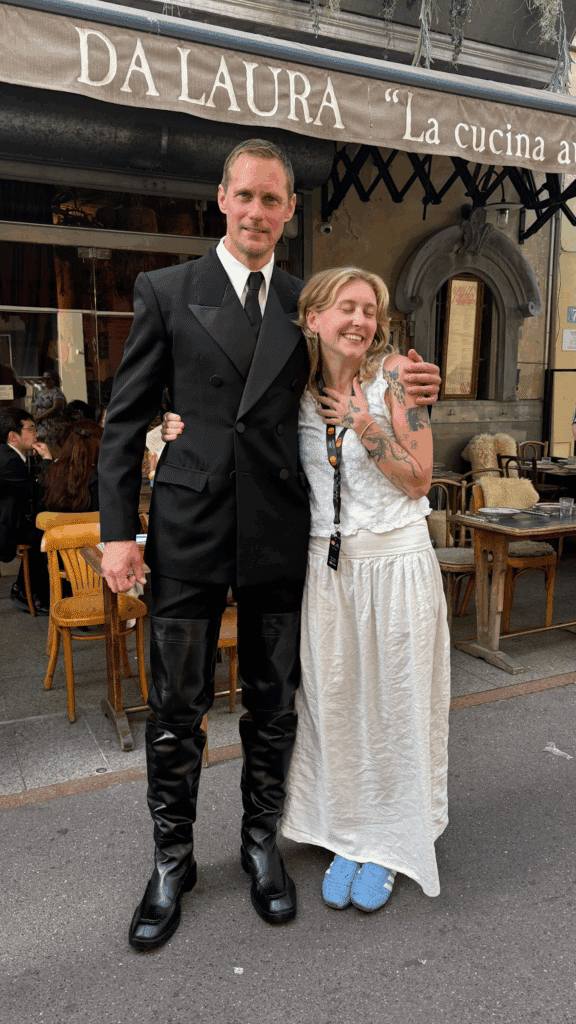
Rachel’s essays have led to moments that measure success beyond dashboards. Viewers now say hello in public, often stylish horror fans and fashion enthusiasts who mirror the channel’s sensibility.
“It is pretty amazing,” she says. “Anytime I have spoken to someone in real life who has known me from my YouTube channel, they are always just the sweetest, most fun, interesting people.”
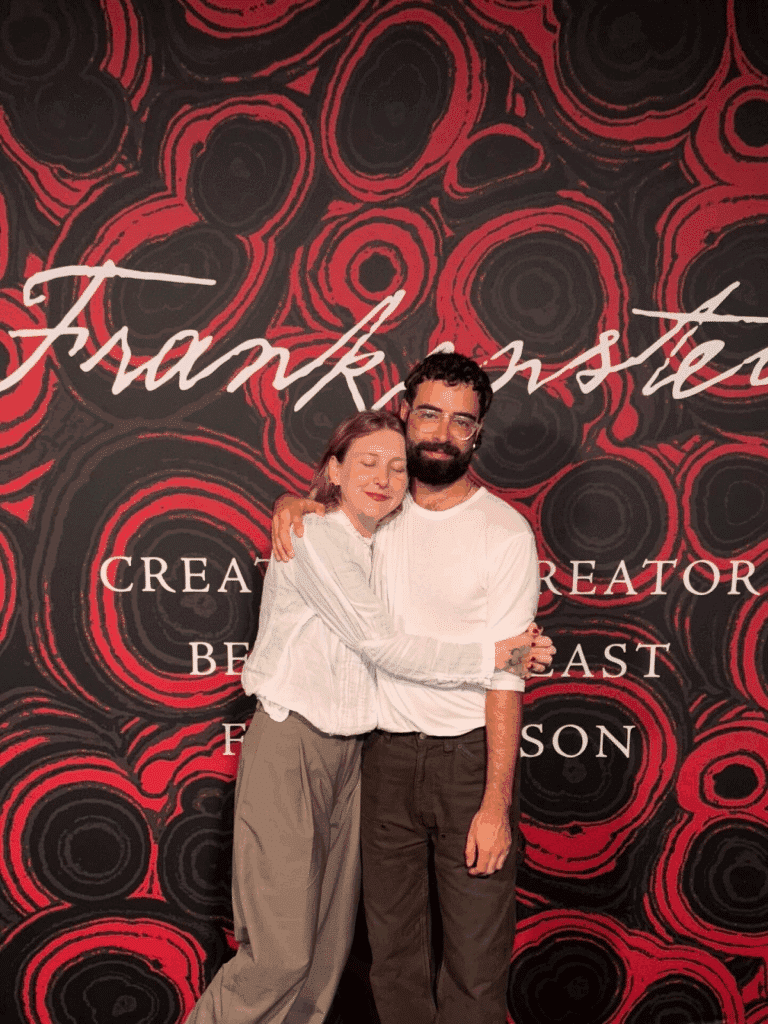
The channel has also opened doors in professional circles. In the past six months, she attended the Cannes and BFI London Film Festivals with press access. “My platform was my way of becoming a part of the world of film criticism when it is so hard to crack in the traditional way,” she says. “Now I am being invited into those same spaces as a result of taking my own path.”
What Comes Next?
Rachel plans to keep publishing long-form video essays while expanding into short-form platforms to meet viewers who prefer other formats. She only recently began creating on TikTok – an adjustment for a thirty-year-old who had never used the app, but a strategic step to present her work in multiple lengths and styles.
“I wanted to be able to give people another option who are more accustomed to other formats,” she says.
Her creative compass remains set on movies and the ideas that live beneath them. She prefers retrospectives and the films that built her taste, from Henry Selick to Jim Henson. The goal is not to chase the zeitgeist, but to deliver essays that have a reason to exist. “Talking about film, but in a way that touches people,” she says. “Always having a through line of philosophy that means my videos are making people think.”
“For me, the success is more in the experiences than it is in the money,” Rachel concludes. “You will never feel unsuccessful if your content is founded in a great love, because whether you get money or not out of it, you will connect with people that share that great love.”
Subscribe to Our Newsletter
Check Out Our Podcast