







Influencer
Engineering Curiosity: How Integza Turned Rocket Fails, Humor, And Hard Work Into A Creator Career

Once a mechanical engineer in Portugal, Joel Gomes, better known to his 1.73 million YouTube subscribers as “Integza,” turned a fascination with how things work into a growing creator career. Mixing humor, experimentation, and engineering precision, he has built a channel where rocket engines, 3D printers, and failed prototypes coexist as part of an ongoing story about curiosity and persistence.
Before YouTube, however, Joel was firmly on an engineering path. “I studied mechanical engineering here in Portugal,” he says. “I worked as a mechanical engineer for about four years, after leaving college, during which I started the YouTube channel.”
At first, creating videos was simply a side project. He admired science communicators such as Vsauce, Smarter Every Day, and Veritasium and wanted to join their ranks. “I was in love with a lot of YouTube channels that were popular at the time. I kind of wanted to copy them,” he recalls. His first upload, a self-described “cringe-worthy” attempt to explain gyroscopic precession better than Veritasium, became the start of something bigger.
Despite his technical background, Joel didn’t know how to produce or edit videos for Instagram, Facebook, or TikTok. “The pacing was horrible, the audio was horrible, the image was horrible,” he says, laughing. For three years, his audience mainly consisted of “my sisters and my mom.” He didn’t reach 1,000 subscribers until 2018, a milestone he remembers as “the magic number for a YouTuber.”
Finding His Voice
Joel’s early videos focused on scientific explanations and small-scale engineering experiments, but his breakthrough came when he explored the inventions of Serbian scientist Nikola Tesla. “There’s a big community online that is completely obsessed with Nikola Tesla,” he says. “That video got like a hundred thousand views, which at the time was insane for me.”
Suddenly, he was “the Tesla guy.” But even then, Joel resisted being confined to a single theme. “Every single person that has a YouTube channel is a guy of something or a girl of something,” he explains. “I didn’t want to become the Tesla guy.” Transitioning to broader topics cost him views, but he stuck with it. “It took me a while, but eventually I got there. It’s just a matter of not giving up.”
Part of his appeal came from his balance of humor and humility. “Sometimes videos work, and I don’t know why,” he says. “I remember getting a lot of comments saying that if I dropped the humor, the videos would be decent. But I kept on making jokes because I wanted to. I don’t like people telling me what to do.”
Experimentation and the Creative Process
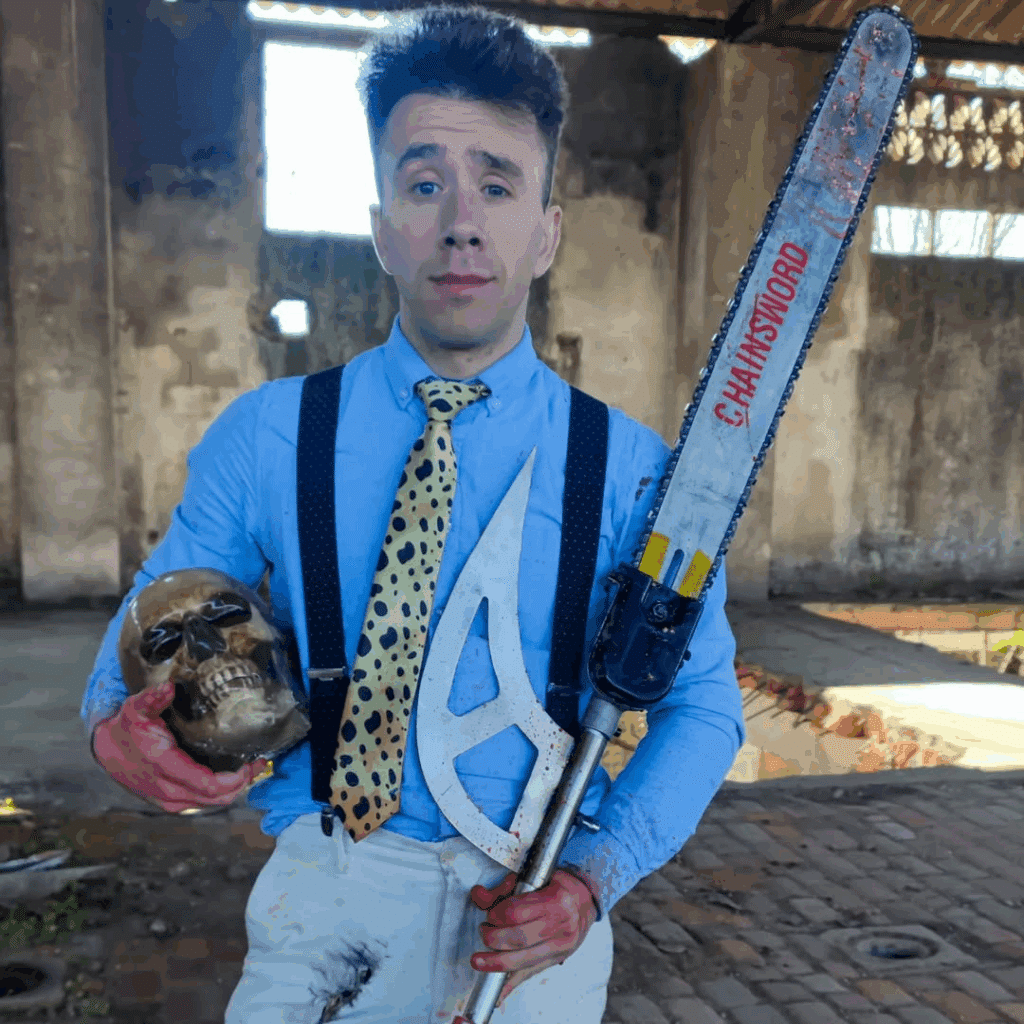
Curiosity continues to drive his content. “Curiosity is always the engine that motivates me,” Joel says. He often finds ideas while browsing Wikipedia links or obscure scientific papers.
One of his favorite discoveries came from reading about electric solid propellants, a rare rocket fuel that ignites only when given a voltage input. “I sent an email directly to the company and said, ‘If you say yes, I will be on the next flight to Nevada.’ They ignored me for six months,” he recalls. When the company finally invited him, even its CEO admitted he’d assumed Joel was “a crazy dude.”
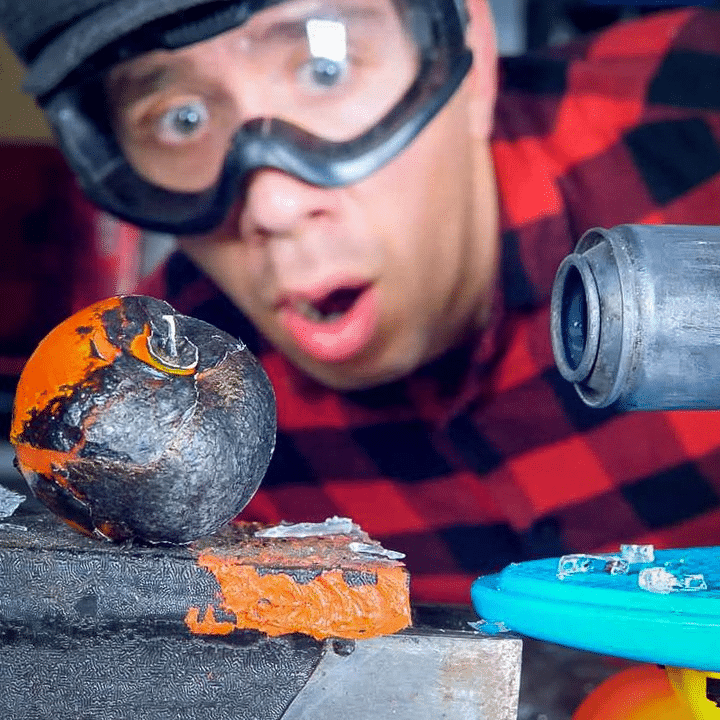
Though his experiments often fail spectacularly, he sees value in every setback. “In most of my videos, the projects don’t work or don’t work properly or get destroyed by the end,” he says. “So the only thing I had going for me at the time was my reactions to things burning down.” Viewers loved the candid chaos, but his approach has matured.
Now, Joel tests everything before filming. “I’m very script-oriented,” he explained. “I don’t really like to improvise much, because I’m not a good actor and I’m not good at improvising.” He distinguishes between his calm, rehearsed delivery and his genuine, unfiltered reactions. “When I’m testing something and you see me going nuts, that’s normally the actual me.”
Challenges and Lessons
Going full-time on YouTube wasn’t a calculated move. It was, by his own admission, risky. “I quit my job because I was making more or less the same from YouTube that I was making at my job,” he says. “But I forgot about one little thing, a detail, which is taxes.” The decision forced him to make it work. “At the time, I was like, ‘Okay, if I don’t make this work, I’m done. I don’t have rent money.’”
He credits his first talent manager at Ziggurat XYZ, Charles Haynes, for helping him survive those early months. “At first I thought he was a scam artist,” Joel says. “When I actually got the money from the first sponsor, I was shocked. I was like, ‘This cannot be real. It was more than my paycheck.’”
Sponsorships remain his main revenue source. His preferred brand collaborations are those that align naturally with his engineering work, such as design software Onshape, which he frequently uses.
Still, not every partnership fits. “Sometimes you get one or two brands that ask you to do stuff that makes no sense,” he says, recalling a brand that once asked him to “simulate a dinner with fictitious characters.”
For up-and-coming creators, his advice is practical: learn more than one craft. “You cannot just build stuff,” he says. “You need to learn video production and entertainment. You’re putting something out there for people to watch, so it needs to be done well and entertaining.”
The combination of engineering, storytelling, and persistence, he believes, is what sustains a channel in the long term.
Connection and Community
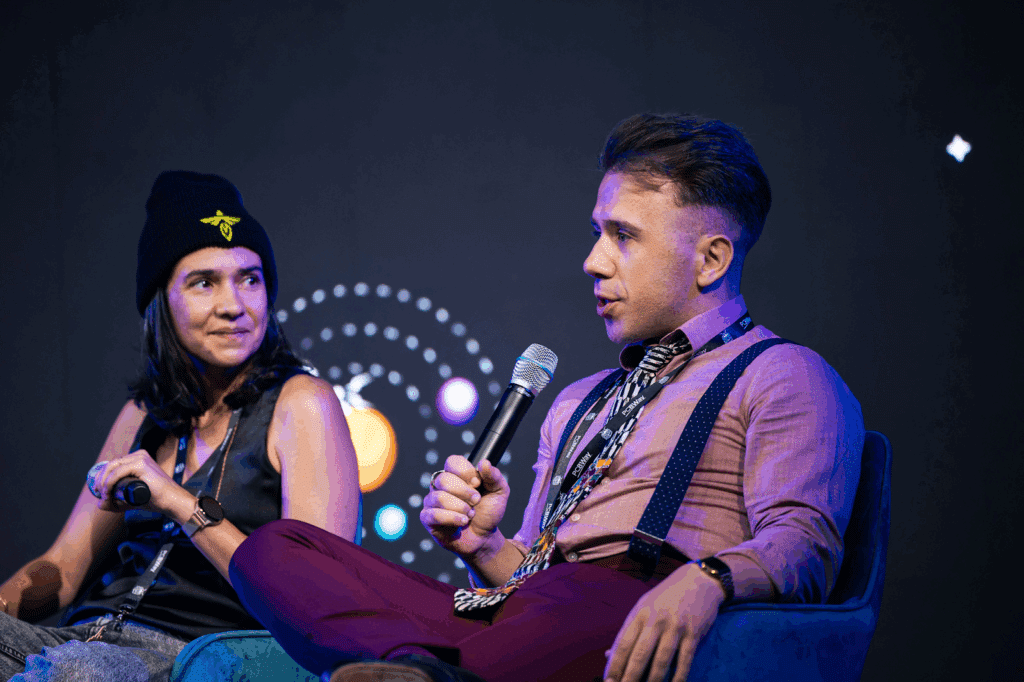
Despite his large audience, Joel maintains a modest view of fame. “If I go to the street, nobody’s going to recognize me. I make videos in English and I live in Portugal,” he notes. Yet moments of recognition matter deeply.
He recalls being approached by a young fan at Maker Central in Birmingham: “She pulled my shirt and asked if I was Integza. Then she said she loved my videos. I pretended to give my jacket to someone because I needed three seconds to recuperate – I was about to cry.”
He limits how much feedback he reads online to preserve his mental health. “You can have 99% of the comments saying very nice things about you, and it just takes one comment saying your nose is too big, and you’re thinking about it for a month,” he says. “So nowadays I reply for the first hour or two after a video goes live, and then I stop.”
What he values most are messages from viewers who build something inspired by his work. “When someone takes the time to build something or make something, I always reply,” he says. “Even if it’s a crappy project like mine, and it doesn’t really work. That’s the process. That’s how you learn.”
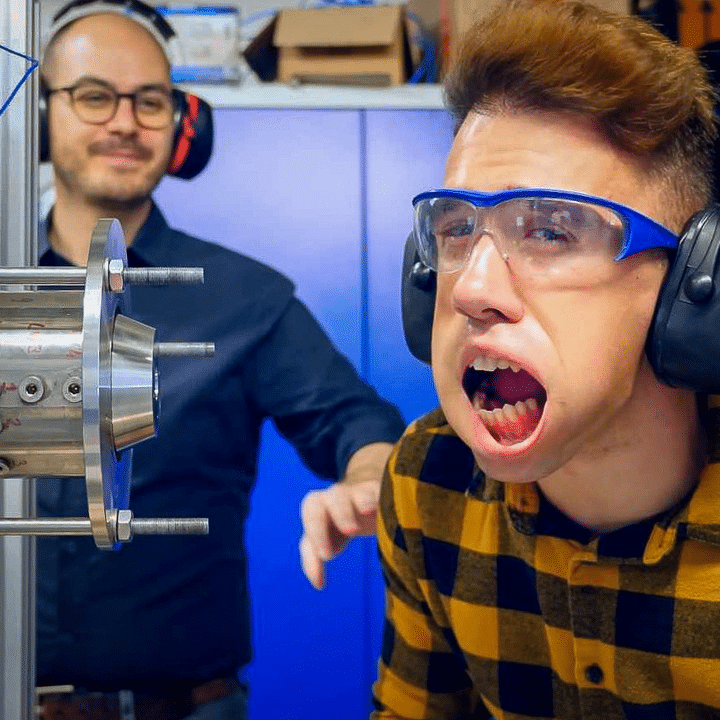
Joel on his Future
A decade into his career as a creator, Joel still records alone in his workshop. “I used to have an assistant,” he reveals. “But I realized I got into this so I could have the freedom to do whatever I want. If you have a team, you have a responsibility, and you get restricted by that team.”
He hopes to design a product tied to his creativity, something more meaningful than standard merchandise. “I would love to be able to create a product that aligns with my channel, something that I really like and that sells well,” he says.
He also wants to connect with audiences offline. “I would love to do live events more, just because of what I said. I love connecting with people who watch my videos. Even if I only do it every six months, I would love to.”
As for where he sees the creator economy heading, Joel predicts a shift toward authentic content in advertising. “Brands still want those kinds of TV ads where you switch from being yourself to being this robot just reading a script,” he says. “It’s not organic, and it doesn’t work well. I think brands would learn a lot by just letting creators do their thing.”
And while algorithms change and trends come and go, Joel stays focused on curiosity, the same force that once led him to dismantle toys as a child.
“You never know where you’re going with YouTube,” he concludes. “It was about five years ago that I mentioned that I hated tomatoes, and now that’s what people remember me for. Even though I build rocket engines and use 3D printing, I’m the tomato guy, and I will always be the tomato guy.”
Subscribe to Our Newsletter
Check Out Our Podcast