



Strategy
Loti’s Luke Arrigoni On Why Digital Identity Is The Next Big Strategy Play For Creators

What happens when a creator loses control of their likeness?
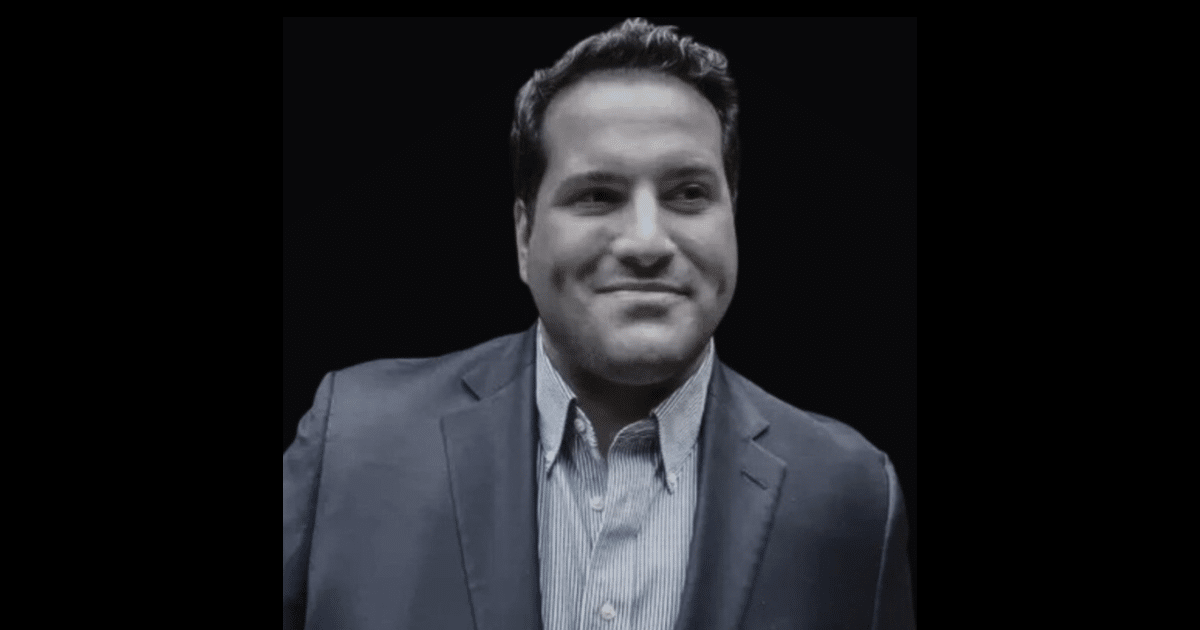
That question drives Luke Arrigoni, founder and CEO of Loti, a tech company using AI to help creators track, protect, and reclaim their digital identities. Founded in 2022, Loti isn’t a generative AI experiment, but a defensive technology built to locate and remove unauthorized content across the internet within hours.
“We download the whole internet every day, find you where you don’t belong, and delete it,” Luke says, describing Loti’s mission in one sentence. Behind that sharp line sits what Luke describes as one of the most complex technical infrastructures ever built for privacy. “We’re running the world’s largest face recognition system ever built; ten times the size of the NSA’s (National Security Agency),” he adds. “But it’s a privacy tool, not a surveillance tool.”
From its base in Seattle, Loti is now being used by celebrities, politicians, and high-profile creators to detect and remove deepfakes, imposters, or unauthorized re-uploads within hours of appearing online. The company’s focus, however, is shifting toward helping creators and agencies understand something bigger: that their faces, voices, and likenesses are intellectual property assets that need strategy as much as protection.
The ‘You Where You Don’t Belong’ Problem
Luke’s idea for Loti came long before the deepfake boom. A mathematics graduate turned data scientist, he spent more than a decade building machine learning programs for clients such as Getty Images, Fox Networks, and AT&T through his firm Arricor AI.
In 2022, while working on a contract involving partial face recognition (identifying an individual from as little as 15% of a face), he realized the same technology could be used defensively. “We pointed it toward the internet, thinking it’d be a cool way to solve privacy issues,” he explains.
Then came the 2023 SAG-AFTRA strike, where likeness rights and AI replication became flashpoints. “I used to work at Creative Artists Agency [CAA],” Luke recalls. “I called friends still in entertainment and asked if this was something LA could use. They said absolutely.”
That pivot defined Loti’s niche: finding creators “where they shouldn’t be.” Whether the issue is a cloned YouTube channel, a deepfake endorsement, or unauthorized adult content, the system’s goal is simple: locate, flag, and remove it quickly. “For some of our users, being able to delete something within a day is everything,” Luke notes. “It’s how they see control over their brand and continue to monetize.”
From ‘Euphoria’ to AI Defense
Luke admits that the spark came from an unlikely place – HBO’s “Euphoria.”
“There’s this whole thread on non-consensual intimate images,” he says. “We were doing partial-face recognition at the time, and I thought, ‘I could solve that.’”
Loti’s early version indexed sites that hosted explicit or harmful materials. Users uploaded only a neutral photo of their face, and Loti did the rest, detecting and removing non-consensual images without exposing users to them. “It was like giving people their life back,” Luke says. “We could play whack-a-mole indefinitely, deleting re-uploads as they appeared, cheaply and automatically.”
That efficiency has become Loti’s hallmark, according to Luke. Its AI scans major platforms daily, from TikTok to emerging networks like Sora. “We ingest everything made on it every single day,” he explains. “Then we identify any creators or celebrities in that dataset and let them know.”
The Fine Print Problem
Today, the threat has expanded beyond explicit content and impostors, Luke warns. According to him, the real danger lies in user agreements.
“It’s subtle and boring. That’s why it’s so life-threatening to our industry,” he says. “If your likeness is something you make money on, those agreements may be forfeiting rights to even what you look like in the future.”
He cites Google’s “Likeness ID” system as an example. Initially seen as a protective tool, Luke claims its terms allow the company to collect biometrics for model training. “It’s a Trojan horse,” he says. “We were going to tell our customers to sign up, but when we read the fine print, we had to send an email saying don’t. You’d be giving biometric rights away.”
For creators and managers, the takeaway is simple but crucial: scrutinize anything referencing “biometric data” or “new and existing services.” In Luke’s words, “That’s usually a euphemism for AI.”
Loti’s Model: Automation With a Human Layer
At its core, Loti operates as a subscription platform, with plans ranging from free access to $2,500 per month, depending on takedown volume.
“It all comes down to how many takedowns you need,” Luke says. Entry-level tiers include up to 500 removals, while higher plans offer unlimited actions and a personal account manager.
“Most users don’t need to talk to us,” he explains. “At the $2,500 level (where most A-list celebrities are), they want someone emailing them once a week. They want a person managing their problems for them.”
Once users upload three or four varied photos, Loti begins populating their dashboard within minutes. The interface displays where their content appears online, categorized by domain, platform, and severity. “You can even click an ‘adult’ button,” Luke says. “We blur a lot, but you can set up rules like ‘all adult content gets deleted,’ so you never have to look at it.”
The process is almost fully automated: once the system detects a match, takedowns are initiated immediately through platform partnerships or legal channels. “We have great relationships with most major platforms,” Luke notes. “Except X. They don’t really listen to anyone, including us.”
Protecting Likeness as IP
As AI-generated content proliferates, Luke argues that creators must treat their likeness as an asset class. “There will be a world in which people will want ads made with your name, face, and likeness,” he says. “You want a strategy around what that looks like.”
He advises creators to document an “allow and disallow” policy, outlining what kinds of uses are acceptable. “It can be categories like politics, endorsements, or drug use,” he explains. “Write down what you’re okay with and what you’re not. The more nuanced you get, the more money you’ll make.”
That principle applies equally to agencies. “They should be standardizing clauses now,” he says. “Anything with the word ‘biometric’ should be deeply scrutinized.”
Misconceptions and DIY Mistakes
Luke often encounters creators who assume that once something is online, it’s permanent. “That’s a misconception,” he stresses. “I spend the first five minutes of every demo deleting things in front of people to prove it’s possible.”
Still, not every strategy needs automation. For creators unable to afford protection tools, Luke recommends building a manual process: search your name regularly, document URLs in a spreadsheet, and file DMCA (Digital Millennium Copyright Act) takedowns. “If you have a unique name, that’s a gift,” he says. “You can track it manually with some patience.”
The bigger mistake, he adds, is overreacting. “If someone makes fan content of you, it’s probably not the end of the world,” he notes. “Some people want everything gone, even fair use clips. That can hurt your brand more than help it.”
The Industry’s Blind Spot
Despite growing awareness, Luke believes most brands and agencies underestimate the commercial value of likeness rights. “They make really bad deals with gen AI providers,” he says. “It’s like people in the 1900s giving away land because it had oil under it.”
He’s seen firms sell collective likeness rights in bulk, often at prices that don’t reflect their long-term worth. “If you see announcements where a platform partners with an individual agency to ‘help creators monetize AI,’ be cautious,” he warns. “Unless they have strong guardrails, they might be throwing creators into the fire.”
The Next Six Months
When it comes to predicting the next wave of threats, Luke’s answer is unambiguous: “Everyone’s going to have to figure out how they participate in the AI economy.”
He expects creators will face legal gray areas, especially in the United States, where public figures may be subject to more permissive use under First Amendment protections. “If you’re a politician or large enough creator, there’s a degree of rights people have to create content about you,” he explains. “Especially if it’s satirical.”
He believes that makes authenticity the new frontier of digital identity. “People talk about verification as ‘this is the real me,’ but really, it’s about how authentic your brand feels when you show up online, not whether a bot has your face on it.”
Expanding the Reach of Digital Protection
Loti’s current focus is growth, particularly among creators and streamers. “We already have 80% of the A-list market,” Luke says. “Now we want 80% of streamers.”
A recent funding round has allowed the company to lower prices and scale its infrastructure. “We’re running everything on hot rails fed by VC [venture capital] money,” he laughs. “The goal is to onboard as many accounts as possible, fast.”
Beyond expansion, Luke hints at bigger developments still under wraps. “We’ve got some big stuff in the works,” he says. “I’ll have to leave the teaser at that.”
For Luke, the next chapter of the creator economy isn’t just about exposure, but about control as well. “It’s going to be a data game,” he points out. “Our job is to give creators the right data to understand their market and how much people will pay.”
And while Loti’s infrastructure may be built on algorithms, its mission reflects something more human. “We wield this enormous superpower,” Luke says, “but we’ve worked really hard to make sure it’s used for privacy, to help people reclaim their digital selves.”
Subscribe to Our Newsletter
Check Out Our Podcast