



Tech
Loti AI, Underscore Talent Partner to Defend Creator Likeness in the Age of Deepfakes

Deepfakes were once framed as a future problem. Today, they represent an operational risk for agencies managing global creator brands. The question is no longer whether impersonation will occur, but who is responsible for stopping it.
Luke Arrigoni, founder and CEO of Loti AI, believes the turning point has already arrived. “Agencies and management firms, we’re all aligned with the same thing. It’s bad for users, it’s bad for talent if we can’t control what goes out there,” he says. “Platforms just don’t share that incentive at the moment.”
Founded in 2022 and headquartered in Seattle, Loti specializes in likeness protection, scanning the web for deepfakes, impersonator accounts, voice clones, and unauthorized reproductions before issuing takedowns at scale. The company reports a 95% success rate within 17 hours. Its Watchtower platform provides creators and their representatives with a live dashboard showing where their faces, voices, and images appear online.
“We basically eat the whole Internet every day,” Luke says. “We bring it into our system, and we run face and voice recognition on it to try to find our clients. We find people where they don’t belong, and we remove them.”
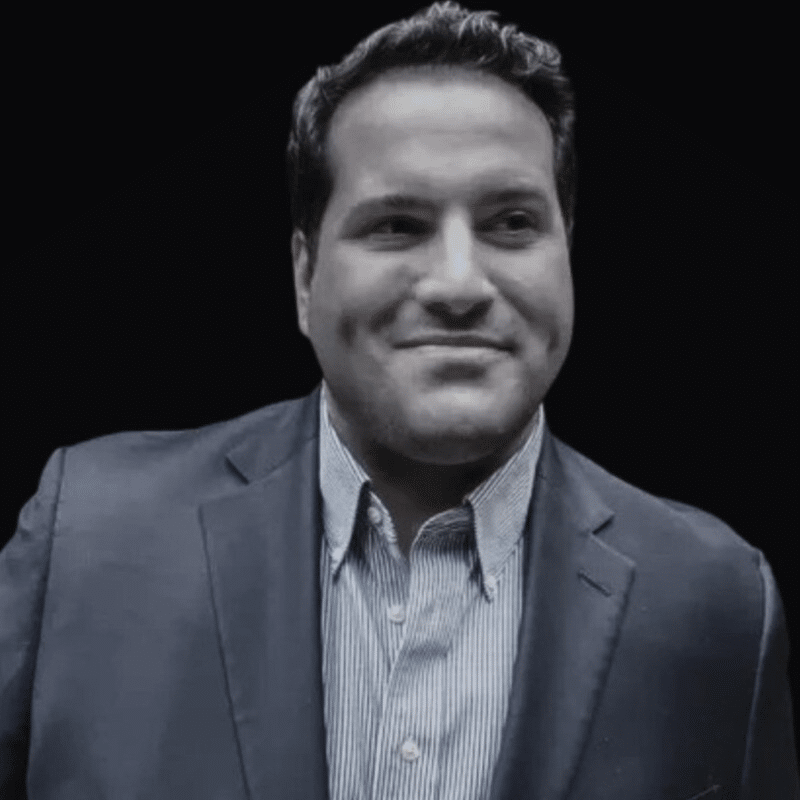
Luke Arrigoni
That infrastructure now underpins a new partnership with Underscore Talent, the Los Angeles-based management firm launched in 2021 and led by Reza Izad and Dan Weinstein. A division of TheSoul Group, Underscore represents creators on YouTube, TikTok, Instagram, Twitch, Snapchat, and in gaming and podcasting, collectively reaching more than 3 billion fans.
Through the partnership, Underscore’s roster gains access to Loti’s full monitoring and takedown capabilities as part of their representation.
For Dylan Flinn, Talent Manager and Head of AI at Underscore, the urgency has been building. “It’s been an increasing risk for 24 months,” Dylan says. “Every time the models improve, which is happening every few months, more bad actors attempt new impersonation and unauthorized usage.”
Before formalizing the partnership, Dylan notes that agencies were largely reactive. “Options were limited to a significant amount of manual searching and being overly reliant on media platforms to stay ahead of the fast-changing landscape.”
Waiting for industry standards was not aligned with Underscore’s strategy. “We welcome the future. It will create as many challenges as it will opportunities, and we’ll be focused on both,” he says. “This isn’t happening next year. It’s happening today.”
A 360-Degree View of Digital Identity
Luke frames the partnership as having a dual purpose.
“It’s preventative, but it’s also preparation,” he says. “They don’t want bad things to happen, but they also see a bigger future of what they want to do, and we just help prep them for that.”
For an Underscore creator, onboarding begins with visibility. “As soon as you go in, you see it yourself all over the Internet,” Luke explains. “It’s the good, the bad, the ugly.”
Through Loti’s dashboard, creators can identify impersonator accounts, flag explicit synthetic content, detect cloned channels, and monitor how their likeness is being used across platforms. “You can search sentiment analysis across pretty much everything that is said of you online,” Luke adds.
For Dylan, that level of control is directly tied to brand equity. “Creators are valuable to brands because of their audience affinity, creativity, reputation, and taste,” he says. “Every interaction with the audience is a product and performance of your brand. No matter how trivial.”
Likeness theft, therefore, threatens more than reputation. It can siphon traffic, redirect affiliate revenue, and attach a creator’s identity to fraudulent promotions or controversial narratives.
Luke describes the objective as restoring economic scarcity to digital identity. “If you really want to sell tickets to an event, you need to make sure people can’t just walk around the ticket booth,” he says.
Why Agencies Are Acting First
One notable aspect of the partnership is that it operates at the agency level rather than requiring individual creators to secure protection on their own.
From an operational standpoint, Luke believes that agency-wide adoption is more efficient. “If you think about how much more efficient it is to bring on hundreds of accounts at a time, it makes a lot more sense for both parties,” he says.
Dylan frames the move as consistent with Underscore’s broader philosophy around technology. “We encourage creators to let technology serve them, not the other way around,” he says. “The most important thing is the connection and trust they have with their audience. No technology can ever replace that, but it can support it.”

The Reality of Deepfake Culture
Despite years of headlines about deepfakes, Luke believes 2026 marks a meaningful shift in realism.
“This year will bring the first moment where 99% of humans fail a Turing test,” he says, referring to AI-generated visuals becoming indistinguishable from real humans.
According to Luke, the threats are varied. They include cloned channels that repost entire libraries of content, explicit synthetic images, AI-generated narratives designed to provoke engagement, and impersonated charity appeals.
“Whenever there’s a natural disaster, there’s a bump in impersonators and the impersonators always have charities,” he says.
Some challenges are technical. Others exist in gray areas. “A fan account that has switched over to using first-person language,” Luke notes, is harder to police.
Loti avoids targeting legitimate fan communities, focusing instead on deception and economic harm. There are also jurisdictional limits. “We can’t do anything in Russia. Tor [browser] is like the dark web, nothing gets monitored,” he says.
Even so, Loti continues to adapt. “We released a whole new takedown architecture,” Luke says. “It’s insane.”
Resetting the Baseline for Creator Representation
For Dylan, the decision to move now rather than later is simple.
“It’s important because we care about our clients. Their image and likeness should be protected with the utmost caution and care,” he says.
Maintaining that reputation requires infrastructure that keeps pace with AI innovation.
Luke believes this will become standard practice across representation. “They need to have a 360-degree view of how they show up online,” he says. “They need to be providing for defense. That is the new baseline. You can’t just pretend that someone else will solve that now.”
Subscribe to Our Newsletter
Check Out Our Podcast