





Agency
How Zorka.Agency Is Turning The History Of Influence Into Strategic Infrastructure For Marketers

For much of the past decade, influencer marketing has been treated as a performance channel, optimized for short-term metrics such as views, installs, and cost-per-action. Viktor Ryzhov, Chief Marketing Officer at Zorka.Agency, has watched that shift unfold from the inside and believes it has narrowed how the industry understands influence itself.
“Digital media was a place where people expressed themselves, shared their activities, and shared their thoughts,” Viktor says. “And now, influence and digital is considered a source for monetization. That’s the biggest difference.”
Founded in 2014 with headquarters in Cyprus, Zorka.Agency operates as an influencer marketing agency focused on gaming, i-gaming, e-commerce, and travel. The company works across major platforms, helping advertisers move beyond top-of-funnel awareness toward bottom-of-funnel outcomes, including installs, in-app purchases, and cost-per-action efficiency.

Viktor, who has spent more than eight years in digital marketing and leads Zorka’s B2B strategy and client relationships, says the agency’s trajectory closely mirrors the broader growth of the creator economy. “Back in 2014, influencer marketing was about views, reach, and brand awareness,” he says. “Now, advertisers focus on deeper funnel metrics. We help advertisers achieve their key performance indicators in the bottom of the funnel.”
That performance-driven shift, Viktor argues, came with a trade-off: influence shifted from self-expression to monetization, compressing the industry’s collective memory as platforms multiplied and trends accelerated, leaving newer creators without context on how influence functioned before algorithms and performance benchmarks took over.
It was that gap between where the industry is now and how it got here that led Zorka to launch The Museum of Digital Influence, a non-commercial online archive documenting the rise of digital influence across several historical epochs. Conceived as an internal Zorka initiative, the project was designed not as a lead-generation tool, but as a long-term value play.
“We wanted to slow down the time and get the picture of the landscape of influencer marketing by gathering the milestones in one place,” Viktor says.
Designing a Museum for a Digital Industry
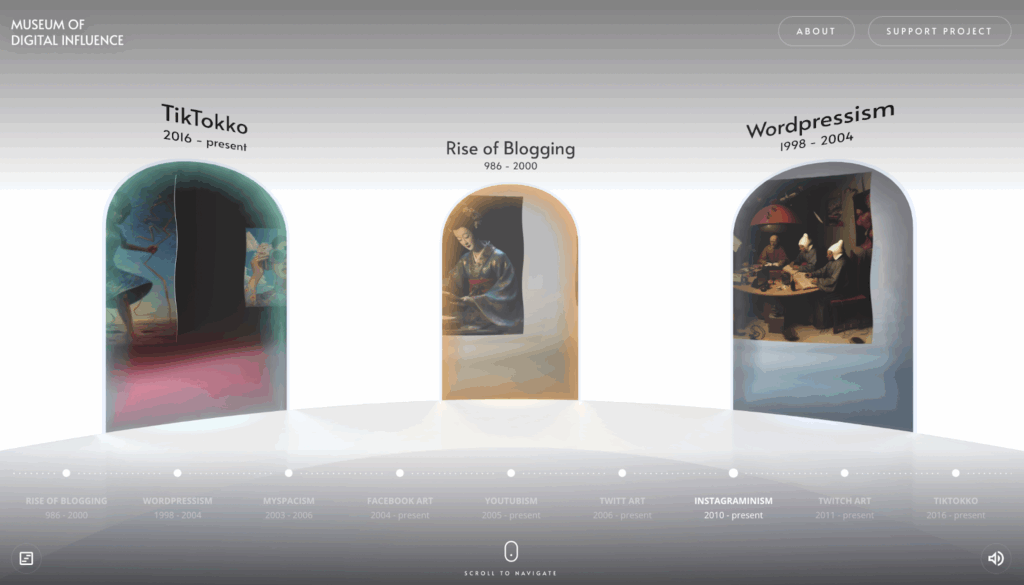
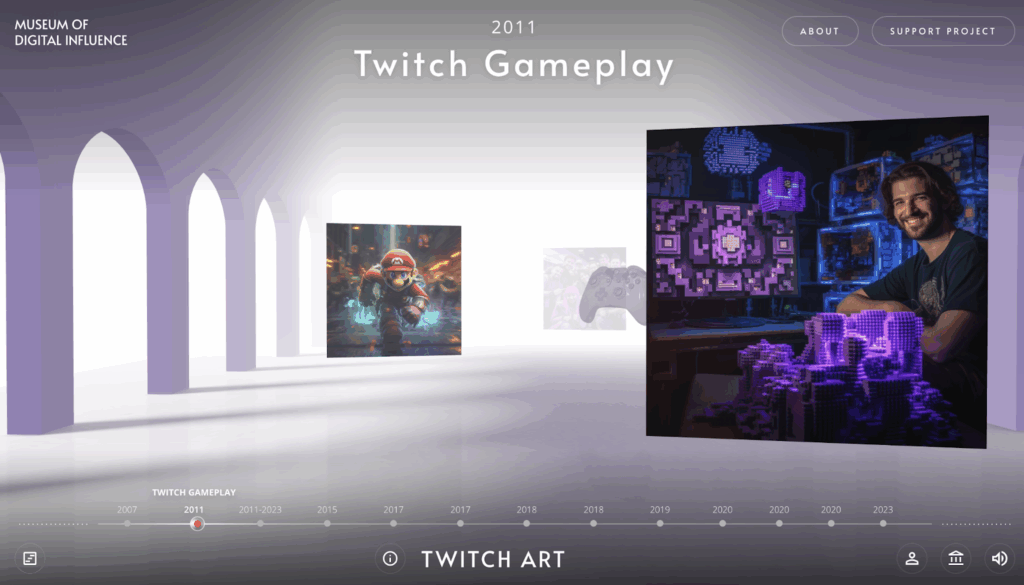
Unlike physical museums, the Museum of Digital Influence exists entirely online and is freely accessible. It organizes nearly 100 curated artifacts (platform moments, viral posts, and campaign formats) into nine chronological epochs, ranging from early blogging communities to TikTok-driven creator economies.
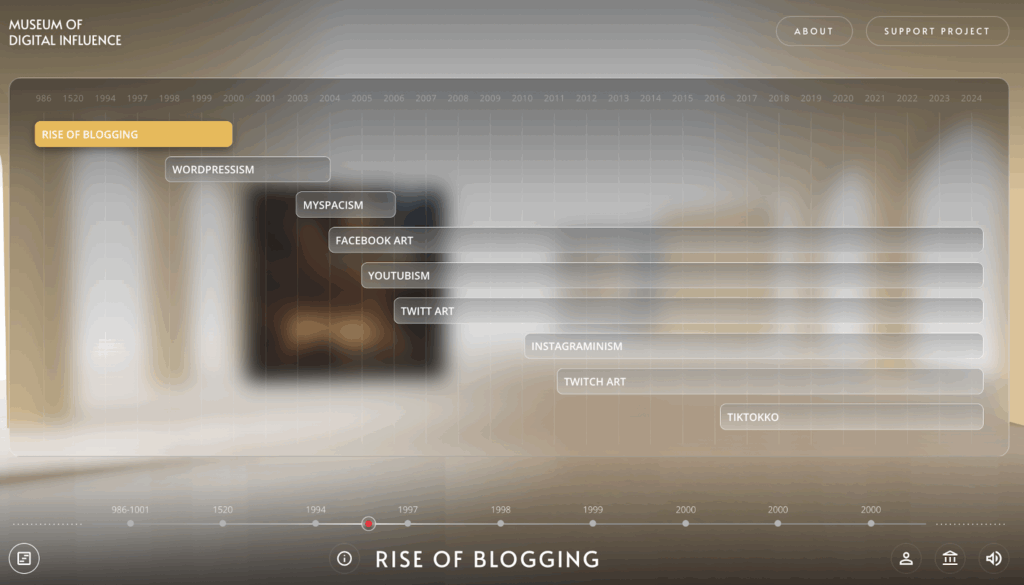
Initially, Viktor and his team envisioned the museum primarily for marketers and creators. As development progressed, the audience expanded. “We realized that the story of digital influence is actually interesting for many more people: brands, students, and anyone who grew up with the internet,” Viktor says. “Because of that, we designed the experience to be educational, but not academic, and visual, but not overwhelming.”
That design philosophy shaped both the structure and tone of the project. Instead of theoretical frameworks, the museum emphasizes timelines, narrative context, and recognizable cultural artifacts. Each epoch explains not just what happened but why it mattered, particularly for visitors too young to remember events such as early blogging platforms or the Ice Bucket Challenge.
“We think it is necessary to give them a context,” Viktor says, “to understand what happened and what stands behind those videos or posts that make the picture whole and complete.”
Choosing What Deserves to Be Remembered
Selecting which moments to include required filtering an industry defined by excess content. The Zorka team applied two main criteria: virality and impact.
“Did it go viral, or did it change the landscape?” Viktor explains, citing examples such as YouTube’s shift from text to video as structural turning points.
The team also evaluated artifacts through an advertising and influencer-marketing lens. Platforms that no longer attract investment may still appear historically, but ongoing relevance mattered. “No one will invest in MySpace nowadays,” Viktor notes, “but Facebook, TikTok, or Instagram are still the most popular channels to promote products.”
Viktor also notes that the curation process itself revealed how quickly digital culture can disappear. “Posts or videos go viral, and then they are gone,” he says. “Almost everyone forgets a trend in a couple of months.”
What Creators and Brands Often Miss
One of the museum’s underlying arguments is that influence predates platforms. “Many creators today think influence started with platforms, algorithms, and monetization,” Viktor says. “But in reality, influence started with people talking to people.”
Early bloggers, he argues, built trust through consistency and proximity rather than scale. That historical context matters for brands as well. “Algorithms change. Reach goes up and down. But relationships last longer than any platform,” Viktor says.
From Zorka’s perspective, this insight informs the agency’s performance marketing approach today. In Viktor’s view, while campaigns are optimized for measurable outcomes, they are grounded in creator-audience relationships rather than purely transactional reach.
The museum reinforces that long-term lens, both internally and for clients navigating increasingly volatile platforms.
Platforms Change Fast; Behavior Changes Slowly
Looking across nine epochs, Viktor sees a consistent pattern.
“Platforms change fast and human behavior changes slowly,” he says. Early users focused on self-expression; later, creators began optimizing for attention and algorithms. “Nowadays, many creators generate their content optimizing it for algorithms instead of identity.”
He attributes faster trend cycles partly to algorithmic distribution and rising media consumption. “There are more options for platforms to show us content,” he says. “That’s why we see trends more frequently.”
This acceleration is one reason the museum updates annually rather than reacting to every micro-trend. Viktor believes an industry fixated on novelty risks losing its memory. “Without looking back, every new format feels revolutionary, even when it’s not,” he says.
Value Beyond PR
While the Museum of Digital Influence functions as a public resource, it also serves a strategic role for Zorka.Agency. Viktor believes the project highlights the depth of expertise and long-term thinking rather than short-term optimization alone.
“It’s not only an idea. It’s a value,” Viktor says. “It gives marketers or creators an opportunity to find something useful in the past, such as viral posts or formats, and transform them according to their needs.”
He adds that the project also strengthens Zorka’s positioning as a partner rather than a vendor, describing clients as collaborators, with campaigns built through a mix of technology, creative formats, and methods tailored to specific business goals. That philosophy extends to a museum designed to contextualize influence rather than sell it.
Overall, Viktor hopes the museum will have a triple function over the next decade. “As a reference, to understand how we got here, as a warning against chasing hype without meaning, and as a source of inspiration, to build influence more responsibly and consciously,” he says.
Immersing himself in the history of digital culture has also reshaped his own perspective. “It made me value depth over speed and trust over reach,” Viktor reflects. “Real influence is not loud. It’s consistent, earned, and remembered.”
Image source: Zorka.Agency
Subscribe to Our Newsletter
Check Out Our Podcast