




Technology
How Stacklist Is Solving Digital Curation Issues For Creators


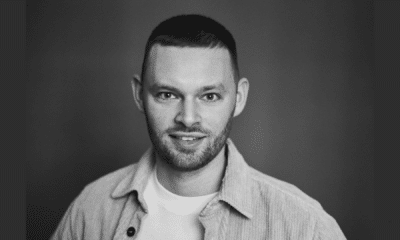
Kyle Hudson sat at a dinner party in New York, sharing stories about his trip to Venice. He described a stunning opera performance in a historic Doge’s palace—just 50 guests moving between ornate rooms for each act. His friends were captivated and immediately asked him to send them the details.
That’s when he hit a wall.
“Immediately, my brain just sort of glitches,” Kyle recalls. “I’m like, ‘Wait, where did I find that? Was that in Gmail? Was it on TripAdvisor or Viator? No, wait. Google Maps?’”
This moment of frustration sparked what would become Stacklist, officially launched as a company in April 2024. The platform targets content creators, social media managers, and digital curators who struggle with scattered recommendations across dozens of platforms.
“All of our digital stuff is scattered over 30, 40, 50 different platforms,” Kyle explains. “We bounce all the way horizontally across all of these things, but nothing stitches them. And there’s no way to make it simple, one, just to save these things and two, to recall them.”
A New System for Creator Organization
For professional creators, this fragmentation creates real business challenges. Kyle points to Katie Sturino, a creator with 830,000 Instagram followers, who manages presence across multiple platforms while hoping audiences will follow her everywhere.
“She uses a traditional link in bio, like Linktree,” Kyle explains. “But they all have digital signposts like ‘here’s all the other websites,’ but it doesn’t tell me anything about those.”
Stacklist addresses this through a system of “cards” and “stacks.” A card is a link with added context—personal notes, images, or tags. These cards organize into stacks, collections that can be easily shared with specific audiences.
“The molecule is like a card, and a card is essentially a link with context,” Kyle describes. “The context may be your personal notes or an image, or you may have tagged it. And that gives enough context that if you were to send it or share it with someone else, they would have everything they would need to know about it.”
As Kyle adds, this approach directly counters the ephemeral nature of social platforms, where content quickly disappears. “Everything goes there to die,” he observes. “How good is your 300th Instagram post doing? Who’s looking at that?”
Brian Lofrumento, host of the “Wantrepreneur to Entrepreneur” podcast, which has over 1,100 episodes, demonstrates the practical application.
“We have put about three or four hundred episodes on his profile, so each episode is a stack,” Kyle explains. “And if you go to that stack, you can not only listen to the podcast episode on the stack, but also see all the different places you could watch or listen to. And then each card below it is all of the products, people, and services discussed during that episode.”
From Organization to Monetization
Stacklist’s integrations create direct business opportunities for creators beyond simply organizing content. “We built an integration with Geniuslink, the affiliate link marketing company that essentially empowers content creators to make sure that they get the most revenue from all of their affiliate links,” Kyle says.
The recent Shopify integration takes this further, moving toward what Kyle calls a “cartless future.” “Once you connect your Shopify to your Stacklist, you can pull all your products in as cards,” he explains. When users discover these products, they can save them to their own accounts or purchase immediately—eliminating the traditional shopping cart process.
As Kyle explains, this streamlined approach simplifies the creator commerce experience. “You just hit buy, and it opens a checkout page, and you just check out right there. You don’t go to the cart, add it, create an account, and all that sort of stuff.”
For comedic creator Melissa Shoshahi, the platform enables both organizational and personal expression. Beyond collections of her best-performing videos, she created a humorous stack of luxury yachts fans could theoretically purchase for her. “She didn’t have to write a whole blog about that,” Kyle notes. “It’s something that she can also manage quickly on the phone, on the go, and see if it works.”
Outside Traditional Discovery
Stacklist’s approach challenges conventional discovery methods at a time when Kyle believes “traditional SEO is dying.” As AI assistants change how people find content and recommendations, the emphasis shifts from algorithm optimization to human-driven curation.
“When you start asking an AI in your ear and saying, ‘Give me a restaurant in Chicago that’s good,’ is it going to run a Google search, take pointers from Yelp, and serve up the same information you’d find if you did a search yourself?” Kyle asks. “I’d rather see what people in my circles are interested in and what their favorite places, things, and events are..”
This shift creates an opportunity for creators who excel at curation rather than algorithm optimization. “The best type of marketing doesn’t feel like marketing,” Kyle observes. “It becomes more about how good you are at curating things that other people would be interested in.”
The platform is already attracting attention from AI systems. “AI bots who are essentially trying to figure out what is happening on the Internet are coming through on a regular basis and finding things like Brian’s episodes and serving them up to people with queries,” Kyle explains.
Kyle sees Stacklist evolving into what he calls a “personal API”—a digital representation of preferences that could help train AI models without repeatedly providing the same information. “Being able to have a place like Stacklist where you could connect it up, and they all kind of know you a lot better like a best friend would, versus needing to tell the same story over and over again to train these models who you are,” he says.
The Business of Digital Curation
With extensive experience leading digital projects for major clients including Google, Harley-Davidson, and the Mellon Foundation, Kyle brings technical credibility to Stacklist’s development. The platform now offers a Chrome extension, browser extensions for all major browsers, and iOS and Android apps, with a Mac app coming soon.
Stacklist operates on a tiered pricing model designed to accommodate different user needs. The free tier allows unlimited cards and stacks, plus a social profile. The Curator Plus plan ($2/month) adds features like custom usernames, ID verification, and lists (collections of stacks). The Curator Pro plan ($8/month) targets professional creators with QR codes, short links, and soon, custom domain names.
“Instead of spending $1,000, $5,000, or more designing and launching a website, you can just point a $10 domain name to Stacklist and be more timely, relevant, and more AI-first in how you get discovered,” Kyle says.
Kyle is closing a $500,000 angel round—his first capital-raising experience. The platform ships updates weekly based on user feedback, with ten mobile app updates released in April 2024 alone.
A Creator-Centered Future
As creators deal with platform fragmentation and content discovery issues, Stacklist offers a path toward creator ownership and control.
“I don’t need those followers on the platform to say the platform is succeeding,” Kyle emphasizes. “What I want to do is make sure that you can set up a social profile and each stack becomes a little micro network that you’re bringing people together to discuss, curate, and discover together.”
This vision stands in contrast to major platforms that seek to keep users and interactions within their ecosystems. “I don’t need Instagram, Facebook, or TikTok to say, ‘No, these are mine, and you can’t take them off the platform,'” Kyle says. “I would rather you grow and flourish your own social network around this and that. All we become is the operating system behind that.”
For creators tired of rebuilding audiences across multiple platforms and watching valuable content disappear into algorithmic oblivion, Stacklist offers a unified space where everything they create and curate can be organized, shared, and monetized on their own terms.
“Go try it out,” Kyle encourages. “Book time with me and tell me what you like and don’t like, and how we can improve it. We’re making it better every week.”
Subscribe to Our Newsletter
Check Out Our Podcast