



Agency
How Ahmad Mahmood Built a MENA Influencer Agency on Peer Trust, Not Pitch Decks

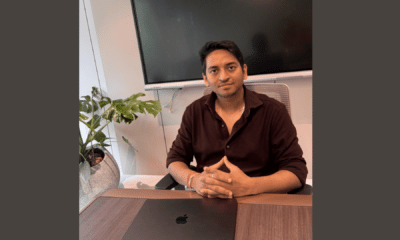
Most influencer agencies sell access to creators. Ahmad Mahmood started as one, and he argues that this distinction is the reason Plug Media has a structural advantage. Ahmad founded Plug Media in Dubai in 2016, when he was still in his early teens, after brokering an influencer deal at a car showroom by cold emailing a YouTuber and offering him a Bugatti to drive.
Today, the agency manages influencer ad spend for some of the region’s largest brands, including Noon, Talabat, Property Finder, Zara, and a string of major real estate developers. Ahmad also runs BookAnyInfluencer, a self-serve platform with a reported database of 280 million creators across Instagram, TikTok, and YouTube.
“I understood creator culture because I lived it, not because I studied it,” Ahmad says. “That’s what Plug Media was built on.”
Why Follower Count Is the Wrong Starting Point
The most persistent mistake Ahmad has watched brands make over nearly a decade is confusing scale with fit. Campaigns that fail, he says, almost always trace back to the same root cause: a brand that picked a creator based on numbers rather than audience alignment.
“The campaigns that actually drove results were never just about the influencer’s follower count,” Ahmad explains. “They worked when there was real alignment between the brand, the creator, and the audience.”
That observation shaped how Plug Media reverse-engineers campaigns. When a brand arrives with a performance goal, the agency identifies the target audience first, and the creator second. From there, content format and platform are chosen based on current algorithmic conditions, not historical assumptions.
Ahmad is direct about what happens when brands skip that process. “If the audience isn’t right, no amount of spend will save the campaign,” he says.
The second most common failure mode is creative. Over-scripted content, or briefs that treat influencer posts like banner ads, kill engagement before the algorithm even has a chance to weigh in.
Being a Peer Changes What Creators Will Do for You
Ahmad describes Plug Media’s positioning not as an agency that works with influencers, but as one that works among them. He has more than 600,000 Instagram followers himself, and the agency’s creator relationships, built over seven-plus years in the MENA (Middle East and North Africa) market, function more like friendships than vendor contracts.
According to him, that closeness has practical consequences. Creators offer better rates because they trust that the terms are fair. They also show up differently for the work itself.
“When you’re friends with the creators, they don’t want to disappoint you,” Ahmad says. “They don’t see it as just another paid post. A lot of the time I’ll sit with them personally, walk them through the campaign, and we’ll come up with ideas together.”
For campaigns with large budgets or high execution complexity, Ahmad is personally involved from creator selection through final content review. He argues this level of involvement is structurally unavailable to traditional agencies that operate at arm’s length from talent.
The result, he says, is a different quality of effort. “You can’t force authenticity, but you can engineer the right match.”
Creative Execution Matters as Much as Creator Selection
Plug Media’s content strategy starts with how people actually consume content on a given platform, not with what the brand wants to say. Ahmad and his team shape the hook, the story arc, and the call to action, while deliberately leaving the creator’s voice intact.
“We don’t script creators, but we guide them,” Ahmad says. “We talk through the idea with them, shape the angle together, and make sure it still sounds like them. When content feels natural, the algorithm pushes it, and the audience responds.”
The signals his team watches most closely are watch time, saves, and comments that indicate intent. Follower count and raw likes, Ahmad argues, remain overrated across the industry. He has seen creators with relatively small audiences outperform much larger accounts because their smaller audiences were more engaged, more relevant, and more likely to act.
“Real performance comes from attention, trust, and action, not just reach,” he says.
From an algorithm perspective, strong hooks in the first few seconds are non-negotiable. Storytelling consistently outperforms direct promotion. And showing a product in actual use builds more credibility than describing its features, according to Ahmad.
BookAnyInfluencer: Turning Gut Instinct Into Auditable Data
Alongside the agency, Ahmad built BookAnyInfluencer to address a structural problem: brands making expensive decisions based on metrics that are easy to inflate. The platform covers anyone with 2,000+ followers across Instagram, TikTok, and YouTube, with full audience breakdowns by country, city, age, and gender, plus fake-follower analysis.
“When brands have access to real audience data and fake follower analysis, influencer spend stops being a gamble,” Ahmad says. “Budgets get allocated to creators who actually convert, not just those who look big on paper.”
He adds that the platform allows brands to filter by target demographic and book creators in under 60 seconds.
The Shift Brands Are Still Resisting
Ahmad’s bluntest criticism is aimed at how most brands still conceptualize Influencer Marketing. By treating influencer spend as a single-post experiment, brands deny themselves the data needed to optimize and the time needed to build audience trust.
“Influencer Marketing stops working when it’s treated like a one-off post instead of a media channel,” Ahmad says. “When brands think long-term and approach creator partnerships more like media buys, with clear strategy and creative planning, results become far more consistent.”
He points to the brands performing best in the category as evidence. They are not chasing viral moments. They are planning campaigns with structure, repetition, and creative intent, then scaling what performs, the same discipline applied to paid search or programmatic.
“One-off activations don’t give the audience enough time to build trust,” Ahmad adds. “And they don’t give brands enough data to learn what actually works.”
Scaling Regionally, Competing Globally
Plug Media currently operates from Dubai. Ahmad’s plan is to open an office in Riyadh and eventually expand into Qatar and London. The broader ambition is to become the leading Gen Z influencer agency globally, a target that requires competing against agencies with far longer track records in Western markets.
Ahmad believes the influencer-owned model itself is the differentiator that scales, and that its influence will extend beyond Plug Media’s own growth.
“Influencer-owned agencies know how to balance brand objectives with what actually works for an audience,” he says. “That leads to better creative, stronger relationships, and more consistent performance.”
He expects this model to push the broader industry toward more transparent pricing, better creator-brand alignment, and campaigns oriented toward results rather than exposure metrics. “It’s a shift from transactional influencer marketing to long-term, performance-driven partnerships,” Ahmad says. “The brands winning right now are already there.”
Subscribe to Our Newsletter
Check Out Our Podcast