Community platforms are moving from optional brand extensions to core business infrastructure, according to new research from Circle. The company surveyed more than 750 community builders worldwide, conducted interviews with 12 industry experts, and overlaid findings with platform data from more than 18,000 communities.
The resulting “2026 Community Trends Report” identifies trends across two broad shifts: communities functioning as competitive differentiators, and a growing recognition among community builders that no single playbook applies across all community types.
Belonging Displaces Branding as Differentiator
Nearly half of survey respondents, 46%, say having a community gives them a competitive edge. The report notes that traditional brand marketing has become what respondents describe as a baseline requirement rather than a distinguishing factor.
Sixty-seven percent of respondents report that members say they joined or stayed because of shared identity and values.
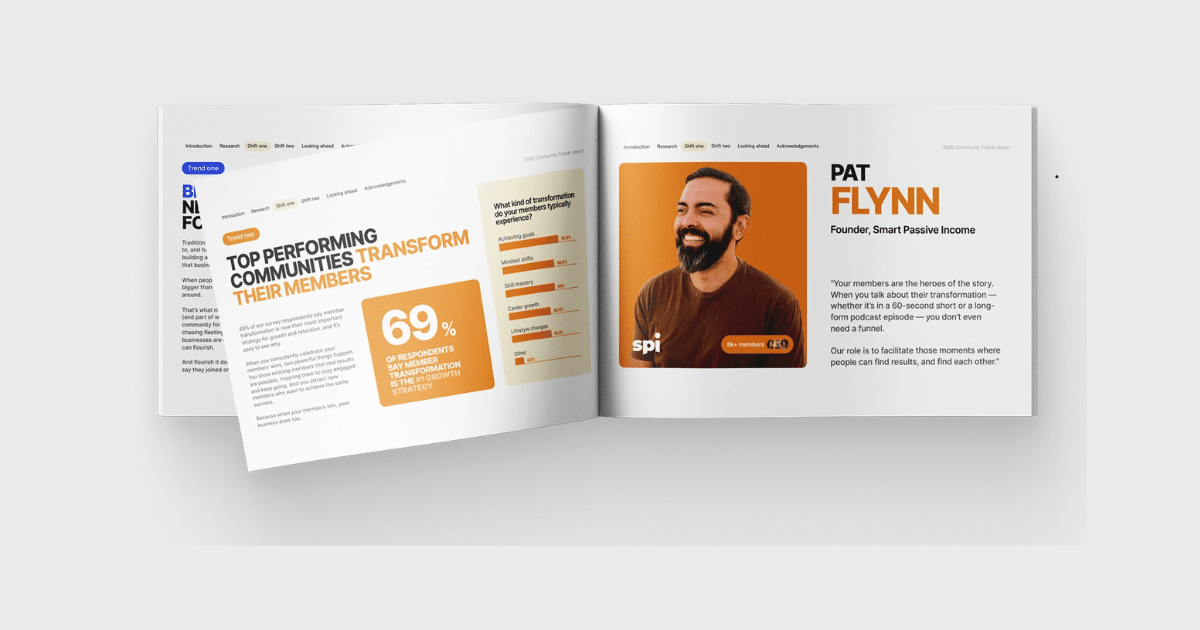
Pat Flynn, founder of Smart Passive Income, which operates a community of more than 8,000 members, described the dynamic: “Your members are the heroes of the story. When you talk about their transformation, whether it’s in a 60-second short or a long-form podcast episode, you don’t even need a funnel. Our role is to facilitate those moments where people can find results, and find each other.”
Member Transformation Becomes Primary Retention Strategy
Sixty-nine percent of respondents identify member transformation as their top strategy for growth and retention. The most commonly reported forms of transformation members experience include achieving goals (61.4%), mindset shifts (56.5%), skill mastery (54%), career growth (43.4%), and lifestyle changes (41.3%).
Community Enters the Pre-Purchase Stage
Forty-eight percent of respondents say prospective buyers engage with their community before making a purchase, positioning community as a discovery and consideration channel rather than a post-sale function alone. Sixty-nine percent say community will represent a larger share of their overall business strategy in 2026, while 7% plan to scale back investment.
Team Structures and Budgets Formalize
Thirty-nine percent of respondents say their community teams now collaborate across multiple departments, including customer success, marketing, sales, and product. Thirty-two percent operate with a dedicated community budget, with some reaching $1 million. Software tools account for 30% to 50% of that spend for many respondents.
Nikki Thibodeau, Regional Vice President of Digital Engagement and Community at Calix, which hosts more than 10,000 members, said: “There was a time when we focused solely on the community and its members, but that’s no longer the case: we’ve become a lot more integrated with teams across the business. Operating outside of our baseline support use case, we’re now integrated with Customer Success and Customer Marketing, Sales and Renewals, and so much more.”
Nearly one in five community professionals say their roles are now more clearly defined. Sixteen percent report adding senior or specialized positions in engagement, operations, content, or data.
Quality Over Scale
Thirty-nine percent of respondents say they are pulling back from member growth as a primary objective for 2026. Twelve percent plan to cap membership, citing a desire for more hands-on engagement (44.9% of those planning caps), exclusivity (30.3%), and a more comfortable environment for members (15.2%).
Rachel Starr, founder of coCreator Society, said: “People I’m working with are moving away from chasing bigger member numbers. They’re charging more and offering a higher level of service in return. To earn trust nowadays, you have to be more nurturing. And it’s not just about service, it’s about connection, bringing back that human touch to balance out AI.”
AI Adoption Expands Behind the Scenes
Sixty-eight percent of respondents plan to expand their use of AI in 2026. Currently, 74.6% use it for content creation or planning, 46.4% for generating insights or analyzing data, and 33.8% for member support. 17.7% apply AI to community moderation, and 12.8% deploy autonomous AI agents.
The report describes the dominant use case as automating operational tasks, including answering common member questions, pulling reports, and content moderation.
Lighter Participation Models Gain Traction
Half of respondents say they are prioritizing lighter engagement formats in 2026. The most widely adopted approaches include asynchronous programming (60.8%), bite-sized content or micro-learning (50.3%), and rotating or seasonal programming (21.3%). Twenty-one percent plan to reduce event programming, and 57% say selective participation is actively shaping their 2026 community strategy.
Image source: Circle The full report is available here
Dragomir is a Serbian freelance blog writer and translator. He is passionate about covering insightful stories and exploring topics such as influencer marketing, the creator economy, technology, business, and cyber fraud.











Community platforms are moving from optional brand extensions to core business infrastructure, according to new research from Circle. The company surveyed more than 750 community builders worldwide, conducted interviews with 12 industry experts, and overlaid findings with platform data from more than 18,000 communities.
The resulting “2026 Community Trends Report” identifies trends across two broad shifts: communities functioning as competitive differentiators, and a growing recognition among community builders that no single playbook applies across all community types.
Belonging Displaces Branding as Differentiator
Nearly half of survey respondents, 46%, say having a community gives them a competitive edge. The report notes that traditional brand marketing has become what respondents describe as a baseline requirement rather than a distinguishing factor.
Sixty-seven percent of respondents report that members say they joined or stayed because of shared identity and values.
Pat Flynn, founder of Smart Passive Income, which operates a community of more than 8,000 members, described the dynamic: “Your members are the heroes of the story. When you talk about their transformation, whether it’s in a 60-second short or a long-form podcast episode, you don’t even need a funnel. Our role is to facilitate those moments where people can find results, and find each other.”
Member Transformation Becomes Primary Retention Strategy
Sixty-nine percent of respondents identify member transformation as their top strategy for growth and retention. The most commonly reported forms of transformation members experience include achieving goals (61.4%), mindset shifts (56.5%), skill mastery (54%), career growth (43.4%), and lifestyle changes (41.3%).
Community Enters the Pre-Purchase Stage
Forty-eight percent of respondents say prospective buyers engage with their community before making a purchase, positioning community as a discovery and consideration channel rather than a post-sale function alone. Sixty-nine percent say community will represent a larger share of their overall business strategy in 2026, while 7% plan to scale back investment.
Team Structures and Budgets Formalize
Thirty-nine percent of respondents say their community teams now collaborate across multiple departments, including customer success, marketing, sales, and product. Thirty-two percent operate with a dedicated community budget, with some reaching $1 million. Software tools account for 30% to 50% of that spend for many respondents.
Nikki Thibodeau, Regional Vice President of Digital Engagement and Community at Calix, which hosts more than 10,000 members, said: “There was a time when we focused solely on the community and its members, but that’s no longer the case: we’ve become a lot more integrated with teams across the business. Operating outside of our baseline support use case, we’re now integrated with Customer Success and Customer Marketing, Sales and Renewals, and so much more.”
Nearly one in five community professionals say their roles are now more clearly defined. Sixteen percent report adding senior or specialized positions in engagement, operations, content, or data.
Quality Over Scale
Thirty-nine percent of respondents say they are pulling back from member growth as a primary objective for 2026. Twelve percent plan to cap membership, citing a desire for more hands-on engagement (44.9% of those planning caps), exclusivity (30.3%), and a more comfortable environment for members (15.2%).
Rachel Starr, founder of coCreator Society, said: “People I’m working with are moving away from chasing bigger member numbers. They’re charging more and offering a higher level of service in return. To earn trust nowadays, you have to be more nurturing. And it’s not just about service, it’s about connection, bringing back that human touch to balance out AI.”
AI Adoption Expands Behind the Scenes
Sixty-eight percent of respondents plan to expand their use of AI in 2026. Currently, 74.6% use it for content creation or planning, 46.4% for generating insights or analyzing data, and 33.8% for member support. 17.7% apply AI to community moderation, and 12.8% deploy autonomous AI agents.
The report describes the dominant use case as automating operational tasks, including answering common member questions, pulling reports, and content moderation.
Lighter Participation Models Gain Traction
Half of respondents say they are prioritizing lighter engagement formats in 2026. The most widely adopted approaches include asynchronous programming (60.8%), bite-sized content or micro-learning (50.3%), and rotating or seasonal programming (21.3%). Twenty-one percent plan to reduce event programming, and 57% say selective participation is actively shaping their 2026 community strategy.
Image source: Circle
The full report is available here
Subscribe to Our Newsletter
Check Out Our Podcast