Why would two companies invent near identical executive titles in the same month? YouTube now takes more daily watch time than Netflix, mobile video ad spending is about to pass mobile search, and the audience brands once reached through television is in the feeds. Reach there is earned: a feed shows a post to more people only when the first people who see it watch it, share it, or reply. Television sold guaranteed reach for money. Social platforms will sell a brand impressions, but they cannot sell the response, and ad messaging stops the moment the spending does.
A creator who can get that response organically, post after post, is holding an asset. Call it algorithmic capital.
Brands need that capital, and the first way to tap it was to pay for access: sponsorships, ambassador deals, affiliate codes, spending that grew 171 percent last year in CreatorIQ’s tracking. But money buys audiences one campaign at a time, and the skill that builds them stays with the creator. The next step is to hire it. Howlett’s title is one of the first of these moves, and more are coming.
Brands struggle win attention on the feed, while creators compound their algorithmic capital
TikTok, Instagram, and YouTube decide post by post what to show each person, and they decide by engagement and response. The ranking favors posts that keep users on the platform, because keeping users is how the platforms make money: Meta’s own reporting shows 97.3 percent of United States post views on Facebook go to posts with no outside link, and SparkToro sees roughly ten times the reach on posts without links. It also favors people over brands. Audiences engage with people rather than logos, and organic reach for brand accounts has fallen for years. Maren Hamilton of Popfly put it plainly in an interview with Net Influencer: creator-led marketing builds trust and loyalty “in a way that advertisement can’t.”
The people who do win the feed are building something while they win. Every post that gets a response earns two kinds of trust, the audience’s trust in the person and the ranking system’s trust in the account, and both accumulate. Howlett’s 50 million followers are the stored form of years of judgment calls, what to post, when, and how it should sound, made by feel. A brand can rent that audience for a campaign. The feel that built it stays with him.
Amanda Natividad of SparkToro has a rule for publishing: give the audience something useful five times for every time you ask for something. The goodwill that builds up is what she calls algorithmic capital.
The hiring has already started
Watch the hiring. Whalar created the industry’s first Global Chief Creator Officer role in 2023 and gave it to Ashley Rudder; BrandArmy followed in 2024; Edelman took the title global this July with Kenny Gold. An agency that installs a chief creator officer is hedging: building the ability its clients will otherwise build without it.
The brands are moving too. Amazon, Coca-Cola, Red Bull, and Unilever have all listed creator-native jobs this year, and Sabrina Haschak of Beacons watches influencer work move from a desk “underneath another team” to “internal infrastructure built inside of brands,” with dedicated teams, longer partnerships, and performance expectations.
Some early in-housing went badly, and the failures share a shape. Brands pulled creator marketing inside to escape agency fees, staffed it like the old influencer program, finding creators, briefing them, paying them, and woke up as understaffed agencies: they had hired managers of the renting, not the ability itself. The chief creator officer is the other kind of hire. Blenders is asking Howlett what will make people respond to the brand, from its campaigns down to the products themselves; that is what Gray means by “a real connection to what we make.” The program manages spending. The officer decides how the brand appears.
The titles vary, Blenders says content where Edelman says creator, but the job is the same: executive ownership of earned attention.
The person who can do this job is rare
The job takes two things that rarely share a resume: the taste and speed of someone who has earned reach personally, and the discipline to build a team and a process around it. Left-brained and right-brained at once, creator and operator.
There are two ways to get there. Howlett is the creator who became an operator, carrying what he learned building his own audience into a role over campaigns and products. Gold is the operator who came up inside the feed, building Deloitte Digital’s creator practice from scratch after running P&G’s #DistanceDance. Either way the pool is small, and Kevin Daigle of LunarX watches companies resort to headhunters for these searches because “they don’t know where to look for it.”
At a startup, none of this needs a title: the founder posts three times a week and builds the audience personally. That works until the company outgrows one person’s posting, and the only way to delegate a sense like that is to hire someone who has it. Every consumer brand eventually reaches that point, and there are not many people to hire when it does.
The org chart catches up to the feed
The last time a new kind of fluency forced its way into the boardroom, the same thing happened. Companies that could not find digital expertise in their own ranks began appointing chief digital officers in the early 2010s, the title spread to thousands of companies within a decade, and then it started to fade, for the best possible reason: digital stopped being a specialty and became how every function worked. The chief creator officer is at the start of the same arc. Feed fluency is scarce, org charts do not contain it, and companies have started buying it one person at a time. If the parallel holds, the title will eventually dissolve the same way, once every team learns to think in feeds, and that disappearance will mean the job succeeded.
For consumer brands, the question is timing, and the ones that hire early get their pick of a thin market. For talent agencies, the business shifts toward supplying the people their clients will hire, a pseudo-recruiting business more than a talent business. For creators, the audience became a credential: proof of a skill that companies now put on org charts. The feed spent a decade training a generation to earn attention at scale, and companies have started hiring them for it. Howlett’s title made news, the hundredth will not.
Nii A. Ahene is the founder and managing director of Net Influencer, a website dedicated to offering insights into the influencer marketing industry. Together with its newsletter, Influencer Weekly, Net Influencer provides news, commentary, and analysis of the events shaping the creator and influencer marketing space. Through interviews with startups, influencers, brands, and platforms, Nii and his team explore how influencer marketing is being effectively used to benefit businesses and personal brands alike.


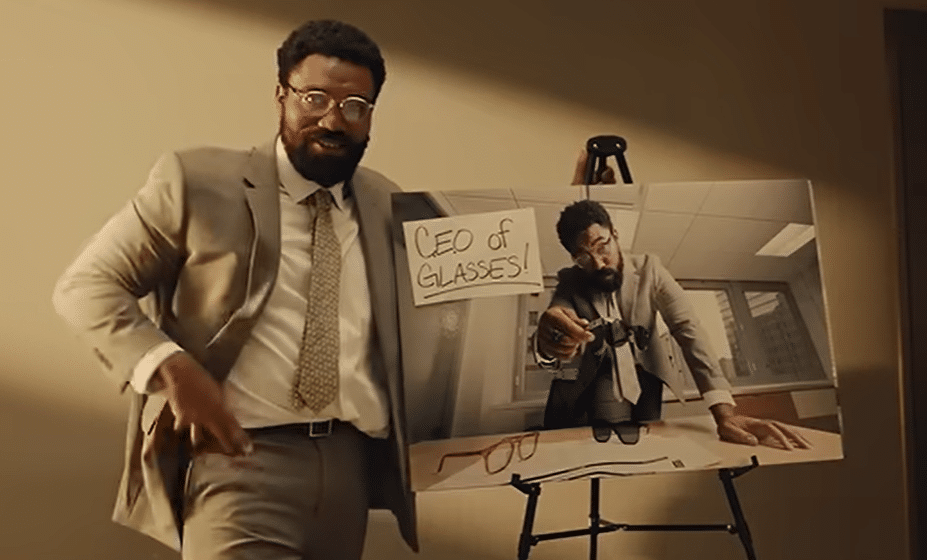








On July 23, Blenders Eyewear named Jordan Howlett its first Chief Content Officer. Howlett, known to 50 million followers as Jordan the Stallion, will shape the brand’s campaigns and have a say in the products themselves. “He brings a massive audience that trusts him and a real connection to what we make,” CEO Jack Gray said. Two weeks earlier, Edelman had created the same job, naming Kenny Gold its Global Chief Creator Officer.
Why would two companies invent near identical executive titles in the same month? YouTube now takes more daily watch time than Netflix, mobile video ad spending is about to pass mobile search, and the audience brands once reached through television is in the feeds. Reach there is earned: a feed shows a post to more people only when the first people who see it watch it, share it, or reply. Television sold guaranteed reach for money. Social platforms will sell a brand impressions, but they cannot sell the response, and ad messaging stops the moment the spending does.
A creator who can get that response organically, post after post, is holding an asset. Call it algorithmic capital.
Brands need that capital, and the first way to tap it was to pay for access: sponsorships, ambassador deals, affiliate codes, spending that grew 171 percent last year in CreatorIQ’s tracking. But money buys audiences one campaign at a time, and the skill that builds them stays with the creator. The next step is to hire it. Howlett’s title is one of the first of these moves, and more are coming.
Brands struggle win attention on the feed, while creators compound their algorithmic capital
TikTok, Instagram, and YouTube decide post by post what to show each person, and they decide by engagement and response. The ranking favors posts that keep users on the platform, because keeping users is how the platforms make money: Meta’s own reporting shows 97.3 percent of United States post views on Facebook go to posts with no outside link, and SparkToro sees roughly ten times the reach on posts without links. It also favors people over brands. Audiences engage with people rather than logos, and organic reach for brand accounts has fallen for years. Maren Hamilton of Popfly put it plainly in an interview with Net Influencer: creator-led marketing builds trust and loyalty “in a way that advertisement can’t.”
The people who do win the feed are building something while they win. Every post that gets a response earns two kinds of trust, the audience’s trust in the person and the ranking system’s trust in the account, and both accumulate. Howlett’s 50 million followers are the stored form of years of judgment calls, what to post, when, and how it should sound, made by feel. A brand can rent that audience for a campaign. The feel that built it stays with him.
Amanda Natividad of SparkToro has a rule for publishing: give the audience something useful five times for every time you ask for something. The goodwill that builds up is what she calls algorithmic capital.
The hiring has already started
Watch the hiring. Whalar created the industry’s first Global Chief Creator Officer role in 2023 and gave it to Ashley Rudder; BrandArmy followed in 2024; Edelman took the title global this July with Kenny Gold. An agency that installs a chief creator officer is hedging: building the ability its clients will otherwise build without it.
The brands are moving too. Amazon, Coca-Cola, Red Bull, and Unilever have all listed creator-native jobs this year, and Sabrina Haschak of Beacons watches influencer work move from a desk “underneath another team” to “internal infrastructure built inside of brands,” with dedicated teams, longer partnerships, and performance expectations.
Some early in-housing went badly, and the failures share a shape. Brands pulled creator marketing inside to escape agency fees, staffed it like the old influencer program, finding creators, briefing them, paying them, and woke up as understaffed agencies: they had hired managers of the renting, not the ability itself. The chief creator officer is the other kind of hire. Blenders is asking Howlett what will make people respond to the brand, from its campaigns down to the products themselves; that is what Gray means by “a real connection to what we make.” The program manages spending. The officer decides how the brand appears.
The titles vary, Blenders says content where Edelman says creator, but the job is the same: executive ownership of earned attention.
The person who can do this job is rare
The job takes two things that rarely share a resume: the taste and speed of someone who has earned reach personally, and the discipline to build a team and a process around it. Left-brained and right-brained at once, creator and operator.
There are two ways to get there. Howlett is the creator who became an operator, carrying what he learned building his own audience into a role over campaigns and products. Gold is the operator who came up inside the feed, building Deloitte Digital’s creator practice from scratch after running P&G’s #DistanceDance. Either way the pool is small, and Kevin Daigle of LunarX watches companies resort to headhunters for these searches because “they don’t know where to look for it.”
At a startup, none of this needs a title: the founder posts three times a week and builds the audience personally. That works until the company outgrows one person’s posting, and the only way to delegate a sense like that is to hire someone who has it. Every consumer brand eventually reaches that point, and there are not many people to hire when it does.
The org chart catches up to the feed
The last time a new kind of fluency forced its way into the boardroom, the same thing happened. Companies that could not find digital expertise in their own ranks began appointing chief digital officers in the early 2010s, the title spread to thousands of companies within a decade, and then it started to fade, for the best possible reason: digital stopped being a specialty and became how every function worked. The chief creator officer is at the start of the same arc. Feed fluency is scarce, org charts do not contain it, and companies have started buying it one person at a time. If the parallel holds, the title will eventually dissolve the same way, once every team learns to think in feeds, and that disappearance will mean the job succeeded.
For consumer brands, the question is timing, and the ones that hire early get their pick of a thin market. For talent agencies, the business shifts toward supplying the people their clients will hire, a pseudo-recruiting business more than a talent business. For creators, the audience became a credential: proof of a skill that companies now put on org charts. The feed spent a decade training a generation to earn attention at scale, and companies have started hiring them for it. Howlett’s title made news, the hundredth will not.
Subscribe to Our Newsletter
Check Out Our Podcast