




Agency
College Dropout Builds Clipping Agency Driving Billions Of Views For Brands, Musicians

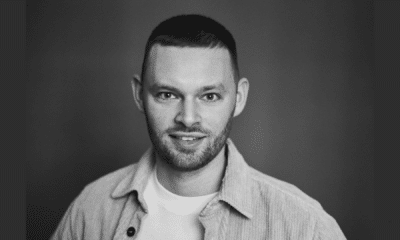
In February, as a freshman marketing student at the University of Kansas, Evan Stanfield found himself restless and uninspired by traditional career paths. “I wanted to make money online and start my own business,” he recalls.
Seven months later, the 19-year-old entrepreneur has transformed that frustration into Clipping Culture, a growing agency that’s generating more than a billion views for major artists and brands through short-form content. By leveraging an army of digital creators to produce organic, viral content at a fraction of the cost of traditional advertising, Evan is developing what he believes will become “the new traditional advertising” in the creator economy.
Bridging the Gap Between Brands and Viral Distribution
Clipping Culture operates at the intersection of influencer marketing and traditional advertising, but with a singular business model. The company connects brands and artists with a network of more than 12,000 “clippers,” primarily young digital creators who produce and distribute organic content featuring clients’ products, music, or messaging.
“Clipping is when you scroll on social media, and instead of an ad popping up with a ‘learn more’ button, it’s an organic video a 16-year-old made in their basement,” Evan explains. These creators participate in campaigns based on specific requirements, such as using a particular song in a relationship-themed video, and are paid based on the views their content generates.
Founded in February 2025, Clipping Culture has already collaborated with major artists, including Yung Gravy, Ski Mask the Slump God, bbno$ (Baby No Money), and the Rolling Stones, as well as brands such as Logan and Jake Paul’s HBO Max show.

The Performance-Based Model
At the heart of Clipping Culture is a performance-driven payment structure that, unlike traditional influencer marketing’s flat-fee model, operates exclusively on a cost-per-thousand-views (CPM) basis.
“You could spend $10 to $25 CPMs on Meta or Google, but with this, we’re spending as little as 10 cents sometimes,” Evan says. This approach yielded impressive results, including generating 190 million views for artist bbno$ with just a $9,000 budget.

The pricing structure varies strategically based on content complexity. Simple sound integrations might cost as little as 10 cents per thousand views, while more elaborate content commands higher rates. “If it’s hard and takes time, like an anime edit, we’ll pay $2 to $3,” Evan explains. “But if it’s just posting content and using the sound, that takes 10 seconds. That pays 10 cents.”
Clipping Culture also implements a payment cap ranging from $100 to $200 per video, ensuring that viral hits continue to generate views without additional costs. “If we’re paying $1 CPM and the video gets 200,000 views, that’s $200, our max payout. If it gets a million views, we still only pay $200,” Evan says. “So we want these videos to go extra viral. We get more views without paying more.”
As Evan points out, this model has proven particularly effective for music artists, who comprise the majority of Clipping Culture’s client roster. “Artists want their sound trending on TikTok because that leads to streams,” he says.
From Dorm Room Idea to Full-Scale Agency
Evan’s entry into the clipping space began with a pivotal conversation with his future brother-in-law, a marketing director at Whop (a marketplace platform). “He said, ‘Evan, if you had one year to make a million dollars, how would you do it?'” Evan recalls. The answer: “Start a clipping agency on Whop. If you have 10,000 clippers in your community, brands will come to you for campaigns.”
With just $20 to his name, Evan spent an entire night researching the concept, then began outreach to potential clients. His first breakthrough came with the artist YNG Martyr, who had approximately 1 million monthly listeners and a $2,000 budget. “We generated about 10 million views in less than 24 hours,” Evan says.
What made clipping attractive as a business model was its low barrier to entry. “Drop shipping is hard. You need capital. With this, you don’t. You just start outreaching and building community. You don’t spend money at all to start,” Evan explains. “That’s the beauty of this. I had no money. I was in college with $20 in my name. I was broke.”
This early success confirmed the potential of the clipping model, leading Evan to drop out of college and focus entirely on building his agency. “I’ve been working every day since February. I haven’t had a day off,” he says.

Inside a Clipping Campaign: From Strategy to Execution
Clipping Culture’s campaign process follows a systematic workflow that begins with client consultation and ends with measurable results. The process starts when brands book a call to discuss strategy, whether it’s promoting an artist’s music or showcasing a product. After establishing a budget (minimum campaigns start at $3,000), the agency creates a campaign inside their Whop community platform, outlining specific content requirements.
“Say it’s a $5k budget, $1 CPM. The clippers see it, read the requirements. If they can participate, they do,” Evan explains. “From there, they just submit videos until the budget runs out.”
Strategy development is tailored to each client’s content type and objectives. For music clients, the approach varies based on genre and style. “If it’s a country song, we might do clips of ‘The Summer I Turned Pretty.’ If it’s rap, we might do drift edits, car edits, or money edits,” Evan explains.
For e-commerce brands, the strategy often involves using existing content assets. “We’ll have them give us a folder of influencer marketing content that’s been collecting dust, the clippers will download the content and create viral clips that get posted on their clip accounts,” he says.
Quality control is maintained through a thorough manual review process. “We have a review team that checks every submission,” Evan says. “Once a clipper submits, it goes into pending.
From there, our team approves or rejects based on requirements.”
This careful approach ensures brands maintain control while benefiting from organic creator content. “We can ask clippers to do whatever we want,” Evan says, explaining that requirements can include specific captions, hashtags, on-screen text, or other elements.
Creating Value for Both Brands and Young Creators
For brands, Clipping Culture promises massive organic reach at lower costs than traditional advertising. “The money isn’t spent until they get the views,” Evan explains. “If a campaign doesn’t work and no money is spent, the client can rethink the strategy or get their money back. There’s no risk. We either get the views or we don’t.”
For creators in Clipping Culture’s network, the platform provides a substantial income source. “Some of our clippers are making $10,000 to $20,000 a month,” Evan says. In other cases, the earnings can be even higher. “I know some clippers that have made well over $100,000 – even $50,000 in a single month. It’s crazy,” he adds.
Becoming a clipper requires developing content creation skills and audience building, but Evan’s platform provides educational resources to help new creators succeed. “We have a free course that teaches the basics,” he explains. “If you post consistently for two weeks with good content, you should go viral at least once. Then you build momentum.”
The most dedicated clippers maintain a rigorous posting schedule. “Some post 10, 20, even 30 times a day,” Evan says. “They understand posting is king and don’t let their accounts die out.”
Challenges and Competitive Advantage
Despite its success, Clipping Culture faces challenges in educating the market about the long-term nature of clipping strategies.
“The biggest thing is it’s not a one-and-done campaign. It’s long-term,” Evan says. “If you just do one campaign, you may not see the results you were looking for.” He points to successful case studies, such as the crypto platform Stake. “Stake has been clipping for one to two years. Clearly, it works,” he says. “If people constantly post your content, it’ll be everywhere. You can’t escape it.”
One of Clipping Culture’s most notable results came from working with artist bbno$, for whom they generated views over a seven-month period. “We’ve generated almost a billion views for bbno$,” Evan notes, adding that most came in the last two months.
Clipping Culture maintains several competitive advantages in this emerging space. First is its early mover advantage. “The best business to start is when nobody’s doing it, and you’re one of the first,” Evan says.
Second is the company’s reliability in an ecosystem where some agencies have developed negative reputations. “A lot of clippers come to our Whop community asking if it’s a scam,” Evan shares. “Some agencies scam; they deposit a budget, take submissions, then refund before paying out.”
To address this, Clipping Culture prioritizes transparent and timely operations. “We check submissions one to two times per day,” Evan explains. “We have a 24/7 chat mod answering questions around the clock.”
Redefining ROI for the Creator Economy
For marketers considering clipping strategies, Evan offers a fresh perspective on measuring return on investment that extends beyond direct conversions. “Most CMOs (Chief Marketing Officer) want a specific ROI (Return on Investment). With clipping, the ROI is brand awareness. It’s not like a Meta ad where you see ROAS (Return on Ad Spend),” he says.
He illustrates this concept using streaming personality Kai Cenat as an example. “I’ve always seen Kai Cenat clips. I’ve never watched his Twitch live. So technically, I’m not ROI for him. But I know who he is,” Evan explains. “Everyone does. And that’s from clips. I can’t get him off my feed.”
This brand awareness focus acknowledges the changing nature of digital consumption. “Attention spans are so short that long-form looks like short-form with quick edits,” Evan observes. “Short-form isn’t going anywhere. If anything, it’ll get even shorter.”
For brands weighing their options, Evan recommends starting with test campaigns. “It’s important for CMOs to test it, come to us, launch a budget, and see how it feels,” he advises. “It might make sense now, it might not, but testing helps you understand it.”
The Future of Clipping and Evan’s Expansion Plans
Evan is expanding Clipping Culture’s reach into new areas, with a particular focus on cryptocurrency companies and e-commerce brands. “We’re looking at crypto brands wanting this. They see Stake’s success and want in,” he says. “Even online casinos want logo clipping or UGC (User Generated Content) content.”
Evan is also developing specialized offshoots of his core business model. “We’re creating sister companies like Crypto Clippers or CEO Clippers,” he reveals. “CEO Clippers would be for CEO’s wanting clips of them posted. We’re expanding quickly.”
His faith in the future of clipping remains strong. “I’m confident clipping will become the new traditional advertising,” he says. “In two years, you’ll see brands spending millions, 100%.”
“The biggest thing I’ve learned is building good client relationships and having strong communication,” he says. “Communication is extremely important.”
For the former college freshman who started with just $20, the transformation into a sought-after marketing entrepreneur underscores the opportunities in today’s creator economy. “I haven’t made a million dollars yet,” Evan admits with determination, “but we’ll get there.”
Subscribe to Our Newsletter
Check Out Our Podcast