






Influencer
From Court To Camera: How Felix Mischker Built A Pro Tennis Career Through Content

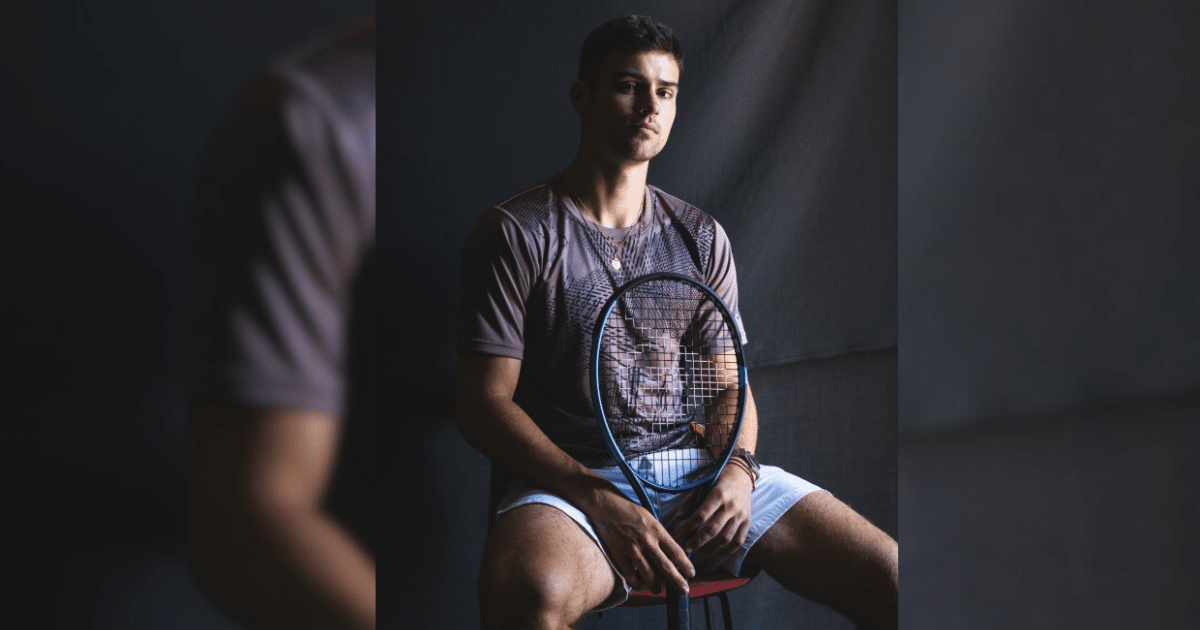
At 22, Felix Mischker has built something that barely existed a decade ago: a self-funded professional tennis career powered by content. From Antalya to Tokyo, his tournaments are not just competitions, but stories, filmed, edited, and shared with an audience that’s grown up watching him chase an ambitious dream: earning his first ATP point.
“I started playing tennis around the age of three,” Felix shares. “There wasn’t much before then.”
That early start turned into something unconventional. Guided by his father, Felix and his brother Lucian launched the Tennis Brothers account when Felix was just ten, years before most athletes saw social media as more than a distraction. What began as one photo per day on Instagram documenting practice sessions became a growing archive of two boys learning, competing, and dreaming out loud.
“My dad had this vision of becoming the first kind of self-funded tennis player in the world,” Felix recalls. “He thought that through social media, one day I’d be able to fund playing professional tennis.”
That vision, radical in 2015, eventually became Felix’s business model.
Going All In: The Road to 1 ATP Point
By 18, Felix faced a decision familiar to many young athletes: university or turning pro. His national junior ranking wasn’t high enough to guarantee either a strong college offer or a clear professional path. “It kind of dawned on me that I needed to do something here,” he says. “Otherwise, I’d go to university, and my dream would die a little bit.”
The solution came in the form of a YouTube series: “Road to 1 ATP Point,” an open-ended documentary following his attempt to win a single professional point. For context, one ATP point is the barrier between amateur and pro, a symbolic, but formidable threshold.
“It was completely absurd,” Felix laughs. “Like you’re running a business that’s making 100,000 a year and saying you want to earn 10 million.”
What made the series stand out wasn’t the results, but the process; the losses, the exhaustion, the pressure of funding each tournament, and the willingness to show it all. Felix edited every episode himself, adopting the quick-cut energy of YouTube creators like MrBeast while keeping the emotional rhythm of a documentary. “I saw an opportunity to do it myself and have full control over my voice,” he says. “How I visualized the story and how I told my own story were very important to me.”
The gamble worked. The series attracted a loyal community of fans – aspiring players, parents, and retired athletes who saw in Felix’s struggle something rare in professional tennis: transparency.
“People said they either felt inspired if they were younger or nostalgic if they’d been through it themselves,” Felix says. “Everyone’s used to watching the pros on TV, but no one had seen it from the perspective of just your average player trying to give it a go.”
Building a Creator-Led Tennis Brand
Felix’s channel has since expanded beyond a single storyline. With over a decade of content under his belt, he now manages a small production team and multiple revenue streams, including sponsorships, YouTube Ad Revenue, and, soon, his own digital community.
“Right now, my main revenue sources are sponsors,” he explains. “In tennis, you usually have long-term contracts. I’ve been with Dunlop for three or four years now.”
But like many creators, he’s thinking long-term. The volatility of brand deals led him to pursue projects he owns outright. One of them is an online community built on Skool, a mentorship-driven community for young players who can’t access expensive academies.
“I want to create the community I would have loved when I was younger,” Felix says. “People can ask questions, join live calls, and learn from what I had to self-learn on a limited budget.”
He’s also developing a tennis-inspired clothing line, starting with off-court apparel due to sponsorship restrictions, but designed to reflect his values of persistence and self-improvement. “I don’t like this idea of a money grab,” he says. “Every product or brand I create should last three, five, ten years – something continuous, like my journey on YouTube.”
Lessons from the Creator Economy
Felix believes the line between athlete and creator is still blurred in tennis, a sport bound by tradition and broadcast rights. Unlike basketball or golf, where athletes freely post game highlights or collaborate with digital creators, tennis remains constrained by fragmented ownership; the ATP, WTA, ITF, and the Grand Slams each control their own content ecosystems.
“Tennis is very far behind,” Felix says bluntly. “Other sports like golf are way ahead. The fact that Carlos Alcaraz can’t use his own match highlights because of TV rights is a bit crazy.”
He’s seen the impact firsthand through collaborations that prove the demand for modern, creator-led storytelling. Partnering with Dunlop, Felix helped produce a series of long-form videos featuring pro players that collectively reached millions of views. “It showed there’s clearly a demand for this kind of content,” he says. “But a lot of brands still don’t know how to use their players properly.”
Felix thinks the problem runs deeper than marketing – it’s structural. According to him, the global tennis calendar leaves little time for coordinated content creation, and no single body owns the narrative. “Everyone’s kind of in it for their own benefit as opposed to the sport as a whole,” he explains. “It creates short-term thinking, which makes innovation hard.”
Still, he sees opportunity. As a bridge between the court and the creator economy, Felix is proving that storytelling can fuel both passion and sustainability in a sport notorious for financial strain. For many players, sponsorships or family funding are the only paths to competing internationally; his audience-supported model offers a rare alternative.
“It’s the single biggest gift I could have had,” he says. “Most players can only afford to travel if their parents or sponsors fund them. I’m grateful that I’ve been able to do it myself through sharing my journey.”
The Discipline of Doing
Behind the effortless energy of his videos lies a firm structure. Felix still manages ideation, scripting, and all of his short-form editing, balancing creative direction with daily training and global tournaments.
“At the beginning, I had to be everything: cameraman, editor, thumbnail artist,” he says. “I remember spending 50 or 60 hours a week just learning.”
Today, he works with the same editor he’s collaborated with for over two years, ensuring his voice stays consistent. “It’s really important not to get detached from the content,” Felix explains. “At the end of the day, it’s just me, my personality, my story.”
That self-awareness defines his creative philosophy. While most platforms reward speed and brevity, he still prioritizes slow, reflective storytelling. “It’s a slower pace of content than what people want today,” he says. “But I think that helps connect with the audience, those candid moments where I just talk to the camera for fifteen minutes.”
For him, self-expression isn’t a branding choice, but a way to cope with public scrutiny. Every match, win or loss, is shared online.
“If you can put your ego to one side, it doesn’t really matter what people think,” Felix says. “Losses are what people can relate to. If anyone’s going to show them, I want it to be me.”
Money, Mentorship, and Mindset
Running a creator-athlete business means balancing inspiration with spreadsheets. When it comes to things he wishes he’d known earlier, Felix highlights “cash flow,” explaining that “you can have a great long-term vision, but you need to keep the lights on.”
That pragmatic streak comes from necessity. Each tournament incurs flights, coaching fees, and accommodation costs, often before any earnings are generated. “If you don’t have the cash flow, you can’t plan future trips,” he stresses. “Then everything becomes more expensive the closer you get, and it’s a bit of a nightmare.”
Through it all, his father remains a constant; the same person who filmed those early Instagram posts and now handles operations, partnerships, and what Felix calls the “adult stuff.” Their collaboration, equal parts mentorship and creative partnership, grounds his growing enterprise.
“We’re very different in how we see things,” Felix says. “But we always manage to come to a good balance. He was the one who started it, and I really value his opinion.”
Expanding the Tennis Universe
Next year, Felix plans to head to Australia to compete during the Open season while doubling down on content creation.
The dual focus on athletic performance and creative production remains central to his identity. “I want to build products and create lots of really engaging tennis content,” he says. “Collaborate with cool people and go to new places that I can showcase to my audience.”
He also hopes to contribute to the sport more broadly through education, storytelling, and access. “I’d love to make a big impact in the tennis space,” Felix says. “Help people get better at the sport, and if they want to go pro, give them advice on how to do it.”
Regarding the driving force behind constant travel, editing marathons, and tight budgets, he quotes a mantra that sums up his approach: do, then feel.
“Emotion is always something you think about before you act,” Felix concludes. “For me, what always works is counting down from five and starting the task. Once I’m in it, I enjoy it, and that applies to tennis, business, content, everything.”
Subscribe to Our Newsletter
Check Out Our Podcast