


Influencer
Cattien Le’s Unscripted Path To Independence In The Creator Economy

Cattien Le’s career has been shaped less by strategic ambition than by a steady accumulation of practical choices. Her path into the creator economy did not begin with growth hacks or algorithm studies, but with a series of roles, experiments, and on-camera moments that gradually expanded her visibility and control. What connects each phase is a consistent willingness to take risks, lean into humor, and prioritize honesty over polish.
Today, Cattien operates as a comedian, actress, and digital entrepreneur whose online presence spans platforms such as Instagram, TikTok, YouTube, and Snapchat, alongside income streams that extend well beyond the screen. Her journey offers a grounded view of how creators can build durable careers by treating the internet less like a lottery ticket and more like a long-term job.
Growing Up Chronically Online, Carefully
Cattien describes herself as “a child of the internet,” but with limits. She grew up fascinated by early platforms such as Tumblr, AOL, Vine, and YouTube, long before creators could reliably monetize their work. Her parents, wary of the risks of early internet culture, enforced strict boundaries.
“They used to scare the absolute daylights out of me because, just like stranger danger, you do not know who is on the internet,” she says.
That tension shaped her relationship with digital culture. She consumed relentlessly, but stayed mostly behind the scenes, maintaining secret accounts and observing how online communities formed. “Eventually it just became me being obsessed with internet culture,” she says. “I was definitely much more of a consumer.”
Offline, she struggled with shyness and uncertainty about her future. After high school, she enrolled in community college, unsure of her direction. What she did know was that she liked performing. “I was a theater kid in high school,” she says. Acting became both an outlet and a strategy. “If I can just do a monologue really well, maybe I can get into a school that will get me out of my hometown.”
That plan worked. Cattien was accepted to several programs and chose to attend the University of Southern California (USC), graduating from its theater department. The decision surprised her family. “You have a hard time ordering from McDonald’s,” she recalls them saying. “What are you talking about?”

Comedy Podcasts as a Back Door Into Media
USC’s demanding but irregular theater schedule left Cattien with long stretches of downtime. She filled them with podcasts, gravitating toward comedy and MMA shows. One afternoon, listening to “The Fighter and The Kid,” she noticed the intern had gone quiet and decided to take a chance.
“I sent a DM to their Instagram page asking if they needed an intern,” she says. “And it turns out they did.”
After graduating, she stepped into the role full-time, managing social media and working behind the scenes. The job paid, which she notes “is amazing for a straight out of college internship.” Still, she balanced it with a second job to cover living expenses until a pivotal conversation with her boss. When she explained she needed to leave for financial reasons, he asked how much she needed to survive and offered to pay it. “It literally changed my life,” she says.
Cattien soon found herself managing multiple podcasts and gradually moving on-camera. Her presence resonated with audiences, particularly in male-dominated comedy spaces. “I think they were just like, ‘Oh, there’s a girl on the screen. Cool,’” she says, adding that her on-screen appearances helped retain YouTube viewers.
Her theater background also played a role. “There’s literally nothing that embarrasses me,” she says. “You just cannot feel the cringe.”
Learning to Withstand Attention and Backlash
Working in comedy podcasting introduced Cattien to the volatility of online audiences early on. “People either really loved me, or they really hated me,” she says.
That intensity forced her to develop resilience quickly. “I learned how to get such a thick skin so quickly,” she explains, noting that strong reactions often coincided with strong performance metrics. “Sometimes it does really well, but everyone seems to hate it, but it did really well.”
This environment taught her not to overcorrect based on comments alone. “Do I change who I am to appease them? Then you do that and the numbers tank,” she says. Over time, she learned to prioritize her own satisfaction with the work. “If you’re happy with it, at the end of the day, that’s all that matters.”
Her exposure to high-profile comedians through intimate podcast settings also expanded her network. Guest appearances led to invitations to other shows and YouTube collaborations. “That’s how I ended up meeting a bunch of comedians,” she says. “And that’s how they started inviting me to do their shows.”
Turning a Running Joke Into a Revenue Stream
The moment Cattien began to see herself as an independent creator came during the pandemic, though the catalyst was unconventional. She noticed a recurring pattern in her direct messages.
“Probably the weirdest one that I didn’t expect is that people want to see my feet,” she says. Initially confused, she learned it was a widespread fetish community.
What began as an inside joke on podcasts turned into a deliberate bit. She hid her feet in photos, fueling speculation. “Nobody saw the feet for as long as I could,” she says. Eventually, curiosity led to experimentation. “I remember just thinking, like, I wonder if I can make a living off of this joke.”
She launched an OnlyFans account selling foot photos and found immediate demand. “It worked… and it worked,” she says. While she acknowledges the timing was unusual, with stimulus checks circulating freely, the experience shifted her mindset. “That’s kind of when something clicked in my head could really make a living just doing social media.”
Despite her growth, Cattien remains cautious about the platform’s broader appeal. “I’m not somebody who recommends OnlyFans to anybody,” she says. “Statistically, you’re not [going to get rich].” She attributes her success less to the platform itself and more to the audience trust built over the years.
“I am a silly goose,” she says. “My entire audience just knows me as a silly goose.”
Parasocial Relationships
As her audience grew to more than a hundred thousand, Cattien became more aware of the scale of her reach. “If you posted this online and it goes viral and it has 7 million views, 7 million people are a part of this conversation now,” she says. That realization prompted her to reassess how much of her personal life she shared.
Early in her career, much of her content drew directly from her real experiences. Over time, that approach led to burnout. “I needed to find a balance between what is up for public consumption and what is not,” she says. Today, she focuses more on bits and observational humor, keeping certain aspects of her life offline. “I found that I got very burned out the more I was giving up information about my life.”
Her relationship with her audience remains close but more intentional. “The parasocial part of it isn’t terrible,” she says. “But you need to find a balance with it, definitely.”
Rejecting Formulaic Creator Strategy
When it comes to growing her online presence, Cattien resists rigid strategies. “I don’t really have a strategy, if I’m being honest,” she says. Attempts to optimize posting schedules and content formats drained her enthusiasm. “Now suddenly, everything that made me special was gone. Now I’m just like a product.”
Instead, she treats her work like a job in terms of consistency, while allowing creative freedom in execution. Short-form video has become her preferred medium, often inspired by spontaneous moments with her sister. “I just try not to have a filter,” she says. “That’s where I feel like I do the best.”
Her disengagement from YouTube and long-form podcasting reflects the same philosophy. “If it’s not fun anymore, I don’t want to do it,” she says. After years of talking on podcasts, she felt she had exhausted what she wanted to say. “Every hot take I have is out there.”
Building Stability Beyond the Screen
In recent years, Cattien has shifted some focus away from content creation toward investments, particularly real estate.
She describes spending time visiting open houses and managing properties as a grounding contrast to her online persona. “It’s created another avenue for me to work without being online,” she says. “I’m not always the feet girl.”
This diversification gives her flexibility and peace of mind. She reveals she no longer feels trapped by the need to produce content constantly. “If I wanted just to stop everything and fully start doing real estate investment, I can do that,” she says. That freedom extends to her personal life, allowing her to spend more time with family during holidays. “Now I get to actually spend time with my family,” she says. “It’s my favorite thing.”
As for the future, Cattien resists long-term predictions. “I couldn’t even tell you what I’m doing on January 2nd,” she says. Still, her vision is clear in its openness. She values having options, something she lacked earlier in her career. “Social media has given me the option to choose,” she says.
For Cattien, success in the creator economy is less about perpetual growth and more about autonomy.
“That’s kind of the beauty of being your own boss,” she says. “You have the freedom to do whatever you want.”
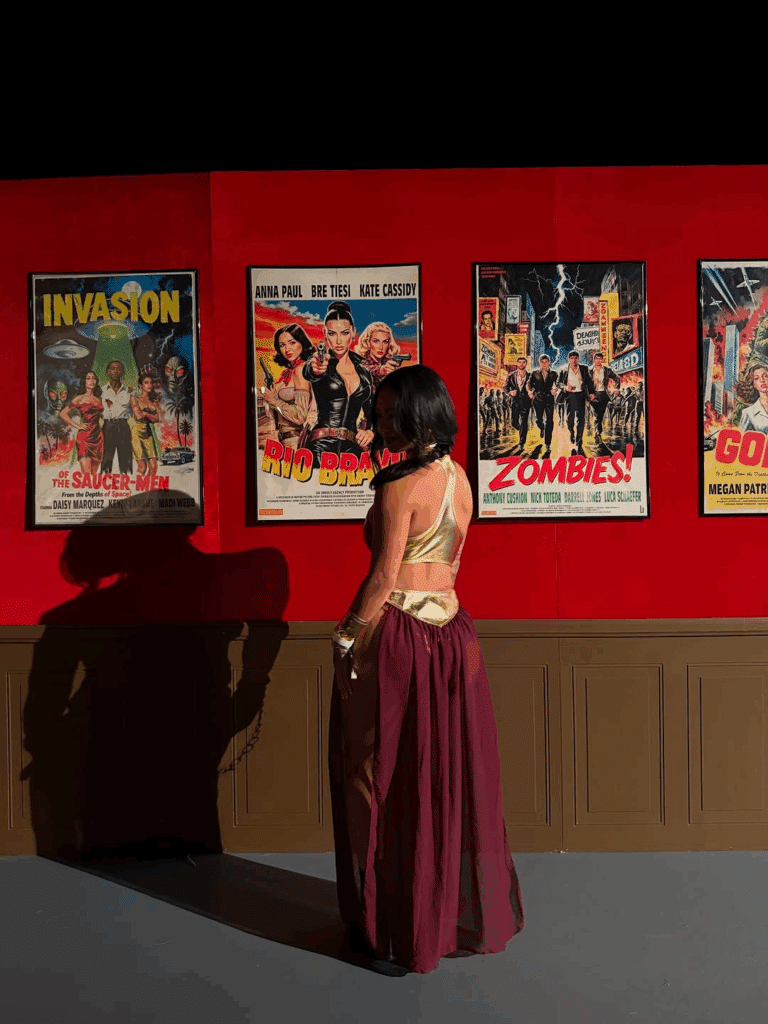
Photo source: @tiiieeen
Subscribe to Our Newsletter
Check Out Our Podcast