




Influencer
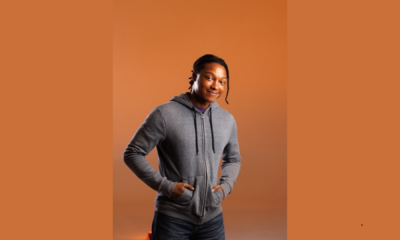
Carson Roney: Discipline Of An Athlete, Instinct Of A Content Creator

Before Carson Roney ever negotiated a brand deal or filmed a commercial, she understood repetition.
Early mornings. Practice. Weight room. Classes. A waitressing shift to cover rent. Repeat.
“Basketball was a job in itself, but I had a job on top of my job,” Carson says of her college years, when she played basketball while working full-time to support herself.
Today, that same structure underpins a multi-platform creator business spanning TikTok, Instagram, and Snapchat. Carson has worked with the NBA, filmed an NFL commercial, appeared in campaigns for Gatorade and U.S. Bank, and is developing her own clothing brand. Her content blends basketball clips, tall-girl fashion, beauty, travel, and lifestyle moments.
Her edge in the Creator Economy comes from pairing an athlete’s discipline with a refusal to be confined to a single identity.
Posting Through College, Then Lockdown
Carson began posting around 2019, during her junior year of college. At the time, it was casual.
“I didn’t even know you could have a job from social media,” she says. “I was just recording silly TikToks. I would film one or two every few weeks. I wasn’t posting consistently.”
Then COVID hit. “I was so bored, and I started posting four or five times a day. That’s when traction started to pick up,” she recalls.
The volume was deliberate. Carson credits a combination of consistency, personality, and timing. “Posting four to five times a day in the beginning when you’re trying to grow a platform is very important,” she says. “My personality, playing sports, dancing, doing skits, and it being COVID when no one had anything else to do but scroll, it was a mixture of all these.”
For Carson, posting wasn’t a pivot away from athletics. It was another arena where repetition mattered.

Choosing Content Over Overseas Contracts
Raised in Waverly, Ohio, Carson earned scholarships in both basketball and volleyball. She initially signed to play volleyball before tearing her ACL (anterior cruciate ligament) for the second time. Basketball became her primary sport in college.
Professional basketball overseas was an option. Her coach encouraged it. “My coach would tell me, ‘You could play overseas if you want to.’ I just don’t think that’s what I want to do,” she says.
After three ACL tears and years of competition, she reassessed what she wanted in the long-term. “I don’t want to have to go to practice every single day and train my body through all of that,” she says. “I feel like I played basketball enough competitively. I love playing now for fun.”
At the same time, brand revenue from posting began to outpace her income from waitressing. What started as a creative outlet was becoming financially viable.
Refusing to Pick One Lane
Carson reveals that she is often asked where she fits in, content-wise. She pushes back on the premise.
“Everyone asks, ‘What’s your niche?’ I feel like I have all of them,” she says.
On one day, she might post basketball drills or a shoe collection. The next, she might share a travel vlog or a styled outfit. That diversity mirrors her personality, but it is also strategic.
“I like to keep my doors open,” she says. “Business-wise, it’s good because brands see that you do all of those things and they want to work with you.”
Her growth has also meant maturing in public. “When I started posting, I was very tomboyish,” she says. “I don’t think you should be the same person you were six years ago. I’m glad I’m not 22 anymore.”
“My mindset on life has changed completely,” she adds.
Learning Where to Draw the Line
As her audience grew, Carson confronted a different challenge: boundaries.
“Learning what is too much to share and not enough to share,” she says. “When you share too much and then stop sharing something, people start questioning a lot. It’s good to keep a medium.”
For creators working from home, where personal life and content production overlap, Carson believes that separation becomes critical. She shares relationships and milestones but protects space offline.
Consistency First, Infrastructure Second
When it comes to building a platform, Carson emphasizes that “consistency is number one.”
“You can make so many videos. Even if two are bad, one might be the reason people follow you. The more you post, the more your videos get put out there.”
Once growth stabilizes, representation becomes important. “It is very important to have a manager or an agent because they know a lot more people than you do. They can reach out to companies and get your name out there,” she says.
Her own brand partnerships reflect that network effect, including the NBA and the NFL.
“They were filming a commercial for the NFL shop. I think it was a nine-hour shoot day. Then it was on TV all the time during the season,” she says.
She measures success less by followers and more by moments that once felt unreachable.
Staying True Over Quick Deals
Early in her creator journey, Carson admits she accepted deals more freely.
“When you start making money, you kind of take whatever brand deal gets thrown at you because you’re broke,” she says.
Over time, she adjusted. “People can tell if you don’t use this product. People can tell if you’re not being genuine,” she says. “I don’t want to promote brands that I don’t really know much about.”
She also recognizes that brand safety influences long-term opportunity.
“A lot of people don’t realize you have to be family-friendly or brand-friendly if you want to work with a lot of brands,” she says.
The Athlete Advantage
Carson credits her athletic upbringing for preparing her for public scrutiny.
“As an athlete dealing with hate comments, it literally just brushes right off,” she says. “From my freshman year to senior year, having coaches that are so hard on you, it prepared me. I have thick skin,” she adds.
She believes athletes often thrive in the Creator Economy because of structure and repetition. “You have a set schedule, deadlines, and games. It goes hand in hand with doing social media,” she says.
For young athletes starting out, Carson’s advice is tactical.
“Post your day in the life in the locker room. No one gets to see before practice, after practice. People love to see that,” the creator says.
From Influence to Ownership
Today, Carson is thinking beyond platform revenue.
“I have been working on a clothing brand for a while,” she says. “We became really close to dropping it, but it wasn’t perfect. Now we’re back on the journey of perfecting it.”
As for the long game, Carson resists rigid targets. “I don’t have a goal of followers to hit. When I get there, cool,” she says.
“Three years from now, I would love to be married and have a kid either on the way or here. Content-wise, I’m kind of just going with the flow. Obviously, I want to grow my platforms as much as I can and try to give back as much as I can,” she says.
For Carson, the formula remains familiar: show up, repeat, grow.
Photo credit: Carson Roney
Subscribe to Our Newsletter
Check Out Our Podcast