


Talent Collectives
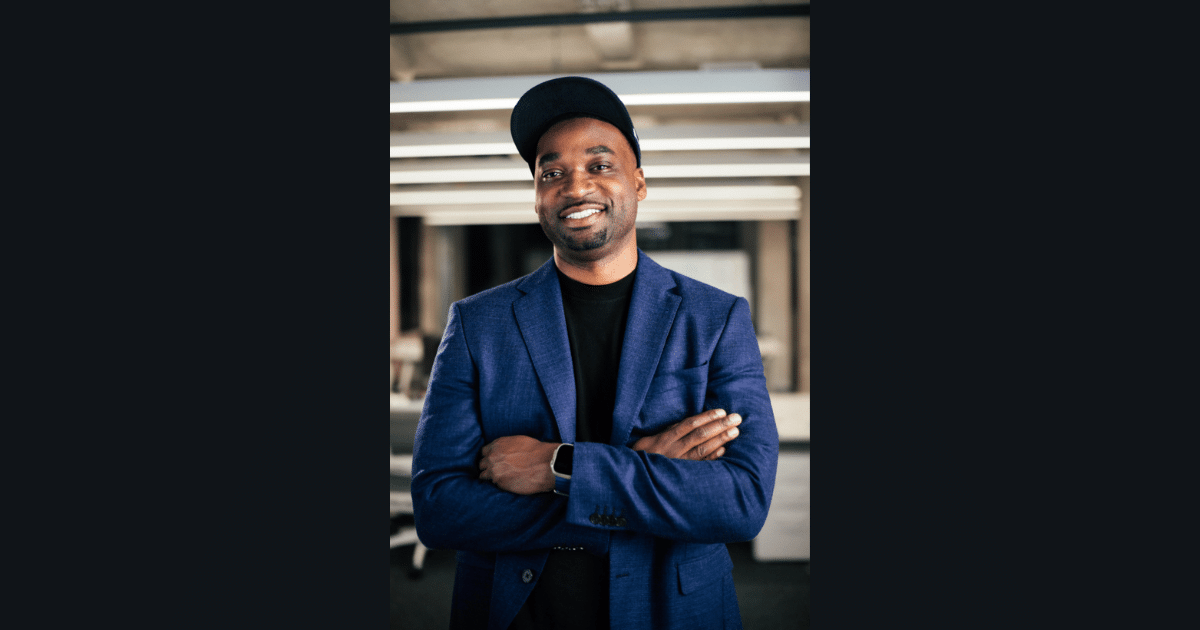
Veteran Hollywood Media Executive Bryan Smiley is Building the Media Company Gen Z Men Don’t Have

Gen Z men are everywhere in media conversation and almost nowhere in media planning. Bryan Smiley is building a company around that contradiction.
Hard Carry Media, launched in February 2026 and backed by Hard Carry Gaming, Inc., is assembling a portfolio of digitally native brands targeting men 18 to 24 across sports, entertainment, comedy, and lifestyle. The Los Angeles company operates out of a 20,000-square-foot studio and has anchored its launch with “Full Squad,” a YouTube variety channel with 11 million followers and 260 million monthly views.
As President and Chief Content Officer of Hartbeat, Kevin Hart’s global media company, Bryan oversaw more than $500 million in production across film, television, and audio projects that earned Emmy, Cannes Lion, and NAACP Image awards. Before Hartbeat, he held an executive role at Columbia Pictures, where he led talent-driven deals, including one with Steph Curry’s Unanimous Media.
Now serving as CEO of Hard Carry Media, Bryan describes it as a portfolio business built around a single audience. “We specifically target the Gen Z male audience as our core demographic,” he says.
Why the Manosphere Doesn’t Speak for the Audience
The loudest voices targeting young men online have made Gen Z male identity a flashpoint. Bryan says that noise is obscuring the actual audience.
Hard Carry runs surveys and deep analytics on its Gen Z male demographic, and what the data describes is a picture far more varied than the content that dominates coverage of the space. Men aged 18 to 24 are engaged across entertainment, finance, tech, relationships, and traditional sports. The creators and commentators who generate the most controversy represent a narrow slice of that.
“The average Gen Z man has a lot of diversified interests, not unlike me,” Bryan says. “The media has kind of glommed onto the very loud and messy part. But they are much bigger than just that one slice of the manosphere that gets so much attention today.”

Hard Carry Media’s recently announced content partnership with Unanimous Media reflects the thesis directly. Sports content tied to Steph Curry speaks to the majority of the Gen Z male audience that Bryan says has been systematically overlooked by a content landscape shaped more by algorithm-driven controversy than actual audience behavior.
Bryan draws a personal parallel. During his years at Hartbeat, he says he consistently turned to YouTube at the end of long production days. “On YouTube, I found creators that spoke to me,” he says. “I was part of this group of people.” That identification with digital-native content, even from inside the traditional industry, is what made the absence of a serious Gen Z male media company feel like an opening.
Hollywood’s Belated Reckoning with Creators
Bryan spent nearly two decades watching Hollywood’s relationship with creator culture shift from skepticism to something closer to genuine partnership. For most of that period, the dynamic was extractive: attach creators to marketing campaigns, bring them to premieres, use their followings to sell projects made without them.
That model is cracking.
He points to recent breakouts, including “Obsession” and “Backrooms,” properties that originated in the YouTube-first space before crossing into traditional media, as evidence that Hollywood can no longer treat creator-native content as a promotional vehicle.
“Today you see people casting creators in projects, filmmakers who come from YouTube,” Bryan says. “They’re now behind the scenes, building with them versus just leveraging them for their audience.”
What surprised him most over the past two years, however, ran counter to his assumptions about the space. Despite creator culture’s reputation for early technology adoption, the wave of AI-generated or AI-assisted content that he expected from creators has not materialized.
“Two years ago, I would have assumed we’d have seen a lot more AI-generated content from creators themselves,” he says. “That’s quite frankly not happened.”
He frames the question of where creators take generative tools over the next few years as one of the more consequential open dynamics in the space.
A Portfolio Built Three Ways
Hard Carry Media operates across three distinct ownership structures. In the first, the company builds and fully owns brands targeting Gen Z men from the ground up. In the second, it co-owns brands alongside creators or established media companies that bring complementary reach. The third is a minority stake model, deployed when creators have already built strong audiences and clear identities, with Hard Carry providing commercial access and operational support around what they have built.
“Some brands we’re going to fully own. Some we’re going to co-own with creators or bigger traditional media brands,” Bryan says. “In some cases, we’re going to take minority stakes in companies where creators are already killing it.”

What triggers investment across any track is not scale but conviction. Bryan says he looks for operators who would succeed regardless of his involvement.
“People that are going to be so successful, whether I have the privilege of working with them or not,” he says. “If I’m lucky to work with them, I get to be a part of that journey.”
The portfolio model extends into traditional media as well. Hard Carry has a game show in development, deficit-financed and targeting premium streaming platforms, applying an evergreen format through a Gen Z male lens. A distribution announcement is expected before the end of 2026.
‘Full Squad’ and What the Audience Actually Wants
“Full Squad” positions itself as a YouTube entertainment channel for Gen Z with formats built around game-based shows, live streams, IRL challenges, and celebrity collaborations. The channel counts Ford, Rockstar Energy, Samsung, and Energizer among its brand partners and generates 485,000 daily engagements across platforms, according to Hard Carry Media.
What makes it the right anchor for Hard Carry’s model, according to Bryan, is not size but tone. The content is built around creators who read as accessible rather than aspirational.
“It feels like normal guys just having fun,” Bryan says. “Guys that are really relatable, accessible. They feel like your classmates, your cousins, your brothers.”
Rather than building for the noisiest segment of the Gen Z male audience, Hard Carry is designing content for the median viewer, young men engaged in sports, finance, and entertainment who do not need their content to carry a political frame.
“How do we keep nurturing the brand of ‘Full Squad,’ whether we have the same squad or a different amalgamation, but ultimately keep serving that feeling and that vibe to our deeply passionate audience,” Bryan says of the company’s approach to its flagship.
Capital is Catching Up to the Audience
Bryan believes the Creator Economy has entered a phase of institutional validation, with capital beginning to move at a scale that would have been implausible five years ago. As an example, he cites CAA, the global talent agency, which recently announced a $250 million creator fund.
“There’s going to be so much opportunity for creators who have built audiences over time,” Bryan says. “A lot of the dream they had will really start coming true.”
The institutional entry he describes is not a displacement of what creators have built. It is a delayed acknowledgment from an industry that required significant proof before committing resources. For creators with established audiences and direct fan relationships, Bryan adds, the capital arrives as fuel rather than a restructuring.
Building Something the Audience Can Walk Into
Five years from now, Bryan will measure Hard Carry Media’s success not by a valuation event but by cultural presence. He describes a scenario in which the company’s brands are recognizable across multiple touchpoints, from digital content to premium entertainment to physical products available in stores.
“You can look at the business and say they have a collection of brands under their umbrella, many of which I have heard of,” Bryan says. “They have premium content in the world, whether it’s a microdrama, a series, a game show, or a feature film. And I can walk into a store and find a product that was born from one of the portfolio brands.”
Hard Carry Media is, by Bryan’s own description, a startup in its first year. The Steph Curry partnership, “Full Squad,” and the game show in development are the opening moves in an argument the company is building across content, commerce, and culture. The bet underneath all of it is that the real Gen Z male audience, diverse in its interests and underserved at its center of gravity, is large enough to anchor a media business built entirely around it.
“This creator space,” Bryan says, “there are no limits.”
Subscribe to Our Newsletter
Check Out Our Podcast