





Agency
The Perfect Match: Why gen.video Acquired Lionize To Build The Next-Gen Creator Marketing Platform


In June, gen.video made headlines by acquiring AI-powered influencer marketing platform Lionize, the brainchild of data scientist Chris Buetti, in a move that unites creator discovery with commerce.
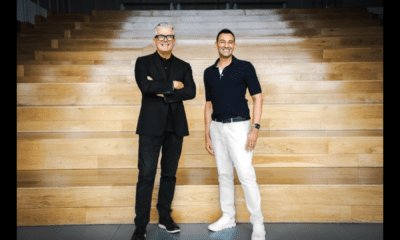
“What we’re building is the next-gen system for creator collaboration and performance,” declares Jessica Thorpe, CEO of gen.video, explaining the vision behind her company’s strategic acquisition of Lionize.
This acquisition brings together two companies that have approached influencer marketing from opposite ends of the spectrum.
“We have always been focused on social commerce, building tools to help with content collaboration for retail syndication and then being able to track, measure, and report back to brands around the impact that content was having on purchasing,” Jessica explains.
What made Lionize the perfect fit? According to Jessica, they were already seeing strong results with gen.video, particularly around content execution, but when it came to creator discovery and recruitment, they were eager to level up.
“Lionize fit the profile,” she says. “What made them especially compelling was how differently they approached the problem. Instead of just giving you access to a massive pool of creators and expecting you to do all the heavy lifting with filters and searches, Lionize actually helped solve the recruitment pain point. They were building smarter tools that made the process faster and more strategic.”
Founded in 2004, gen.video established itself by tracking and measuring the commerce impact of creator content. Meanwhile, Lionize, founded in 2019 as “a data science project that turned into a software platform that turned into a company,” as Chris describes it, developed AI-driven approaches to identifying and communicating with potential creator partners for brands.
After their first meeting in January 2024, the two companies recognized their complementary strengths and minimal overlap in technology.
“When you’re exploring companies to acquire, it is important to ensure there isn’t 80% overlap in the technology, but finding a fit where there is that one plus one equals three,” Jessica explains.
Chris, formerly CEO of Lionize and now Chief Data & AI Officer at gen.video, shares why they chose to join forces: “When we were going through the M&A process, we had spoken to several different companies, both in the space, in adjacent spaces, tech companies, agencies, a little bit of everything. But we loved gen.video because we felt that they had excelled in some of the things we were lacking in.”
For Lionize, gen.video’s established revenue engine and agency relationships, combined with their technological focus, made them an ideal partner. “They were looking for something like us. We were looking for something like them,” Chris explains. “It just worked well in terms of being able to fill the gaps on both sides.”
The AI Difference
In a field where “AI-powered” has become a buzzword, gen.video and Lionize are prioritizing the practical application of the technology.
“There’s a difference between automation and true AI,” Jessica emphasizes. “AI is getting used to define automation. Automation has been around for a long time.”
Chris elaborates on their perspective on AI: “What really makes AI important and useful is not some fancy algorithm or crazy equation. The most important thing that goes into AI and what sets you apart is the data that you use to feed these algorithms and models.”
This data-first approach is built on Lionize’s history of running thousands of campaigns with tens of thousands of creators. When brands need guidance on questions like how much to pay an influencer, generic AI tools might offer standardized answers, but Lionize can provide specific recommendations based on real campaign data.
The combined company views AI not as a replacement for human expertise, but as a means to enhance it. “Where it’s helpful is that it aids you,” Chris explains. “It doesn’t replace you. It gives you the ability to streamline things that you spend a lot of time doing that aren’t necessarily things you need to be doing and allows you to focus on the things that a computer can’t do.”
The Roadmap for Transformation
The newly combined company is developing an integration roadmap that harnesses both companies’ strengths. Chris outlines their approach: “We’re essentially able to build the roadmap out and say, ‘Okay, what are 90% of our clients combined looking for? What are they doing?’ And making sure we have all aspects of that into our platform.”
The first few months will focus on merging existing functionality, but the longer-term vision aims higher. Chris describes the future platform as a system where brands can “decide what parts they want to be more proactive with, decide what parts they want AI to handle, decide what parts they want to be able to navigate or give to other people on their team.”
This system will empower brands to insert themselves where they want in the process, rather than forcing them to manage every aspect of influencer marketing. “Some brands, it’s more important that they review the content heavily and make sure it follows all the guidelines. When other brands don’t care about that, they care about making sure they have a lot of creators that talk about a wide variety of things,” Chris notes.
Jessica compares this approach to a shift from “software as a service” to “service as software,” allowing brands to determine which aspects of influencer marketing should be automated and which require human intervention. This flexibility is essential because different brands have different priorities and risk tolerances.
The Power of AI Assistants in Creator Marketing
One of the distinctive features of the combined platform is its AI assistants. Lionize’s AI agent, Lily, has already been helping clients manage campaigns, and Chris confirms she’s gaining more capabilities post-acquisition.
“Lilly has only gained a lot of superpowers since we last talked,” Chris shares. “Our clients love to use Lilly because it’s like there’s another person on their team. It’s like they have another employee that’s helping us use the platform and run these campaigns.”
Meanwhile, gen.video has its own AI agent named Betty, who helps existing platform users find and use content for paid media, organic social, and other marketing placements by looking within the video and at the associated contract data to find the right clip with rights to use it for that use case. “We’re hoping that Betty and Lilly get acquainted and maybe they meet some new friends along the way,” says Jessica.
Chris even suggests there might be multiple AI personalities handling different aspects of campaign management: “We might take an angle where Lilly does one thing and we have another AI personality that does another. Perhaps Lilly will be the person who reaches out to creators or something similar. And then we’ll have Joe be the one who reviews the content.”
Preventing Campaign Failures
The strategic value of this acquisition becomes clear when examining the real-world problems it aims to solve. Jessica shared an example of how the combined technologies could prevent costly marketing failures.
“About a year ago, we had a big PR agency want to use gen.video’s performance analytics. They had creators. We didn’t know who they were, nor did we know what their content was. They were literally just using our tracking links to measure Walmart sales for the grooming product that they were promoting,” Jessica recounts.
Halfway through the campaign, the agency panicked because they weren’t seeing any sales. When gen.video investigated, they discovered that consumers were visiting Walmart’s site but buying other products, not the razors being promoted.
“They were trying to make funny dancing TikTok videos, but they were trying to sell a razor at Walmart,” Jessica explains. Once the brand hired new, more appropriate creators based on gen.video’s recommendation, “they saw significant increases in traffic and sales for that brand’s product out at Walmart immediately afterwards.”
What entices Jessica is that such failures could be prevented entirely: “What I’m so excited about is that agency being able to use our combined tools at once, where the recruitment AI doesn’t let them even look at those dancing TikTok creators if their goal is to sell stuff on Walmart.”
Expanding Access for Brands and Creators
The combined company aims to make effective influencer marketing technology accessible to a broader range of brands, agencies, and creators.
“Software’s felt expensive and hard to buy if you needed to sign annual contracts and you just did one campaign a year or two, three campaigns a year,” Jessica explains. “So I think we’re trying to be much more open about how accessible the technology is and let users come in where they are.”
By revisiting pricing and packaging, the company aims to expand access to advanced creator marketing technology. “We want to reinvent how those relationships can be had between the brands and the software,” says Jessica.
For creators, the acquisition unlocks new opportunities beyond just brand deals. “Creator Opportunity,” a Lionize product now under the gen.video umbrella, provides creators with insights into what brands are looking for in partnerships.
“We have a lot of insights into what the brands are looking for in a partner, the types of content they’re looking for in a creator they work with, what makes a successful partnership,” Chris explains. “Gen Video has a ton of their own data in working with brands, data that we did not have before either. So now we can provide those insights to creators.”
Jessica adds that they’re considering a tiered approach: “There is a free version for creators to come in, but there is a paid opportunity that unlocks resources, that unlocks early access to brand deals, unlocks faster payouts.”
Predictions for Creator Commerce
As the companies integrate their technologies, both leaders share predictions for how creator commerce will change in the coming year.
Chris sees creator content becoming central throughout the entire consumer journey: “I think there’s going to be a lot more emphasis on not just using creators to help promote the products, but using the content on the website, on the ads, on the company socials and things like that.”
He predicts that creator relationships will move from transactional to long-term partnerships: “It’s going to be more than just a transaction, more than just an advertisement and hanging up the phone. It’s going to be a longer-term partnership.”
Meanwhile, Jessica forecasts a shift in how brands work with retail-specific influencer networks: “People will stop caring so much about retail-specific influencer networks. Amazon has influencers, Target has influencers, Walmart has influencers. I think there’s like this proliferation of influencer networks that are tied to retail channels.”
She argues that separating creator relationships by retail channel is inefficient: “What I don’t think is in the best interest of brands or creators is being locked up at a single retailer. How do you have a long-term brand-to-creator relationship if someone at Walmart owns it?”
One year from now, success for this acquisition will be defined by a fully integrated platform enhanced by agentic AI. “We have a platform that has all the joint features that’s amplified by agentic AI,” says Chris.
Jessica adds that the goal is to help consumers find credible information about products throughout their shopping journey: “Brand website, influencer social channels, brands’ own social channels, retail pages – any place where social proof can add value to the shopping experience and the product discovery or product research experience for a consumer. We want to be a part of that.”
Subscribe to Our Newsletter
Check Out Our Podcast