




Technology
Streamlabs’ ‘Stream Shift’ Lets Creators Take Their Audience Anywhere

When live streaming first emerged, creators were often tethered to their desks by wires, monitors, and network connections. It’s 2025, and that boundary is dissolving. Streamlabs, a brand of Logitech G long known for its creator-first approach to broadcast software, is reimagining mobility for the streaming era. At the center of that shift is Ashray Urs, Head of Streamlabs, who leads the company’s product vision from its San Francisco headquarters.
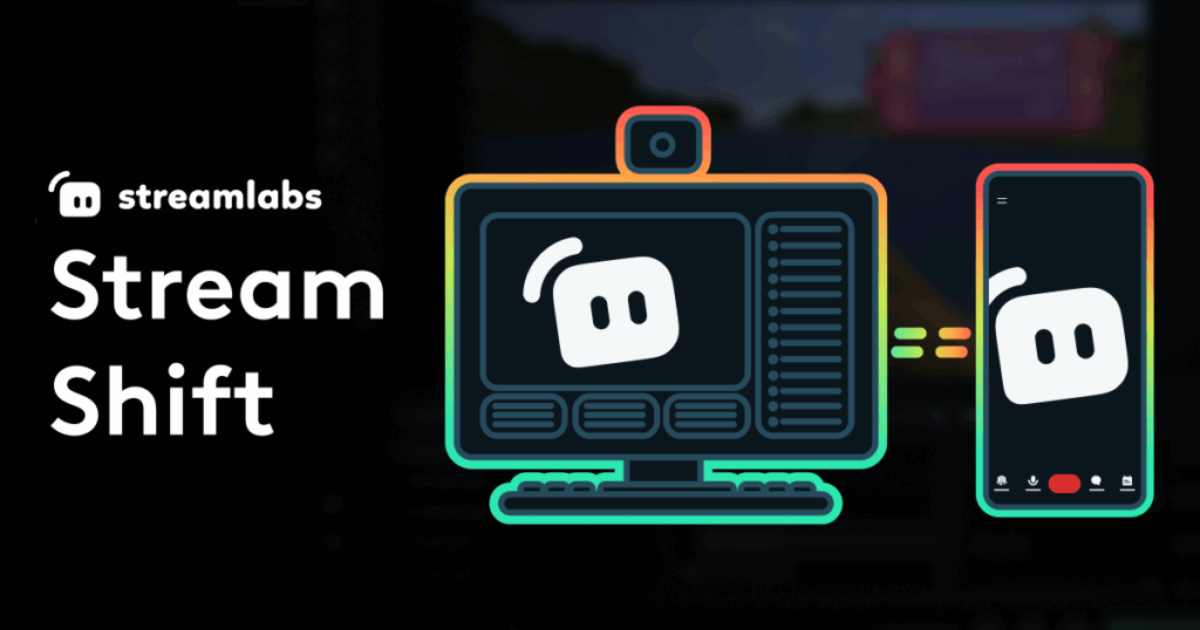
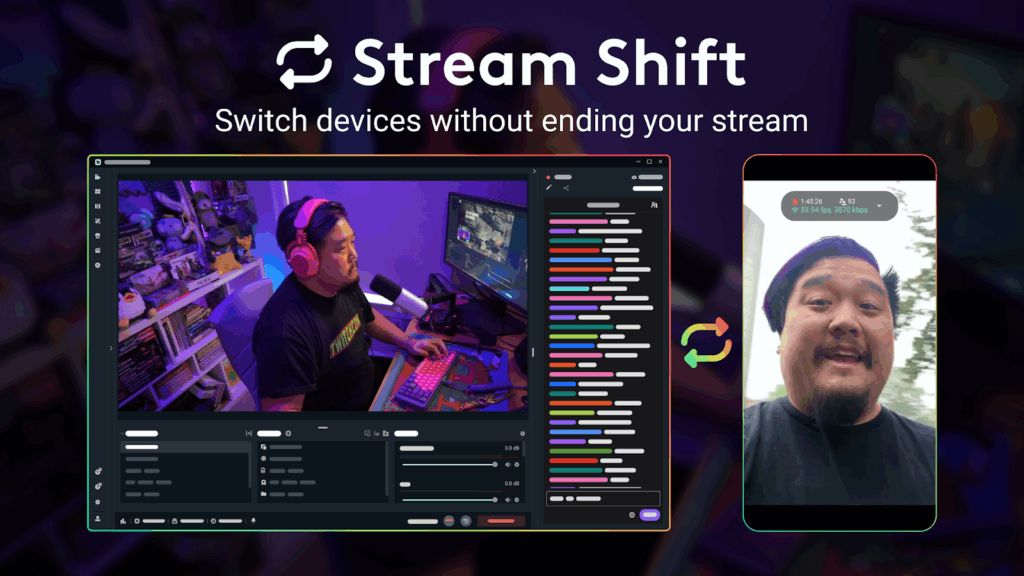
At TwitchCon San Diego 2025, Streamlabs debuted Stream Shift, a feature that lets creators seamlessly move a live broadcast between desktop, phone, and tablet without ending their stream or losing their audience. The idea originated not in a boardroom, but from a conversation with Tubbo, a popular “Minecraft” streamer, who pitched the challenge to Ashray at TwitchCon EU earlier that summer.
“He was basically telling us, ‘I’ve been thinking about this idea all day,’” Ashray recalls. “He wanted to keep his stream going as he moved between devices. It sounded simple, but was technically complex.”
The Streamlabs team built it in time for the company’s San Diego showcase, where creators could test it at Streamlabs-sponsored streamer stations. The result: a single uninterrupted session where the chat never resets and viewers remain connected throughout a creator’s day, from gaming setups to on-the-go In Real Life (IRL) moments.
Empowering the Modern Streamer
Ashray describes Streamlabs’ mission in straightforward terms: To enable creators to do more and make a living doing what they love. Since joining in 2019 and taking over as Head of Streamlabs in 2024, he has overseen a string of features designed to make broadcasting simpler and more sustainable.
The company’s product ecosystem now spans Streamlabs Desktop and Mobile, as well as integrations across platforms like YouTube, Twitch, and Kick. Streamlabs operates a sponsorship marketplace, a donation and tipping platform, and a charity-streaming tool that routes funds directly from viewers to causes without taking a cut. “We built a charity platform where the money moves directly from fans to the actual charity,” Ashray says. “At the same time, all the cool things like alerts and donation goals still work. You get that magic of the live stream without the complexity.”
That blend of accessibility and reliability has become central to Streamlabs’ strategy. “Every feature we’ve built that found product-market fit started from solving a creator’s problem,” he says. “Our job is to take something that worked for a big streamer with a custom setup and make it scalable for everyone.”
Creator-Inspired Innovation
Stream Shift is a prime example of that philosophy. Tubbo’s request for smoother mobility reflected a real technical gap in the industry. Before, creators had to end a stream entirely to switch devices, losing momentum and audience retention in the process. Advanced streamers used expensive, server-based setups to maintain continuity; out of reach for most.
With Stream Shift, creators logged into their Streamlabs accounts can press a single button to hand the live broadcast from one device to another. The system accepts feeds from both devices in parallel, but it sends only the live feed that the creator selects. That’s what makes the transition instant.
The system also incorporates disconnect protection, ensuring that even when a connection drops, the audience sees a brief signal notice rather than a terminated stream. “In the past, you’d end your stream, switch devices, and your viewers would go watch someone else,” Ashray says. “Now you can move and keep your audience with you.”
As Ashray shares, early feedback from creators at TwitchCon was immediate. “You rarely get to enable people to do something that simply wasn’t possible before,” he says. “That’s what made this launch so special.”

The Rise of IRL Streaming
Stream Shift’s timing coincides with one of the most significant shifts in live-streaming culture: the growth of IRL content. Ashray points to the explosion of creators such as Kai Cenat and iShowSpeed, whose personality-driven streams dominate global viewership. “For every person doing it at TwitchCon 2024, there were at least 20 doing it this year,” he says.
The trend also exposes practical challenges. IRL creators often juggle multiple devices, unstable connections, and safety concerns when filming in public. Stream Shift was designed to simplify that experience. “Imagine you start streaming from your hotel room, then move outside with your phone, and later continue on a desktop at a booth, all in one session,” Ashray says. “It’s perfect for events like TwitchCon.”
Streamlabs is also collaborating with Meta AI on integrations for Meta’s smart glasses, enabling hands-free, first-person streaming. “You can go from playing ‘Fortnite’ for an hour to walking around using your Ray-Bans,” Ashray says. “We’re getting closer to a world where, with just a phone and a pair of glasses, you can create high-quality live content.”
Toward Invisible Tech
Ashray calls this direction “invisible technology,” a future where creators focus less on managing cables, cameras, and software, and more on storytelling and community. “No one’s happy when their streamer has to spend time adjusting audio sources,” he says with a laugh. “If we can make that easier and more automated, people can focus on their audience.”
Streamlabs’ work in AI automation and computer vision reflects this goal. The company’s Intelligent Streaming Agent automatically handles scene switching and overlay triggers, while its reactive overlays respond to in-game events in real time.
Ashray cites an early inspiration: four years ago, “Fortnite” creator Lachlan built a custom overlay that changed color with his in-game health bar. “Now, because models are lighter and optimized, we can make that available to everyone,” he says. “We’re bringing high-end production value to any creator, no matter their technical background.”
The Streamlabs chief believes that democratization is increasingly critical as new streamers enter the space from TikTok and short-form platforms. “A few years ago, the top streamers were deeply technical,” he notes. “Now the new generation is less focused on code and more on creativity. It’s our job to make the tools intuitive.”
Building a Safer Ecosystem
As live streaming expands into public spaces, safety has become a growing priority. Streamlabs is developing AI-powered safeguards that automatically detect and blur sensitive visuals, such as street signs, phone numbers, or on-screen messages, in real time.
These features leverage the same server infrastructure powering Stream Shift, reinforcing that Streamlabs’ technology stack supports both convenience and security.
Ashray emphasizes that creators will retain full control over such features. “We’re exploring different approaches, but the goal is to make safety easier while keeping creators in charge.”
Ethical Monetization and Community Impact
While Stream Shift grabbed headlines, another major Streamlabs initiative launched earlier this year tackled a different problem: sponsorship transparency.
At TwitchCon, the company hosted a panel on the sponsorship ecosystem, where Ashray heard firsthand how inconsistent deals and unreliable partners often undermine smaller streamers. “One creator told us his management once encouraged him to start vaping because there were lucrative vape deals available,” he recalls. “That’s alarming.”
Streamlabs’ response was to curate only verified brand partnerships. “We’re comfortable saying no if we’re not confident a brand will pay creators,” Ashray says. “We’d rather have fewer deals that are healthy and reliable.”
The company’s charitable focus complements that ethos. Streamlabs’ direct-donation system powers large-scale events like ZEvent, a French streaming fundraiser that raised nearly $20 million in one weekend. “It’s a powerful example of what streaming can achieve,” Ashray says. “We were there facilitating the tips and donations, and it was incredible to see.”
The Future of Live Streaming
Looking toward 2026, Streamlabs is refining its product flows to help creators discover the right tools at the right time, while continuing to expand partnerships with platforms and hardware makers. The focus, Ashray says, is on simplifying complexity and amplifying creativity.
He envisions a near future where cross-platform live streams, automated highlight reels, and instant social clips work in harmony. “You’re doing this IRL stream, and your best moments are automatically clipped and shared across social channels,” he says. “It’s about helping creators show up everywhere their audiences are.”
For Ashray, that convergence of gaming, IRL streaming, and AI represents a defining moment. “We’re at the forefront of both worlds,” he says. “On the gaming side, AI tools are transforming production. On the IRL side, mobility and accessibility are unlocking new forms of content. The intersection of the two is where things get really exciting.”
Despite Streamlabs’ technological edge, Ashray remains clear about the company’s guiding principle. “Anytime there’s something new, people try every version of it, even replacing humans,” he says. “But when you’re watching a live stream, you want to see the creator entertain you, not adjust volume knobs.”
His vision for the next phase of streaming is both pragmatic and optimistic: “You want to see the tech get out of the way and the person shine. We’re building toward that.”
Checkout Our Latest Podcast