




Influencer
Unfiltered And Unscripted: Annika Osterlund On Building Community, Revenue, And Longevity As A Creator

For Annika Osterlund, content creation has always functioned less like a career decision and more like a personal archive that slowly turned into a business. She began posting on YouTube as a child and never stopped, carrying the same channel through middle school, high school, college, and into her post-grad life.
Today, Annika balances a full-time marketing role with a creator business spanning YouTube, TikTok, and Instagram, with more than 350,000 followers. While the platforms and revenue streams have grown more sophisticated, her strategy has not fundamentally changed. She shows up unfiltered, treating authenticity not as a branding tactic, but as the foundation of her work.
Annika began posting videos as a child, initially filming “American Girl Doll” content and uploading it to YouTube. That same channel, with the same URL, remains active today, even though those early videos are now private.
“I’ve been creating content since before I can remember,” she says. “Since I became conscious.”
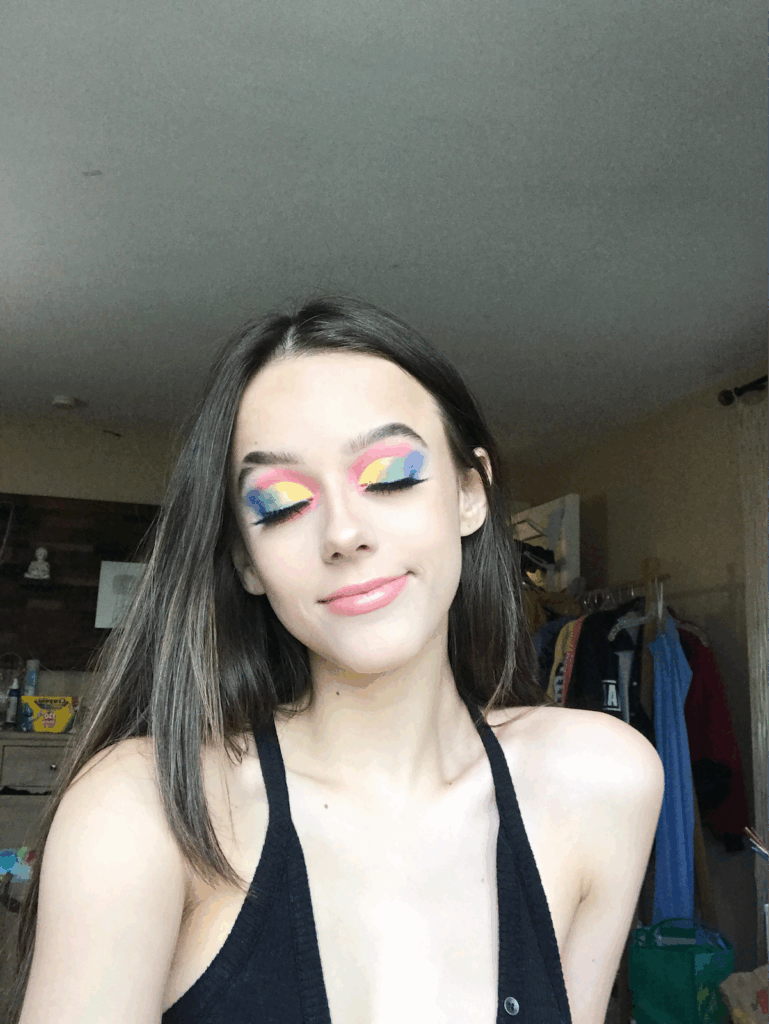
As she entered her early teens, her content shifted toward makeup tutorials, aligning with the rise of beauty YouTube in the mid-2010s. She was posting regularly by the time she was 12, experimenting with bold looks inspired by creators reshaping the platform. That early consistency paid off. By 2018, Annika had reached 100,000 subscribers, a figure that felt massive within the context of her small school environment.
“It felt like so much more than it actually was,” she says. “When you’re young, and you go to really small schools, like a hundred thousand followers, that’s crazy.”
She was already receiving PR packages from beauty brands, earning AdSense revenue, and treating content creation as more than a hobby. Her parents recognized the effort and supported her work, viewing it as a legitimate pursuit rather than a distraction.
Shifting Formats and Audience Retention
By 2019, both Annika’s interests and the platforms were changing. Makeup-centric YouTube content was losing momentum, and she found herself less invested in producing beauty tutorials. Instead of forcing the format, she pivoted toward lifestyle videos and vlogs that reflected her day-to-day life.
Her audience followed.
“My audience grew with me,” she says. “Makeup YouTube wasn’t as big in 2019/20, so people were looking for different content to watch, and I adjusted with that.”
That ability to change without alienating long-term viewers became a defining feature of her career. She retained viewers by anchoring her work in personality rather than format.
Annika credits that longevity to one trait that has remained unchanged since her earliest uploads: a refusal to censor herself.
“I have always been just so unapologetically myself,” she says. “Even though the content changed, the person making the content has stayed the same.”
As a young teenager, that manifested in small ways, like swearing on camera when it was considered inappropriate. Over time, it became a broader openness about her opinions, experiences, and emotional life. While many creators polished their on-camera personas, Annika leaned into chaos, humor, and imperfection.
Navigating Platforms With Intention
Although YouTube remains Annika’s favorite platform, her creator business now spans multiple channels, each with a distinct role. She describes herself as a “YouTube girly at heart,” citing her love of editing and long-form storytelling, but she has embraced TikTok and Instagram as essential distribution tools.
TikTok, in particular, has driven recent growth. Annika notes that the platform’s algorithm rewards spontaneity and speed, favoring short, reactive content over polish. Many of her TikToks are filmed in seconds, capturing thoughts or moments that might never translate into a scripted format.
“The funniest videos are the ones where I just whip my phone out and say what’s on my mind,” she says.
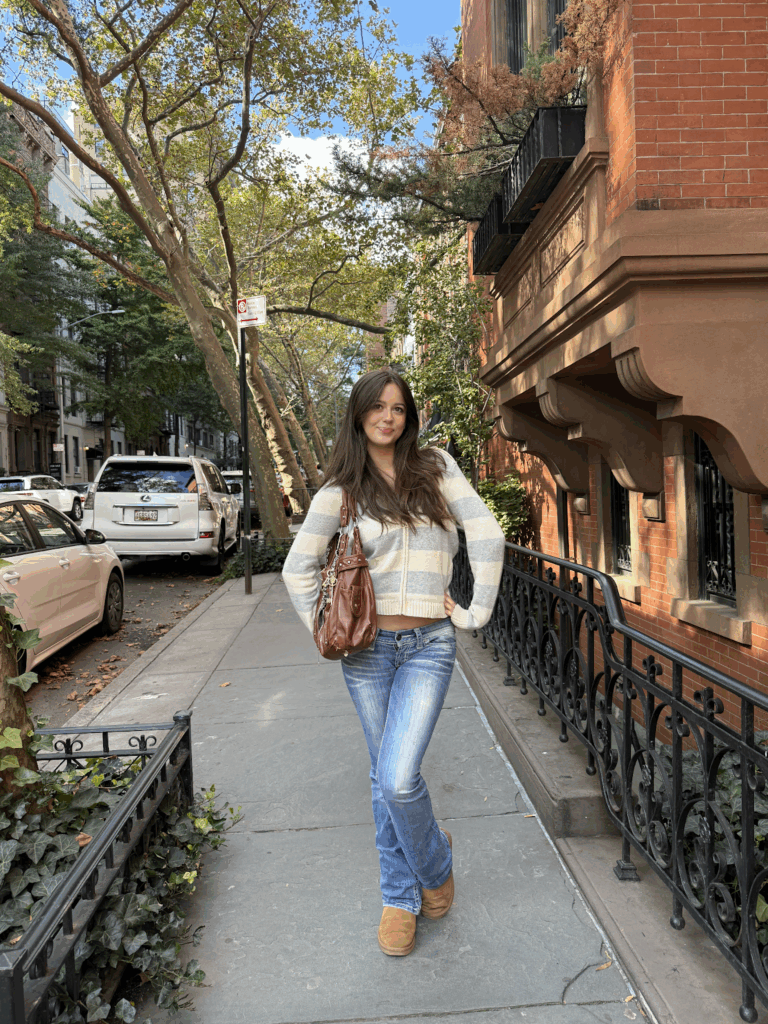
Instagram, by contrast, serves a different purpose. Annika still treats the platform as a visual space, posting outfit photos and curated moments alongside Reels. She describes herself as an “Instagram purist,” even as she acknowledges the importance of short-form video for reach.
More recently, she has begun cross-promoting strategically by clipping moments from her YouTube videos and posting them to TikTok. She says that approach has already driven measurable traffic back to her long-form content, with viewers commenting that they discovered her YouTube channel through TikTok clips.
Community Built Through Vulnerability
Annika’s relationship with her audience extends beyond content formats. She frames her community as something that grew out of personal need. As a student, she struggled to feel accepted offline and turned to YouTube, a space where people appreciated her energy rather than rejected it.
That dynamic shaped how she interacts with viewers today. She responds to comments, stays active on Stories, and maintains visibility even during periods when she posts fewer long-form videos.
Her most engaged content often emerges from vulnerability, particularly when she combines it with humor. Annika has spoken openly about losing her father in 2021, and videos referencing that experience consistently resonate with viewers.
“When I make dead dad content, people really resonate with it,” she says. “It will always blow up.”
She is careful to distinguish between openness and exploitation. Her goal is not to dwell on tragedy, but to normalize difficult conversations and remove their stigma by framing them honestly.
“I’m not just sharing my stories and making people really sad,” she says. “I’m sharing my stories to show that there is something to come out of it.”
Managing Slow Periods and Career Plateaus
Despite her early success, Annika’s growth has not been linear. During late high school and college, her channel entered a slower phase as she focused on her education. Uploads became less frequent, and subscriber growth plateaued.
Rather than interpreting that slowdown as failure, she viewed it as a temporary consequence of shifting priorities.
“I knew that there was a reason for it,” she says. “This is just a time of transition.”
That mindset helped her avoid burnout and resist the urge to quit entirely. After graduating, she returned to content creation with renewed focus, experimenting with new formats, like reaction videos and increasing her posting cadence. In recent months, that effort has translated into renewed growth, including an additional 10,000 YouTube subscribers.
Turning Content Into a Business
Today, Annika’s creator income comes from a mix of YouTube AdSense and brand partnerships. YouTube remains her most consistent revenue stream, as all of her long-form videos are monetized and Shorts provide additional income. Brand deals supplement that base, with larger partnerships arriving less frequently, but delivering revenue spikes.
She notes that securing brand deals has become easier since signing with a management, Greenlight Group, which now handles outreach and negotiations. Before that, she experimented with self-representation, even creating a separate email identity to appear more professional when contacting brands.
“It’s really hard to just reach out,” she says. “Something about having somebody backing you up makes you seem more professional.”
Her approach to partnerships centers on alignment. She gravitates toward brands in categories she already engages with, including fashion, books, makeup, and skincare. Her day job in marketing further informs how she evaluates collaborations, giving her insight into what brands expect from creators and how campaigns are structured behind the scenes.
What’s Next?
In the short term, Annika’s priority is structure. After years of balancing school, work, and content creation, she sees scheduling and consistency as the key to unlocking her next phase of growth. She has already mapped out video ideas for the coming months and aims to publish on YouTube weekly throughout 2026.
In the long run, she wants to transition fully into content creation, leaving her conventional role once her creator income can sustain that shift.
“I would love to quit my 9-to-5 and just do YouTube full-time,” she says. “I think that if I keep going the way that I’m going, I could certainly make enough money to live just by being a content creator.”
For Annika, that ambition does not come from a desire for visibility or status. It stems from a simple motivation that has guided her since childhood: the freedom to create, connect, and keep telling her story on her own terms.
“You miss 100 of the shots you don’t take,” she says. “So, if you give up, then it’s done.”
Subscribe to Our Newsletter
Check Out Our Podcast