




Strategy
RockWater Founder Chris Erwin on Guiding M&A and Strategy for the Creator Economy

RockWater is an M&A advisory firm that helps social agencies, creator-economy operators, and digital media companies navigate the complex process of mergers, acquisitions, and strategic growth. Founded in 2017 by Chris Erwin, the company’s purpose is straightforward but uncommon: to bring Wall Street precision to an ecosystem built on creators, communities, and content

“We do M&A (Mergers and Acquisitions) and strategy advisory for the creator economy and social and audio agencies,” Chris says. “Simply put, we help our clients buy and sell businesses in the creator space and do good deals.”
Since its founding, RockWater has quietly become the firm behind some of the creator economy’s most notable transactions. Its portfolio spans social publishers like Feedfeed (acquired by People Inc.), influencer management companies such as Click Management (sold to GameSquare), and marketing platforms including Lionize and Bounty (both acquired by gen.video [now partnrUP]). The firm also advised on the sale of Bottle Rocket Management to Night and Long Haul Management to Wasserman.
Each deal underscores the same thesis: that the creator economy deserves its own class of advisors who understand how influence, intellectual property, and audience translate into enterprise value. “As our industry grows, the types of companies we work with grow – influencer management companies, influencer marketing agencies, podcasting businesses, social publishers, and more,” Chris explains.
For RockWater, the mission extends beyond transactions. The firm’s work is about professionalizing a market still defining its fundamentals and bringing financial rigor and strategic clarity to a creative ecosystem that until recently had neither.
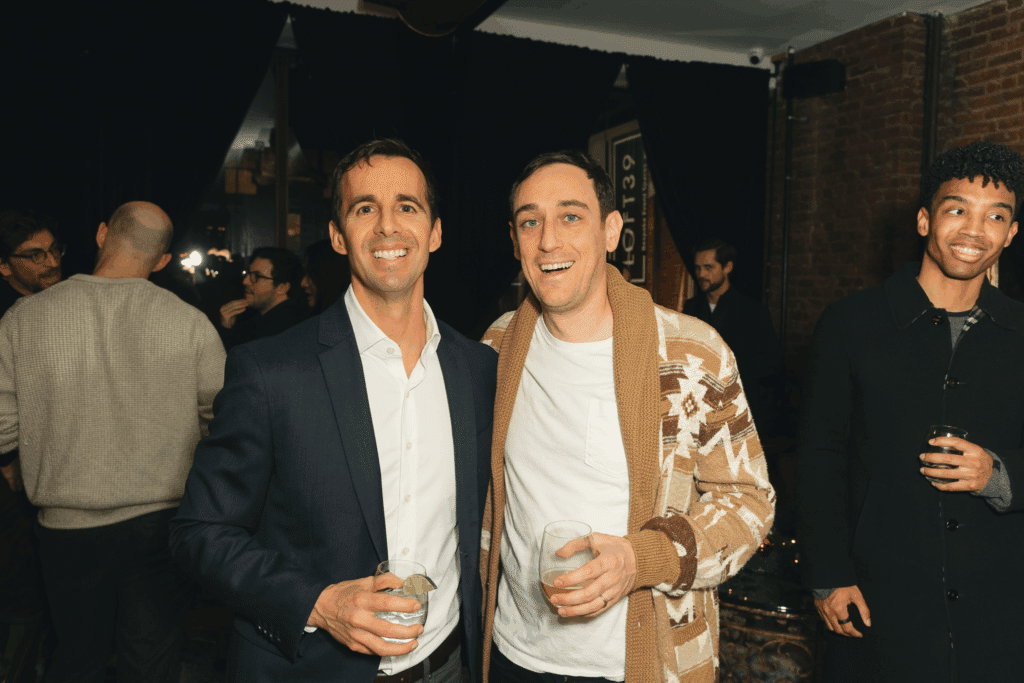
From Wall Street to YouTube’s Early Days
Chris’s path to RockWater began far from YouTube and TikTok. “I started my career on Wall Street 20 years ago, probably spent 15,000 hours just in training and being a deal banker,” he says.
The pace and culture eventually led to burnout, and with a desire to get real hands-on operator experience, Chris enrolled at Northwestern’s Kellogg School of Management. During his MBA, he joined Pritzker Capital, one of the earliest investors in digital video startups that were emerging through the Google Original Channels program.
That connection led him to “Big Frame,” a pioneering YouTube multi-channel network, where Chris became COO in 2012. “We ran a sales process and sold to AwesomenessTV, which was backed by DreamWorks Animation,” he recalls. “I took over running that company, built out influencer management and marketing, owned-and-operated media channels, and then I realized there was a void of specialist advisors in the creator space.”
The void was structural. As Chris explains, traditional investment banks and consultancies weren’t equipped to value creator-led businesses, in which social-first distribution and new revenue models replace traditional media metrics.
“There weren’t dedicated investment banks focused on the creator space,” he says. “The deals were small, the industry was nascent, but I saw where this was going and wanted to fill the gap.”
Dealmaking in a Maturing Market
When Chris describes the current stage of the creator economy, he calls it its “sophomore year.”
After a volatile stretch between 2022 and 2024, he sees a more disciplined, standardized market emerging. “We’re moving away from vibes-based valuations to really standardized metrics,” he says. “More transparency, more public data. That’s closing the bid-ask spread between buyers and sellers, and it’s attracting new categories of capital.”
That shift, he argues, is critical for the ecosystem’s longevity. “The deal structures are normalizing,” Chris says. “As there’s more standardization and transparency, more deals are getting done, and it’s bringing in institutional investors, private equity, and traditional media buyers.”
Recent examples back his view: GameSquare’s purchase of Click Management, People Inc.’s acquisition of Feedfeed, and Publicis Groupe’s spree of influencer-agency acquisitions, including Captiv8.
Legacy media is writing “big checks” again, he says, pointing to Paramount’s acquisition of The Free Press and Fox’s expansion into creator platforms like Red Seat Ventures and Meet Cute.
The Gatekeepers of the Gatekeepers
Among the most active sectors in creator-economy M&A, Chris sees a recurring pattern: investors consolidating talent representation.
“Private equity is running the Hollywood agency playbook on creator management,” he says. “In the old world, studios controlled distribution. In the new world, influencers control the audience. The question is: Who controls the influencers?”
The answer, increasingly, lies with management firms, many of which are now building hybrid business models. “They’re not just talent agencies anymore,” Chris explains. “They’re also building digital content studios, licensing IP, and developing short-form social franchises.”
He cites Unicorn Management, which raised $1 million from Powerhouse to expand its content studio, and Fixated, which secured $13 million from Eldridge for syndication and production.
“It’s about creating defensible moats: diversified revenue, proprietary IP (Intellectual Property), and clear value propositions,” Chris says. “That’s what’s going to attract bigger investors and higher valuations.”
What Buyers Really Value
At the center of every RockWater engagement is a data-backed evaluation.
“The first thing I ask for is their P&L statement,” Chris says. “Are they growing revenue? Are they delivering a service and experience people are willing to pay for? Can they make a profit, or do they have to keep raising money just to stay alive?”
For him, valuation always comes back to fundamentals: sustainable margins, diversified income, and low concentration risk. “Do they have high revenue concentration where one talent or one partner walking away fundamentally changes the business?” he asks. “If so, that’s a red flag.”
Chris often finds himself advising founders to simplify. “We see a lot of companies trying to do way too much,” he says. “You have five business lines, one of them makes money, one of them your team actually likes. The rest are distractions. Focus on what’s winning; do less, terminate the distractions, and your business will look fundamentally different in six to twelve months.”
Rethinking the Banker’s Playbook
While RockWater’s advisory model borrows discipline from Wall Street, it diverges sharply from its formality.
“Traditional banking is very rigid. You have a 50-page memorandum, 2-step auctions, and you never let buyers and sellers talk directly,” Chris says. “In the creator economy, we’ve learned to follow the culture. We’re less formal, more collaborative.”
He believes this looser structure actually improves outcomes. “Letting buyers and sellers connect early builds understanding. It’s important for educating buyers in this space,” he says.
Still, Chris cautions that not all deals benefit from speed. “Some dealmaking is too fast and loose,” he notes. “Adding a bit more structure could help our industry professionalize as we enter this next cycle.”
Beyond the Hype Cycle
For Chris, dealmaking discipline is also a hedge against industry overexuberance.
“As industries grow, there are cycles, such as early growth, hype, pullback, then new growth,” he says. “We just went through that pullback from 2022 to 2024. Too much capital came from the wrong investors, and many companies without strong fundamentals went under.”
He wants to prevent a repeat of that boom-and-bust pattern. “We encourage people to focus on the fundamentals and do good deals,” he says. “If there’s another adjustment, it doesn’t have to be painful or prolonged. Our job is to evangelize good dealmaking so the industry can grow better together.”
Standardization and Scale
Over the next three years, Chris predicts further normalization and larger capital flows in the creator economy.
“We’ll see defined valuation metrics, standardized deal structures, and more traditional institutional players writing bigger checks,” he says. “And as more deals get done, we’ll have clearer playbooks for post-merger integration – how companies combine and grow together.”
RockWater is already positioning for that future. “We’re preparing a variety of clients for the market right now,” he says. “One is an e-learning and monetization platform. They’re bootstrapped, growing 300% CAGR (Compound Annual Growth Rate), and generating millions in EBITDA (Earnings Before Interest, Taxes, Depreciation, and Amortization).”
Alongside deal advisory, RockWater has built what Chris calls its own “B2B (Business to Business) media machine.” The firm hosts executive events, publishes a widely read M&A newsletter in the creator economy, and distributes deal-breakdown videos on YouTube and Instagram.
“It’s how clients find us,” he says. “We learn from our clients, and we’ve become B2B creators ourselves.”
As the creator economy enters a more measured phase, Chris remains focused on one thing: helping founders grow through sound strategy and solid exits. “I’ve been in media and entertainment for almost two decades,” he says. “A lot of my clients now are friends I’ve known for ten years. Seeing them build their companies and help them achieve incredible outcomes. That’s personally fulfilling.”
His goals for the next decade sound almost minimalist. “I just want to keep seeing good deals get done,” Chris says. “Help founders make money, help teams grow, and keep building this new paradigm of media. I just love what I do, and I could see myself doing this for the next 40 years.”
Subscribe to Our Newsletter
Check Out Our Podcast