



Agency
#paid Rebuilt the Creator Economy Conference. Now Its Annual Summit Is the Company’s Biggest Growth Channel

Kerry-Anne Hamilton despises conferences. She finds their panels interchangeable, and their networking too passive to generate anything lasting. She built one anyway. Today, it is #paid’s top driver of new business.
As Director of Events and Growth at #paid, a creator marketing platform, Kerry-Anne runs a critical department that executes roughly 90 events per year across North America. “Our events department is essential to bringing to life the value of creator infrastructure,” she says.
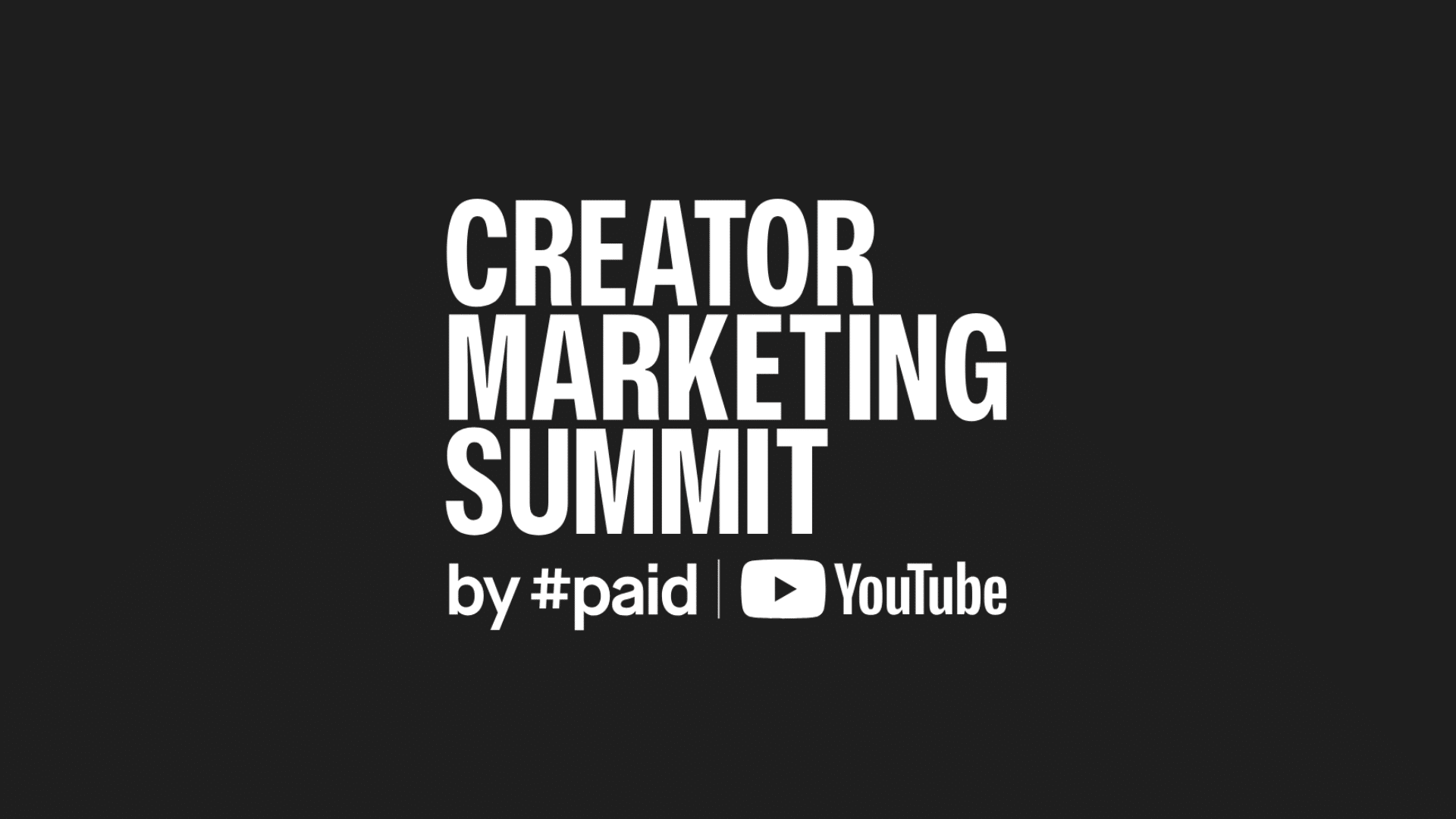
The Creator Marketing Summit (CMS) is where that bet is most visible. Entering its fourth annual edition on October 29 at Hall des Lumières in New York, CMS draws 350 invitation-only senior brand marketers, and Kerry-Anne expects a waitlist of 400 to 500 people, with prospective attendees pitching for invitations in the two weeks leading up to the summit. YouTube returns as title sponsor for the second year. For 2026, the event introduces its first external-facing theme: nostalgia.
CMS Replaced Conference Panels With Experiences Built Around Community
CMS began as a response to recurring feedback from clients and industry contacts. The events were well-produced, but the industry wanted more substantive education alongside the networking. “Can you put together an event where we can bring together industry leaders and actually learn about not only what’s happening today, but most importantly, what’s going to happen in the future?” Kerry-Anne recalls being asked.
The obvious answer was a conference. Kerry-Anne found the format universally unconvincing. “I think that all conferences are very similar,” she says. “People create a talk track at the start of the year and then follow that track through an entire year. And I don’t think you can do that in the Creator Economy because things change too quickly.”
She catalogued every element of the traditional conference format and rebuilt each one. Twenty-minute panels became 10-minute sessions. Standard networking gave way to a gamified token exchange, and conventional catering was replaced with what she calls “entertainment catering,” built around interactive activations and flair bartenders.
The networking mechanic works like this: each attendee is assigned a color and receives five tokens. Their goal is to collect five different colors by day’s end, which grants them access to the “Creator Bodega,” a pop-up retail experience stocked with products from 30 partner brands. Kerry-Anne traces the concept to Disney World’s “Tower of Terror,” where the experience begins in the queue, builds through staging areas, and culminates in the ride itself.
“They won’t remember who we are. They won’t remember 90% of what we told them that day, but they will remember who they met in the room,” she says. “And so we gamified it.”
Events Work as a Growth Channel When KPIs Are Business-Focused
Kerry-Anne measures CMS by its commercial impact. The events department exists to drive growth, and the summit’s KPIs reflect that.
That focus shapes attendee selection directly. The 350 seats are filled by senior decision-makers, existing key accounts, and brands the team has confirmed are actively investing in creator marketing. Kerry-Anne’s team reviewed candidates line by line before extending invitations. The waitlist grew, and Kerry-Anne says her inbox filled with “pitches as to why they should be there.”
Planning began in June while the team was also executing Cannes Lions, with another 30 to 50 events scheduled between then and the summit. Full execution mode started in late July. Each of the four team members owned a discrete area of the program. “That’s how we’re able to do it at scale,” Kerry-Anne says.
Nostalgia Takes the Summit Backward to Move It Forward
The biggest change for 2026 is an attendee-facing theme. Previous editions had thematic conversations internally. For 2026, that theme is communicated outward from registration.
“I think we actually need to take people back before we take them forward,” Kerry-Anne says. “How did we get to creator marketing? Did we start at newspaper? Did we start at photography? Did we start out of home?”
The nostalgia theme runs through every touchpoint, from signage and decor to projection mapping, rather than functioning as decoration. Attendees have already begun asking whether they should arrive in nostalgic outfits.
Kerry-Anne connects the appetite for nostalgia to broader digital saturation. “We’re all so inundated with digital,” she says. “After Covid, I think everybody wants to be able to take a beat and go back to a simpler time.” She sees the current rise of in-person events as part of that same shift.
Programming That Can’t Be Heard Anywhere Else
Kerry-Anne applies one standard to every session on the CMS agenda: has the speaker presented this material at another conference this year? “Our goal is that the answer is no,” she says. “Everything that people are hearing should be net new information to them.”
The 2026 lineup includes Virgin Voyages walking through how it brought 1,000 creators onto a cruise, a personal branding session for marketers, and “Creator Feud,” a Family Feud-format game show in which brands and creator representatives compete on creator marketing survey data. The format is designed to let CMS educate its audience without adding another panel to a dense day.
Kerry-Anne has cleared one programming category from the CMS agenda. “I am sick and tired of hearing about marketers and creators getting on stage and saying, ‘Let us cook,’” she says. “There’s a lot of sessions on authenticity, and at this point, you should know that’s a given already. That’s why you’re hiring a content creator and not doing it yourself.” She has no plans to include the topic in future editions.
Why Events Have Become Creator Marketing’s Most Versatile Growth Channel
Kerry-Anne argues that in-person events can deliver something digital channels alone cannot. “There’s not another growth marketing channel that can do it for you other than events,” she says.
Her case rests on what she calls the “crave for community.” For brands, events eliminate the need to compete for attention in crowded digital feeds because the attention is already in the room. “Events are an incredible way to inject your culture, your thesis, into the individuals within the room,” she says.
The “Creator Bodega” illustrates the economic logic of the model. The 30 participating brands each receive a merchandised shelf and edited event content from the day. They also gain exposure to the event’s attendees. YouTube’s VIP pre-event, capped at 60 guests the evening before the summit, extends the same logic to #paid’s most senior relationships.
Growing the Summit Means Making It Harder to Attend
Kerry-Anne is not planning to grow CMS by expanding the room. The 350-seat cap is intentional, and she is not looking for a bigger venue.
“I don’t think it’s about having more people, more money, more budget, more sponsorship,” she says. “I think it’s about having the advocacy around people continuing to believe that this is one of the leading industry events.”
A two-day format is under consideration if demand continues to outpace supply, which Kerry-Anne measures by wait list length and the seniority of incoming applicants. For now, the measure of success is the strength of what attendees carry out of Hall des Lumières on October 29.
“They will remember who they met in the room,” Kerry-Anne says. “Those are the connections that are going to carry on.”
More information about the event is available here.
Subscribe to Our Newsletter
Check Out Our Podcast