




Agency
How QYOU’s President Thinks About Scaling Creator Marketing Without Losing Brand Control

Creator marketing has crossed a threshold. The question brands now ask isn’t whether it works. It’s how to scale it without breaking the brand.
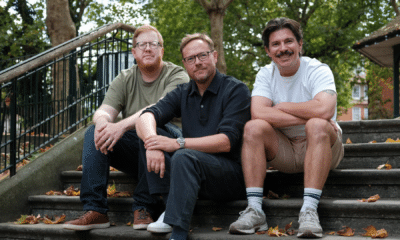
Glenn Ginsburg, President of The QYOU Media, sat down with Net Influencer Senior Editor Ceci Carloni to discuss how creator marketing transitioned from an experimental budget line to core enterprise infrastructure. Glenn has spent nearly 20 years in the creator space, starting at Disney in 2008, and has since led QYOU through campaigns for some of the biggest entertainment brands in the world.
The conversation covered scaling challenges, the rise of media amplification, and what separates brands that win at creator marketing from those still figuring it out.
1. Creator Marketing Just Passed Cable TV in Investment
The numbers make the case impossible to ignore.
Glenn points to a comparison that reframes the entire industry. At its peak, cable television generated roughly $30 billion in annual advertising revenue. This year, brand investment in creator collaborations and amplification is projected to exceed $36 billion.
“In 2026, it’s hitting a kind of a whole new level of investment and activity.”
The shift isn’t just incremental. Multiple companies are now committing $100 million or more to the space. Last year’s announcement from Unilever, one of the world’s biggest advertisers, that it would direct over 50% of its marketing budgets toward social and creators, sent a signal the industry hadn’t seen before.
“The conversations with brands are no longer about, hey, let’s try this out,” Glenn said. “It’s how and how do we scale it?”
2. The Shift from Experiment to Enterprise Function
Creator marketing didn’t arrive at scale in a straight line.
Glenn mapped the progression clearly. It started with experimental budgets, a single visionary inside an organization convincing leadership to try something new. Then it became a dedicated team, often an offshoot of the brand, media, or PR department. Now it’s something different: an enterprise-level function woven into the entire organization.
“Creator marketing is becoming more of an enterprise-level function of a core corporation where it is a part of every team,” he said. That means PR, media, and brand teams all have a role in shaping creator strategy, not just one siloed group running campaigns in isolation.
The evidence showed up in how brands are buying. Glenn noted a notable shift toward procurement teams entering the conversation and planning creator partnerships up front for the full year, rather than approving campaigns one at a time.
3. Scale Is Where Brand Consistency Goes to Break
Growing from 10 creators to 1,000 introduces problems that don’t exist at a small scale.
Glenn was direct about the core tension. A 30-second TV spot gives a brand complete control over messaging. A creator program spanning hundreds of voices does not. “When you start trusting your brand with thousands of creators, how do you keep that consistency?” he said.
“Your brand could get watered down. Giving creators a la carte access to your brand could have damage over the long term.”
QYOU’s answer has been to work with fewer, higher-quality creators while investing heavily in creative direction and media amplification. Their internal studio layer sits between the brand and creator, ensuring alignment on format, tone, and message before anything goes live. Glenn said that the approach has produced engagement rates roughly double the industry average.
4. Amplification Is Now the Bridge Between Creator and Brand Marketing
Organic reach has a ceiling. Paid amplification removes it.
Glenn described the math that drives the case: a creator post without amplification might reach 6% of the intended audience. With the right media investment behind it, that same post can reach 50% or 60% efficiently. “It’s going to maximize the content and make the overall program more efficient by adding that layer,” he said.
Media principles, Glenn argued, are finally being applied to creator marketing the way they’ve long been applied to traditional channels. That means media mix modeling on the front end to size budgets correctly, targeting during execution to reduce waste, and distribution across connected TV and digital out-of-home on the back end.
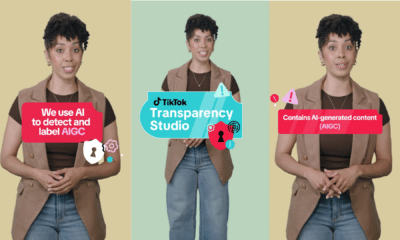
QYOU recently formalized this with the launch of Q Amplify, a dedicated media buying division. The company was also recently badged by TikTok as an official media partner, a marker Glenn said reflects how central amplification has become to the business.
5. What Winning Brands Actually Do Differently
The gap between brands that are winning at creator marketing and those still experimenting has become measurable.
According to Glenn, winning brands have accepted that creator posts used as ads outperform traditional spots across view-through rate, click-through rate, and engagement. That recognition changes how they allocate budgets. But investment alone isn’t the differentiator.
“The number one winning thing that brands are doing is when creators are integrated into the overall media mix in a very integrated fashion,” he said. What’s happening in TV, in PR, and with creators all aligns around the same message at the same time.
That kind of synchronized execution is what Glenn describes as tapping into culture. Without it, even large creator budgets can feel disjointed.
6. Community-First Is the Only Path to Authentic Scale
Most creator strategies start with creators. Glenn argues the right starting point is the audience.
His framework for CMOs looking to build scalable creator programs begins with mapping communities. Who exactly is the brand trying to reach? What communities do they belong to? Only after answering those questions does it make sense to identify creators who speak authentically within them.
“Go deep into their libraries of content, understand what formats the audience really loves, and ask whether that same format lets the brand come in organically.”
Once that base is established, scaling becomes additive. More creators, more formats, more media, more communities. The approach maintains authenticity because it starts from what already exists and resonates in those communities, rather than engineering content from the top down.
7. The Creator Economy’s Next Frontier Is Global
The industry has largely been solving domestic problems. The next set of challenges is international.
Glenn pointed to this as one of the bigger open questions for the Creator Economy broadly. Creator sophistication is accelerating across markets once considered secondary, and brands with global footprints need infrastructure to keep pace.
QYOU is building toward that. The company has a sister company in India, Chatterbox, and opened a Dubai office at the start of this year. Glenn described the strategy as taking QYOU’s existing playbooks into new territories with the goal of building a collection of companies capable of supporting both local and global campaigns.
“We’re really seeing the Creator Economy explode across markets,” he said. “How do I take this from just domestic to more global?” That question, Glenn suggested, is one the entire industry still needs to answer.
The infrastructure debate in creator marketing has shifted from whether to invest to how to invest well. Brands that treat creator content as a standalone tactic are already behind. The ones building integrated programs, with media amplification, creative oversight, and cross-functional alignment, are setting a new baseline for what serious creator marketing looks like.
Listen to the full conversation on “The Big Three” podcast.
Subscribe to Our Newsletter
Check Out Our Podcast