






Tech
How Ceartas Is Turning Creator Brand Protection Into Infrastructure

Most content creators understand, in the abstract, that piracy exists. What they don’t know is how much of it is happening to them, how much it’s costing, and how far beyond stolen videos the problem now extends. For Dan Purcell, founder and CEO of Ceartas, those gaps are not only a market opportunity, but the reason he built the company in the first place.
Ceartas, a Dublin-based anti-piracy and brand-protection platform, was built to solve a problem Dan experienced firsthand. Founded in June 2021, the company now employs 75 people, serves thousands of creators and enterprise clients, and scans millions of websites daily, including the dark web, looking for stolen, pirated, or synthetic content. Its clients range from individual creators on OnlyFans and YouTube to enterprise production companies and major celebrities managing brand-critical likeness.
“People don’t need to find peace with this on the internet,” Dan says. “A lot of people are suffering in silence. They’re afraid to get out there because they’re afraid of being harassed, afraid of deepfakes. No, it’s not the case.”
Dan’s path to founding Ceartas began with his own experience as a victim of non-consensual content distribution around 2016, when intimate footage he had shared privately surfaced across Google search results and was linked to his Instagram profile. Rather than hire a lawyer, the then-engineer, who had worked in support and project management roles at Google, Facebook, and Apple, built a script to automatically track and file copyright removal notices. It worked.
When the pandemic hit, and OnlyFans exploded in adoption, he watched friends face the same problem at a far larger scale, compounded by extortion, blackmail, and content that spread faster than anyone could manually address it.
“I felt like my ordeal would have been 100 times worse if I were a woman,” Dan says. “I needed to help.”
A Personal Problem Becomes a Platform
The early version of Ceartas grew from that script into a product built around one core insight: creators couldn’t monitor the entire internet themselves, and the potential shaming around explicit content. real or fake, it made it hard to ask anyone else to do it for them.
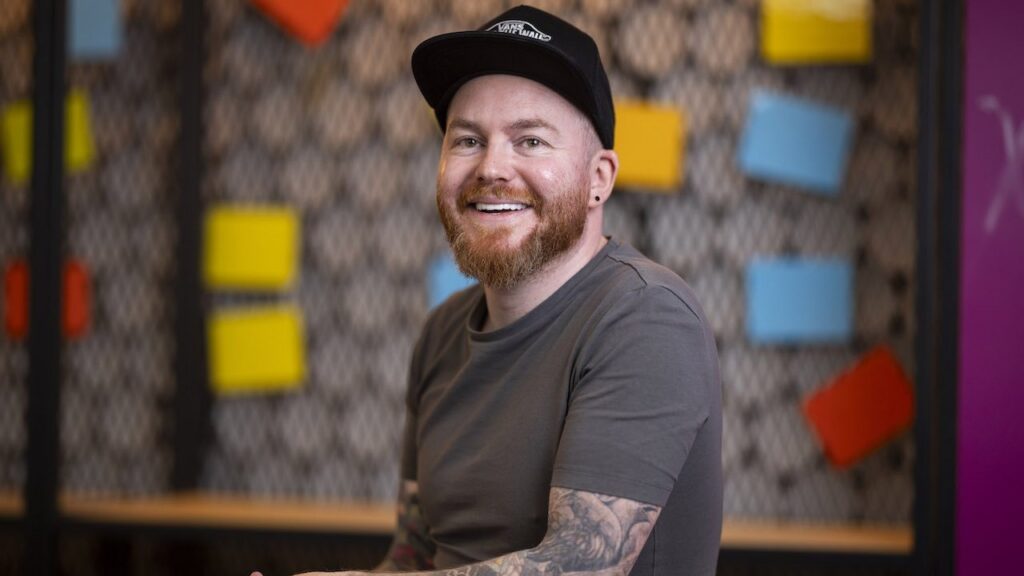
Dan and a co-engineer developed what he describes as an always-on protection layer, framing the product from the start as a creator’s “internet delete button.” The pitch was simple: sign up, provide an Instagram username or link-in-bio handle, and within an hour, Ceartas returns a map of where content exists online and where it shouldn’t.
“We don’t need any original content,” Dan explains. “You don’t need to upload an image. We look at your social footprint, we look at everything on search engines, and we paint a picture.”
Takedowns are validated by AI and reviewed by a manual team before execution, so creators don’t have to submit evidence, interact with legal systems, or monitor anything themselves. Within an hour of signing up, the system flags content and prepares it for removal. “They don’t have to lift a finger,” Dan says.
What Piracy Actually Costs
The revenue impact of content piracy is immediate and significant for subscription-based creators. Dan puts the average revenue loss at more than 40% within the first 72 hours of a content drop, as pirated copies circulate across free-access sites before paying subscribers complete the purchase flow.
“They don’t need to live with it,” Dan says. “We can autonomously track this content in real time, remove it, and put money back in their pocket.”
The Sidemen, a British YouTube group that includes KSI and currently has a Netflix show, experienced this directly. When their subscription video platform began underperforming, they identified a major piracy problem and brought in Ceartas. According to Dan, the team removed approximately $6 million worth of stolen content within 10 weeks, shut down mirror sites, and cleared private information from the internet, including home addresses and footage of a group member’s partner taken without consent at Wembley Stadium.
“From there,” says Dan, the revenue obviously increased. “We kind of stopped the bleed, and then they got a show on Netflix.”
In a separate case, a former OnlyFans creator who had transitioned careers was repeatedly failing job applications despite being highly qualified. Ceartas conducted an intensive eight-week sweep, removing approximately 600,000 images and videos from across the web.
“This content poisons SEO,” Dan notes. “It’s kind of like reverse SEO.” Within roughly four weeks of the cleanup, the person was hired.

Photo: Ceartas team
Why the Google Partnership Changes the Math
Beyond detection, the speed of removal determines the extent of damage piracy actually inflicts. Standard access to Google’s content removal tools caps submissions at around 1,000 URLs per day, and all are subject to manual review. For creators with content spread across hundreds of thousands of links, that ceiling is effectively meaningless.
Ceartas built a track record of high-accuracy, legally sound submissions that earned it a place in Google’s Trusted Copyright Removal Program, a partnership that allows the company to process removal approvals in minutes at a massive scale. “Millions of links,” Dan says. “Things just can’t stay on the internet that long.”
The Google relationship also gave Ceartas a framework for approaching other platforms. Rather than positioning itself adversarially, the company pitched itself as a source of external support for moderation. “We’re not trying to be a thorn in your side,” Dan says. “We’re cleaning you up. We’re helping you avoid legal exposure.”
OnlyFans eventually designated Ceartas as its official safety partner after the platform’s top creators began publicly recommending the service. Partnerships with Subs, the new platform launched by OnlyFans founder Tim Stokely, followed.
“As new platforms pop up, they’re realizing the absolute importance of protecting content creators,” Dan says. “That’s the monetization layer. They take their percentages. By default, when we protect thousands of OnlyFans creators, we’re also protecting that 20% that OnlyFans generates.”
Deepfakes Are Now the Defining Threat
Piracy of existing content is one problem. The emergence of synthetic media is another. Deepfakes, which have existed in crude form since the early days of Photoshop manipulation, have become nearly indistinguishable from reality and now require minimal source material to generate. Dan describes the shift as categorical: what previously took hours of high-definition footage to produce something unconvincing is now automated, trained, and instantaneous.
As Dan shares, a celebrity client came to Ceartas recently after discovering deepfake nude imagery of themselves being printed onto merchandise and sold on a major retail platform. “They were making T-shirts and posters and selling them,” Dan says.
The brand implications go beyond the creator. When deepfake content surfaces, brands partnering with affected creators face an immediate decision: investigate the material’s authenticity, often a slow and uncertain process, or cut ties. Most choose the latter. “It’s easier to wash their hands and move on,” Dan notes. The result is that even fabricated content carries real commercial consequences, particularly because online audiences will circulate content as fact even when they suspect otherwise.
Dan predicts that the current behavior, in which people ask whether something is AI-generated, will reverse as synthetic media becomes the norm: “I think people will no longer be asking if this is AI. They’ll actually be asking, ‘Is this real?’ Perception is reality. If someone’s first interaction with a creator is seeing them on a pornographic website in synthetic content that is virtually impossible to identify from reality, that becomes their perception. And that creator probably doesn’t even know it’s there.”
Who Ceartas Serves and Where It’s Going
Ceartas operates across three tiers. Its free service that targets victims of non-consensual explicit imagery, a choice Dan frames as a baseline ethical obligation, where no money changes hands regardless of the severity of the situation. Its commercial product serves individual creators across platforms such as YouTube, OnlyFans, and Patreon. Its enterprise layer protects studios, production companies, and brand-critical IP from unauthorized distribution.
The range of those who need the product has expanded beyond what Dan initially anticipated. A recent April Fools’ experiment offering protection for pet-influencer accounts turned into an unplanned beta when creators came forward with genuine problems: stolen pet images on merchandise, fake profiles, and unauthorized use of their animals’ likenesses. Ceartas is now piloting the service with five major pet influencer accounts. “We didn’t realize this was a problem,” Dan says. “It really is for everybody.”
In the near future, Dan sees the Creator Economy following a generational pattern similar to film stardom, where defining figures emerge in waves and anchor the cultural memory of the audiences who grew up with them. He expects the threats to change alongside the industry’s growth, making protection infrastructure increasingly non-negotiable rather than optional.
“You’re going to have content creators that will define people’s childhoods,” he says. “These guys will be mega brands. And the threat landscape will also massively evolve. We’re evolving as well as the threats evolve. We’re just really excited to be along for the journey.”
Subscribe to Our Newsletter
Check Out Our Podcast