Tech
Canva Create 2026: A Case for Human Creativity in an AI Era

When the world’s largest design platform stages its most ambitious event, the tension on the floor isn’t about templates or typography. It’s about identity.
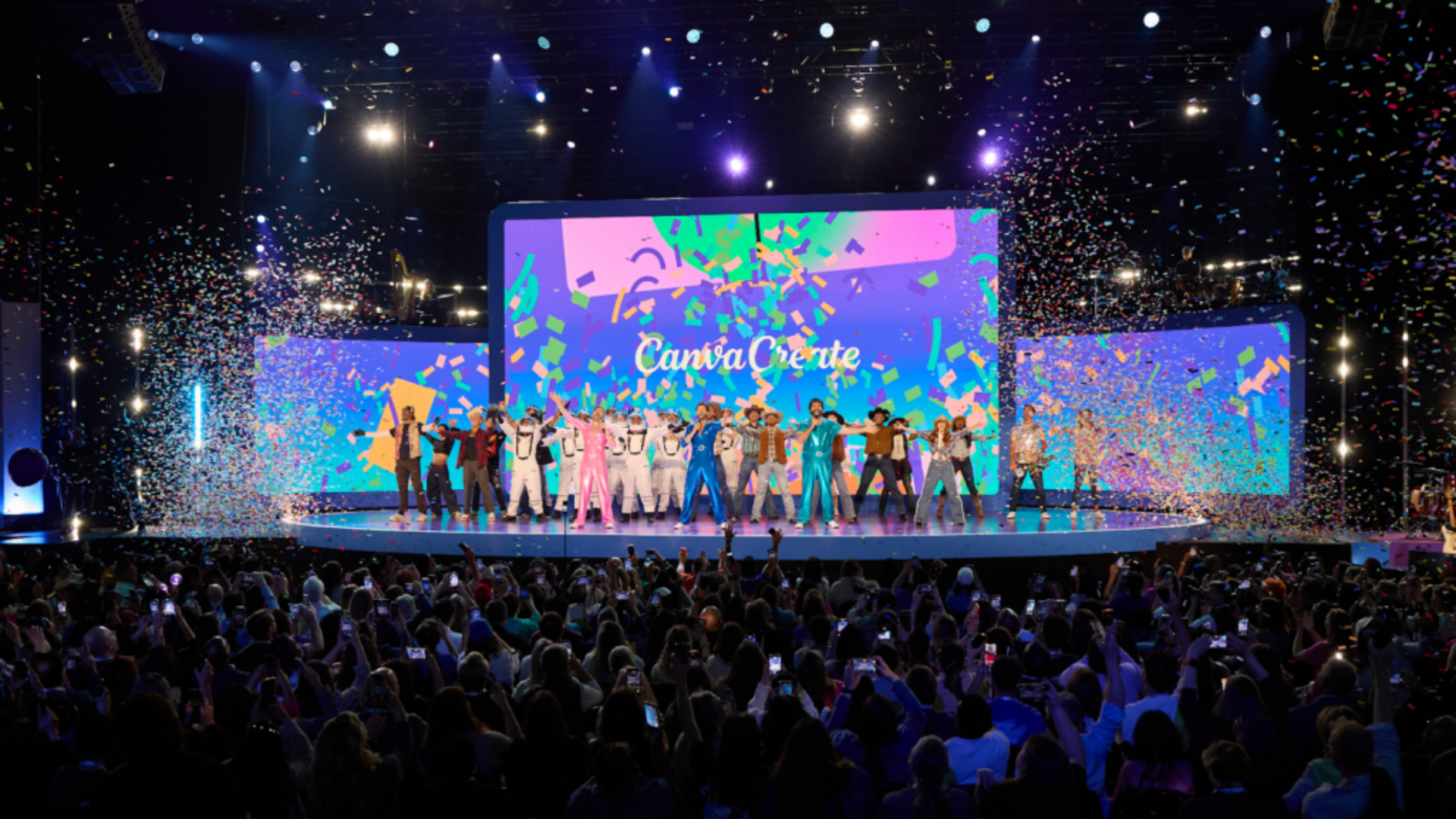
Canva Create 2026, held April 16 at SoFi Stadium in Los Angeles, marked the company’s clearest public statement yet about where it is heading. Early-bird tickets sold out, and thousands were said to have attended in person or streamed live, part of a community Canva counts at more than 265 million monthly users across 190 countries.
Kailyn Nunn, Canva’s Influencer Marketing Lead for North America, has had a front-row seat to that transformation. She joined in 2020 as the company’s first Influencer Marketing Manager, building the function from scratch at a time when Canva was still primarily known as a tool for social graphics. Five years and several platform pivots later, she oversees how the company uses creators to tell a different kind of story.
“AI can generate and optimize, but it can’t develop taste,” Kailyn says. “That’s still deeply human.”

Photo: Kailyn Nunn
Canva Is Rewriting Its Own Job Description
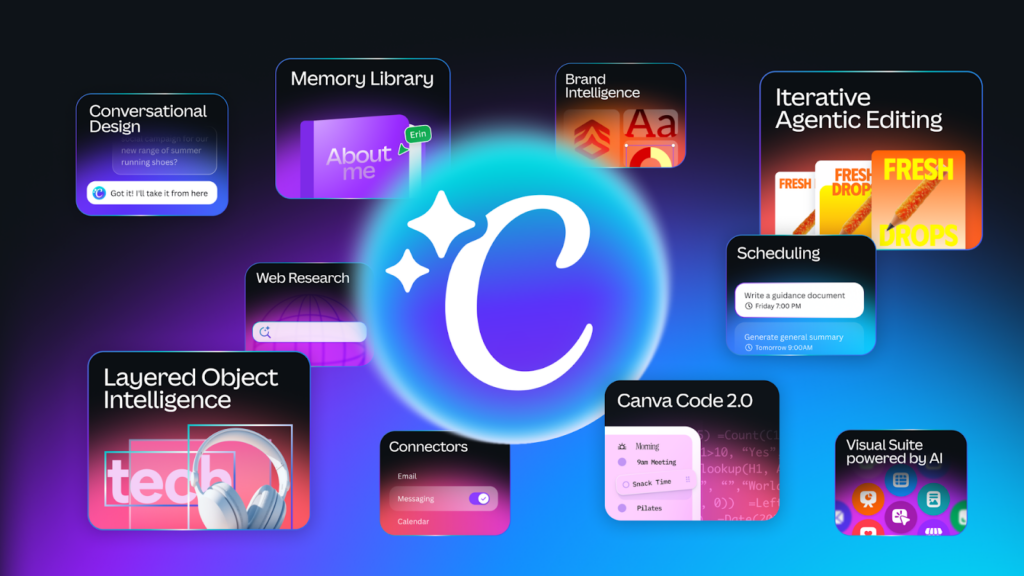
The announcement that anchored this year’s event was not incremental. Canva AI 2.0, unveiled during the keynote led by the company’s co-founders, Melanie Perkins, Cliff Obrecht, and Cameron Adams, signals what Kailyn describes as “the biggest product shift in Canva’s history since we were founded in 2013.”
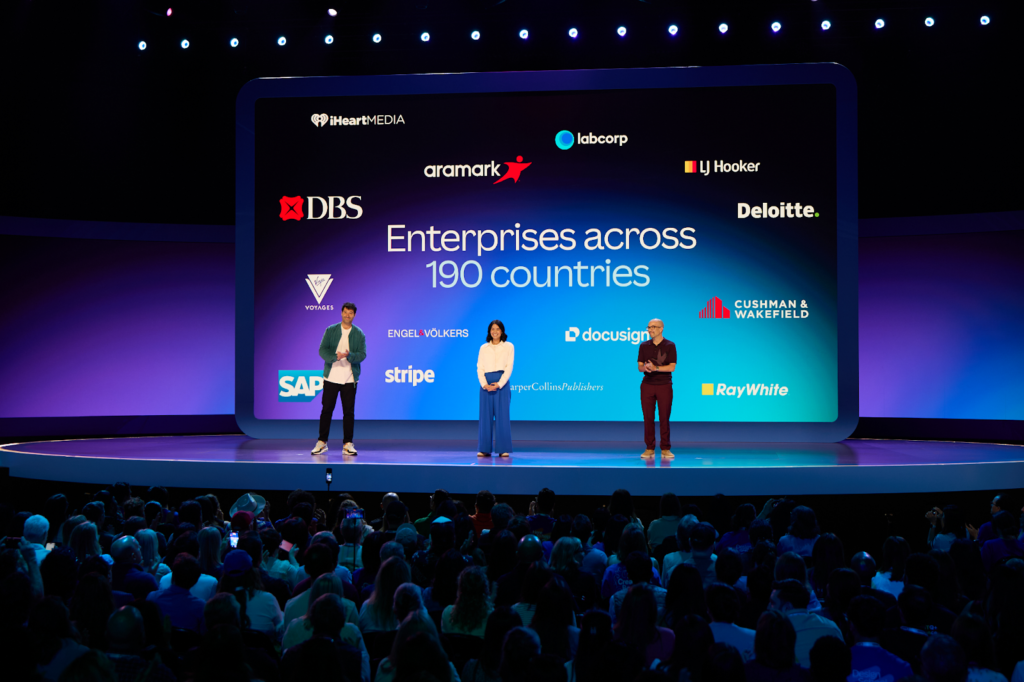
Photo: (Left-to-Right) Canva co-founders Cliff Obrecht, Melanie Perkins, and Cameron Adams
The language the company now uses to describe itself has changed accordingly. Canva is moving, in Kailyn’s framing, “from a design platform with AI tools to an AI platform with design tools.” The distinction may sound subtle, but it carries real implications for how creators and marketers think about the product’s role in their workflows.
Under the previous model, users learned tools to bring an idea to life. The new model inverts that relationship. “Creation starts with a goal, and the tools meet you there,” Kailyn explains.
Canva Create is where that pivot goes public. The keynote was produced more like a live show than a product briefing, and the activation floor was designed to let attendees experience Canva AI 2.0 directly, through seven dedicated Design School Labs staffed by the engineers who built them.
A Sellout Signal That Goes Beyond Demand
Early-bird tickets for Canva Create 2026 were gone before the full speaker lineup was even announced. Kailyn reads that as something more specific than enthusiasm for a company event.
“People are really hungry for connection and shared experiences,” she says. “AI is evolving incredibly fast, and if anything, that’s making human connection more important, not less.”
The observation carries particular weight when it comes from someone whose job is to understand what motivates creators to engage. According to Kailyn, Canva’s community submits more than a million product wishes annually, and that input feeds directly into both the product roadmap and the event agenda.
“The creators, designers, and marketers we speak to are working through the same questions around brand governance, content quality, editability, and how to actually make these tools work in their day-to-day,” she says. “That’s what shaped the agenda.”
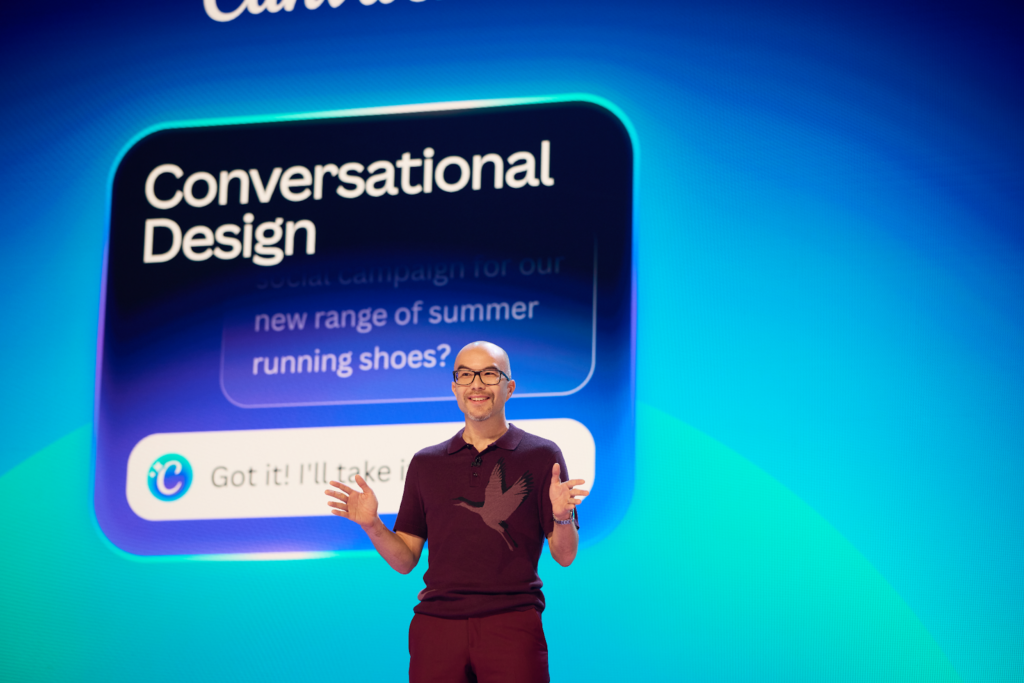
Photo: Canva co-founder Cameron Adams
Creators Aren’t Amplifiers Anymore
A few years ago, creator participation at brand-hosted events followed a familiar pattern: show up, post, leave. Kailyn says that model has given way to something more substantive, visible in how Canva structures creator involvement at events like Create and the Canva World Tour.
“Creators want to be genuine collaborators in how the experience comes to life, and audiences can tell the difference,” she says. “When creators have that level of ownership, the impact follows.”
Canva’s Influencer Marketing approach has been built around that premise since Kailyn joined the team. Early partnerships with creators like Corporate Natalie and Dude With Sign were less about reach than about authentic integration with creator workflows. She reports that creator-led campaigns have since generated tens of millions of views across global activations.
Canva Create’s speaker roster reflects the same logic. Jon M. Chu, Issa Rae, Aurora James, Bobby Hundreds, and Debbie Millman were selected not because they are technology executives, but because they represent how creativity shows up across film, fashion, culture, design, and business. “Canva Create isn’t just a product event,” Kailyn notes. “It’s a reflection of how creativity shows up in the world.”

Affinity and the Bet on Professional Creators
Canva’s acquisition of Affinity, a professional design suite built for photographers, graphic designers, and illustrators, has quietly expanded the company’s target user beyond the casual creator. Canva Create 2026 was the first major event to feature Affinity prominently, and Kailyn says the inclusion signals an expansion of who Canva considers its community.
“Affinity’s inclusion really signals that Canva is building for the full spectrum of creators, not just everyday creators, but also professional designers and creatives,” she says.
Since joining Canva, Affinity has recorded more than 5 million downloads, with the majority going to users new to the platform, according to Kailyn. The Canva Brand System now works inside Affinity, letting teams access their Brand Kit and move work between the two tools.
Kailyn describes the integration as part of a push toward “a much more connected workflow for creative teams,” with Canva Create serving as the venue where those connections are shown in practice.
Success Isn’t a Number. It’s a Shift in Behavior.
Kailyn’s definition of success for Canva Create is notably behavioral rather than metric-driven. “Success, for me, is people feeling excited about what they can create next,” she says. “If it all goes to plan, it also proves that we’re entering a new era of creating.”
That framing indicates a broader thesis about where the Creator Economy is heading. The creators who will define the next phase, she argues, are not those who use AI to produce more content faster, but those who use it to do things that were previously impossible while maintaining the point of view that makes their work worth following.
Canva Create is designed to show both sides of that equation. The tools are on display. So is the argument that the tools only matter when the person using them has something to say.
“The creators who break through won’t just capture attention,” Kailyn says. “They’ll change behavior.”
Subscribe to Our Newsletter
Check Out Our Podcast