






Tech
From Campaigns to Payouts: CreatorCore Is Building Infrastructure for End-to-End Creator Campaign Management

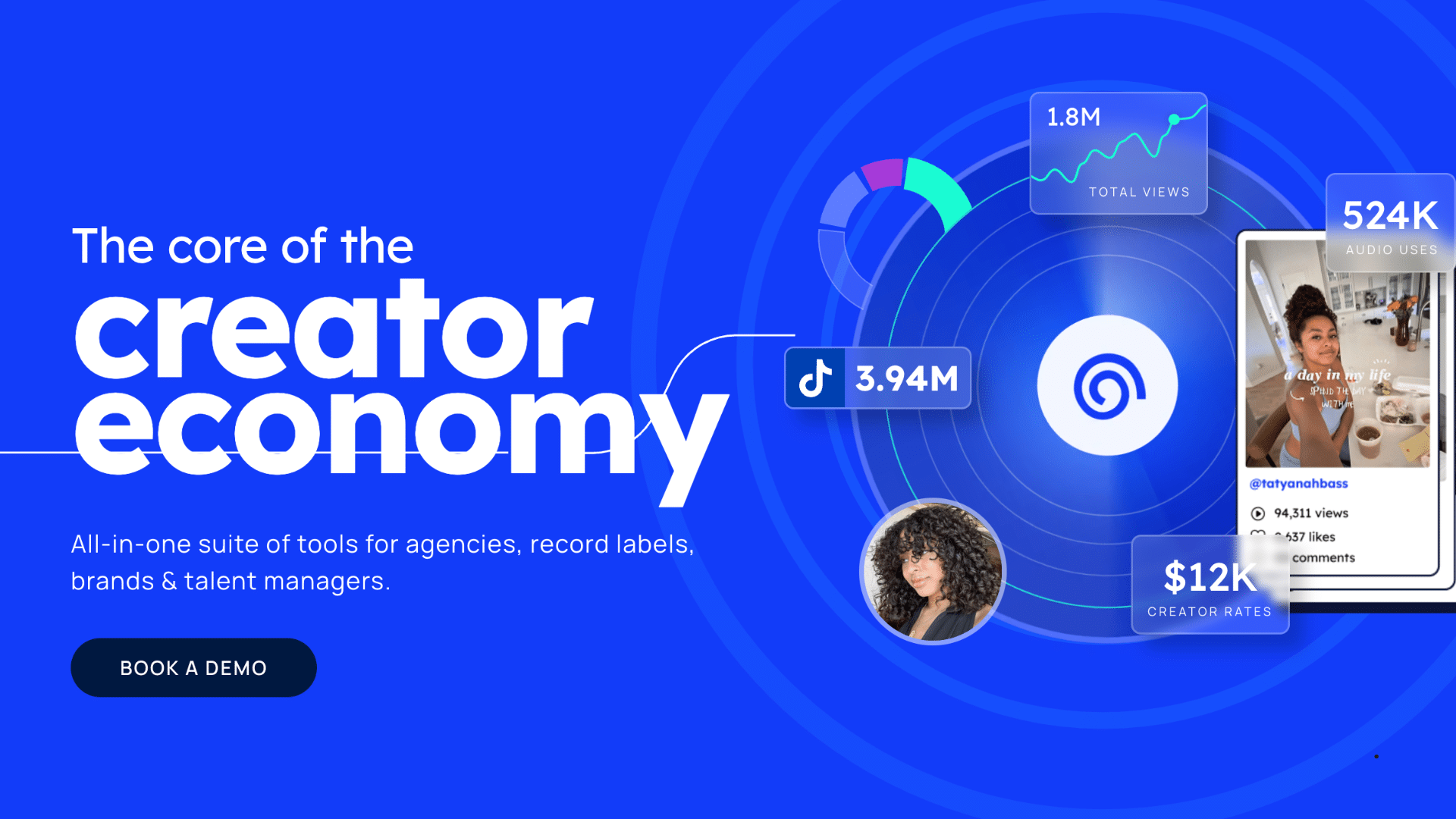
When The Clementine Group, a talent management and Influencer Marketing agency, outgrew spreadsheets, co-founders Dominick Paielli and Nic Campanile built their own campaign software. Peers in the industry started asking to white-label it. That internal tool is now CreatorCore, a San Diego-based platform used by Warner Music Group, Paramount Pictures, and Universal Music Group to manage influencer campaigns end to end.
Launched in 2023, the platform operates on the premise that influencer campaign management requires infrastructure built for it specifically, not adapted from general-purpose project management tools. “We service talent managers, agencies, brands, record labels, and movie studios,” Dominick says, “helping them with everything from managing their creator database and campaigns to the reporting and payouts.” That scope is the direct product of running a creator management agency where the limits of borrowed tools surfaced at every stage of the operation.
CreatorCore was formally structured as its own entity rather than a Clementine offering, a decision Dominick says was informed by watching others who had tried to run an agency and a software business under the same roof. Keeping them separate allowed CreatorCore to serve a broader market without the structural complications of an agency-owned tool.
Influencer Campaign Operations Are Still Running on General-Purpose Software
Campaign management in Influencer Marketing developed on workarounds. Talent managers and agencies adapted various platforms and spreadsheets to handle creator outreach, content approvals, and reporting because no purpose-built alternative existed when the industry started to scale. Dominick argues that those adaptations remain a cost.
“A lot of those platforms aren’t really built for Influencer Marketing, but you can adapt them,” he says. “Whereas CreatorCore, you’re just hopping in the driver’s seat with an Influencer Marketing-supercharged campaign management workflow tool.”
The clearest example is reporting. Two years ago, Dominick says, it was common for campaign managers to manually visit each creator’s post, record view counts and engagement figures into a spreadsheet, return hours later to update the numbers, and compile a client report by hand. CreatorCore automates that by ingesting post links and tracking performance continuously. A creator-facing portal also eliminates the email back-and-forth between managers, talent, and internal stakeholders over draft approvals and content submissions. Creators access it through a single link, upload their drafts or post URLs, and the information flows directly into the campaign manager’s dashboard.
The platform also segments creator content by format, identifying which post types are outperforming others within a given campaign. That data, Dominick says, gives brands a clearer basis for reallocating spend and is often what prompts larger budget approvals.
Record Labels Require a Different Measurement Standard
Not every CreatorCore client is optimizing for the same outcome. Consumer brands and entertainment companies share a need for campaign workflow and performance reporting, but music labels have a specific requirement that separates them from the rest: audio tracking.
When a label runs a creator campaign on Instagram or TikTok, it is designed to drive UGC activity around a specific track and push the audio toward trending status. “CreatorCore can actually track the growth of the audio every single day,” Dominick explains, “so they can see how their campaigns are affecting the audio growth.”
That native capability, Dominick notes, is what makes the platform relevant to clients like Warner Music Group and Universal Music Group in ways that general-purpose campaign management software is not. The metric a label manages is the momentum of a specific piece of audio, not aggregate campaign performance, and that distinction requires a measurement layer built for it.
Creators Finish Work, Then Wait Up to Three Months to Get Paid
Dominick addresses the payment problem in Influencer Marketing, stating that “we’re one of the only industries where you finish your work, but you don’t get paid for 30 to 60 to 90 days.”
He believes the delay is driven by the complexity of brands’ and studios’ accounts payable systems. Hence, he and his team designed CreatorCore’s payout workflow to reduce that lag on both ends: brands and labels reduce administrative overhead in disbursing payments across large creator pools, and creators receive income sooner.
Dominick says that faster payment is one of the most consistently appreciated aspects of the platform among talent, which makes the payout system a factor in adoption on the creator side, not just the agency side.
Automation Has Limits in a Business Built on Relationships
The question of how much of the management workflow CreatorCore can handle without human intervention has a clear boundary in Dominick’s view. On what breaks first if a manager tries to run entirely on automation with no human oversight, he identifies three failure points.
Rate errors are the first. “You might under-pitch your creator because your computer said to pitch them at this rate, but they got paid $10,000 more on their last deal,” he says. Contract compliance is the second, with usage rights and terms that a manager must track actively. The third is talent attrition. “This is a very relationship-based business,” he notes. “Creators want more human interaction and touch points.”
Dominick’s position is that CreatorCore is built to handle the administrative load surrounding those decisions, not to replace the judgment they require. The platform aggregates data and surfaces signals, but the manager interprets them and acts.
One Feature Gets Clients In. The Full Platform Keeps Them.
CreatorCore’s clients typically arrive through a single use case. A brand comes for the reporting layer, while a label comes for the payout workflow. That narrow expectation tends to shift once they are inside.
“Sometimes, when they come to us, they’re expecting only to be really good at reporting or really good at payouts,” Dominick says. “And then they realize that there’s so much more to the platform.”
The pattern reflects CreatorCore’s competitive premise. Most Influencer Marketing software, Dominick argues, is built for either talent managers or enterprise clients, not both. “If you have both types of those clients, you now have an ecosystem.” The practical advantage he highlights is transaction speed: a manager and a brand both operating inside CreatorCore can move through approvals, communication, and payment without switching between systems.
Toward a Central Operating Layer for the Creator Economy
CreatorCore’s second major version, rebuilt on new infrastructure, is scheduled to launch in Q4 of this year. Dominick says the payment layer will be a centerpiece, with the goal of building the most complete end-to-end creator payout solution available. A planned API will let agencies and companies developing supplementary tools plug into CreatorCore’s infrastructure, extending the platform’s reach without requiring those companies to build the underlying data layer themselves.
The two developments support CreatorCore’s broader goal of building an ecosystem that serves both sides of the market. Dominick compares the intended dynamic to Apple’s iMessage network, describing a system where every participant operates within the same infrastructure, making transactions faster because no translation between systems is required.
“The platform will become a really big ecosystem for the Creator Economy,” he says. “Central point of the Creator Economy, which I don’t think any platform has fully achieved yet.”
Subscribe to Our Newsletter
Check Out Our Podcast