



Agency
Ubiquitous CEO Jess Flack Wilson: Brands Are Running Campaigns When They Should Be Building Programs

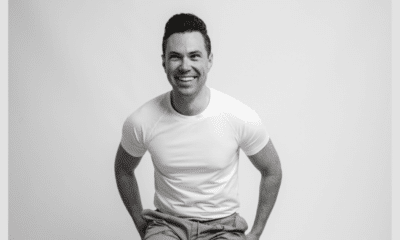
Jess Flack Wilson spent years in performance marketing convinced that influencer campaigns were too unattributable to take seriously. TikTok changed her mind, and she spent the next four years building the infrastructure she wished had existed.
That infrastructure is Ubiquitous, the Influencer Marketing agency Jess co-founded in April 2021 in Atlanta, now operating as “Ubiquitous by Humanz” from its base in New York following its acquisition by Humanz, an AI-powered Influencer Marketing platform, in 2025. The combined entity serves enterprise brands including Disney, American Eagle, Netflix, and Lyft across organic influencer content, user-generated content, paid amplification, and TikTok Shop. Jess leads the U.S. operation as CEO of Ubiquitous and Vice President, USA, for Humanz.
“In 2020/21, we were still having to sell Influencer Marketing as a powerful growth engine,” she says. “Now, we never really are selling brands on its efficacy. It’s all about selling our solutions and how we can help them do it better than anyone else.”
That transition tracks how far the channel has traveled. Jess’s argument, built across years of campaigns for major consumer brands, is that the problems holding most influencer programs back have little to do with the medium. They have almost everything to do with how brands approach measurement, creator selection, and the time horizon they are willing to work within.
Why Influencer Marketing Is More Like SEO Than a Paid Channel
The most common mistake Jess encounters after a creator campaign is the same one: brands measure to the bottom line from the first post. “Launching one campaign and then being like, ‘How many sales did we get? Oh no, let’s cut it,'” she says. “You wouldn’t do that with any other channel.”
The analogy she reaches for is SEO. Influencer Marketing compounds over time through audience trust, relationship-building, and iterative optimization. It does not deliver immediate, linear return on spend. “You’re not turning on a watering hose,” Jess says. “You’re setting up an irrigation system. Give it time to work out the kinks.”
That framing shapes how she advises brands entering the channel. She recommends carving out a manageable portion of the overall marketing budget, starting with nano and micro creators, and treating early spending as a learning cost rather than performance spend. “Learning comes at a cost,” she says. “You either have the expense of investing in learning, or you have the expense of not learning anything and being behind all your competition.”
Follower Count Is Not the Lead Metric
For brand awareness campaigns, Jess’s primary creator selection signal is engagement rate. It is difficult to manufacture, she argues, unlike raw impressions, which can be inflated through paid spend. But she uses a more specific forecasting tool: median views across a creator’s last nine videos, not average views.
“If you have a video that goes viral, it can really inflate what your average views are,” she explains. “Median takes out any volatility.” The nine-video window corresponds to the grid that loads automatically on mobile, the first content a viewer encounters when opening TikTok or Instagram.
When the goal shifts to conversion, the methodology changes entirely. Jess recommends UGC creators, where brand and audience fit matter more than any reach or engagement metric, because that content is designed to feed paid media rather than generate organic reach on its own. For awareness campaigns, she describes the creator roster as a “bouquet,” pairing macro and celebrity-tier talent with mid-tier and nano creators. “They can all kind of feed into each other and play a different position in the funnel,” she says.
Sponsored Content That Looks Like an Ad Now Performs Like One
Organic influencer content still works. Jess’s qualification is specific: the brand has to accept a secondary role.
“The only way to get max eyeballs is to let the creator put on makeup, talk about your brand, and then talk about their date last night,” she says. “You can’t just go talk about all the value props of your product and expect it to get lots of eyeballs without putting paid ad dollars behind it anymore.”
The mechanism she points to is audience fatigue. Display advertising captured attention efficiently until users developed ad blindness and learned to scroll past. Influencer content is following the same trajectory. “People are so familiar with it that when they see something come up, it’s like, ‘Oh, that’s a promotion,’ and they’ll scroll past,” she says.
For brands that need the product front and center, Jess notes that Ubiquitous now pairs organic placements with a paid amplification budget. According to her, content that centers the product without paid support will underperform.
Creators Who Promote Everything Eventually Promote Nothing
The structural problem Jess returns to most often is how brands approach the creator relationship. Many treat it as a transaction: a single activation, a content deliverable, and no further contact.
“If you see a creator constantly promoting a new product in every video, they don’t have any authority anymore,” she says. “It undermines it.”
Long-term partnerships work in the opposite direction. Audiences notice when a creator consistently advocates for a small number of brands over time, and that consistency reads as genuine endorsement rather than paid placement. “If you see a creator that you love and they’re talking about this brand they love all the time, I’m a lot more compelled to go out and try that product,” Jess says.
Her prescription is to treat Influencer Marketing as a program rather than a campaign: identify product advocates, invest in the relationship, and approach each partnership as an ongoing integration. “One-off campaigns don’t really work anymore,” she says.
Why Jess Chose a Buyer That Had Already Built Her Roadmap
Jess raised $5 million at seed in 2021 and additional product funding in subsequent rounds, then concluded that sustaining product development at a competitive pace required either a large new round or a strategic partner. Humanz had already built what she was planning to build.
At the center of the deal: a marketing pixel, deployable via Google Tag Manager, that closes the attribution gap for organic influencer campaigns, capturing conversions across devices and sessions that standard last-click models miss entirely.
The combined platform connects creator-generated data directly to brand dashboards, pulling first-party metrics including story views, link clicks, and attributable purchases in real time. Self-service brands can query the platform’s AI layer for strategic questions, including which creators to recontract and at what rates. “I’d say the pixel is a big game-changer for us,” Jess says.
“They had built what was on my two-to-three-year roadmap,” she says of Humanz. “They were kind of looking for us, and we were kind of looking for them.”
Pricing Is the Gap That Still Makes the Industry Unpredictable
Full-funnel attribution, in Jess’s view, is no longer the defining challenge in Influencer Marketing. Pricing is.
Creator rates remain volatile across the industry and quoted rates can vary by a factor of ten. “Sometimes, you’ll reach out to a creator and think they’re going to charge 2K and they charge 20K, or vice versa,” she says. “There’s just still a lot of volatility and non-standard pricing.”
Standardization, she argues, is the unlock that would allow brands and agencies to productize the channel the way paid media has been productized, enabling reliable forecasting and efficient scaling. “With predictability and standardization comes efficiency,” she says. “And this opportunity to really productize the industry in a more efficient and scalable way.”
TikTok Shop is a parallel development that the industry is still undervaluing. Jess says Ubiquitous sees a consistent correlation between TikTok Shop campaigns and lift on Amazon and brand websites, beyond direct platform purchases. “It’s not only about what’s directly attributable to that individual video,” Jess says. “It’s also about what’s happening across all of your channels.”
Full-funnel visibility, she adds, was the problem she would have cited a year ago. “But I feel like we’ve already cracked that code.”
Subscribe to Our Newsletter
Check Out Our Podcast