





Tech
Hypeo AI Bets on Formalization Gap in MENA Creator Economy With All-in-One Platform

For most agencies, managing more than 20 influencers across five campaigns for a single brand is a major operation. Running it through Excel sheets, WhatsApp, and scattered email chains is not a workflow. It’s a liability.
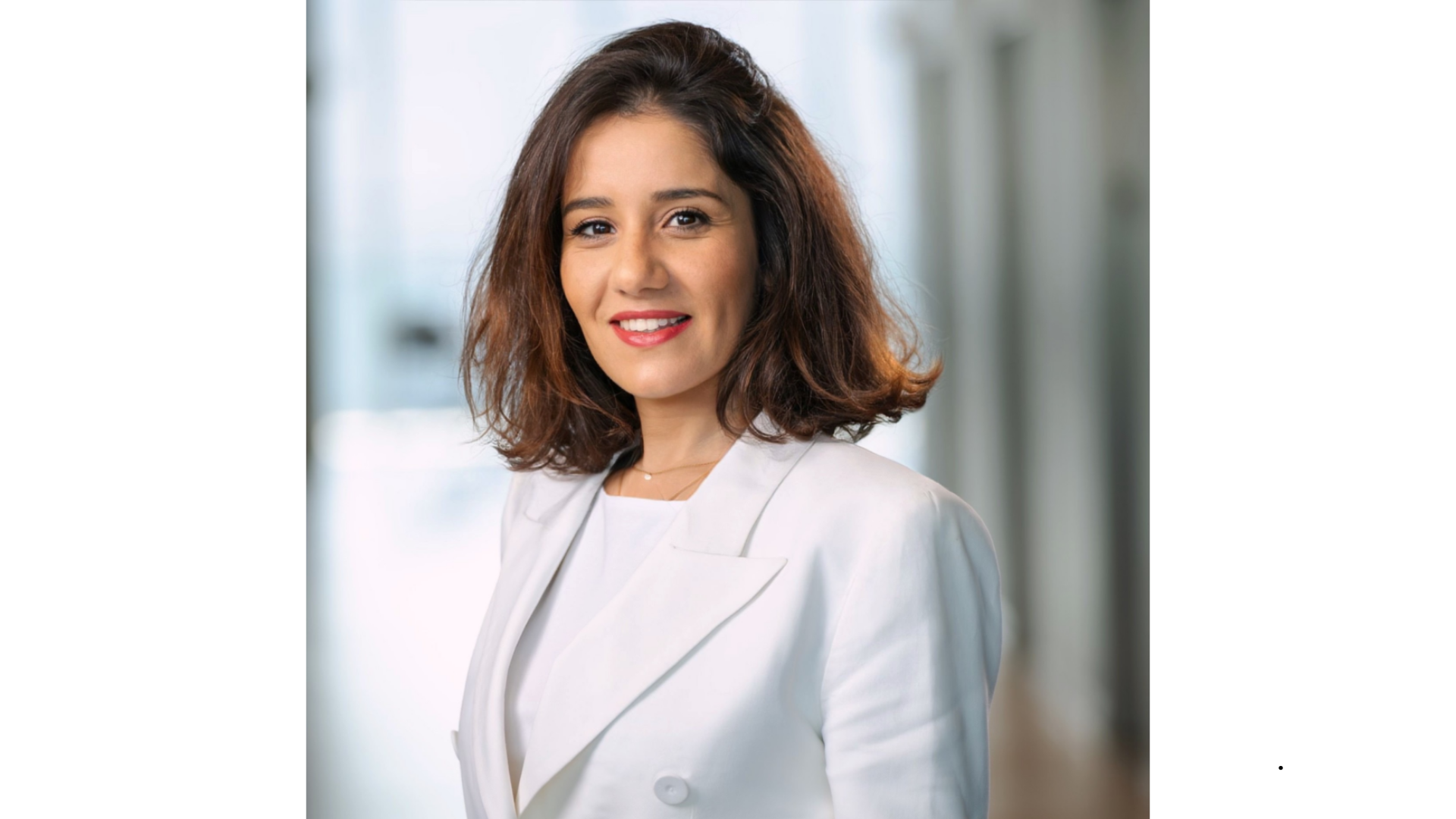
Myriam Bessa knows this firsthand. The Casablanca-based founder spent nearly a decade building L’Atelier Digital, a digital marketing agency she launched during maternity leave in 2017, while managing influencer campaigns for some of North Africa’s larger brands. By 2022, the operation had grown to 14 staff members managing dozens of influencers per campaign across multiple brands simultaneously. The volume exposed a structural problem the industry had not solved.
“The market is messy because that’s how Influencer Marketing works today,” Myriam says. “There is not one place where you are doing everything from brief to campaign.”
Losing a major client at the end of 2022 forced a reckoning. Revenue dropped by nearly $2 million the following year, and the business took two full years to recover. But the crisis also gave Myriam time to step back and see the problem clearly.
That breakdown became the foundation for Hypeo AI, an end-to-end Influencer Marketing platform that Myriam co-founded in June 2024. Incorporated in Delaware and operating out of Casablanca, Hypeo AI targets brands and agencies across Morocco, Africa, and the broader MENA (Middle East and North Africa) region with a workflow designed to compress what typically takes 10 days into under 15 minutes.
What Hypeo AI Actually Does
Hypeo AI is built around a single premise: every step of an influencer campaign, from brief to payment, should live in one place.
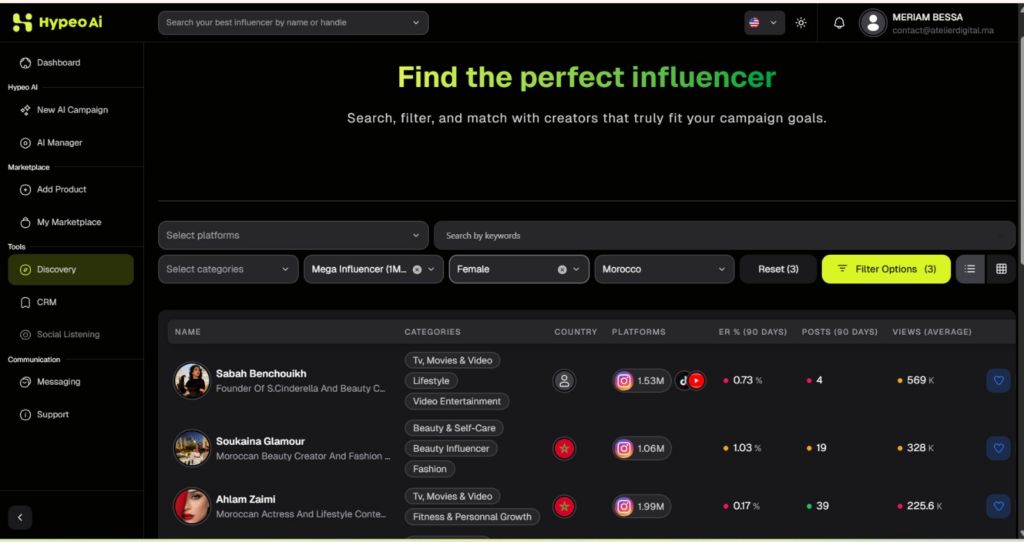
When a brand or agency enters the platform, an AI agent walks them through campaign parameters and generates a brief, a strategy, and a creator script in under 15 minutes. From there, the platform produces an AI-matched shortlist of influencers scored against the campaign brief, the brand, and the product. Negotiation, contracts, content review, and payment all run within the same environment.
“You don’t have to go and check decks or Excel sheets or emails or anything,” Myriam says.
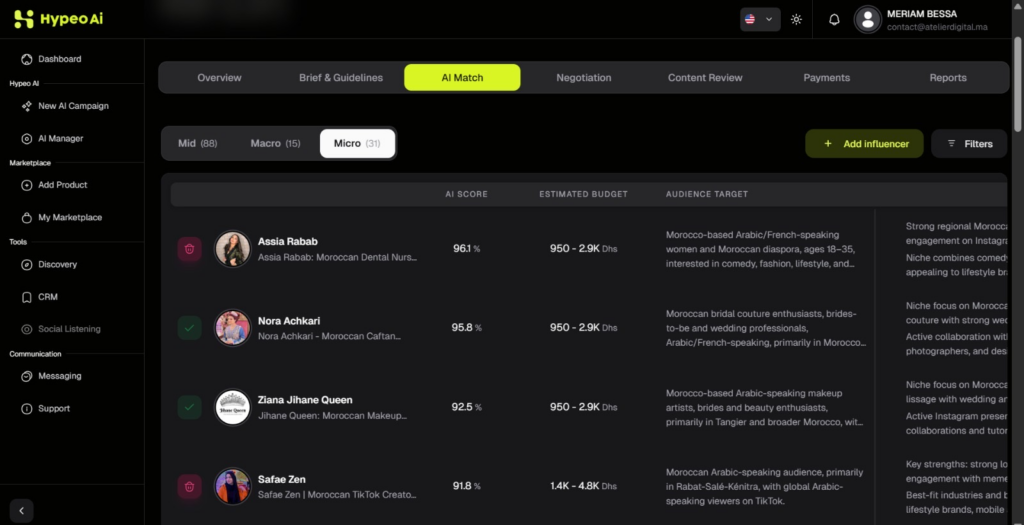
The AI matching component addresses what Myriam identifies as a consistent gap in how brands actually select influencers. In her years managing campaigns, agencies would present data-driven shortlists, and brands would routinely override them based on instinct. The result was inefficient and inconsistent.
“They ended up choosing based on feelings only and forgetting the data,” she says. “With AI matching, we are empowering them with both in one score.”

The Creator Side of the Equation
Myriam believes most Influencer Marketing platforms are built for brands. She positioned Hypeo AI to serve creators directly as well, a decision she frames as both strategic and ethical.
Influencers on the platform get free access to performance analytics, an AI coaching tool for content improvement, and a marketplace where they can actively apply to campaigns. That last feature addresses what Myriam calls a structural passivity built into the Creator Economy.
“Today, influencers worldwide cannot go to a brand,” she says. “They are just waiting for brands to come to them through agencies or directly. There is no way, worldwide today, to have a place where they can apply to a campaign and see if the brand is accepting them or not.”
The platform currently holds data on approximately 60,000 Moroccan influencers. When a campaign brief generates a match with an unregistered creator, the team reaches out directly. Myriam notes that free access for creators is also a business choice: it keeps the supply side of the marketplace growing without barriers.
Morocco and the MENA Creator Economy
Myriam describes the MENA influencer market as geographically fragmented, with each country operating under different economic conditions and levels of formalization.
According to her, the UAE functions as the region’s high-value hub, driven by mega-influencers and celebrity-tier rates. Saudi Arabia is the volume play, with a dense micro and nano-influencer ecosystem, which she sees as the region’s most significant near-term growth market. Egypt has exceptional content quality rooted in the country’s deep advertising culture, but formal commercialization lags due to the prevalence of undeclared influencer work.
“A lot of influencers are working without any legal documents,” she says. “The [MENA] market is big, but the numbers are not that big, and you don’t understand why. But when you realize that a lot of influencers are working without being paid formally, you understand it.”
In Morocco, Myriam describes the core sales challenge not as convincing brands to switch platforms, but as convincing them to abandon manual workflows entirely.
“Today, our main objective is actually trying to convince them to change their work style from manual to everything online,” she says. “Transparency is a green light. Gain of time is a green light. Centralizing everything is a green light.”
If she could change one thing about the industry in the region, she says, it would be formalization: each creator operating with a registered business entity, approaching influence as a professional career.
“I would like every influencer to have their legal documents,” she says, “and to make them understand that they can make a life with influence and it’s not a dark business.”
The Expansion
Hypeo AI is currently raising a seed round, with expansion into French-speaking African markets targeted for 2027. Senegal, the Ivory Coast, and Gabon are the priority markets. France is also on the roadmap, and Myriam is candid about why it ranks alongside sub-Saharan Africa in the near-term plan.
“In France, there are no platforms like ours,” she says. “The market is bigger and easier than Africa. The African market is not easy at all. It is the most difficult market in the world. There is everything to build there, and when you have to build, you need a lot of money.”
The company also plans to launch mobile apps for influencers, brands, and agencies. In a market where much of the work happens on mobile, Myriam views the apps as a prerequisite for real adoption at scale.
The longer-term vision is acquisition by a major advertising group. But Myriam’s immediate focus is more specific: demonstrating that the infrastructure gap she spent 10 years tackling manually is now solved.
“The region has no shortage of talent,” she says. “What’s been missing is smart infrastructure. We’re building the tools that allow brands and creators to meet faster, better, and work smarter.”