




Tech
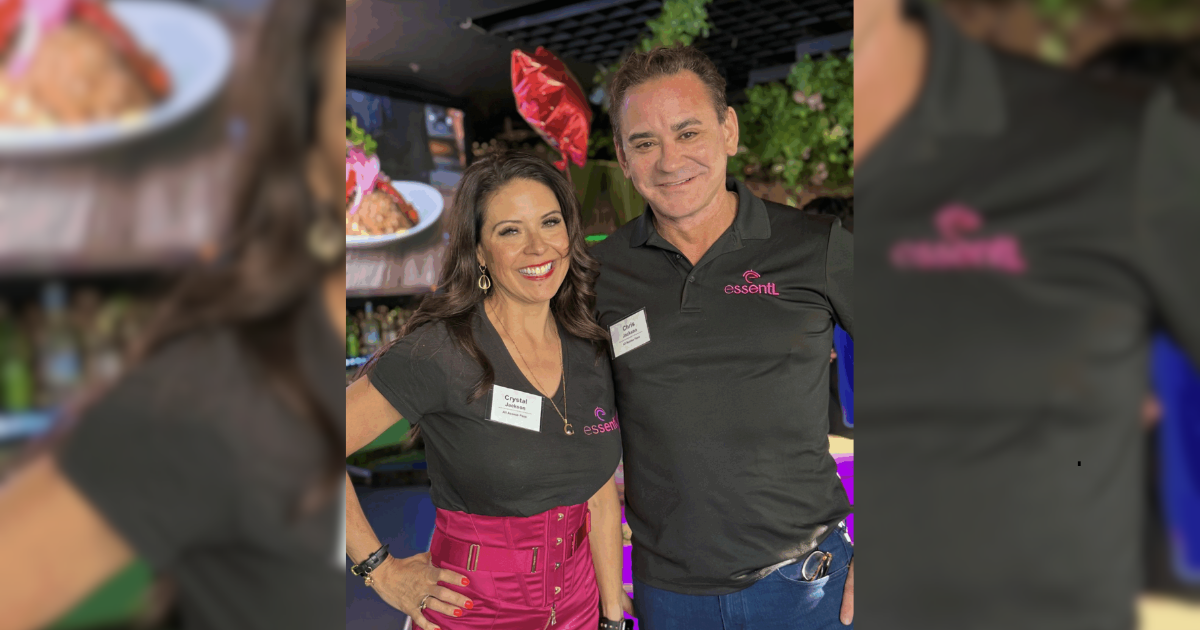
How Chris & Crystal Jackson Are Bringing Worker Protections To The Creator Economy

Chris and Crystal Jackson, the co-founders of essentL Creator, argue that while creators have built a multibillion-dollar industry, most still operate without the protections, benefits, and structural safeguards that traditional workers take for granted. Health insurance, payroll compliance, unemployment coverage, workers’ compensation, retirement plans – these, they say, are not “nice to haves.” They are the foundation of a sustainable business.
“Workers’ benefits for the internet creator,” Crystal says. “That’s really what we do.”
Founded in 2024 in California, essentL Creator is structured as a professional employer organization (PEO) designed specifically for individual creators, solopreneurs, and small creator teams. Its core offering allows creators to access corporate-grade benefits, typically reserved for large employers, by joining a shared employment structure that pools risk, compliance, and administrative overhead.
The premise is simple: creators should be able to operate like real businesses without having to build an HR department from scratch.
From Silicon and Science to Internet Infrastructure
Both Chris and Crystal began their careers at Intel, working deep inside the semiconductor supply chain. Crystal trained as a chemist and worked in silicon fabrication labs. Chris, a physicist, focused on logic design and circuit architecture.
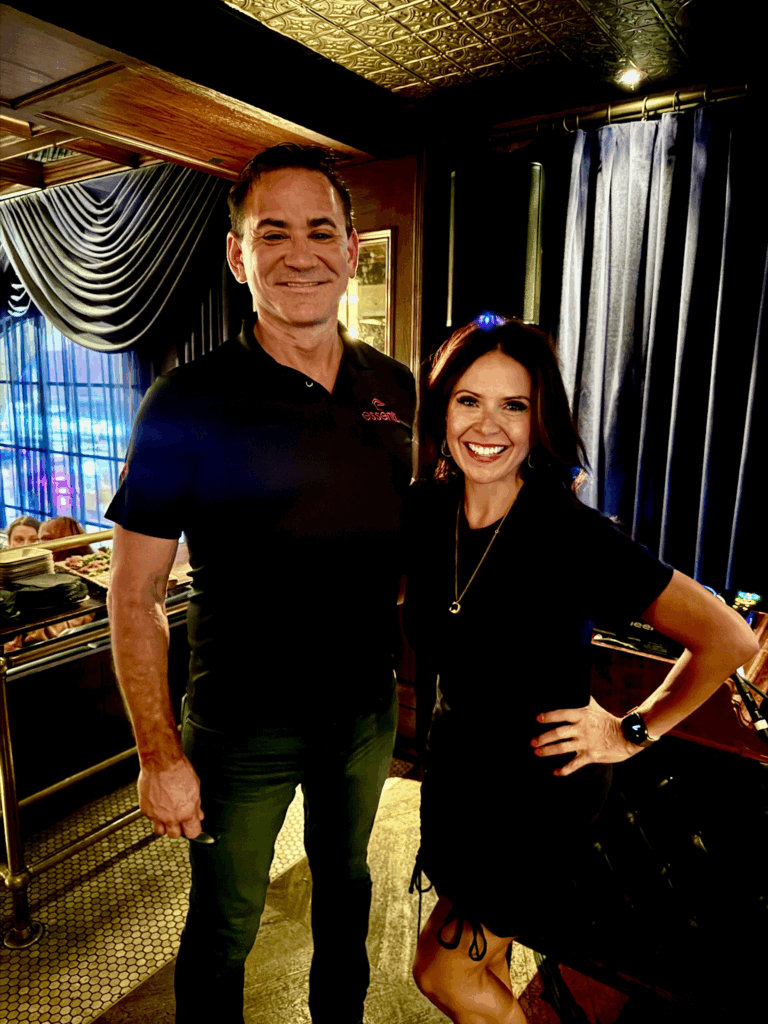
After leaving Intel, the pair founded and led multiple technology businesses across data management, cybersecurity, agricultural software, financial services, and analytics. Crystal later served as Chief of Application Development for the California Department of Public Health during COVID-19. Chris held CEO and CTO roles across venture-backed startups and large enterprises.
The creator economy entered their lives almost by accident.
“As the creator stuff was bubbling up, we were like, ‘Holy cow. This is a really interesting business,’” Chris says. “We started it and, after a while, when it just made tons of money, we said, ‘You know what, we should just quit our jobs and focus on this.’”
What initially looked like an opportunity soon revealed a deeper structural problem.
The Pain Point That Sparked essentL Creator
The idea for essentL Creator did not begin with a market analysis. It began with a monthly bill.
“For about 18 months straight, I was writing a $4,000 check every month for health insurance,” Crystal says. “And every month I said, ‘This is crazy. There’s got to be a better solution.’”
As independent business owners, the Jacksons were paying open-market health insurance rates: high premiums, steep deductibles, and limited coverage. Despite earning well, they lacked access to the group benefits they had as corporate employees.
When Chris contacted a former MBA classmate who worked in national insurance, the answer was blunt.
“He said, ‘No, individual corporate-grade insurance as you get at Intel does not exist,’” Chris recalls. “It’s statistics. If I insure 100,000 people, I can spread risk. If I insure one person and they get sick, I lose.”
The workaround, he explained, was a professional employer organization, a legal structure that allows many small businesses or individuals to operate as a single employer for benefits and compliance purposes.
Other PEOs already existed. None wanted creators. “Once you do all that work, you want the 100-person company,” Chris says. “You don’t want the individual YouTuber.”
So the Jacksons decided to build the structure themselves, explicitly for creators.
How the Model Works
essentL Creator operates as a benefits corporation and professional employer organization (PEO), making creators co-employees within a shared legal framework. This structure allows the company to negotiate corporate-grade benefits with national carriers such as MetLife and Cigna, while assuming the employer responsibilities required under U.S. law.
“We don’t sell insurance,” Crystal emphasizes. “We offer corporate benefits, and they are done by an underwriter.”
Behind that legal structure sits a full-stack, internet-based technology platform designed to connect systems that were never built for independent creators to work together at scale. essentL Creator integrates directly with insurance carriers, payroll systems, tax authorities, unemployment insurance, and workers’ compensation providers through APIs, allowing processes that are typically fragmented and manual to operate as a single, continuous system.
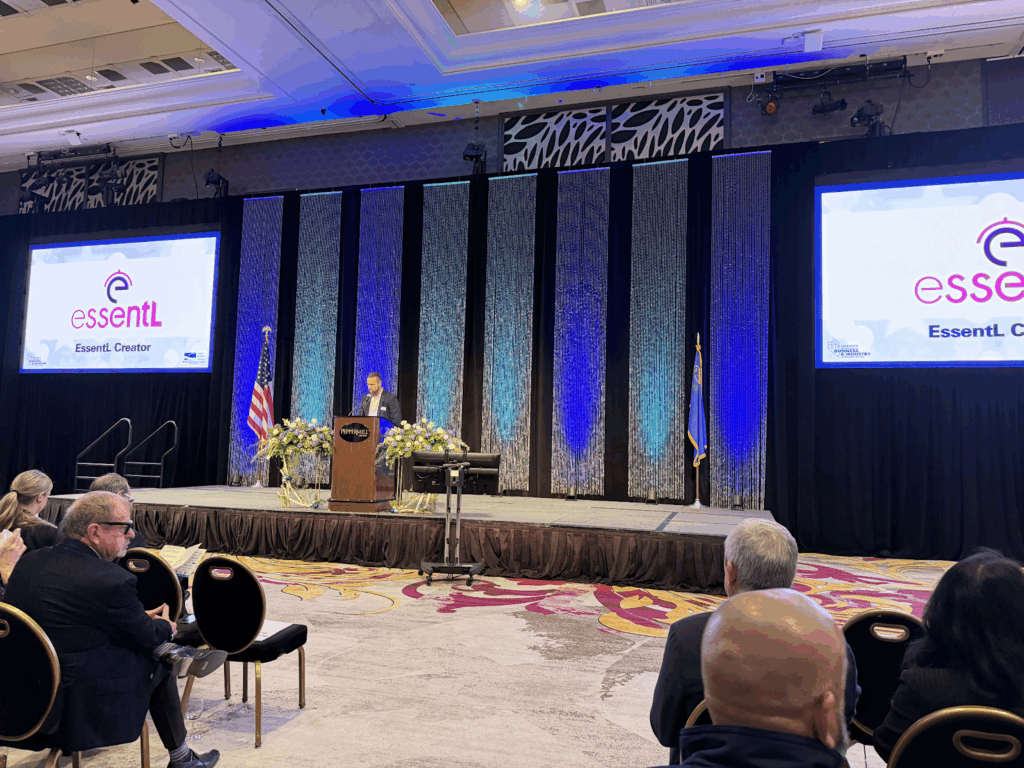
Internally, the Jacksons describe the platform as a bridge between legacy institutions and a digital-first workforce. “Our technology connects old-school requirements like insurance and taxation to a new-school internet creator economy,” Chris says.
By law, operating this way also means offering workers’ compensation, unemployment insurance, payroll tax withholding, and labor-law compliance, i.e., services many creators have never set up on their own.
“To access corporate-grade benefits, we have to take on the same legal responsibilities as any employer, including offering all the protections workers are entitled to,” Crystal says.
For creators, the result is a system that brings payroll, HR compliance, benefits administration, and access to legal and financial partners under one roof while keeping the underlying complexity largely invisible. The Jacksons argue that this is what makes the model scalable: creators interact with a platform designed for ease of use, while the regulatory, technical, and administrative burdens are absorbed by the infrastructure that supports it.
Why Creators Struggle With Business Infrastructure
According to the Jacksons, the biggest obstacle is not cost, but education.
“If you’re an interior designer and you grow your company, you know what’s required,” Chris says. “A creator generally doesn’t know what’s required.”
Many creators begin as individuals filming content alone, often earning revenue before ever thinking about taxes, payroll, or legal structure. As income scales, those gaps can become liabilities. “We’ve seen creators get dinged by the IRS and have all their money frozen,” Crystal says. “Because they didn’t know they had to run payroll taxes.”
Under essentL Creator’s structure, payroll becomes mandatory, not as a growth tactic, but as a compliance safeguard.
“The IRS lets us be a benefits corporation because we run payroll,” Chris explains. “They know they’re going to get their withholding.”
Mental Health as a Core Benefit
Beyond compliance, the Jacksons point to mental health as one of the most under-addressed issues in the creator economy.
“We’ve seen the darkest of the dark,” Chris says. “In extreme cases, we’ve seen creators commit suicide because when they go down, the money goes down.”
Creators often work in isolation, with income tied directly to volatile platform metrics. Stress compounds when demonetization, algorithm changes, or public criticism occur. “I don’t need a discount on mental health,” Chris adds. “I need to see a therapist every week for 52 weeks. And I want it covered.”
Hence, essentL Creator negotiated enhanced mental health and addiction medicine coverage with its underwriters, an area the Jacksons believe reflects creators’ real health needs.
“Our policies cover that,” Crystal says. “That was one of our biggest points.”
Agencies, Platforms, and Retention
While individual creators make up a large portion of essentL Creator’s user base, the company also works with talent agencies and creator teams.
For agencies, the Jacksons note that benefits can function as a retention tool. “If you have an agency with 100 creators, one benefit is loyalty,” Crystal says. “If you subsidize benefits, creators are less likely to leave.”
The duo also sees potential for platforms to play a role. “If you lose your top 1-2% of creators, you’re out of business,” Chris says. “If you offer benefits, they might stay.”
A Maturing Industry
The Jacksons believe this year marks a turning point.
“For years it was, ‘How do I get brand deals?’” Crystal says. “Now it’s, ‘How do I build a real business?’”
Chris frames it more bluntly: “Those tools that raised venture capital in 2021 – scheduling, editing – I thought they were losers. What matters now is the underpinning of the business.”
They see growing alignment between private solutions like theirs and emerging policy discussions around creator protections, such as Congressman Ro Khanna’s Creator Bill of Rights, a recently introduced resolution that establishes seven areas to protect creators.
“What that bill is trying to solve, that’s what we do,” Chris says. “Private industry can move faster.”
What Comes Next?
In 2026, essentL Creator’s priority is growth, specifically onboarding and education.
“Our hurdle is education,” Crystal says. “It only takes about an hour to onboard, but creators don’t like forms.”
In the long run, the Jacksons envision using aggregated creator data, ethically and at scale, to help brands identify creators aligned with their values and audiences, creating new revenue opportunities within the ecosystem.
But that vision depends on getting the basics right first. “You can’t grow unless you build structure,” Chris says. “Corporate structures exist because they work.”
For now, essentL Creator is focused on making sure creators no longer have to choose between independence and protection.
“Workers’ benefits and workers’ rights for the internet creator,” Crystal reiterates. “That’s the future.”
Subscribe to Our Newsletter
Check Out Our Podcast