When Cassey Ho uploaded a 10-minute Pilates video to YouTube in 2009, she wasn’t trying to build a business empire; she was simply leaving a parting gift for her 40 students at 24 Hour Fitness before moving across the country for a corporate job. That video, intended for a handful of people, would eventually lead to a fashion empire worth millions and a coveted spot in Taylor Swift’s wardrobe.
Today, Cassey commands an audience of over 10 million YouTube subscribers and runs two successful activewear brands—Popflex and Blogilates—the latter of which has secured prime real estate at the front of every Target store in America. Her journey from fitness instructor to fashion CEO offers a masterclass in how content creators can build sustainable businesses beyond the algorithm.
The Reluctant Pre-Med Student Who Sketched Her Way to Success
Cassey’s entrepreneurial DNA revealed itself early. In middle school, she ran K Cookies and Candies, a small bakery operation. By high school, she was designing Halloween costumes and prom dresses for friends, carrying a sketchbook everywhere. But when she announced her intention to pursue fashion design, her parents delivered an ultimatum that would haunt her college years.
“My dad said, ‘You’re either going to be a doctor, a lawyer, or a failure,'” Cassey recalls. “He said I wouldn’t make any money, wouldn’t have any friends. It really scared me.”
The daughter of Vietnamese and Chinese parents who fled the Vietnam War in 1975, Cassey understood their emphasis on financial stability. She dutifully enrolled at Whittier College on a Fulbright scholarship, excelling in science and math while her heart remained hollow. The breaking point came in her third year.
“I was crying many nights in college, asking myself: Am I on this earth to make my parents happy, or am I supposed to make myself happy?” she says. In an act of calculated rebellion, Cassey dropped organic chemistry—the last prerequisite before the MCAT—effectively derailing her path to medical school.
When Content Creation Meets Product Innovation
While Cassey’s YouTube channel grew steadily from 2009 onward, she was quietly building a product empire behind the scenes. She designed motivational shirts, water bottles, and yoga mats, wearing them in videos without fanfare. The real transformation came in 2021 when she made a pivotal decision: let the design process become the content itself.
“I started making 60-second vertical videos sharing my sketches, explaining the problems we’re solving,” Cassey explains. “Sometimes these videos would go viral and sell out within hours.”
This content strategy revealed a crucial insight that many creator-entrepreneurs miss: audiences crave authenticity and process, not just polished outcomes. By showing her design journey—from initial sketch to problem-solving iterations—Cassey created a feedback loop that both engaged her community and improved her products.
The Taylor Swift Moment That Changed Everything
In 2024, Cassey’s approach reached a cultural apex when Taylor Swift stepped out wearing a lilac skort from Popflex. “It was such a dream come true moment,” Cassey says, though she’s quick to note the double-edged nature of viral success. “After that, the product got even more dupes.”
The knockoff problem has become Cassey’s unlikely badge of honor. Major retailers from Nordstrom to Kohl’s have copied her designs, a frustrating validation of her innovation. Rather than dwelling on the negatives, Cassey focuses on what separates authentic brands from imitators: the soul behind the product.
“Each product takes anywhere between one and a half to three years to get to market,” she reveals. “We fit on a size small model and a 1X model, then test from extra small to 3X across all nine sizes. If the fit isn’t perfect, I won’t release it.”
This meticulous approach recently delayed their swim line by three months. “Maybe I’m losing out on revenue, but I’d rather that than lose trustworthiness, which takes forever to build.”
Building Culture Through Kindness
As Popflex scaled, Cassey faced the dark nights familiar to many founders. “There was a time when I was about to quit everything—Blogilates, Popflex, all of it,” she admits. “I thought I wasn’t suited to be a CEO because things weren’t working.”
The problem wasn’t Cassey’s vision or products—it was the organization she put together to support her vision. Learning to hire, fire, and build culture became her steepest learning curve. Today, she’s most proud when external partners comment on her team’s kindness and work ethic.
“Culture trickles down from the top,” Cassey observes. “My husband and I are hyper-aware of people’s emotions because I’m a highly emotional person. We act the way we want to be treated.”
Her company handbook now features 10 core values that employees sign off on, including one that addresses conflict directly: approach friction with solutions and kindness. For a remote company, this clarity proves essential.
The Creator’s Playbook for Building Brands
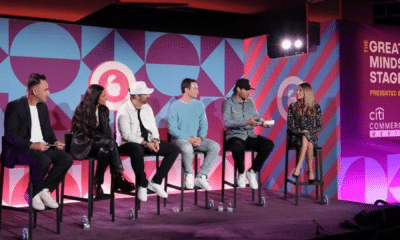
Cassey recently attended VidCon 2025 as one of the speakers where she shared her experience as a content creator and entrepreneur, highlighting the lessons she’s learned about building successful businesses and long-term brand strategy.
Her message to aspiring creator-entrepreneurs is both encouraging and sobering. “Not every creator has to be a business person. Not every creator has to be the CEO,” she emphasizes. “You have to love what you do to keep doing this.”
For those ready to take the plunge, Cassey’s playbook is deceptively simple:
Start with genuine problems: Every Popflex innovation addresses a specific issue, from the front seam on leggings that creates discomfort to the lack of pockets in women’s clothing. “I’m not going to make something unless I can make it better,” she states.
Make authenticity your marketing strategy: By sharing her design process transparently, Cassey built trust that translates to sales. “It has to be like talking to a friend about something you just bought and love. Otherwise, people see right through you.”
Choose your battles wisely: When faced with copycats and competition, Cassey focuses on what she can control—product quality and customer trust. “At the end of the day, if it’s a bad product, you have no business.”
Scale thoughtfully: The launch of Blogilates at Target addressed a specific customer request for more affordable options. By creating a sister brand at half the price point, Cassey expanded access without diluting Popflex’s premium positioning.
The Future of Creator Commerce
Cassey’s success story illuminates a broader shift in how businesses are built in the creator economy. Unlike traditional entrepreneurs who create products and then seek audiences, creator-entrepreneurs like Cassey build communities first and solve their problems second.
“I’ve always been an entrepreneur, and content creation was just part of the journey versus the other way around,” she clarifies. This distinction matters. While many creators struggle to monetize beyond sponsorships and ad revenue, Cassey’s approach—building genuine products for an engaged community—offers a more sustainable path.
As she continues sketching solutions to women’s clothing frustrations, one thing remains constant: the intention to serve that launched her first YouTube video. “Anytime there’s a situation, we ask, ‘What does the customer want?’ That usually leads us to the right place.”
For creators watching Cassey’s growth, the lesson is clear: sustainable success comes not from viral moments or celebrity endorsements, but from solving real problems for real people—even if it starts with just 40 of them in a gym class.
Dragomir is a Serbian freelance blog writer and translator. He is passionate about covering insightful stories and exploring topics such as influencer marketing, the creator economy, technology, business, and cyber fraud.
















When Cassey Ho uploaded a 10-minute Pilates video to YouTube in 2009, she wasn’t trying to build a business empire; she was simply leaving a parting gift for her 40 students at 24 Hour Fitness before moving across the country for a corporate job. That video, intended for a handful of people, would eventually lead to a fashion empire worth millions and a coveted spot in Taylor Swift’s wardrobe.
Today, Cassey commands an audience of over 10 million YouTube subscribers and runs two successful activewear brands—Popflex and Blogilates—the latter of which has secured prime real estate at the front of every Target store in America. Her journey from fitness instructor to fashion CEO offers a masterclass in how content creators can build sustainable businesses beyond the algorithm.
The Reluctant Pre-Med Student Who Sketched Her Way to Success
Cassey’s entrepreneurial DNA revealed itself early. In middle school, she ran K Cookies and Candies, a small bakery operation. By high school, she was designing Halloween costumes and prom dresses for friends, carrying a sketchbook everywhere. But when she announced her intention to pursue fashion design, her parents delivered an ultimatum that would haunt her college years.
“My dad said, ‘You’re either going to be a doctor, a lawyer, or a failure,'” Cassey recalls. “He said I wouldn’t make any money, wouldn’t have any friends. It really scared me.”
The daughter of Vietnamese and Chinese parents who fled the Vietnam War in 1975, Cassey understood their emphasis on financial stability. She dutifully enrolled at Whittier College on a Fulbright scholarship, excelling in science and math while her heart remained hollow. The breaking point came in her third year.
“I was crying many nights in college, asking myself: Am I on this earth to make my parents happy, or am I supposed to make myself happy?” she says. In an act of calculated rebellion, Cassey dropped organic chemistry—the last prerequisite before the MCAT—effectively derailing her path to medical school.
When Content Creation Meets Product Innovation
While Cassey’s YouTube channel grew steadily from 2009 onward, she was quietly building a product empire behind the scenes. She designed motivational shirts, water bottles, and yoga mats, wearing them in videos without fanfare. The real transformation came in 2021 when she made a pivotal decision: let the design process become the content itself.
“I started making 60-second vertical videos sharing my sketches, explaining the problems we’re solving,” Cassey explains. “Sometimes these videos would go viral and sell out within hours.”
This content strategy revealed a crucial insight that many creator-entrepreneurs miss: audiences crave authenticity and process, not just polished outcomes. By showing her design journey—from initial sketch to problem-solving iterations—Cassey created a feedback loop that both engaged her community and improved her products.
The Taylor Swift Moment That Changed Everything
In 2024, Cassey’s approach reached a cultural apex when Taylor Swift stepped out wearing a lilac skort from Popflex. “It was such a dream come true moment,” Cassey says, though she’s quick to note the double-edged nature of viral success. “After that, the product got even more dupes.”
The knockoff problem has become Cassey’s unlikely badge of honor. Major retailers from Nordstrom to Kohl’s have copied her designs, a frustrating validation of her innovation. Rather than dwelling on the negatives, Cassey focuses on what separates authentic brands from imitators: the soul behind the product.
“Each product takes anywhere between one and a half to three years to get to market,” she reveals. “We fit on a size small model and a 1X model, then test from extra small to 3X across all nine sizes. If the fit isn’t perfect, I won’t release it.”
This meticulous approach recently delayed their swim line by three months. “Maybe I’m losing out on revenue, but I’d rather that than lose trustworthiness, which takes forever to build.”
Building Culture Through Kindness
As Popflex scaled, Cassey faced the dark nights familiar to many founders. “There was a time when I was about to quit everything—Blogilates, Popflex, all of it,” she admits. “I thought I wasn’t suited to be a CEO because things weren’t working.”
The problem wasn’t Cassey’s vision or products—it was the organization she put together to support her vision. Learning to hire, fire, and build culture became her steepest learning curve. Today, she’s most proud when external partners comment on her team’s kindness and work ethic.
“Culture trickles down from the top,” Cassey observes. “My husband and I are hyper-aware of people’s emotions because I’m a highly emotional person. We act the way we want to be treated.”
Her company handbook now features 10 core values that employees sign off on, including one that addresses conflict directly: approach friction with solutions and kindness. For a remote company, this clarity proves essential.
The Creator’s Playbook for Building Brands
Cassey recently attended VidCon 2025 as one of the speakers where she shared her experience as a content creator and entrepreneur, highlighting the lessons she’s learned about building successful businesses and long-term brand strategy.
Her message to aspiring creator-entrepreneurs is both encouraging and sobering. “Not every creator has to be a business person. Not every creator has to be the CEO,” she emphasizes. “You have to love what you do to keep doing this.”
For those ready to take the plunge, Cassey’s playbook is deceptively simple:
Start with genuine problems: Every Popflex innovation addresses a specific issue, from the front seam on leggings that creates discomfort to the lack of pockets in women’s clothing. “I’m not going to make something unless I can make it better,” she states.
Make authenticity your marketing strategy: By sharing her design process transparently, Cassey built trust that translates to sales. “It has to be like talking to a friend about something you just bought and love. Otherwise, people see right through you.”
Choose your battles wisely: When faced with copycats and competition, Cassey focuses on what she can control—product quality and customer trust. “At the end of the day, if it’s a bad product, you have no business.”
Scale thoughtfully: The launch of Blogilates at Target addressed a specific customer request for more affordable options. By creating a sister brand at half the price point, Cassey expanded access without diluting Popflex’s premium positioning.
The Future of Creator Commerce
Cassey’s success story illuminates a broader shift in how businesses are built in the creator economy. Unlike traditional entrepreneurs who create products and then seek audiences, creator-entrepreneurs like Cassey build communities first and solve their problems second.
“I’ve always been an entrepreneur, and content creation was just part of the journey versus the other way around,” she clarifies. This distinction matters. While many creators struggle to monetize beyond sponsorships and ad revenue, Cassey’s approach—building genuine products for an engaged community—offers a more sustainable path.
As she continues sketching solutions to women’s clothing frustrations, one thing remains constant: the intention to serve that launched her first YouTube video. “Anytime there’s a situation, we ask, ‘What does the customer want?’ That usually leads us to the right place.”
For creators watching Cassey’s growth, the lesson is clear: sustainable success comes not from viral moments or celebrity endorsements, but from solving real problems for real people—even if it starts with just 40 of them in a gym class.
Subscribe to Our Newsletter
Check Out Our Podcast