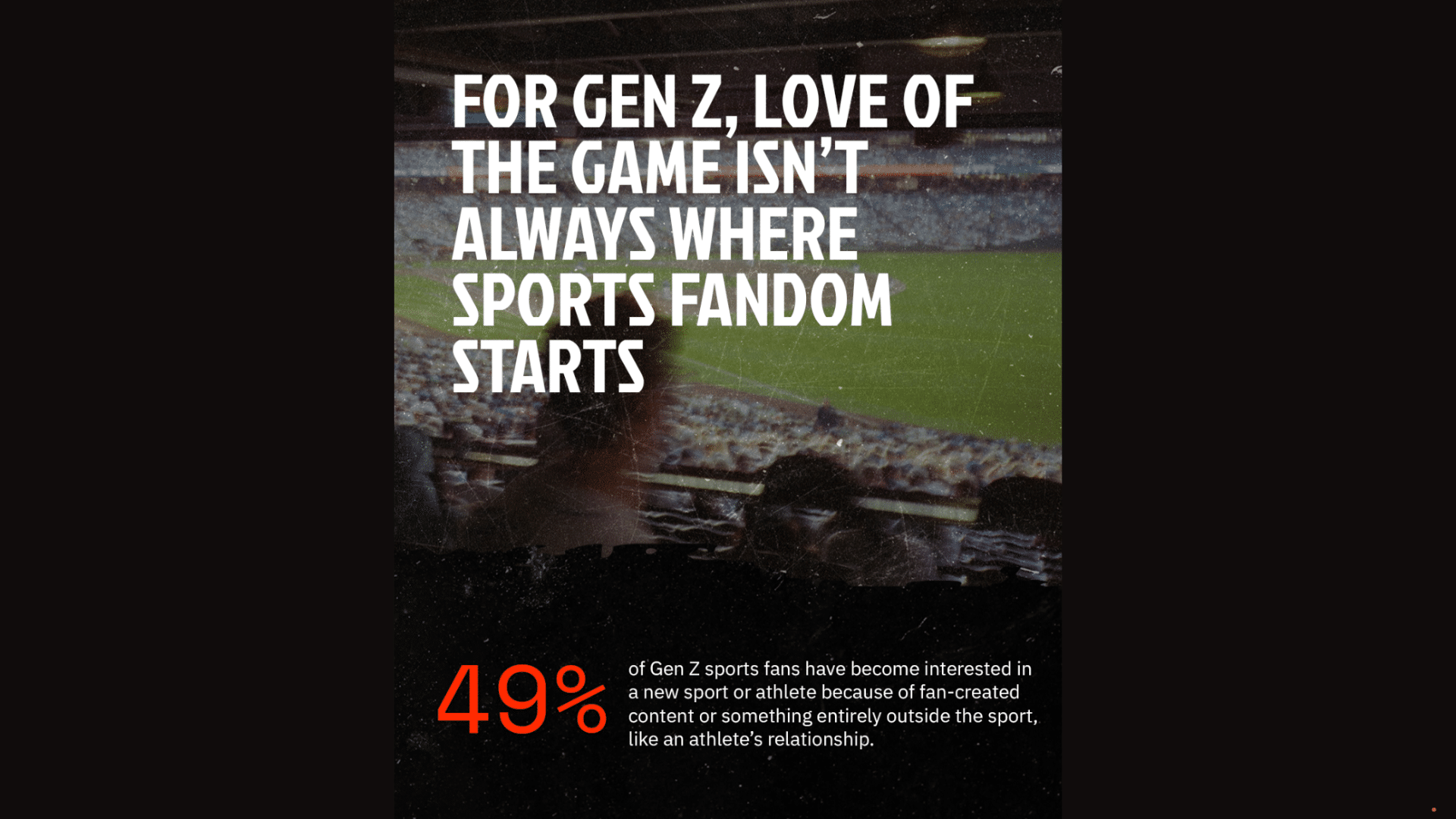
A new study from the USC Annenberg x ACC Think Tank found that 49% of Gen Z sports fans have become interested in a new sport or athlete because of fan-created content or something entirely outside the sport, such as an athlete’s relationship, rather than through the competition itself.
The report, “Gen Z Sports Fandom + The Mega-Moment,” combines a nationally representative YouGov survey of 2,154 US Gen Z adults conducted May 12 to 20, 2026, a community survey of 146 Gen Z adults aged 18 to 29, and live focus groups. It also draws on 52 weeks of secondary YouGov Profiles data collected between June 2025 and June 2026.
Among the specific triggers for short-term interest in a sport or athlete, 25% of respondents cited a viral video, 23% a movie or TV show, 19% an athlete’s personal life or relationship, 18% a celebrity or influencer they like being involved in the sport, and 18% a rivalry or scandal. Sixteen percent pointed to a fan edit and 16% to a creator or streamer they follow.
Fandom Splits Into Five Modes, Not Two
The study found that traditional categories of “fan” and “non-fan” no longer describe most of Gen Z. Twenty-six percent identify as die-hard fans who watch full games regularly for at least one sport, and 26% are not sports fans at all. The remaining 48%, described in the report as “the New Bandwagon,” follow athletes, highlights or social content without identifying as die-hards.
The report breaks this middle group into five overlapping modes: athlete-driven, content-driven, drama-driven, tradition-driven and community-driven fandom, each responding to a different part of the same event. Researchers argue that a single marketing message will not reach all five.
The Second Screen Is the Default, Not the Exception
The study found that 92% of Gen Z sports fans do something else on their phones while watching a game, with just 8% staying off their devices entirely. Thirty-seven percent said they text people they know about the game, 35% watch highlights or short-form content, and 35% scroll unrelated social media.
Attendance at live events tracks a similar logic. Only 46% of Gen Z agreed that attending a live sporting event is more enjoyable than watching on TV, according to YouGov Profiles data cited in the report. When asked what would most increase their likelihood of buying a ticket, 50% named lower prices, 39% said friends or family attending with them, and 23% pointed to entertainment beyond the gameplay. Separately, 78% of Gen Z sports viewers said they have attended or would attend a major sporting event primarily for the experience around it, such as concerts or brand activations, rather than the game itself.
LA28 Faces an Engagement Gap
With the FIFA World Cup, Super Bowl LXI and the 2028 Olympics all set to take place in Los Angeles within roughly two years, the report flags a specific risk for the Olympics: only 23% of Gen Z say they follow and engage with the Games. Thirty-seven percent said they have no interest in attending the Olympics in person, 21% said they feel they should care but don’t feel engaged, and 20% said the Games feel overly commercialized.
Cost compounds the gap. More than two in five Gen Z respondents said they would not spend $250 or more on a single Olympic ticket, and 27% said they are interested in attending but feel it is financially out of reach. Half of Gen Z said they would not use buy-now-pay-later financing for sports or live events at all; among those who would, 34% said they’d use it for World Cup tickets and 32% for concert tickets.
Betting Draws Skepticism, AI Draws More
Gen Z respondents aged 21 and over were more than twice as likely to view the growth of sports betting negatively as positively, with 48% calling it negative against 20% positive. Thirty-six percent agreed that widespread betting makes fans care more about money than sports.
Resistance was sharper on AI-generated content. Fifty-six percent of respondents said they want real footage only and would not watch an AI-generated highlight reel personalized to their interests, and 60% said AI-generated or simulated athletes competing against real ones would ruin the authenticity of the sport.
Image source: “Gen Z Sports Fandom + The Mega-Moment” The full report is available here
Dragomir is a Serbian freelance blog writer and translator. He is passionate about covering insightful stories and exploring topics such as influencer marketing, the creator economy, technology, business, and cyber fraud.










A new study from the USC Annenberg x ACC Think Tank found that 49% of Gen Z sports fans have become interested in a new sport or athlete because of fan-created content or something entirely outside the sport, such as an athlete’s relationship, rather than through the competition itself.
The report, “Gen Z Sports Fandom + The Mega-Moment,” combines a nationally representative YouGov survey of 2,154 US Gen Z adults conducted May 12 to 20, 2026, a community survey of 146 Gen Z adults aged 18 to 29, and live focus groups. It also draws on 52 weeks of secondary YouGov Profiles data collected between June 2025 and June 2026.
Among the specific triggers for short-term interest in a sport or athlete, 25% of respondents cited a viral video, 23% a movie or TV show, 19% an athlete’s personal life or relationship, 18% a celebrity or influencer they like being involved in the sport, and 18% a rivalry or scandal. Sixteen percent pointed to a fan edit and 16% to a creator or streamer they follow.
Fandom Splits Into Five Modes, Not Two
The study found that traditional categories of “fan” and “non-fan” no longer describe most of Gen Z. Twenty-six percent identify as die-hard fans who watch full games regularly for at least one sport, and 26% are not sports fans at all. The remaining 48%, described in the report as “the New Bandwagon,” follow athletes, highlights or social content without identifying as die-hards.
The report breaks this middle group into five overlapping modes: athlete-driven, content-driven, drama-driven, tradition-driven and community-driven fandom, each responding to a different part of the same event. Researchers argue that a single marketing message will not reach all five.
The Second Screen Is the Default, Not the Exception
The study found that 92% of Gen Z sports fans do something else on their phones while watching a game, with just 8% staying off their devices entirely. Thirty-seven percent said they text people they know about the game, 35% watch highlights or short-form content, and 35% scroll unrelated social media.
Attendance at live events tracks a similar logic. Only 46% of Gen Z agreed that attending a live sporting event is more enjoyable than watching on TV, according to YouGov Profiles data cited in the report. When asked what would most increase their likelihood of buying a ticket, 50% named lower prices, 39% said friends or family attending with them, and 23% pointed to entertainment beyond the gameplay. Separately, 78% of Gen Z sports viewers said they have attended or would attend a major sporting event primarily for the experience around it, such as concerts or brand activations, rather than the game itself.
LA28 Faces an Engagement Gap
With the FIFA World Cup, Super Bowl LXI and the 2028 Olympics all set to take place in Los Angeles within roughly two years, the report flags a specific risk for the Olympics: only 23% of Gen Z say they follow and engage with the Games. Thirty-seven percent said they have no interest in attending the Olympics in person, 21% said they feel they should care but don’t feel engaged, and 20% said the Games feel overly commercialized.
Cost compounds the gap. More than two in five Gen Z respondents said they would not spend $250 or more on a single Olympic ticket, and 27% said they are interested in attending but feel it is financially out of reach. Half of Gen Z said they would not use buy-now-pay-later financing for sports or live events at all; among those who would, 34% said they’d use it for World Cup tickets and 32% for concert tickets.
Betting Draws Skepticism, AI Draws More
Gen Z respondents aged 21 and over were more than twice as likely to view the growth of sports betting negatively as positively, with 48% calling it negative against 20% positive. Thirty-six percent agreed that widespread betting makes fans care more about money than sports.
Resistance was sharper on AI-generated content. Fifty-six percent of respondents said they want real footage only and would not watch an AI-generated highlight reel personalized to their interests, and 60% said AI-generated or simulated athletes competing against real ones would ruin the authenticity of the sport.
Image source: “Gen Z Sports Fandom + The Mega-Moment”
The full report is available here
Subscribe to Our Newsletter
Check Out Our Podcast