






Tech
MovieMe Is Rebuilding Streaming Around Time Instead of Views

Most streaming platforms pay creators based on how many people watched. MovieMe pays them based on how long those people stayed.
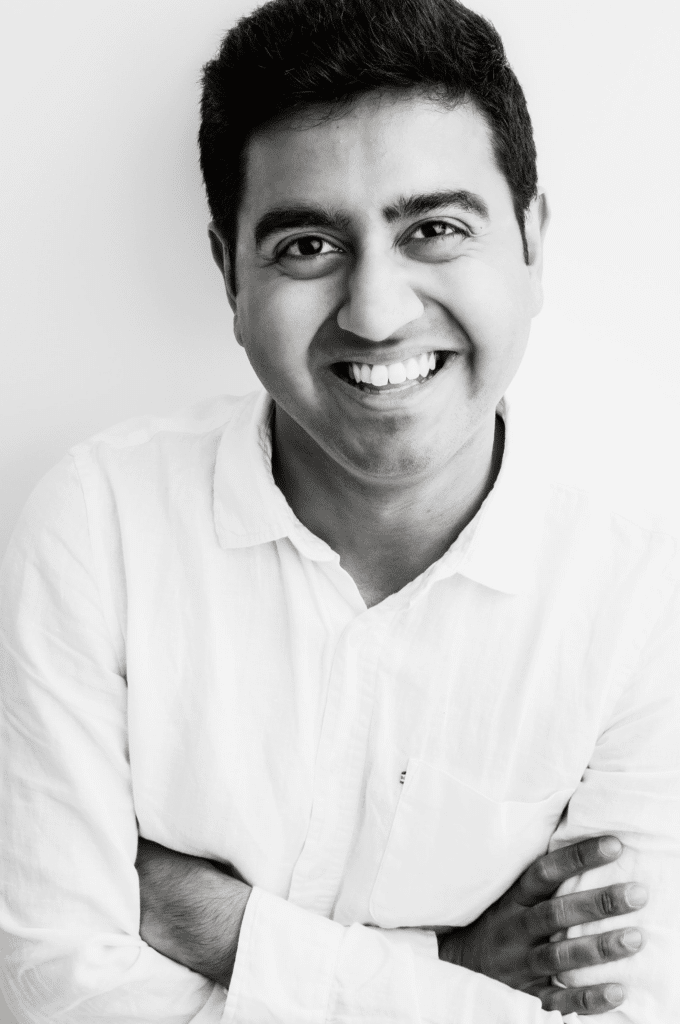
The distinction matters to founder and CEO Bhavesh Joshi because he spent years watching it play out. After studying at the School of Visual Arts in New York and the National Film and Television School in the UK, Bhavesh worked in film acquisitions and distribution, including stints at NBC Universal and a European distributor serving Australia and New Zealand, advising platforms on licensing at a time when streaming services increasingly benchmarked acquisition fees against box office performance.
“The people who are actually driving the most internet traffic are locked out of the financial returns of that traffic,” he says.
He founded MovieMe in Melbourne in 2022 as a data company, pivoted toward content, and tested the pay-per-minute concept using a library of lesser-known films. That test drew viewers from more than 90 countries, confirming demand. Despite no paid marketing since, the platform reports 150,000 downloads and 43.5% first-month retention. The July 2026 official launch, anchored in Turkey by one of that country’s most prominent digital voices, is the first step in a global rollout built around a partner program that offers talent agencies a perpetual revenue share for bringing long-form creators onto the platform.
What MovieMe is asking the industry to accept is a model that departs from nearly everything streaming has standardized over the last decade.
Why Both Dominant Models Fall Short
Bhavesh’s critique of ad-supported platforms is structural. They pay creators per thousand views, which rewards volume over depth and forces creative decisions into alignment with advertiser guidelines. On subscription platforms, the problem is different. From his distribution work, he observed that streaming services increasingly benchmarked acquisition fees against box office performance after the pandemic, removing the revenue floor for films that performed well in home entertainment but not in theaters.
“A lot of films that would do really well in the home entertainment space suddenly didn’t get made anymore,” he says, “because they needed to earn that money at the box office.”
Traditional transactional models presented a third set of problems: risk. Buying a film outright requires committing money before knowing whether you will want to finish it. Renting for 48 hours creates a deadline viewers may not meet.
“What is the smallest unit that people value when they’re watching something?” Bhavesh asks. “And we saw that as their time.” Pay-per-minute became his answer.
The Economics of a 70/30 Split
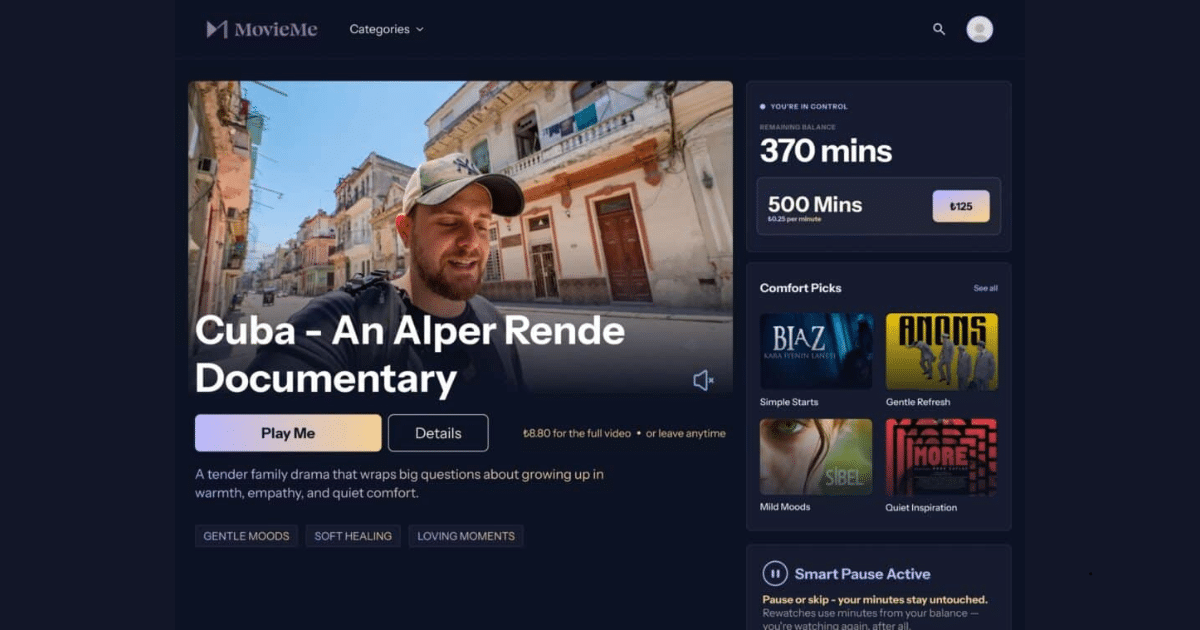
MovieMe prices its minutes at localized market rates: 2 cents in the United States, 2 pence in the United Kingdom, and half a rupee in India. Viewers purchase bundles of 100, 500, or 1,000 minutes and use them to stream content across the platform. Creators earn 70% of the per-minute revenue their content generates, regardless of which market the payment originates from.
The split is the platform’s central recruitment argument. Bhavesh positions it against YouTube’s 55% ad revenue share and Spotify’s reported 15%-25% artist payouts. “Think of it like the modern Creator Economy meeting old school film royalties,” he says. The model is also intended to undercut subscription fatigue: a 2026 Self Financial survey found that 60% of Americans had at least one paid subscription going unused each month. A viewer who watches 700 minutes pays $14 on MovieMe; the creator of those 700 minutes earns $9.80.
Traditional advertising is not permitted on the platform. Brand integration is possible, but only in forms embedded within the content rather than interrupting it. “The more high-impact version of brand integration is product placement,” Bhavesh says, “integrating the brand into the narrative that is being told.”
Curation Without Engagement Optimization
The most distinct aspect of MovieMe is not its pricing model. It is the recommendation logic behind it.
Bhavesh says MovieMe does not optimize for watch time or engagement, the twin drivers of algorithmic recommendations at YouTube and Netflix. Instead, the platform applies a mood-based system. “Can we focus on connecting people with content that is better suited to the mood that they would be in this specific scenario?” he asks. A Tuesday evening session, in his framing, might call for different content than midday on a Sunday.
He clarifies that MovieMe does have an algorithm, but stresses that “it just works entirely differently on a completely new set of parameters.” The distinction he draws is about what the system optimizes for: not retention or repeat engagement, but a closer fit between content and viewing context.
Whether that distinction holds as the platform scales is a question the current numbers do not yet address. At 150,000 downloads, the curatorial system is still manageable in scope. At 10 million users across dozens of content categories and markets, maintaining that coherence will require infrastructure the platform has not yet had to build.
The Creator the Platform Was Built For
MovieMe is not a platform for all creators. The target is specific: those with engaged audiences who earn below-average rates on existing platforms, because their content does not generate high ad load or broad algorithmic amplification.
Documentary filmmakers, travel creators, true crime producers, and investigative journalists fit that profile. So do stand-up comedians, whose material loses its economic durability on ad-supported platforms once it circulates freely. “Once you’ve got a joke that’s out in the world, you can’t really make that joke again,” Bhavesh says. “Having that on a platform like ours can provide them with that longevity.” Film directors who have finished projects but lack the traffic numbers to attract Netflix or Amazon are another target.
Access is not open. Creators apply, submit existing social profiles or IMDb pages, and are vetted before uploading. Pornography, hate speech, and excessive violence are explicitly excluded. Bhavesh frames this process as safety enforcement rather than editorial curation, designed to create an environment where audiences can de-stress without encountering content optimized for controversy.
The platform is also designed to complement, not replace, creators’ existing channels: MovieMe is intended as an output for premium work that ad-supported economics cannot support rather than a destination creators migrate their communities to.
Turkey, and What Comes After
MovieMe’s first formal market push is Turkey, which Bhavesh describes as a strategic entry point. The Turkish content industry generates approximately half a billion dollars in global exports, and the difference between what platforms pay creators in ad revenue and the value their content represents is, by his account, large enough to make an alternative monetization channel attractive to creators operating there.
The anchor partnership is with Alper Rende, who recently received Turkey’s best content creator award and has 8.7 million followers across social channels. Rende’s debut content on MovieMe is a documentary on Cuba’s energy crisis, filmed on location. “It showcases the capacity and the potential that MovieMe can offer creators in terms of ambitious storytelling with layered narratives,” Bhavesh says. He recently concluded meetings in Istanbul with three additional creators, each of whom, he says, responded positively.

Photo: Alper Rende in Cuba
Turkey also functions as a geographic gateway into Europe, the UK, the Middle East, and Asia. The partner program, which offers talent agencies and multi-channel network operators a perpetual revenue share in exchange for bringing 100 long-form creators to MovieMe within six months, is the primary mechanism for driving that expansion internationally.
What the Platform Is Actually Betting On
The Creator Economy’s central problem, as Bhavesh frames it, is not about content supply. It is about who captures the value that content generates.
He cites an industry report in which 57% of media and entertainment CEOs reportedly said they did not expect their current business models to last the next decade. Of YouTube’s 115 million channels, he says, only three million are monetized, and fewer than 10% of those earn what he calls a living income. Bhavesh is currently onboarding approximately 10 creators per month to the platform, a pace he expects to accelerate as the partner program expands across markets. “Creators are now realizing that they actually have a lot more power than what the current systems created for them are able to allow them to monetize upon,” he says.
For MovieMe, the thesis is that direct fan payment, structured around the unit of a minute, is the model that finally aligns streaming incentives with creator output.
“We believe in a future where the people who are driving the traffic on the internet are the ones that are benefiting from it the most,” he says. “And that’s what MovieMe is championing.”
Subscribe to Our Newsletter
Check Out Our Podcast