Real money is moving into the Creator Economy. The bigger question is whether the people writing the checks actually understand what they are buying.
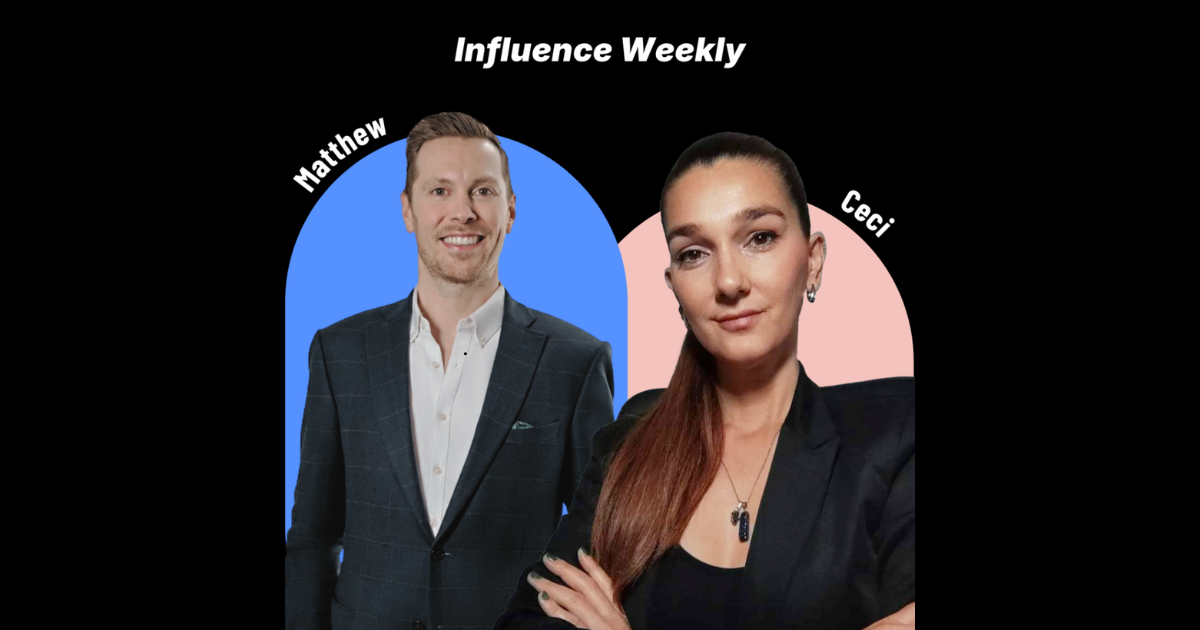
Matthew Lacey, Managing Partner at Waypoint Partners, an M&A advisory firm focused on creative industries, has spent over 15 years advising on deals across marketing, content, and creative businesses, completing 40 transactions worth almost $2 billion in deal value. He started his career doing deals in traditional TV and entertainment and has had a front-row seat as the digital Creator Economy emerged and began colliding with it.
Matthew sat down with Net Influencer Senior Editor Ceci Carloni to discuss where those worlds are converging, what the deals signal, and why the biggest moves may still be ahead.
1. The Collision Was Always Coming. It Just Took Longer Than Expected.
The convergence of brand, entertainment, and Creator Economy worlds has been building for over a decade. What surprises Matthew is how long it took.
“How long it’s taken,” he said when asked what caught him off guard about the convergence. He recalled watching Netflix’s Bandersnatch, the interactive Black Mirror episode where viewers chose the story path, and thinking about the data brands could harvest by commissioning that kind of format. “Think about how much information and data could be at your fingertips,” he said. The opportunity was obvious. The deals weren’t happening.
Matthew traces his first read of the collision back to 2011 and 2012, when big entertainment groups were navigating the earliest days of YouTube spin-offs and brands were funding product placement in spin-out shows. He kept waiting for the two worlds to merge. Then he waited some more.
What ultimately spurred the convergence, in his view, was the Creator Economy itself. Creators stepped into spaces they had not traditionally occupied, forcing brands and studios to pay attention. “It’s a fight for attention out there, and that drives those tailwinds,” he said. “Brands want to be entertainers these days.” The snowball is rolling now.
2. M&A Today Is About Capability Unlocks, Not Scale
A decade ago, almost any marketing business could find a buyer. The process was predictable. That era is over.
“Go back a decade or two, and there was probably a home for every marketing business,” Matthew said. “You could put something in a process, and it would come out the other side.” Today, the question is more specific: what capability does this acquisition actually unlock?
The pool of potential buyers has expanded considerably. Traditional marketing routes face disruption from consultancies, tech consulting, data providers, and tech companies themselves. Private equity consolidators have entered. Entertainment groups, talent agencies, and newly funded independents are all making moves.
For a Creator Economy business exploring an exit, the advisory lens has to be wide. “You can’t just take this to the usual players,” Matthew said. “You’ve closed off the lens to some other things that are really interesting happening.” Finding the right buyer now means understanding which industries are converging and which acquirer’s strategic vision actually aligns with the seller’s direction.
3. After Party Studios Shows What the Convergence Looks Like in Practice
The Waypoint-advised acquisition of After Party Studios by the SISTER Group, the production company behind “Chernobyl” and “Black Doves,” sits at the center of the conversation.
SISTER wanted access to a digital-first audience. After Party Studios had built IP and entertainment formats that worked at the creator-brand-studio intersection. The firm understands the language of brand commissioners, entertainment buyers, and creators alike, with a creator co-founder at its heart.
“You’ve got a big gap from a lot of the entertainment groups of a huge portion of their audience now consuming different styles of content on different formats,” Matthew explained. YouTube is now one of the most-watched services in the world. Traditional studios are playing catch-up.
What SISTER bought was the ability to create formats with creators and brands for a digital-first audience, with the goal of producing content, ads, and IP that the internet wants to watch and share. The first half of that objective sounds like entertainment. The second sounds like marketing. That overlap, Matthew argued, is exactly the point.
4. Translating Across Three Industries Is the Hardest Part of the Job
When advising a buyer in this space, the hardest part is not the deal mechanics. It is getting everyone in the room to agree on what they are actually building.
“Nobody can answer what the future looks like from a marketing perspective, or what the future winner of someone who operates in this convergence of the three big industries looks like,” Matthew said. Each sector brings a different lens, and some buyers simply have not yet formed a view on where their place is in the convergence.
The advisor’s job in this environment is translation. “You have to be able to translate into each of them, and some people will get that better than others.” The mechanics of deal structuring are secondary. “Finding that vision and co-creating something and then wrapping the deal around it is a key part of our role,” he said.
That is also why the headline-grabbing deals tend to emerge from genuine strategic alignment between principals, not from running a standard process. When a deal surprises the market, Matthew said, it is usually because founders and principals aligned on a shared vision of where the industry is going and then built a deal structure around it.
5. The Creator Economy Is Still in Its Infancy Relative to Global Ad Spend
A wave of M&A activity has created the impression that the Creator Economy is maturing fast. Matthew pushes back on that reading.
The tell is simple arithmetic. Compare global ad spend to the Creator Economy’s current share of it and add the entertainment piece on top. “I really think it’s in its infancy,” he said. “It’s got a long way to go.”
Even the biggest creator-native agencies remain small relative to WPP or Publicis. Traditional brands have been slow to shift budgets from conventional channels. “There’s still a long way for brands to go to get comfortable in this space,” Matthew noted. The digitally native, direct-to-consumer brands have led the way, scaling quickly to challenge incumbents by going social and creator-first from the start. Many of those incumbents are still catching up.
There will be a natural gap between the current wave of independents being acquired and the next cohort emerging. How quickly that gap fills depends on how fast new purpose-built businesses can organize around the opportunity. Matthew pointed to The Whalar Group, which scaled significantly in a decade, as evidence that the right people with the right funding can move faster than the cycle implies.
6. Brands Have the Edge in Leading the Next Phase
If forced to pick which industry leads the next phase, Matthew places his bet on brands.
“If it were to come from a single industry, I’d say there’s a good chance it comes from the brand world,” he said. The reason is proximity. Brands are experimenting most actively with creators, watching what works, helping launch creator-owned IP, and seeing new product lines emerge directly from those relationships.
He hedged, though. The most interesting outcome may not come from any single incumbent sector at all. It could be purpose-built, assembled by pulling together smaller disruptors from each industry, or backed by investors with a specific thesis.
If Matthew were building the ideal business himself, it would combine strong talent relationships, creator capabilities, brand creative with social-native skills, a design studio, and experience-led capabilities for live and offline engagement. The major networks arguably already have all those components. The question is whether they can operate as a unified entity. “Can it all work as one?” he asked.
7. Mega Deals Are Coming. Accenture and Whalar Just Proved the Template.
Consultancies have been disrupting the marketing world for years by positioning themselves at the boardroom level. Consumer data now drives corporate strategy. Brand reputations can be built or destroyed on social and creator platforms within hours. “That’s got to be part of understanding where your corporate reputation and strategy is going,” he said.
He sees the Whalar deal as a template for what follows. The next question is where the equivalent moves will come from in corporate reputation. The established firms in that space have board-level access during some of the most consequential moments in a company’s life. None of them, Matthew suggested, has yet built the social and creator capability those moments now require.
His prediction for the next 12 months: “There’s going to be some mega deals that happen that will start to shape what that future world looks like.” Some of them may already be forming. The convergence is no longer theoretical. The question is how fast the rest of the market catches up to where the deals are already pointing.
Listen to the full conversation on “The Big Three” podcast.
Cecilia Carloni, Interview Manager at Influence Weekly and writer for NetInfluencer. Coming from beautiful Argentina, Ceci has spent years chatting with big names in the influencer world, making friends and learning insider info along the way. When she’s not deep in interviews or writing, she's enjoying life with her two daughters. Ceci’s stories give a peek behind the curtain of influencer life, sharing the real and interesting tales from her many conversations with movers and shakers in the space.











Real money is moving into the Creator Economy. The bigger question is whether the people writing the checks actually understand what they are buying.
Matthew Lacey, Managing Partner at Waypoint Partners, an M&A advisory firm focused on creative industries, has spent over 15 years advising on deals across marketing, content, and creative businesses, completing 40 transactions worth almost $2 billion in deal value. He started his career doing deals in traditional TV and entertainment and has had a front-row seat as the digital Creator Economy emerged and began colliding with it.
Matthew sat down with Net Influencer Senior Editor Ceci Carloni to discuss where those worlds are converging, what the deals signal, and why the biggest moves may still be ahead.
1. The Collision Was Always Coming. It Just Took Longer Than Expected.
The convergence of brand, entertainment, and Creator Economy worlds has been building for over a decade. What surprises Matthew is how long it took.
“How long it’s taken,” he said when asked what caught him off guard about the convergence. He recalled watching Netflix’s Bandersnatch, the interactive Black Mirror episode where viewers chose the story path, and thinking about the data brands could harvest by commissioning that kind of format. “Think about how much information and data could be at your fingertips,” he said. The opportunity was obvious. The deals weren’t happening.
Matthew traces his first read of the collision back to 2011 and 2012, when big entertainment groups were navigating the earliest days of YouTube spin-offs and brands were funding product placement in spin-out shows. He kept waiting for the two worlds to merge. Then he waited some more.
What ultimately spurred the convergence, in his view, was the Creator Economy itself. Creators stepped into spaces they had not traditionally occupied, forcing brands and studios to pay attention. “It’s a fight for attention out there, and that drives those tailwinds,” he said. “Brands want to be entertainers these days.” The snowball is rolling now.
2. M&A Today Is About Capability Unlocks, Not Scale
A decade ago, almost any marketing business could find a buyer. The process was predictable. That era is over.
“Go back a decade or two, and there was probably a home for every marketing business,” Matthew said. “You could put something in a process, and it would come out the other side.” Today, the question is more specific: what capability does this acquisition actually unlock?
The pool of potential buyers has expanded considerably. Traditional marketing routes face disruption from consultancies, tech consulting, data providers, and tech companies themselves. Private equity consolidators have entered. Entertainment groups, talent agencies, and newly funded independents are all making moves.
For a Creator Economy business exploring an exit, the advisory lens has to be wide. “You can’t just take this to the usual players,” Matthew said. “You’ve closed off the lens to some other things that are really interesting happening.” Finding the right buyer now means understanding which industries are converging and which acquirer’s strategic vision actually aligns with the seller’s direction.
3. After Party Studios Shows What the Convergence Looks Like in Practice
The Waypoint-advised acquisition of After Party Studios by the SISTER Group, the production company behind “Chernobyl” and “Black Doves,” sits at the center of the conversation.
SISTER wanted access to a digital-first audience. After Party Studios had built IP and entertainment formats that worked at the creator-brand-studio intersection. The firm understands the language of brand commissioners, entertainment buyers, and creators alike, with a creator co-founder at its heart.
“You’ve got a big gap from a lot of the entertainment groups of a huge portion of their audience now consuming different styles of content on different formats,” Matthew explained. YouTube is now one of the most-watched services in the world. Traditional studios are playing catch-up.
What SISTER bought was the ability to create formats with creators and brands for a digital-first audience, with the goal of producing content, ads, and IP that the internet wants to watch and share. The first half of that objective sounds like entertainment. The second sounds like marketing. That overlap, Matthew argued, is exactly the point.
4. Translating Across Three Industries Is the Hardest Part of the Job
When advising a buyer in this space, the hardest part is not the deal mechanics. It is getting everyone in the room to agree on what they are actually building.
“Nobody can answer what the future looks like from a marketing perspective, or what the future winner of someone who operates in this convergence of the three big industries looks like,” Matthew said. Each sector brings a different lens, and some buyers simply have not yet formed a view on where their place is in the convergence.
The advisor’s job in this environment is translation. “You have to be able to translate into each of them, and some people will get that better than others.” The mechanics of deal structuring are secondary. “Finding that vision and co-creating something and then wrapping the deal around it is a key part of our role,” he said.
That is also why the headline-grabbing deals tend to emerge from genuine strategic alignment between principals, not from running a standard process. When a deal surprises the market, Matthew said, it is usually because founders and principals aligned on a shared vision of where the industry is going and then built a deal structure around it.
5. The Creator Economy Is Still in Its Infancy Relative to Global Ad Spend
A wave of M&A activity has created the impression that the Creator Economy is maturing fast. Matthew pushes back on that reading.
The tell is simple arithmetic. Compare global ad spend to the Creator Economy’s current share of it and add the entertainment piece on top. “I really think it’s in its infancy,” he said. “It’s got a long way to go.”
Even the biggest creator-native agencies remain small relative to WPP or Publicis. Traditional brands have been slow to shift budgets from conventional channels. “There’s still a long way for brands to go to get comfortable in this space,” Matthew noted. The digitally native, direct-to-consumer brands have led the way, scaling quickly to challenge incumbents by going social and creator-first from the start. Many of those incumbents are still catching up.
There will be a natural gap between the current wave of independents being acquired and the next cohort emerging. How quickly that gap fills depends on how fast new purpose-built businesses can organize around the opportunity. Matthew pointed to The Whalar Group, which scaled significantly in a decade, as evidence that the right people with the right funding can move faster than the cycle implies.
6. Brands Have the Edge in Leading the Next Phase
If forced to pick which industry leads the next phase, Matthew places his bet on brands.
“If it were to come from a single industry, I’d say there’s a good chance it comes from the brand world,” he said. The reason is proximity. Brands are experimenting most actively with creators, watching what works, helping launch creator-owned IP, and seeing new product lines emerge directly from those relationships.
He hedged, though. The most interesting outcome may not come from any single incumbent sector at all. It could be purpose-built, assembled by pulling together smaller disruptors from each industry, or backed by investors with a specific thesis.
If Matthew were building the ideal business himself, it would combine strong talent relationships, creator capabilities, brand creative with social-native skills, a design studio, and experience-led capabilities for live and offline engagement. The major networks arguably already have all those components. The question is whether they can operate as a unified entity. “Can it all work as one?” he asked.
7. Mega Deals Are Coming. Accenture and Whalar Just Proved the Template.
The Accenture acquisition of Whalar from The Whalar Group was announced during the recording of the episode. Matthew’s reaction was immediate: “It goes exactly back to where we talked about.”
Consultancies have been disrupting the marketing world for years by positioning themselves at the boardroom level. Consumer data now drives corporate strategy. Brand reputations can be built or destroyed on social and creator platforms within hours. “That’s got to be part of understanding where your corporate reputation and strategy is going,” he said.
He sees the Whalar deal as a template for what follows. The next question is where the equivalent moves will come from in corporate reputation. The established firms in that space have board-level access during some of the most consequential moments in a company’s life. None of them, Matthew suggested, has yet built the social and creator capability those moments now require.
His prediction for the next 12 months: “There’s going to be some mega deals that happen that will start to shape what that future world looks like.” Some of them may already be forming. The convergence is no longer theoretical. The question is how fast the rest of the market catches up to where the deals are already pointing.
Listen to the full conversation on “The Big Three” podcast.
Subscribe to Our Newsletter
Check Out Our Podcast