Global marketing executives are shifting their strategic focus away from reach-based metrics toward cultural relevance and community engagement while increasing investment in artificial intelligence, according to social-first marketing group SAMY’s fourth annual “Marketing Trends” report surveying more than 100 chief marketing officers across 22 countries.
The research, which gathered insights from marketing leaders at L’Oréal, Microsoft, Unilever, Diageo, as well as at other major brands, found that 46% of CMOs identified cultural relevance – defined as tapping into trends and conversations – as the most effective way to connect with social media communities.
Budget Allocation Shows Conservative Trend
Marketing budget projections for 2026 indicate a cautious outlook among executives. The share of respondents planning no budget increase rose from 29% in 2025 to 37% in 2026, while those expecting modest growth of 1% to 10% remained stable at approximately 45%. According to the report, “companies appear more conservative in 2026, with fewer planning significant increases and more maintaining current budgets.”
Despite overall budgetary restraint, certain investment areas continue to grow. AI implementation is expected to increase, with 53% of marketers naming it their top investment priority.
More than half of respondents indicated they plan to adopt AI for the first time in 2026. Creativity follows at 50%, while influencer marketing captures 48% of planned budget increases.
The research points to a shift in how marketers approach influencer partnerships. Only 18% of respondents cited “identifying the right influencers” as their biggest challenge in 2026, down from 57% in 2025. Instead, 33% now identify KPIs and reporting (proving campaign performance and ROI) as their primary pain point, followed by strategic integration at 30%.
The report describes this phase as “Influencer Marketing 4.0,” characterized by deeper strategic collaboration and a stronger emphasis on measurable outcomes. Forty-five percent of marketers plan to strengthen partnerships with micro-influencers, while strategic thinking emerged as the most valued quality when working with influencer marketing agencies, cited by 28% of respondents.
When defining collaboration objectives, 39% of CMOs prioritize awareness, 24% focus on engagement, and 16% emphasize conversion. Affiliate programs currently represent the most successful social commerce format among brands that have already implemented such strategies, according to the research.
Social Listening Gains Strategic Importance
Social listening continues to expand its role in marketing decision-making. The report found that 48% of CMOs consider social listening a critical part of their decision-making process in 2026, representing a nine-percentage-point increase from the previous year. An additional 36% use social listening occasionally for reactive purposes, while only 16% assign it minimal importance.
When identifying audiences and market trends, marketers rank social listening tools second at 59%, just behind third-party market research reports and industry benchmarks at 63%.
However, challenges remain: 35% of marketers report difficulty identifying emerging trends, and 20% report difficulty translating insights into campaigns.
Conversion Remains Primary Social Media Challenge
Nearly half of surveyed marketers (48%) identified conversion (defined as purchases and sign-ups) as the primary friction point in the social media customer journey. This significantly outpaced consideration (23%) and retention (20%).
The top barriers to conversion include difficulty tracking ROI (47%), poor integration between social and e-commerce platforms (31%), and low brand trust or credibility (14%).
Despite ongoing investment in social commerce, 33% of marketers reported that they have not yet implemented social commerce strategies, unchanged from the previous year.
ROI Measurement Expands Beyond Financial Metrics
While ROI remains the dominant marketing KPI at 40%, the report notes that measurement frameworks are expanding beyond purely financial outcomes. Engagement and community growth rank second at 23%, followed by revenue growth at 18%.
The research states that “ROI is no longer just financial; it’s cultural,” reflecting broader evaluation criteria tied to audience connection and long-term brand value.
Regarding social media priorities for 2026, 44% of marketers identified increasing engagement and community building as their top objective, ahead of driving brand awareness (25%) and generating leads and conversions (25%).
Platform Strategy and Search
Social SEO has emerged as a growing focus, with 70% of CMOs planning to invest in social SEO initiatives. When asked about search priorities, 42% of marketers plan to focus on social SEO across platforms such as TikTok, Instagram, and LinkedIn, followed by 24% prioritizing AI-powered search engines, including ChatGPT or Perplexity.
The report also documents continued growth in AI-driven creative processes. Sixty-five percent of CMOs plan to increase AI use in creative workflows in 2026, up from 25% in 2023. When asked how AI reshapes creative strategy, 57% agreed that “AI helps generate ideas and concepts faster,” while 51% maintained that “AI is still a tool, humans define the narrative.”
The report surveyed marketing executives between February and December 2025, with participation from companies across the consumer goods, technology, automotive, retail, and hospitality sectors in Europe, the United States, and Latin America.
Cecilia Carloni, Interview Manager at Influence Weekly and writer for NetInfluencer. Coming from beautiful Argentina, Ceci has spent years chatting with big names in the influencer world, making friends and learning insider info along the way. When she’s not deep in interviews or writing, she's enjoying life with her two daughters. Ceci’s stories give a peek behind the curtain of influencer life, sharing the real and interesting tales from her many conversations with movers and shakers in the space.




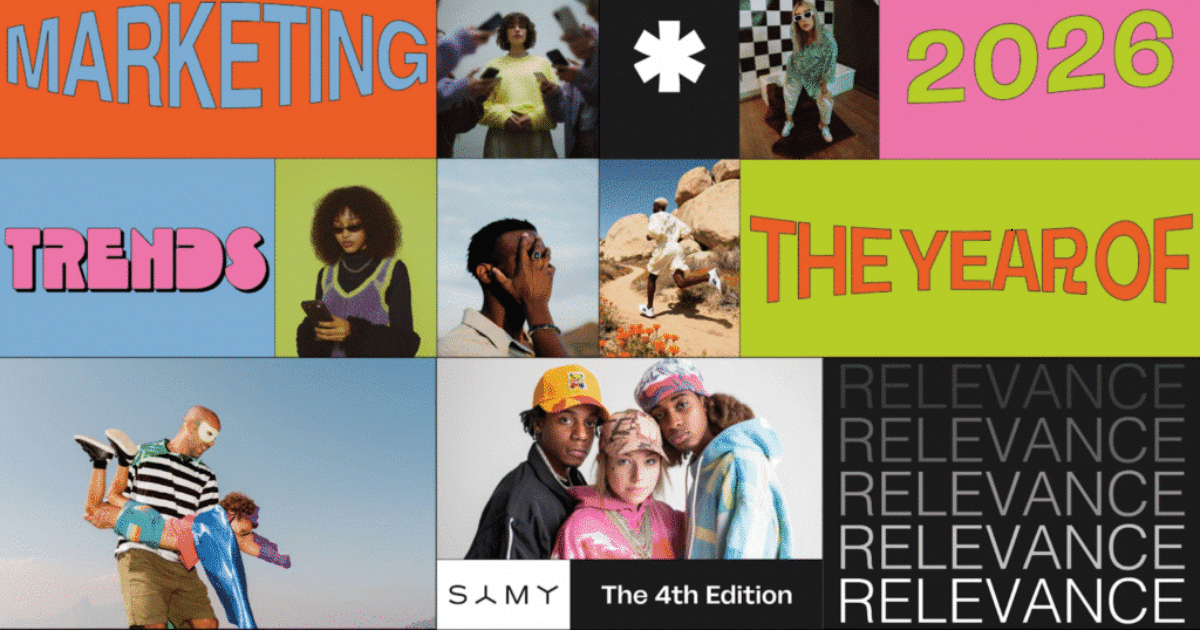






Global marketing executives are shifting their strategic focus away from reach-based metrics toward cultural relevance and community engagement while increasing investment in artificial intelligence, according to social-first marketing group SAMY’s fourth annual “Marketing Trends” report surveying more than 100 chief marketing officers across 22 countries.
The research, which gathered insights from marketing leaders at L’Oréal, Microsoft, Unilever, Diageo, as well as at other major brands, found that 46% of CMOs identified cultural relevance – defined as tapping into trends and conversations – as the most effective way to connect with social media communities.
Budget Allocation Shows Conservative Trend
Marketing budget projections for 2026 indicate a cautious outlook among executives. The share of respondents planning no budget increase rose from 29% in 2025 to 37% in 2026, while those expecting modest growth of 1% to 10% remained stable at approximately 45%. According to the report, “companies appear more conservative in 2026, with fewer planning significant increases and more maintaining current budgets.”
Despite overall budgetary restraint, certain investment areas continue to grow. AI implementation is expected to increase, with 53% of marketers naming it their top investment priority.
More than half of respondents indicated they plan to adopt AI for the first time in 2026. Creativity follows at 50%, while influencer marketing captures 48% of planned budget increases.
Influencer Marketing Enters Performance-Focused Phase
The research points to a shift in how marketers approach influencer partnerships. Only 18% of respondents cited “identifying the right influencers” as their biggest challenge in 2026, down from 57% in 2025. Instead, 33% now identify KPIs and reporting (proving campaign performance and ROI) as their primary pain point, followed by strategic integration at 30%.
The report describes this phase as “Influencer Marketing 4.0,” characterized by deeper strategic collaboration and a stronger emphasis on measurable outcomes. Forty-five percent of marketers plan to strengthen partnerships with micro-influencers, while strategic thinking emerged as the most valued quality when working with influencer marketing agencies, cited by 28% of respondents.
When defining collaboration objectives, 39% of CMOs prioritize awareness, 24% focus on engagement, and 16% emphasize conversion. Affiliate programs currently represent the most successful social commerce format among brands that have already implemented such strategies, according to the research.
Social Listening Gains Strategic Importance
Social listening continues to expand its role in marketing decision-making. The report found that 48% of CMOs consider social listening a critical part of their decision-making process in 2026, representing a nine-percentage-point increase from the previous year. An additional 36% use social listening occasionally for reactive purposes, while only 16% assign it minimal importance.
When identifying audiences and market trends, marketers rank social listening tools second at 59%, just behind third-party market research reports and industry benchmarks at 63%.
However, challenges remain: 35% of marketers report difficulty identifying emerging trends, and 20% report difficulty translating insights into campaigns.
Conversion Remains Primary Social Media Challenge
Nearly half of surveyed marketers (48%) identified conversion (defined as purchases and sign-ups) as the primary friction point in the social media customer journey. This significantly outpaced consideration (23%) and retention (20%).
The top barriers to conversion include difficulty tracking ROI (47%), poor integration between social and e-commerce platforms (31%), and low brand trust or credibility (14%).
Despite ongoing investment in social commerce, 33% of marketers reported that they have not yet implemented social commerce strategies, unchanged from the previous year.
ROI Measurement Expands Beyond Financial Metrics
While ROI remains the dominant marketing KPI at 40%, the report notes that measurement frameworks are expanding beyond purely financial outcomes. Engagement and community growth rank second at 23%, followed by revenue growth at 18%.
The research states that “ROI is no longer just financial; it’s cultural,” reflecting broader evaluation criteria tied to audience connection and long-term brand value.
Regarding social media priorities for 2026, 44% of marketers identified increasing engagement and community building as their top objective, ahead of driving brand awareness (25%) and generating leads and conversions (25%).
Platform Strategy and Search
Social SEO has emerged as a growing focus, with 70% of CMOs planning to invest in social SEO initiatives. When asked about search priorities, 42% of marketers plan to focus on social SEO across platforms such as TikTok, Instagram, and LinkedIn, followed by 24% prioritizing AI-powered search engines, including ChatGPT or Perplexity.
The report also documents continued growth in AI-driven creative processes. Sixty-five percent of CMOs plan to increase AI use in creative workflows in 2026, up from 25% in 2023. When asked how AI reshapes creative strategy, 57% agreed that “AI helps generate ideas and concepts faster,” while 51% maintained that “AI is still a tool, humans define the narrative.”
The report surveyed marketing executives between February and December 2025, with participation from companies across the consumer goods, technology, automotive, retail, and hospitality sectors in Europe, the United States, and Latin America.
Image source: SAMY
Get the full report here
Subscribe to Our Newsletter
Check Out Our Podcast