






Influencer
Mamadou Ndiaye Built ‘Casual Geographic’ By Making Nature Funny, Then Making It Matter

What does it take to turn internet jokes about deadly animals into a real media business?
For Mamadou Ndiaye, the answer began without a plan. He downloaded TikTok in April 2020 in the midst of the pandemic with no intention of changing careers or becoming a content creator. One day later, he was laid off from his job as an environmental field technician.
With time on his hands and no immediate path forward, Mamadou began posting short videos, largely as an experiment. Early clips leaned into humor and trends, but momentum shifted when he started talking about animals. A video inspired by a moose walking alongside cars on a highway helped establish the tone that would define his work: deadpan delivery, sharp factual detail, and an ability to make nature feel both absurd and dangerous at once.
Mamadou began building an audience on TikTok under the username @mndiaye_97, a generic handle that reflected his expectation that the account would scale only to casual posting. The name “Casual Geographic” came later, when he reluctantly launched a YouTube channel in late 2020 amid growing uncertainty about TikTok’s future. What carried across platforms was the format itself: short-form explanations rooted in “edutainment,” using comedy as an entry point rather than a distraction. The jokes came first, but the substance kept viewers watching.
Over time, casual posts turned into a structured creator operation spanning long-form video, publishing, memberships, and selectively chosen brand partnerships, all shaped by a focus on animal welfare and conservation. Mamadou has moved from solo creator to something closer to an institution, without losing the voice that made people stop scrolling in the first place.
From Environmental Science to Accidental Creator
Mamadou graduated from Rutgers University with a degree in environmental science and went on to work in environmental management, a field that had no direct connection to animals or wildlife. “That always surprises people,” he says. “I did not study zoology or animal husbandry in school.”
His early content was not about animals at all. It leaned toward situational comedy and trends. The shift came when he posted a video about animals much larger than people expect, sparked by seeing a moose on the highway.
“I thought animals were this niche special-interest that wasn’t really palatable for everybody,” he says. The response proved otherwise. The moose video performed well, and Mamadou doubled down. “I did the typical influencer TikTok thing where I just rode the subject into the dirt, but people kept watching.”
The delivery mattered as much as the subject. Mamadou spoke in a flat, monotone voice while sharing facts that sounded almost unbelievable. The contrast stuck. “There was something about the way I would explain things,” he says. “I had this deadpan expression, but I was saying the most insane stuff.”
The ‘Crap Core’ Era
Mamadou admits that early “Casual Geographic” videos were “endearingly low quality.” He filmed on his phone, wedged into a window for natural light. He also used wired headphones as a microphone and TikTok’s green screen filter instead of a real setup.
“Somebody called it ‘crap core,’ and they meant it as a compliment,” he notes.
The stripped-down production placed full focus on his ability to communicate. It also lowered the barrier to entry. “I was making content, but hoping none of my friends would see it,” he says.
Mamadou credits that lo-fi approach for helping “Casual Geographic” find its voice before it found its scale. Over time, production improved, particularly on YouTube, but the creator has been careful not to lose the conversational rhythm that defined his early success.

When Satire Turned into Responsibility
One of the most notable shifts in Mamadou’s approach came with a long-form video entitled “Should We Let Nature Finally Delete Pandas?” For much of the video, he leaned into the internet trope that pandas are “bad at life.” Then the tone changed.
“They existed before us,” he says in the video. “Something had to have changed, and it wasn’t really them.”
Mamadou used the panda narrative to explain specialist species, habitat fragmentation, and how human intervention altered survival conditions. He compared pandas to polar bears and discussed how captivity disrupts natural mating behaviors. The response was different from his usual viral hits.
“A lot of people said it changed their minds about pandas,” he says. “It felt like a moment of catharsis.” For Mamadou, it marked a turning point. “Nature is crazy enough,” he says. “You don’t need to bend the facts for a good story.”
That realization reframed his role. He no longer saw himself as simply entertaining. “People kind of see you as an authority,” he says. “That comes with a responsibility.”
From One-Man Show to a System
For years, Mamadou handled every part of the process himself. He researched, wrote, recorded, edited, and published each video.
“This man was a one-man show forever,” his manager, Mikayla, says.
Letting go proved difficult. “You’re letting people hold your baby,” Mamadou says. He resisted hiring editors even when burnout crept in. The shift came in 2025, when he finally began building a team.
“Transition from individual to institution,” he says. “That’s how we view ‘Casual Geographic’ now.”
The process is still hands-on. Mamadou remains deeply involved in scripting and structure. But the system has changed. He now plans content in batches, maintains a pipeline of ideas, and works with editors to maintain consistency across long-form and short-form output.
“I usually know what my next two or three videos are going to be,” he says. “That didn’t happen before.”
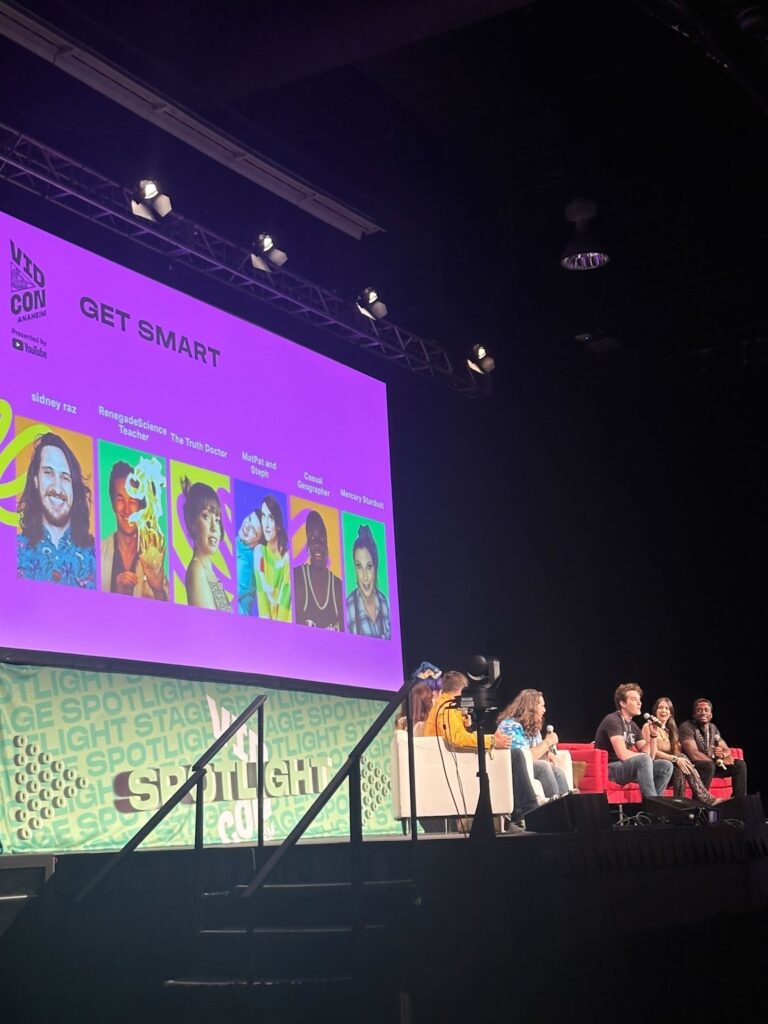
Photo: Mamadou Ndiaye at VidCon
Crafting Videos Like Music
Mamadou approaches video structure with unusual care. He describes pacing as musical, emphasizing rhythm, flow, and timing.
“I try to figure out what background music I’m going to have before I even start writing,” he says. “I’ll play that music while I’m talking.”
Hooks matter, but so does respect for the viewer. Mamadou avoids the kind of overstimulating, hyper-edited style that dominates much of online video, instead relying on alliteration, internal rhymes, and sudden tonal shifts to keep viewers engaged.
His scripts function more like guidelines than rigid text. He reads lines aloud while writing to ensure they sound natural. “It’s a verbal medium,” he says. “I want it to feel like a conversation.”
Platform Strategy: Short Form vs. Long Form
“Casual Geographic” spans TikTok, Instagram, and YouTube, but Mamadou treats them differently.
On TikTok and Instagram, attention is fragile. “You’re competing with somebody that’s one scroll away,” he says. Hooks need to land within seconds.
On YouTube, viewers arrive with more intent. Thumbnails and titles do some of the work. “You respect their attention span a little bit more,” he says. The result is longer storytelling arcs and deeper context.
The platforms influence each other. TikTok and Instagram sharpened Mamadou’s pacing. YouTube strengthened his narrative structure. “You take little things from other apps and bring them into different platforms,” he says.
Revenue Without Dilution
“Casual Geographic” has diversified and generates revenue through multiple channels: brand partnerships, memberships, and a book titled “100 Animals That Can F*cking End You.” The book, Mamadou says, felt inevitable. “That sounds like something I would say,” he notes.
He approaches monetization with restraint. “I never feel like I have to add a revenue source,” he says. When he does, it must align with his values and content. “We don’t run yellow lights.”
That discipline serves as risk management. Rather than chasing growth at all costs, “Casual Geographic” prioritizes long-term trust. “I never want anything to feel forced,” he says.
Measuring Impact Beyond Metrics
Mamadou does not track success solely through views or follower counts. The most meaningful feedback, he says, arrives in comments and messages.
“I’ll get someone saying they’ve been watching since they were a freshman in high school,” he says. Others describe choosing careers in animal science after discovering his videos.
He also hears from older viewers. “Sixty or seventy years old in Wyoming,” he says. “They’re still learning stuff because of me.”
Those signals matter to him more than analytics. “If people use my videos as a springboard to explore the natural world, that’s success,” he says.
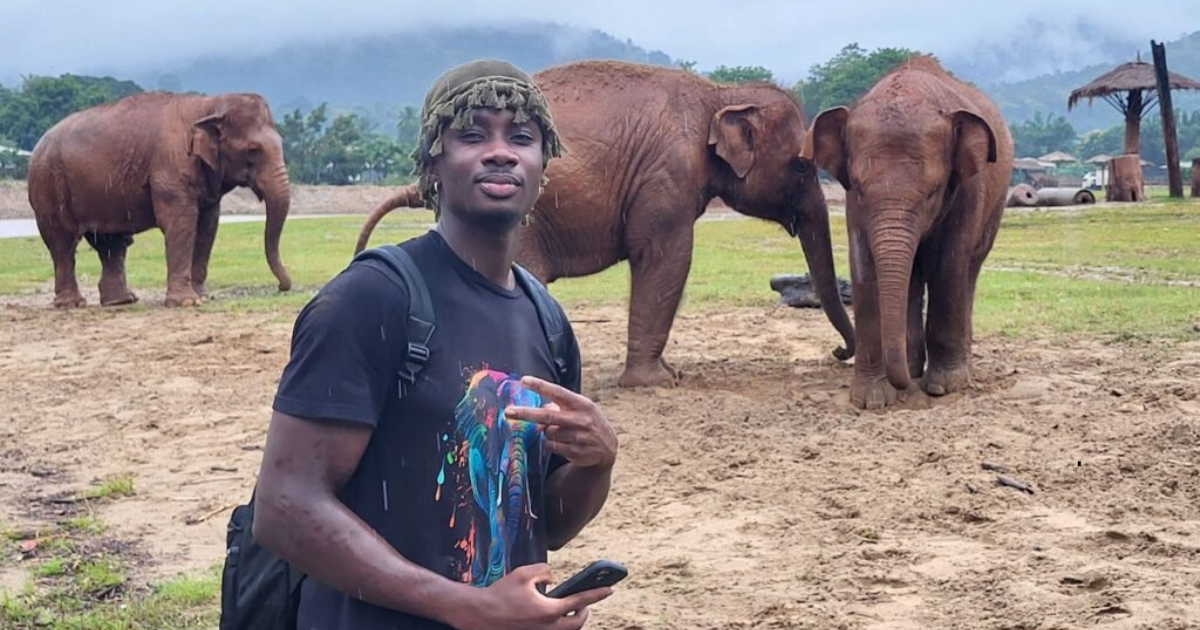
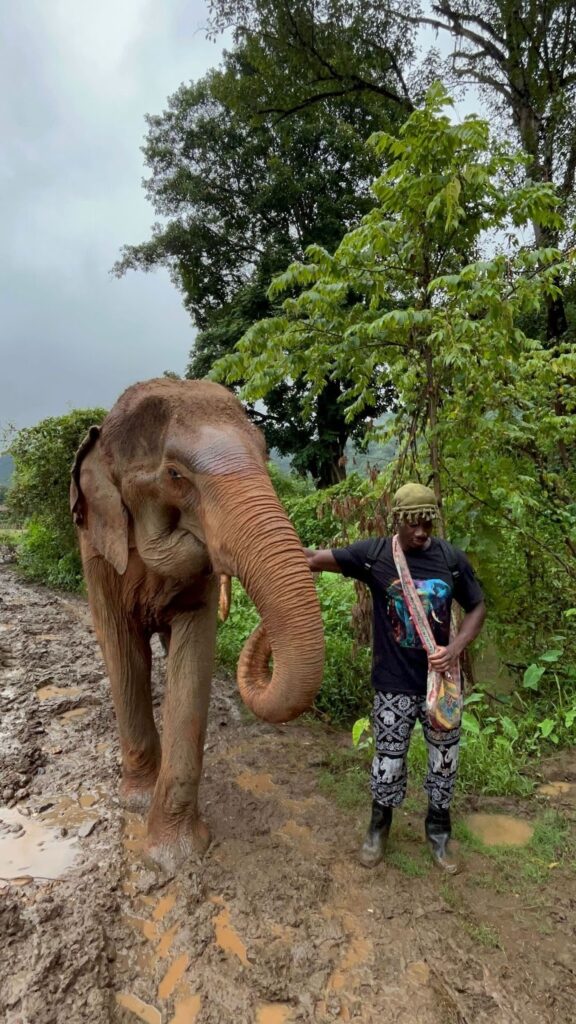
“Casual Geographic’s” impact also extends offline. Mamadou works with conservation organizations, using his platform to direct attention and funding. In Thailand, he visited Elephant Nature Park to illustrate the difference between ethical sanctuaries and exploitative tourism. After flooding devastated the sanctuary, his video helped drive donations.
He has supported wolf rescue efforts in New Jersey, raptor rehabilitation centers, and wildlife research programs. “People would care if they knew,” he says. “Sometimes they just don’t know.”
What’s Next?
In 2026, Mamadou plans to expand “Casual Geographic” beyond studio content. He wants to travel, document wildlife in person, and collaborate with other conservation-focused creators.
“I really enjoy going out there and experiencing the things I talk about,” he says.
The long-term ambition echoes the figures he admired growing up. “We had our heroes,” he says, referencing Steve Irwin, David Attenborough, and others. “To be able to do that on a relative level would be huge for me.”
For Mamadou, the goal remains simple, even as the operation grows. “Everyone has an intrinsic interest in nature,” he says. “It’s just a matter of exposure.”