





Strategy
The Business Behind Clae: Mādin’s Nick Valenti On What Makes Creator Brands Break Through

Influencers aren’t just selling products anymore. They’re building companies anchored in culture, lifestyle, and community. In the past year alone, several creator-founded brands have shown how personal identity can drive commercial momentum. Mikayla Nogueira’s POV Beauty reportedly made $1 million in eight minutes. Kai Cenat’s personal-care line, TONE, hit seven figures in three days and secured Target distribution. Jordan and Salish Matter’s Gen Alpha–focused skincare brand drew more than 80,000 people to its Sephora launch pop-up.
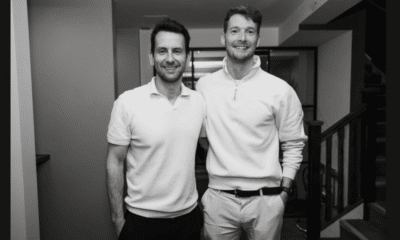
This is the field where Nick Valenti operates. As CEO at Mādin, a creative agency he co-founded in 2020, Nick and his team merge strategic rigor with expressive storytelling. Based between New York, Los Angeles, and client sites, Mādin specializes in creator-led brand building, delivering what Nick often describes as the intersection of “culture and capital.”
“We say we’re building conviction,” Nick explains. “Our goal is to not just make things look good, but help them make sense.”
Working with creator founders, he believes, requires a distinct model that blends financial discipline, consumer insight, and identity-driven storytelling. And in an industry where originality has become the new premium currency, Mādin’s work with creator partners such as Slater and Stacie Trout – founders of skincare brand Clae (the reimagination of Momona Skin) – offers a blueprint for the next wave of creator-led entrepreneurship.
Why Creator Founders Are Winning in Beauty
A long-time entrepreneur and former private equity professional, Nick believes the creator-led brand boom is rooted in something simple: audience ownership.
“For us, the goal is to own an audience,” he says. “The most authentic influencers build an audience around their hobbies and what they care about. They’re able to communicate to a very specific group of people, and that group has certain interests.”
According to Nick, this dynamic creates a built-in customer base and an advantage that celebrity-backed brands don’t necessarily have.
“We love creator-backed brands because they’re so passionate about what they’re doing,” he says. “It’s literally their reputation behind what they’re building. The intentionality behind everything – the ingredients, the messaging, the packaging – is so thought out.”
But he’s quick to point out the blind spots.
“If people have only ever been creators, they definitely need to find someone who has a strong business background,” he says. From cash-flow planning to production timelines, the best creative idea in the world doesn’t work if the creator doesn’t know how to manage the operations.”
This is where Mādin steps in: grounding creative instincts in strategy, data, and operational foresight.
A New Creative Model for Creator-Led Brands
Nick founded Mādin with creative partner Jamieson Maunder, formerly the global Chief Creative Officer of iLUKA, where he led design for the Olympics, FIFA World Cups, and top-tier global sponsors. The agency’s guiding principle is to combine emotional storytelling with measurable impact.
“We care about the intersection of art and economics,” Nick says. “We translate emotion into measurable impact.”
The agency is built to “meet brands where they are,” he adds. “We understand the rules that exist in your world, and then figure out how we can build something new together.”
This approach resonated with Slater and Stacie Trout, the Hawaii-based creators behind Clae, a clean, earth-toned, “Skincare Simplified” line rooted in their lifestyle and values. When the Trout duo began experimenting with beef tallow balm (then known as Momona), Mādin initially supported performance marketing and content optimization.
Within months, the founders realized they needed more than a product: they needed a brand.
How Clae Was Rebuilt From the Ground Up
The transformation from Momona to Clae required clarity of purpose. “Momona was a single-product company,” Nick recalls. “It wasn’t really a brand.”
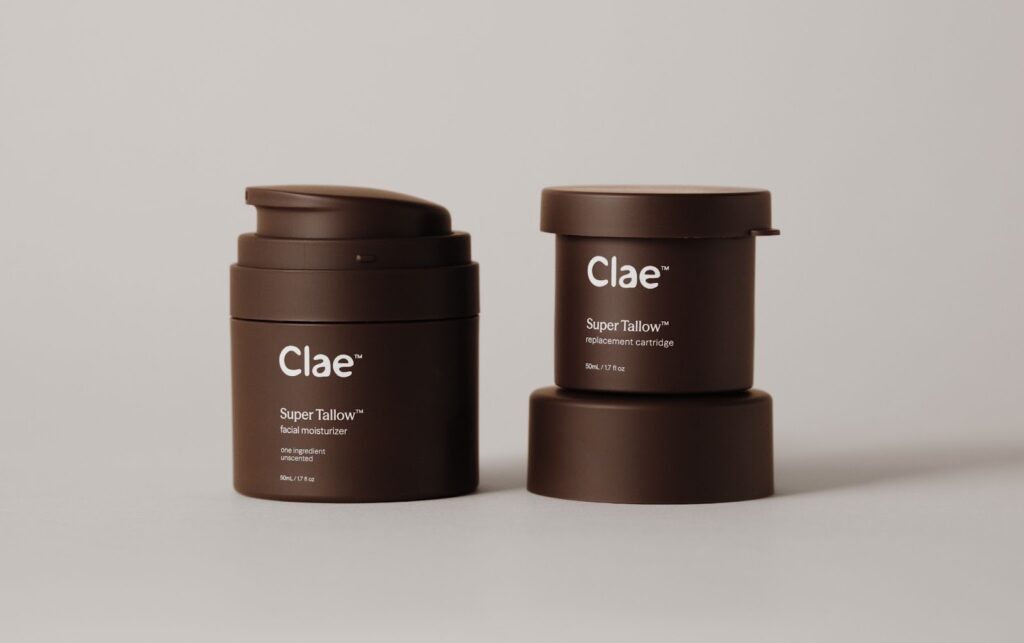
As additional products were planned (such as Clae’s lanolin lip balm and future formulations), Mādin recognized the need to build a long-term platform that aligned with the creators’ identities and consumer expectations.
Their process began with market immersion.
“Everyone says, ‘That market’s saturated.’ Everything’s saturated at this point,” Nick says. “So how do you visually stand out? We start by understanding what exists, what’s doing well, and what aligns with the creators’ core values as people.”
From that analysis emerged Clae, a brand grounded in simplicity, earth-derived ingredients, and transparency. Its signature one-ingredient balm allowed for a playful packaging detail Nick loved.
“Our favorite piece of the packaging is the ingredient list, where it just has so much room below the single ingredient,” he says.
But building the brand meant building the messaging, including the now-centralized phrase “Skincare Simplified.”
“It came out of understanding the landscape,” Nick explains. Beauty was torn between heavily engineered formulations and ultra-natural minimalism. “There was a place in the middle to simplify the skincare process.”
Launching Clae: The First Major Campaign
With the rebrand underway, Mādin had to guide creator-founders through something they had never done before: a full-scale brand campaign.
“Creator-led brands often haven’t launched a campaign before,” Nick says. “Convincing them of how bold and unique we could be was a back-and-forth process – and one that took months.”
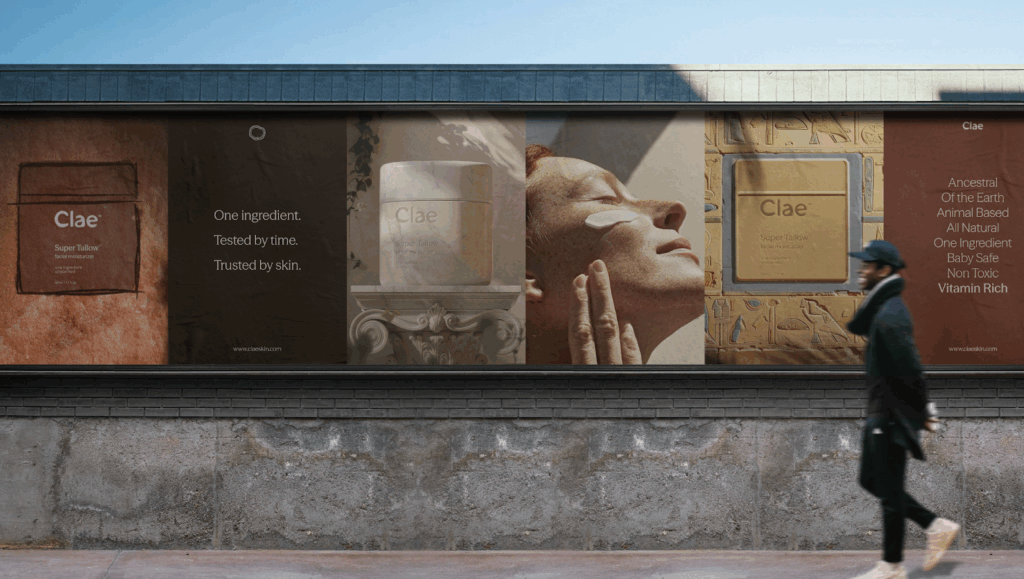
Mādin pitched multiple creative directions, but one idea stood out: the ERAS campaign, a high-production visual concept that traced the ancient roots of beef tallow skincare from Egyptian royalty to Roman bathhouses to the American frontier.
“It was an out-there idea,” Nick admits. “But once we had their buy-in, everything flowed.”
The agency also developed a multi-stage launch: Stage 1 was unveiling the Clae name and packaging to existing customers. Stage 2 was to roll out the rebranded website. Stage 3 was to release the ERAS campaign across social, press, and paid media.
The results? “We launched the rebrand of Clae and had the second most successful day since their inception,” Nick shares. “Engagement was high, open rates were incredibly high, and the site redesign led to dollar impact.”
Earned media became one of the most meaningful signals.
“As an agency, we care so much about earned media,” Nick says. “Ads of the World picked it up. Muse by CLIOspicked it up. A bunch of other publications picked it up organically. That’s the most exciting thing.”
Two Moments That Defined the Campaign
Regarding his favorite moments from the process, Nick doesn’t hesitate.
First, a coincidence led Mādin’s team to believe they were on the right track.
“We pitched working with ceramicists and makers,” he says. “The next day, they received an email from a ceramicist wanting to work with them, completely unrelated to us. I got on the phone with her and said, ‘You just made our campaign even more exciting.’”
Mādin eventually collaborated with the artist, Marlena Myles, to produce clay spheres that enclosed the product: a nod to both the brand name and longtime customers who used to break open the original Momona packaging to retrieve the last of the tallow.
Second was a moment of levity during the ERAS shoot.
“Tyler [Miller], the ops and strategy partner, was not used to being on camera,” Nick says. “But he was perfect for the Roman time period. He did such a great job. He should probably be a creator on his own.”
What Separates Creator Brands That Last From Those That Don’t
Nick believes the new playbook is rooted in focus and authentic appeal. “It’s so crucial for creators to go all in behind what they’re launching,” he says. “If you’re promoting five products and then launching your own brand, that’s different from, ‘This is something I use every day.’”
He sees a growing risk in creators launching products simply because the market expects it.
“There’s an oversaturation of people saying, ‘I feel pressure to launch a product,’” he says. “If you don’t do it with intention and you don’t actually have something that adds value, those generally fail.”
For creators considering the leap, his advice is clear: “Find either an internal or external amazing partner to help with operations and push you on the creative beyond what you’re already good at,” he says. “UGC [user-generated content], you can handle. But to an audience that’s not your own. That’s where you need support.”
What’s Next for Mādin
With Clae’s campaign gaining industry attention, Nick’s team is already preparing major launches for early 2026.
“We have a few innovative campaigns launching early 2026 with both massive brands and smaller brands,” he says. “We’re focused on launching these campaigns and finding diamond-in-the-rough creators that we can attach to brands in authentic, unique, clever ways.”
One area he’s particularly drawn to is unexpected collaborations. “I love obscure things,” he says. “Someone known for dancing does something not related to dancing, but that ties back to their values. That’s interesting.”
Nick ends with a challenge to creators who want to build something lasting.
“I hope and challenge everyone that is a founder or creator running a brand to go beyond what they’re comfortable doing, creatively,” he says. “Partner and find ways to do things that are unique. What builds culture is doing things that are different; things that might otherwise get thrown away in the creative pitch process.”
Subscribe to Our Newsletter
Check Out Our Podcast