Strategy
LOST iN’s Subway Food TourSignals a New Model for Creator-Led Travel IP

In travel media, the subway map may be the new development slate.
With Subway Food Tour, travel media publisher LOST iN is turning a public transit line into a scalable content format, pairing creator Jeremy Jacobowitz with production infrastructure designed to transform neighborhood food stories into franchise-ready intellectual property.
For LOST iN founder and CEO Jonathan Skogmo, the series, co-produced with Andrew Zimmern’s Intuitive Content, represents more than a creative experiment. It signals the next stage of travel media inside the Creator Economy: moving from short-form brand collaborations to structured, repeatable IP built for long-term expansion.
“Creators work directly with brands every day,” Jonathan says. “What we’re talking about here is larger-format storytelling. When the budgets get bigger, and the expectations get higher, that’s where having production infrastructure matters.”
The gap he’s addressing is structural. Brands increasingly want to invest in creator-led storytelling, but large-format production requires financing discipline, legal safeguards, distribution strategy, and format durability, elements most independent creators aren’t built to manage alone.
Jonathan has spent the past two decades building exactly that infrastructure. After developing digital video licensing with Jukin Media, scaling it to nearly 300 employees before its 2021 acquisition, he turned his attention to travel media. Under his leadership, LOST iN has grown from a style-forward guidebook brand into a multi-platform travel company spanning print, digital, events, destination partnerships, and now long-form creator IP.
“At the end of the day, strong IP and a strong format are what carry across platforms, seasons, and territories,” he says.
Subway Food Tour is his latest test of that thesis.
A Creator-Led Format Built Around a Clear Hook
Subway Food Tour follows Jacobowitz as he rides a single subway line per episode, discovering off-the-radar restaurants at each stop. The structure is deliberate: one line, multiple stops, each anchored in food and neighborhood storytelling.
“In any great storytelling element, you need a hook,” Jonathan says. “It’s a strong way to get into something, instead of just walking up to a restaurant, which we’ve seen 9,000 times before.”
The subway provides both narrative constraint and cultural texture. “That’s how New Yorkers travel. That’s how Jeremy travels in the city,” he says. “That authenticity is important to the story.”
From a production standpoint, the series is designed to feel intimate, rather than polished. “Our content isn’t manufactured,” Jonathan says. “It captures rawness. From a shooting style perspective, the best way to do that is handheld.”
Although New York is the natural starting point, the format is structured for replication. “We feel like there could be spin-offs in different cities,” he says, noting that expansion is always part of the strategy. “We’re never looking for one and done. We’re looking for expansion.”

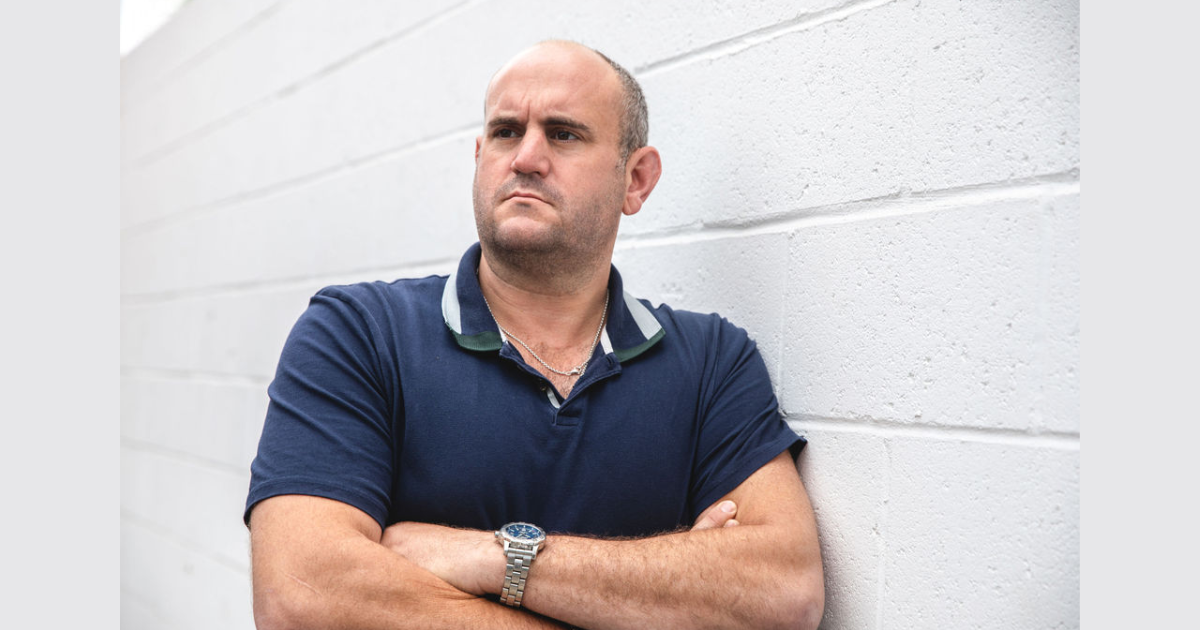
Jeremy Jacobowitz
Why Co-Production Matters
Jonathan’s decision to co-produce with Intuitive Content reflects lessons from his previous company, Jukin Media.
With Subway Food Tour, he is applying that same logic to creator-led travel storytelling. Rather than limiting LOST iN’s role to sponsorship or distribution, he chose a co-production model with an established unscripted producer.
“Since it’s one of our first long-form formats out of the gate, we wanted the best partner in the business,” he says. The collaboration helps secure financing, navigate distribution, and offset production risk.
It also reinforces Jonathan’s view that large-scale creator projects require structural oversight. “Investing in individual creators can be extremely risky,” he says. “A lot of them don’t have the infrastructure, liabilities, or the basic fiduciaries in place.”
For smaller brand deals, Jonathan notes that direct creator partnerships may work. But for “bigger, high-ticket, high-touch storytelling,” he says, “you should be working with a third-party producer.”
LOST iN aims to occupy that middle layer and connect creators, brands, and distributors with operational rigor.
Community-First Media in 2026
Jonathan’s critique of legacy publishing is direct.
“Legacy publishers come from a glossy magazine approach,” he says. “In 2026, that’s not the right approach.”
While LOST iN maintains its editorial roots, Jonathan emphasizes a digital-first mindset. “We’re video first, social first, and community first,” he says. “Everything we do has audience and community at the center. We’re community obsessed.”
That community orientation informs how the company develops IP. Before expanding into long-form production, LOST iN tests formats in short-form digital environments, measuring audience response and iterating.
“We leverage short-form to test what’s working and follow the data,” Jonathan says.
Jacobowitz had already collaborated with LOST iN for more than a year before the series announcement. The team analyzed how its audience responded before committing to a larger format.
Managing Risk in Long-Form Video
Jonathan is honest about the financial risks associated with video production.
“There’s a real risk factor,” he says. “I’ve seen digital media companies overspend and kill their margins.”
That awareness explains the partnership structure behind Subway Food Tour. Rather than fully financing the series independently, LOST iN is pursuing buyers and deficit financing to balance exposure.
“We have to create original IP to build audience and community,” Jonathan says. “We’re in the media business.”
But that investment, he notes, is measured. “We’re going to do more of it and take bigger swings,” he says, suggesting that full in-house financing could come later once the model is validated.
A Franchise Mindset
If Subway Food Tour succeeds, Jonathan sees a clear path forward.
“We plan on doing many seasons in many cities,” he says.
The goal extends beyond domestic expansion. With relationships across tourism boards and destinations, LOST iN views the format as globally adaptable.
The company’s longer-term vision is equally ambitious. “We’re going to be the number-one travel publication and media company for our millennial premium economy audience,” Jonathan says. “We’re going to be a household name.”
For now, Subway Food Tour serves as a test case for what structured, creator-led travel IP can look like when paired with media infrastructure.
As Jonathan puts it: “Strong IP and a strong format – that’s what carries on.”
Subscribe to Our Newsletter
Check Out Our Podcast