



Talent Management
How NETWORK Helps High School Athletes Create Brand Identities Before They Reach College

Justin J. Giangrande, founder and CEO of NETWORK, doesn’t think traditional sports representation works anymore.
“The days of just being an agency are gone,” he says. “Today’s talent wants to be active partners, and these guys are more entrepreneurial.” That conviction, shaped by more than 20 years in athlete brand management at firms including NCLUSIVE and Vayner Sports, is the premise NETWORK was built on.
Justin launched the firm in 2020 after leaving Vayner Sports, where he served as EVP and oversaw brand partnerships for professional NFL and NBA athletes. When the NCAA opened college sports to name, image, and likeness (NIL) deals in 2021, he pivoted NETWORK toward the college and high school athlete. Today, the firm operates across Miami, Los Angeles, and New York as a management agency, brand studio, and production company, with a current roster that includes DJ Lagway at Baylor University, Malachi Toney at the University of Miami, Julian Lewis at the University of Colorado, Rachel Glenn, an Olympian, and Malachi Nelson at Syracuse University, alongside NFL legend Mike Vick and Syracuse University head football coach Fran Brown.
NETWORK’s entry point is earlier in an athlete’s career than most representation firms attempt. The firm targets elite high school prospects, typically sophomores and juniors already attracting recruiting attention, and begins building their brand identities before they arrive on campus.
One Encounter Reoriented the Business
The pivot toward college and high school athletes was not planned. It arrived 20 days after the NCAA’s interim NIL policy took effect in 2021, when Justin was introduced to Malachi Nelson, then the most high-profile high school quarterback in the country. Nelson’s father asked him to research California’s rules on NIL for high school athletes. Justin had the answer the same day.
“God works in mysterious ways,” he says. “I had to be in the right state. Someone had to come to me with an opportunity. I had to understand how to market the position.”
The pieces aligned with what he already knew. Justin had spent years working alongside top quarterbacks, including Mike Vick, and had built his career on athlete brand marketing. The NIL market presented a familiar problem applied to an underserved client base. College and high school athletes had the same brand-building needs as professional athletes but, with few exceptions, access to none of the same infrastructure.
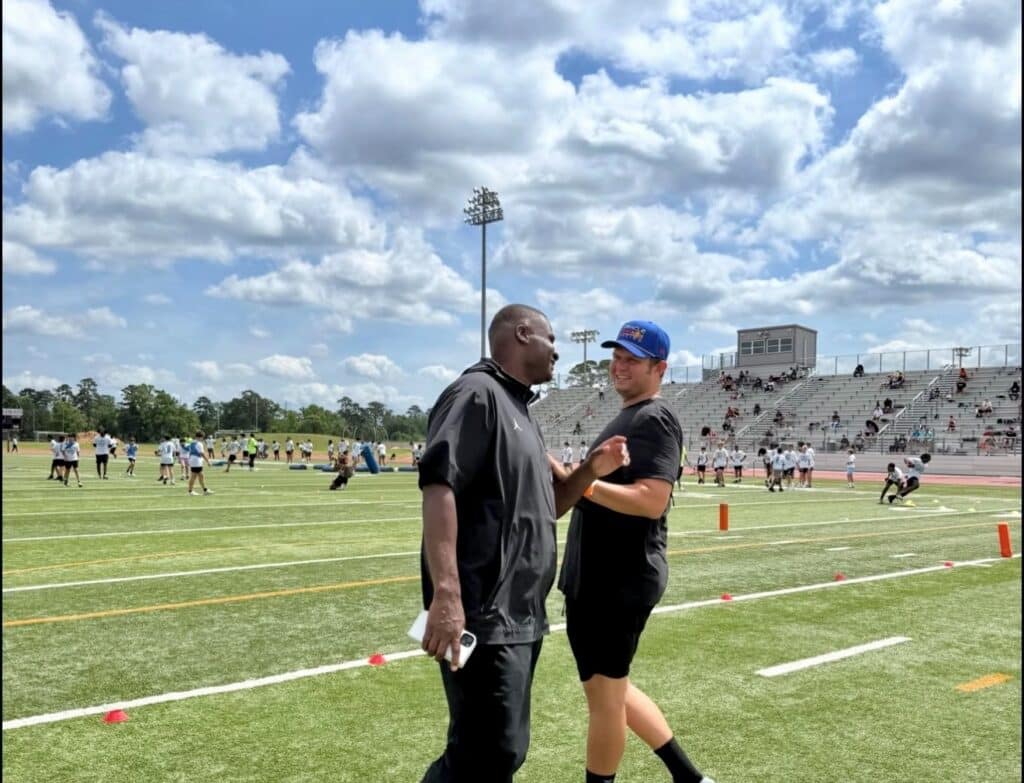
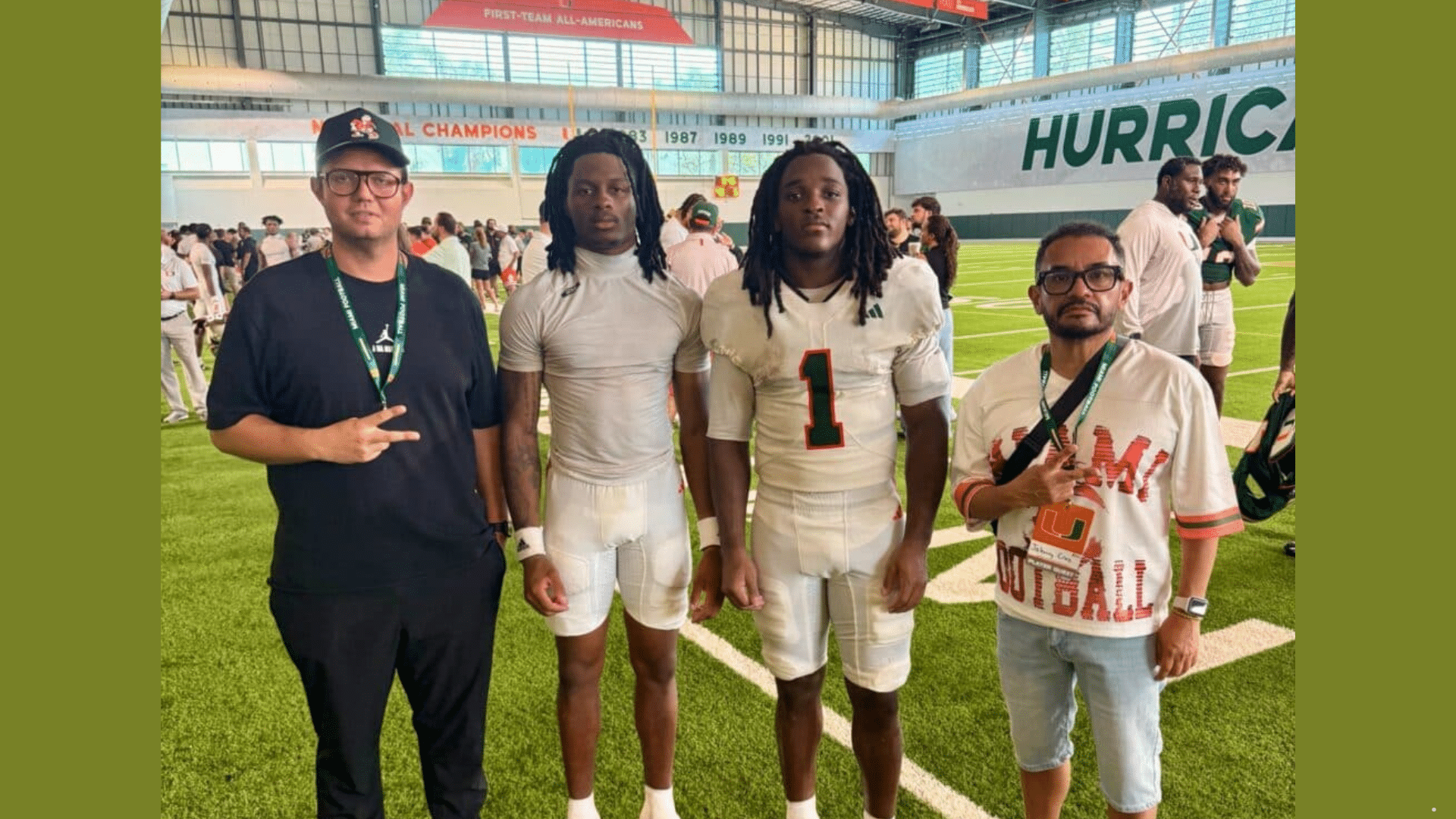
Photo: DJ Lagway Sr. & Justin J. Giangrande
The Case Against the Single-Function Agency
NETWORK is structured as an agency, brand studio, and production company, with Justin framing each function as a requirement of how NIL actually works.
Brand development comes first. An athlete’s name, image, and likeness have no commercial value if no one recognizes the brand behind them. NETWORK builds logo systems and brand identities for clients, which an in-house design team then applies to merchandise.
“If you’re building an athlete’s brand and managing them, fans want to own a piece of them,” Justin says. “What better way for people to grow your name and image likeness than to be wearing products with your name on it?”
Content production runs alongside brand development. Justin says everything in NIL comes back to storytelling, whether an athlete is executing a brand deal or building their audience. The firm provides athletes with strategy and platform-growth resources, but athletes post their own content. Justin frames this explicitly as education rather than service.
“Our job is to basically help give them the resources so that they understand how to grow their social,” he says. “We could do it for them, but your job is to actually teach them so that they’re able to do it themselves.”
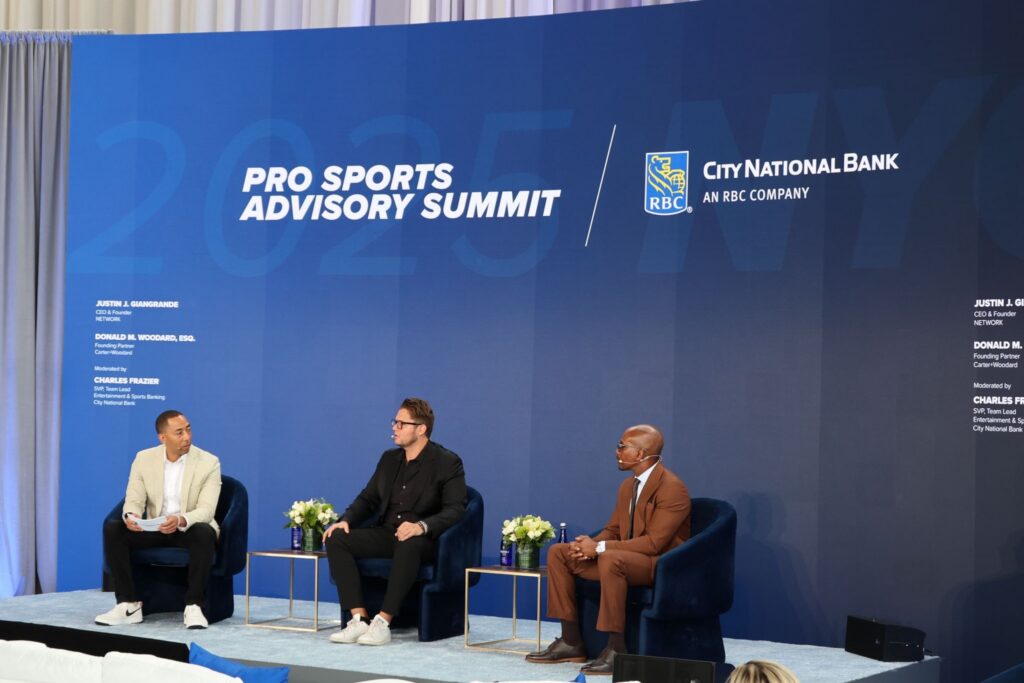
Photo credit: Citi National Bank
Why Brands Are Paying for Athletes Who Haven’t Turned Pro
Brands including Red Bull and Jordan Brand have worked with NETWORK athletes. The pitch to those brands, Justin argues, comes down to timing and economics.
Partnering with a college or high school athlete before they reach professional visibility costs less than signing someone who has already established a track record. For brands that read an athlete correctly early, that first deal becomes part of an origin story the athlete will carry for their entire career.
“There’s an arbitrage of maybe you don’t have to pay like when you pay for a talent that has already made it,” Justin says. “There’s some level of also being a part of their journey and being one of the first brands that really supports them. It’s memorable.”
That upside carries real risk. Justin acknowledges that deals have collapsed when athletes underperformed on the field and that state-specific legislation has killed partnerships in certain markets. His approach after a deal falls through is to work across verticals, finding adjacent categories rather than treating each brand relationship as a standalone.
For athlete families entering a market full of agencies and collectives chasing NIL talent, he offers a single, direct test: ask any prospective partner to explain how they specifically plan to use the athlete in their marketing.
“If they can’t tell you how they plan on using them in their marketing mix, then they’re not really all in on them,” he says. “If they have a custom plan on how they want to handle the situation, that tells you a lot.”
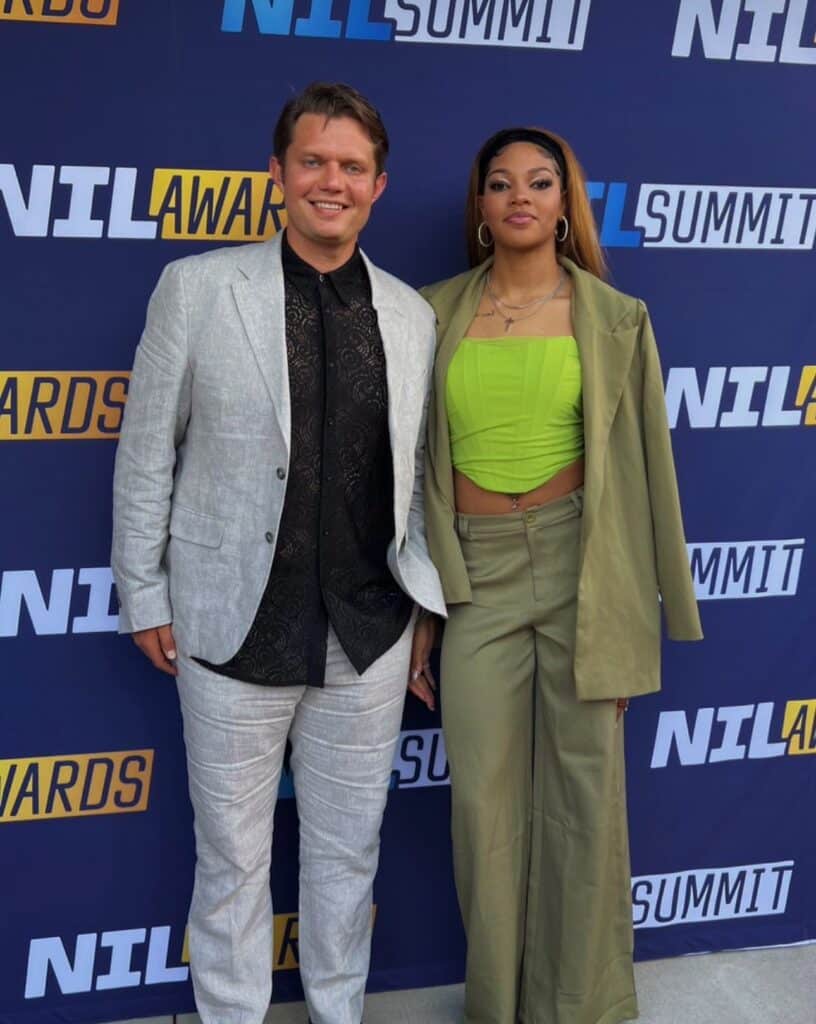
Photo: Justin J. Giangrande & Rachel Glenn
YouTube Is the New Cable
Platform strategy is central to NETWORK’s model, and Justin is specific about where he is directing attention. He describes YouTube as the emerging default for athlete media presence, a platform he believes is reconstructing the logic of cable television for individual creators.
“I think YouTube is basically going to be what cable is,” he says. “Everyone has their own TV channel.”
NETWORK steers its college and high school athletes toward building YouTube audiences and, in Justin’s view, understanding that algorithm as a long-term growth system. He describes Instagram as a necessary front door, the equivalent of a personal website for this generation. He identifies Snapchat as the platform least essential to his clients’ strategies, in part because of how difficult it is for brands to activate campaigns there.
The question of where a young athlete spends their time online is, in Justin’s framing, a business allocation question, not a personal preference. That means the answer changes as platforms shift, and staying ahead of those shifts is part of what the firm offers.
The Long Game: Athlete Likeness as an Equity Asset
Justin’s forward-looking ambition is to move NETWORK’s athletes from flat endorsement fees into equity-based deals, where a client’s likeness is licensed in exchange for an ownership stake rather than cash.
“I dream that I sign a high school player and we do an equity-based deal using their likeness and that company does so well that they have the option to go pro when the time comes that they’ve exited and made so much money from using their likeness,” he says.
An early version of that model is already in motion. NETWORK helped structure an equity-based NIL deal with Gym Weed for Julian Lewis, the University of Colorado quarterback. Justin expects the partnership to grow.
The broader argument, as he frames it, is that the college and high school NIL ecosystem is still frequently misread by the athletes who have the most at stake in it. A large agency name built on professional representation does not translate automatically to expertise in the specific rules, timelines, and leverage dynamics of the college market.
“The college sports ecosystem is not the same as the NFL and NBA,” Justin says. “Do your diligence and make sure that whoever you’re signing up with really understands where you’re at and can meet you where you are in your career at that time.”
Subscribe to Our Newsletter
Check Out Our Podcast