





Influencer
From Fitness To Finance Parody: Johnny Hilbrant On Turning A One-Off PE Guy Joke and Meme Into A Career

Johnny Hilbrant didn’t plan to become known for impersonating private equity executives. Until recently, most people knew him as a fitness instructor in Boston, where he spent nearly a decade coaching classes and motivating clients. Today, his name is more likely to appear on Instagram feeds and TikTok reels, where he performs as a sharply observed caricature of corporate culture, a character followers simply call the “PE Guy.”
The idea started small. After finding himself more than once trapped in conversations with finance professionals at weddings, Johnny turned the experience into a short video sketch.
“He basically started as the guy you get stuck talking to at a wedding,” he says. “And because that kept happening to me, I gave him a job; everyone I met worked in private equity, so I just made him the PE guy.”
What began as a throwaway bit soon reshaped his career. “I’ve always tried to make people laugh in every area of my life,” Johnny says. “But this character kind of just blew up my audience into what it is right now.”
Finding His Voice in Character
Before content creation, Johnny spent nearly ten years teaching fitness classes across Boston and five years working for Beam Organics, a wellness company that began as a CBD brand and later expanded into sleep and nutrition supplements. He left Beam in 2024 to focus fully on his fitness career.
The defining moment came when he began filming sketches, and that man very soon became “the PE guy,” a caricature of corporate confidence and small-talk bravado.
What started out spontaneously turned into a recognizable persona with a whole fictional life, complete with a pregnant wife and three kids whose names followers now know by heart. “In the beginning, it was just a guy,” he says. “Now he’s got this whole family situation. The voice even changed; it started whiny and nasally, and now it’s energetic and in your face.”
Building an Audience Without a Blueprint
Johnny insists there was no grand plan behind his rise. “I feel bad saying this because I know some people have a strategy, but there was no strategy,” he says. “I never wanted to go viral. I just stayed true to myself and the character.”
He credits consistency more than tactics for his growth. Posting every two or three days, he focused on feeding the algorithm without over-engineering content. “People tell me, ‘Develop another character’ or ‘Make him do this or that.’ But I got here by myself, and I want to keep doing it that way,” he says.
Even as followers ballooned into the hundreds of thousands, Johnny continued reading his comments and direct messages for inspiration.
“People will say, ‘Do Charlotte, North Carolina. It’s full of bankers,’ or suggest smaller cities I’d never thought of,” he explains. “I take feedback like that, but I also know when to tune it out. If the videos are still doing well and the feedback is good, I just keep rolling.”
Monetizing Comedy
Three months after his first viral post, Johnny realized the character could replace his full-time income. “The bread and butter for me early on was Cameo,” he says. “People were paying me to make birthday wishes or roast their friends. That gave me the freedom to quit my job even before brand deals.”
The cameos became a steady business of their own. “People would say, ‘How much for a personalized video?’ and I’d say, ‘Pay me whatever you want.’ They’d send over $200 without blinking,” he says. “The fact that people put that kind of value in these videos is shocking and makes me feel really good.”
As his presence grew, brands began to reach out, mainly from the business-to-business sector. “It’s been mostly software companies,” he says. “I have to educate myself on their products because I know nothing about that world, but it’s worked out.”
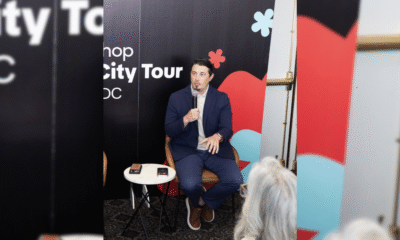
One of his most notable collaborations came with Ramp, a corporate card and finance platform, which turned into a multi-month partnership. “I just did a marketing stunt with Ramp and Brian Baumgartner from ‘The Office’ in New York,” he says. “People loved it. That’s when I saw a big uptick.”
While brand collaborations provide valuable revenue, Johnny is selective. “A lot of lifestyle brands don’t want to make fun of their customer base,” he says. “They want to look elevated, so comedy doesn’t always fit. That’s a limitation of what I do.”
Running a One-Person Business
Behind the humor, Johnny is managing what has quickly become a thriving solo enterprise. “Keeping everything organized has been the biggest challenge,” he admits. “I have an Excel sheet with color codes, but sometimes I’ll forget to make a cameo someone paid for. That’s bad. That’s where a manager would help.”
So far, he’s chosen to operate independently, wary of agency contracts and creative loss. “Some agencies take 20 or 30 percent and have these big, scary contracts,” he says. “If you work with a brand they bring to you, you can’t work with them again for 12 months. That’s not fair.”
He’s also cautious about losing the direct connection with followers. “I love answering my DMs,” he says. “I still have friends from high school replying to my stories. I don’t want someone pretending to be me in my inbox. That human touch is part of why I love this.”
Creating for the Long Game
Comedy creators often face the challenge of keeping audiences engaged with a recurring character, but Johnny isn’t worried. “People said months ago, ‘Isn’t this going to get old?’” he says. “But the character can talk about anything. He could talk about the tile in his kitchen, and it would still be funny.”
The creator sees the constant influx of new followers as a natural refresh. “I’m sure some people who followed me seven months ago don’t watch every video anymore,” he says. “But every day there are a thousand new followers, and that keeps it alive.”
His advice to other creators is to focus less on performance metrics and more on creative fulfillment. “Tie your worth to how you feel about what you made, not to what the algorithm tells you,” he says. “There’s a world where that first video got 700 views instead of millions. But I’d still be proud of it.”
Johnny’s commitment to creating from instinct has helped him maintain balance amid fast-growing success. “Be comfortable doing this without accolades,” he says. “If you’re proud of what you put out there, that’s the reward.”
Lessons in Control
For all the talk of strategy and scaling, Johnny believes longevity in content creation depends on staying rooted in identity. “Be really sure who you are going to present as,” he says. “When opportunities come your way, you can say no to what doesn’t feel right.”
That ability to say no, he adds, is what keeps creators from burning out. “This is a long game,” he says. “If it’s the game you want to play, don’t say yes to everything at the start just because it sounds good.”
He’s also noticed how easily creators lose their original spark once business interests take over. “Sometimes there’s such a drastic shift,” he says. “You follow someone because they’re funny or creative, and suddenly it’s all newsletters and sales funnels. You have to ease people into that or you lose them.”
What’s Next for Johnny?
Johnny is already thinking about how to expand his comedic world beyond Reels and TikTok. “There’s a little bit of apparel, cameos, and brand work now,” he says. “The next thing might be a podcast or YouTube show, interviewing people as PE Guy and also as myself.”
The concept is already in development. “There are people in my DMs, from executives, even celebrities who’d probably say yes to an interview,” he says. “It would be fun to see how they handle the character.”
As for the most surreal moment so far, he points to performing in character opposite Baumgartner in New York. “It wasn’t even with the filter, and people still loved it,” he says. “That was one of those pinch-me moments.”
After years of posting simply for the joy of it, Johnny now approaches content creation as both creative expression and business. Yet his motivation remains simple: “I’ve always been posting funny stuff,” he says. “It makes me feel like a kid. I don’t have to be a buttoned-up adult because this is a fun place to play and be ridiculous.”
He smiles before adding what might be his clearest philosophy yet: “Keep doing what feels right. It’ll be worth it. Even if you don’t go viral, you’ll still be making people laugh.”
Checkout Our Latest Podcast