


Influencer
From Wall Street To Viral Comedy: How Andrew Meng Rebuilt His Career In The Creator Economy

Andrew Meng built his career by doing everything he was supposed to do: studying electrical engineering, landing a job in investment banking, and working the kind of hours that signal ambition in finance. What he did not expect was how quickly that version of success would feel suffocating. Long weeks spent building pitch decks and financial models made it clear that the work, while prestigious, left little room for creativity.
That dissatisfaction was not new. Long before TikTok or brand deals, Andrew had been drawn to making things for an audience. He grew up during what he calls the “golden age of YouTube,” watching creators like Wong Fu Productions, Ryan Higa, and KevJumba. As a middle-school student, he experimented with video game commentary and early YouTube uploads, driven by curiosity rather than any expectation that content could become a career.
As his professional life narrowed, that early creative instinct became harder to ignore. Once inside investment banking, the contrast sharpened. “I saw where my life was going, and I wanted to do something more creative that involved building something for myself,” he says.
In January 2021, Andrew quit his job outright, without a content strategy or even a clear plan. “I left my job cold turkey, without even posting a piece of content,” he recalls. One week later, he uploaded his first TikTok, which reached roughly 16,000 views. “The rest was kind of history.”
That leap ultimately reshaped both his creative identity and his career. Today, Andrew is known online as @mengmengduck, a creator with more than 800,000 followers whose short-form comedy draws directly from his experiences in finance and tech, skewering the absurdities of corporate and startup culture. At the same time, he is building Yorby AI, a content intelligence platform designed to help creators and marketers generate ideas by studying what already works online.
Teaching People to Get Jobs He No Longer Wanted
Andrew’s earliest content leaned heavily on his finance background. He posted videos explaining how to break into investment banking, offering advice on networking, interviewing, and workplace etiquette. The content performed well, and he hit 10,000 TikTok followers while still focused on career education.
At the same time, something about the niche felt increasingly misaligned with his own choices. “I quit my corporate job to become a full-time content creator,” he says. “Why am I teaching people to get a job?”
The internal conflict grew. While there was nothing wrong with career advice, it was no longer what he wanted to spend his creative energy on. “It wasn’t really resonating with me personally,” he says. “It wasn’t as creative as I wanted it to be.”
That tension eventually pushed him toward experimentation. Andrew began experimenting with more comedic formats, acting out exaggerated versions of his corporate experiences. One video went viral, surpassing 20 million views across platforms and marking a turning point. “That allowed me to pivot my brand into being more like a comedy creator,” he says.
Instead of instructing viewers on how to survive corporate life, Andrew started making fun of it.
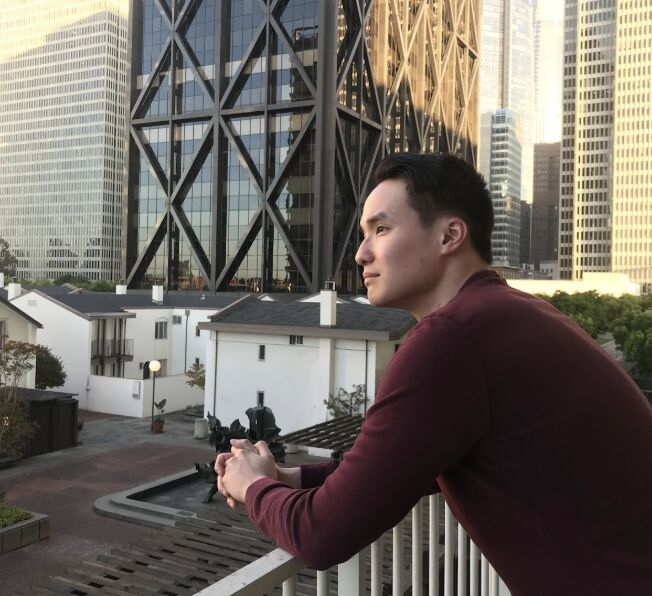
Comedy as a Release Valve
Andrew’s comedy draws heavily from what he describes as “painful experiences” in corporate environments. He frames them with humor, rather than bitterness, using exaggeration and irony to tap into shared frustrations.
“A lot of times comedy comes from a very dark place,” he says. “Being able to take something that is painful or not that socially accepted and twist it in a way that makes it funny.”
The shift broadened his appeal. Comedy content brought more consistent viewership and made his account easier for brands to evaluate. “My views became a lot more consistent, which is very appealing to brands,” he explains. In his experience, volatility is one of the biggest deterrents for advertisers. “They’re just going to take your lowest performing video and assume that’s what they’re getting.”
The payoff arrived slowly. While his follower growth came early, meaningful monetization did not appear until late 2023 or early 2024. His first $5,000 brand deal felt surreal. “Back in 2023, I was like, ‘Dude, this is a crazy amount,’” he says, adding that two deals a month at that rate suddenly made content creation feel sustainable.
Rethinking What ‘Original’ Really Means
Like many early-stage creators, Andrew once believed that success depended on being completely original. “I used to think you have to do something that no one has ever done before,” he says. Over time, that belief unraveled.
As he reverse-engineered his own viral videos, Andrew noticed patterns. The ideas were rarely invented from nothing. Instead, they combined familiar elements in new ways. “You took this element from this creator, you took this music from this video, and you mashed it together in your own way,” he says.
For Andrew, creativity became less about novelty and more about recombination. “Originality comes from combining elements that usually don’t go together,” he says. The realization reshaped both his content and his thinking about tools for creators.
Burnout and the Limits of Repeatability
Despite his success, Andrew does not present his creator journey as a straight line. Growth, he says, happens in bursts followed by plateaus. “It’s like a step function,” he explains.
Comedy, in particular, proved difficult to systematize. Unlike educational content, which can be repeated with minor variations, comedy requires constant novelty. “You kind of have to do this slightly different every single time,” he says.
Eventually, the pace took a toll. “I just ran out of ideas,” Andrew admits. He describes his current relationship with content as one of burnout rather than excitement. “I’m pretty burnt out from my brand-making content,” he says, adding that he has not yet found a clear path back to that earlier sense of creative momentum.
What changed is where his energy goes. After four years of obsessing over content, his focus has shifted toward building a company. “I don’t naturally think about content anymore,” he says. “My obsession has shifted more towards building my startup.”
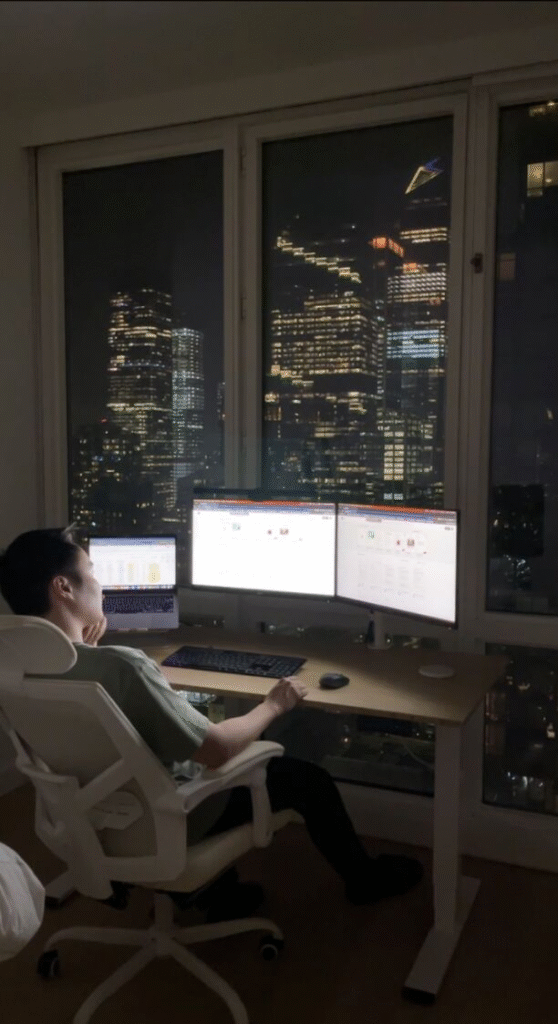
Building Yorby AI From a Creator’s Frustration
Andrew’s startup, Yorby AI, grew directly out of his experience as a creator struggling with ideation. The platform allows users to upload viral TikTok or Instagram videos and analyze their structure, pacing, visuals, and transcripts. The AI then remixes those elements for a different topic, niche, or audience.
“I didn’t see a lot of tools focusing on the content intelligence portion,” Andrew says. “I want to solve the problem of ‘What do I make?’”
The product reflects his belief that creativity is a remix. By systematizing that process, Yorby aims to help creators move past blank-page paralysis without relying solely on trends or guesswork.
Andrew says the AI is trained on the combined experience of himself and his co-founder, who together have generated more than 300 million impressions and built audiences totaling roughly 1.5 million followers.
Since launching, Yorby reports attracting more than 10,000 users. While revenue goals matter, Andrew frames success differently: “If we can help 10,000 creators hit 10,000 followers, that would be a pretty big signal to accomplish.”

When Being a Creator Hurts You as an Operator
Despite his background in marketing and distribution, Andrew believes being a creator has also worked against him as a founder. He points out that the mindset that fuels personal branding does not always translate to running a company.
“As a creator, you have to be emotionally invested,” he says. “It’s a lot of me, me, me.” That self-focus, he argues, clashes with the customer-first thinking required in a business.
Running Yorby forced a shift. “It doesn’t matter what I want,” he says. “It’s like, ‘What does the customer want?’ We’re going to go build that.” Learning to separate personal identity from product decisions has been one of the hardest adjustments.
Advice for Creators and Brands
For creators hoping to turn audiences into businesses, Andrew’s advice is simple: “Pick one topic or niche and stick to it,” he says, adding that blending too many interests into a single brand makes monetization harder.
He also urges creators to treat content creation more like structured work over time. Rather than filming every day, Andrew recommends blocking off specific days for production. “Once you’re two or three years into it, it becomes a job,” he says.
On the brand side, Andrew believes many agencies misunderstand how to work with different types of creators. Some individuals thrive with detailed scripts, while others need looser guidelines. “If it’s a comedy skit creator, you should probably let them do what they know will work for their audience,” he says.
Over-controlling the process, in his view, often kills performance.
What’s Next?
Andrew is currently raising capital for Yorby AI and aims to grow the company in 2026. At the same time, he has not abandoned the idea of returning to content creation in a more sustainable form. “Hopefully, I will start a podcast and still be making content,” he says.
When it comes to the future of the creator economy, Andrew is firm on one point. “AI is not going to replace creators,” he says. “People want to watch other human beings.”
For him, that belief underpins both his content and his company. Technology can accelerate workflows, but it cannot replace the human connection that made him hit “post” in the first place.