




Technology
From Hollywood To ‘Meaning Economy’: Matt Zien Shares Vision For AI-Powered Storytelling

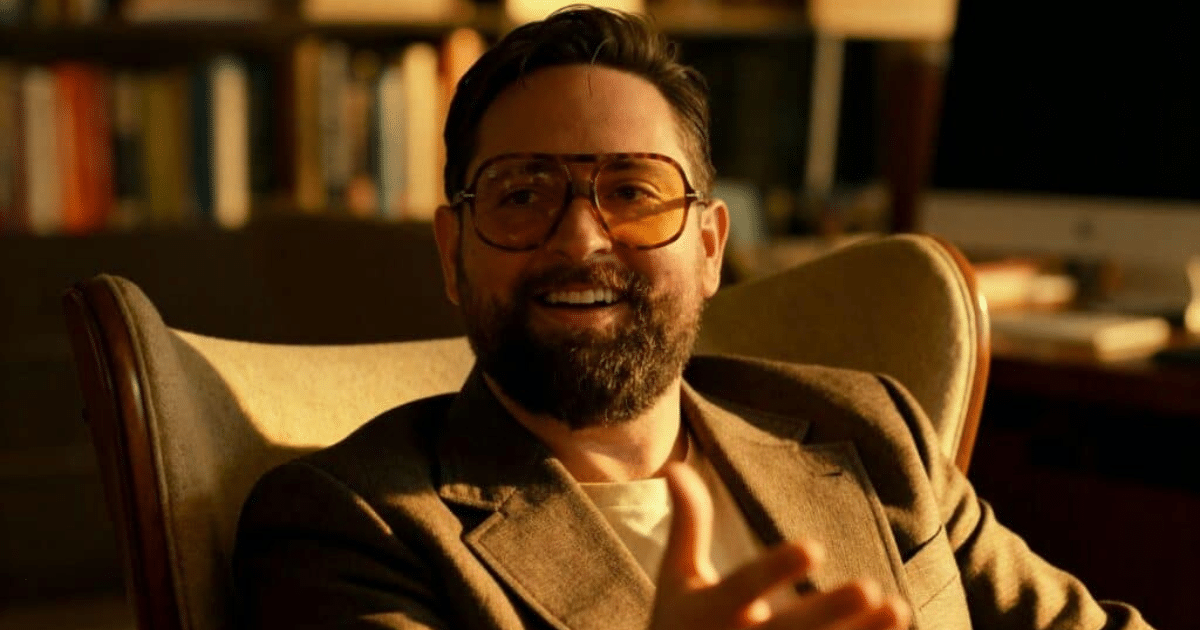
For more than a decade, producer Matt Zien helped shape the worlds of television and documentary filmmaking, creating shows that explored the inner workings of culture, celebrity, and belief. Today, he’s reimagining storytelling. As the founder of KNGMKR Labs, a creative studio operating at the intersection of cinema, technology, and culture, Matt believes artificial intelligence won’t replace filmmakers. It will liberate them.
“We’re trying to make AI cinema for people who don’t care that it’s AI,” he says. “If the story connects, it shouldn’t matter what tools made it possible.”
Founded in early 2024, Los Angeles-based KNGMKR Labs (pronounced “Kingmaker Labs”) functions as what Matt calls a “cinematic laboratory.” Working with collaborators across entertainment, tech, and music, the studio experiments with AI-assisted storytelling to create emotionally resonant, visually appealing projects that couldn’t exist through traditional means. Its collaborators have included Microsoft, Coachella, Grimes, and Anyma, with projects spanning immersive experiences, speculative world-building, and cinematic R&D.
Matt’s latest traditional film, “Slauson Rec,” which premiered at the 2025 Cannes Film Festival, reflects his dual commitment to innovation and emotion. Directed by Leo Lewis O’Neil, the documentary captures five years of footage inside an experimental theater collective in South Central Los Angeles.
“I still want to produce films that have nothing to do with AI,” Matt says. “But I also want to figure out how to tell stories with this chaotic, unpredictable new medium, and how to do it ethically.”

A Filmmaker’s Early Spark
Matt’s fascination with storytelling began long before streaming or social media reshaped entertainment. Growing up in Vancouver, he was the kid who “forced all his friends to be in movies,” shooting with his parents’ camera and uploading short films to online forums before YouTube even existed.
At 13, a short film of his screened at a Canadian festival in Winnipeg. His mother insisted he fly out. On one condition: he had to bring his next script. “She told me, ‘If you meet someone important, you’ll waste the opportunity if you don’t have your next project ready.’”
That advice proved prophetic. At the festival, Matt met a technology investor developing a digital camera that could match the quality of 35mm film. He handed the man his script; weeks later, the prototype camera arrived at his door. It was a DALSA Origin, an early 4K digital cinema camera that preceded the RED One by several years, part of the first wave of professional digital cameras that would transform how films were made.
With access to the prototype, Matt assembled a professional crew eager to test it, filmed on his school campus with the principal’s permission, and soon attracted attention from the University of Southern California (USC) School of Cinematic Arts, which offered him admission and a scholarship.
“They told me, ‘If you hit this SAT (Scholastic Assessment Test) score, you can skip finishing high school,’” he recalls. “I studied like hell and left Vancouver at 17.”
Inside the Hollywood Machine
After graduating from USC, Matt transitioned from aspiring screenwriter to development executive. He joined All3Media America, the company behind “Undercover Boss,” before helping to launch The Intellectual Property Corporation (IPC) in 2016, an Emmy-winning production company later acquired by Sony Pictures Television.
As one of IPC’s first executives, Matt helped expand it from a startup into a major producer of unscripted series and documentaries. Among his credits are “The Curse of Von Dutch” (Hulu), “This Is Paris” (YouTube Originals), “Free Meek” (Amazon), and “Leah Remini: Scientology and the Aftermath,” which earned multiple Emmys.
“Selling television was a mix of great ideas, luck, and relationships,” he reflects. “It was a system built on gatekeepers. If you wanted to make something ambitious, you had to convince someone to give you the resources.”
That reality, he says, began to feel limiting, especially as streaming blurred the lines between film, television, and online storytelling. “I loved the work, but what frustrated me was when we had a great idea, we couldn’t even put it on the slate because the budget made it impossible,” Matt explains. “AI felt like a key to unlocking those stories that were too expensive to tell.”
Founding KNGMKR Labs
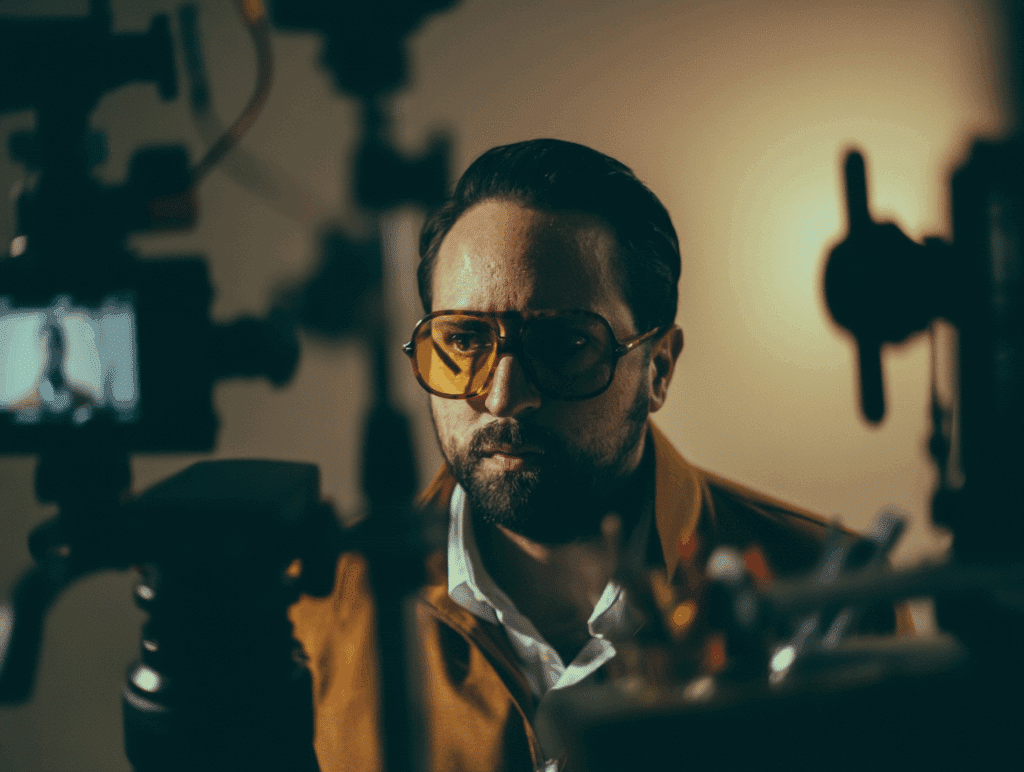
In 2024, Matt partnered with Mac Boucher, a director, digital artist, and technologist known for his collaborations with Canadian musician Grimes, to found KNGMKR Labs. Their goal: explore how emerging AI tools could expand cinematic language.
Boucher introduced Matt to Midjourney, which was still in early beta. “He said, ‘You can make any image you can think of,’” Matt recalls. “It felt like magic.” Within months, the pair began experimenting with a patchwork of software, often using 30 or more tools, from After Effects to Blender, to produce short films blending AI imagery with human storytelling.
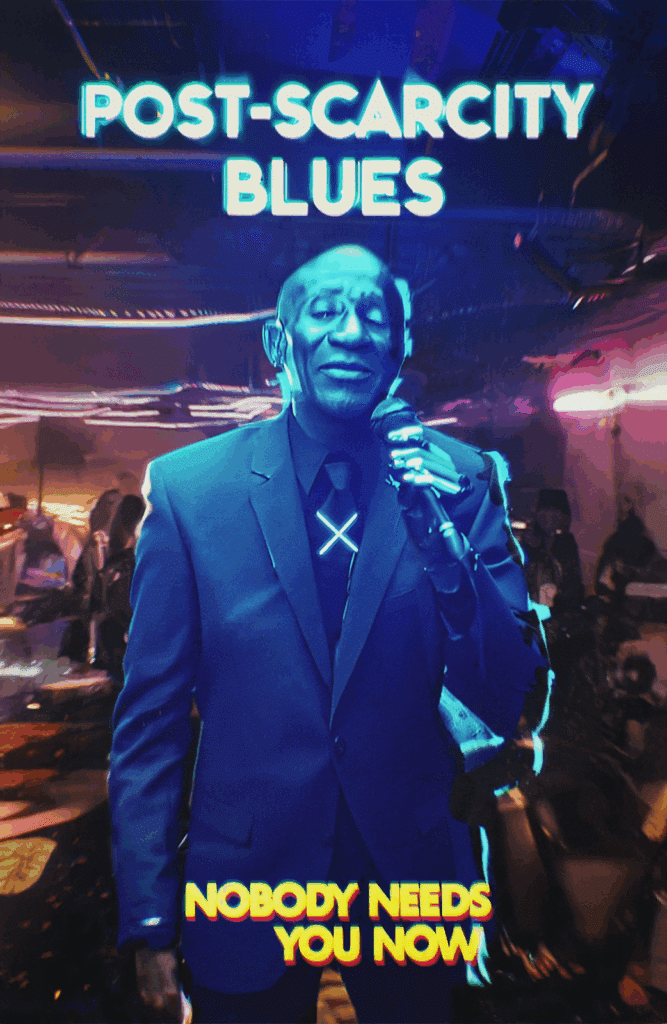
Their breakout project, “Post-Scarcity Blues,” captured the internet’s collective anxiety about automation. In it, a holographic blues singer describes a world where “the world learned to run without you.” The short, which Matt wrote and directed, went viral, amassing nearly 10 million views across platforms.
“I didn’t think anyone would respond to it,” he says. “It was just me processing my own anxiety, wondering, ‘Will I matter anymore?’ But it turned out a lot of people were feeling the same thing.”
From Creator Economy to ‘Meaning Economy’
For Matt, the rise of AI marks not just a technical shift, but a cultural one. He predicts that as tools become more accessible, production value will no longer be a differentiator. “What we now consider big-budget, high-production value is going to become the baseline,” he says. “We’ll have a flood of beautiful, Hollywood-level, mostly meaningless content.”
The next phase, he argues, will depend on meaning rather than spectacle. “The only thing that will remain scarce is meaning,” Matt explains. “Content asks, ‘Did I get your attention?’ Meaning asks, ‘Do you see the world a little differently now?’”
He calls this new paradigm the “Meaning Economy,” a world where individual perspective and emotional truth become creators’ most valuable assets. “An AI can’t decide what’s meaningful,” he says. “That remains human.”

2025 Korea AI Content Awards
Empowering Storytellers Through AI
Despite the controversy surrounding generative tools, Matt sees AI as empowering, not erasing, human creativity. “If you’re someone who truly yearns to tell stories, you no longer need permission,” he says. “You can test ideas quickly and at low cost instead of waiting years and spending thousands.”
He believes this freedom will democratize filmmaking while also raising the bar for quality. “The bar is ten times higher for anyone using AI,” he admits. “You can’t just type a movie into a prompt and get something good. It’s about figuring out how to talk to machines in a way that makes them understand your vision. It’s like machine psychology.”
Still, Matt cautions against using AI merely to cut costs. “You should have a reason for it,” he insists. “If a story couldn’t exist without AI, or if the technology serves the creative purpose, that’s when it’s worth it.”
His method often involves combining dozens of programs to achieve cinematic cohesion. “It’s a puzzle,” he says. “You have to learn which tools do what best and then glue them together. There’s still a lot of human work in AI filmmaking.”
Toward the Next Form of Entertainment
Beyond film, KNGMKR Labs is investigating how AI could shape entirely new forms of media, such as experiences that merge storytelling, interactivity, and culture.
Matt describes his vision as “somewhere between a great movie, a video game, and sports.” The holy grail, he says, will be something “coherent enough to discuss at work tomorrow, personal enough to feel like yours, evolving enough to demand return visits, and social enough that missing out means missing culture.”
While he acknowledges that thousands of experiments will fail before one succeeds, he believes those failures are part of the discovery process. “What this technology will enable isn’t just cheaper movies. It’s new kinds of experiences we can’t even define yet.”
A Future Built on Voice and Vision
For now, Matt remains focused on helping filmmakers find their own voices within this rapidly changing landscape. “Every great director says the same thing: just make films,” he says. “The difference now is you don’t have to wait five years to get the money or permission to make one.”
As AI tools continue to advance, Matt hopes to see a more diverse generation of creators emerge, one defined not by resources but by point of view. “Filmmakers are going to have more power than ever before,” he says. “But also more competition. The ones who’ll stand out are those who know what they want to say and why it matters.”
And for KNGMKR Labs, that philosophy remains the compass guiding its experiments at the edge of art and technology. “We don’t know what the next form of entertainment looks like,” Matt says. “But I believe it’s coming, and we’re trying to find it.”
Subscribe to Our Newsletter
Check Out Our Podcast