



Talent Collectives
Flywheel’s Eyal Baumel Breaks Down His Disney-Inspired Playbook For Creator Franchises

Can the business models that built entertainment giants like Disney truly work for individual creators? The creator economy has traditionally focused on short-term monetization through brand deals, platform revenue sharing, and merchandise, which is a far cry from the multi-decade franchise development that transformed Disney from an animation studio into a global entertainment conglomerate.
Eyal Baumel believes a modified Disney playbook might be the key to building sustainable creator businesses. As founder of Flywheel, a boutique management company and venture studio launched in July, Eyal is working with established creators to build franchise ecosystems around their personal brands and content.
“My vision was to apply the franchise strategy to creators,” explains Eyal, who resigned from running Yoola in 2022, where he managed a YouTube network with 3,000 channels and started working with talent directly. This experience revealed both the potential and limitations of traditional creator management approaches.
“When I started working with Nastya’s family in 2018 [Like Nastya – online alias of Anastasia Radzinskaya], I saw the difference between working with many people and spending a lot of time with one creator,” Eyal explains. “To create content is very time-consuming. These creators are very good at what they do. They know how to create and distribute content. I always say that the best creators are those who understand both the art and the science. The art is the content, the science is the algorithm.”
Flywheel serves creators who have already built large audiences but need strategic partners to develop their intellectual property (IP) across multiple platforms, products, and experiences. Eyal and the company currently work with mega-creators including Like Nastya, Rebecca Zamolo, Jordan and Salish Matter, The Royalty Family, and MrBeast.
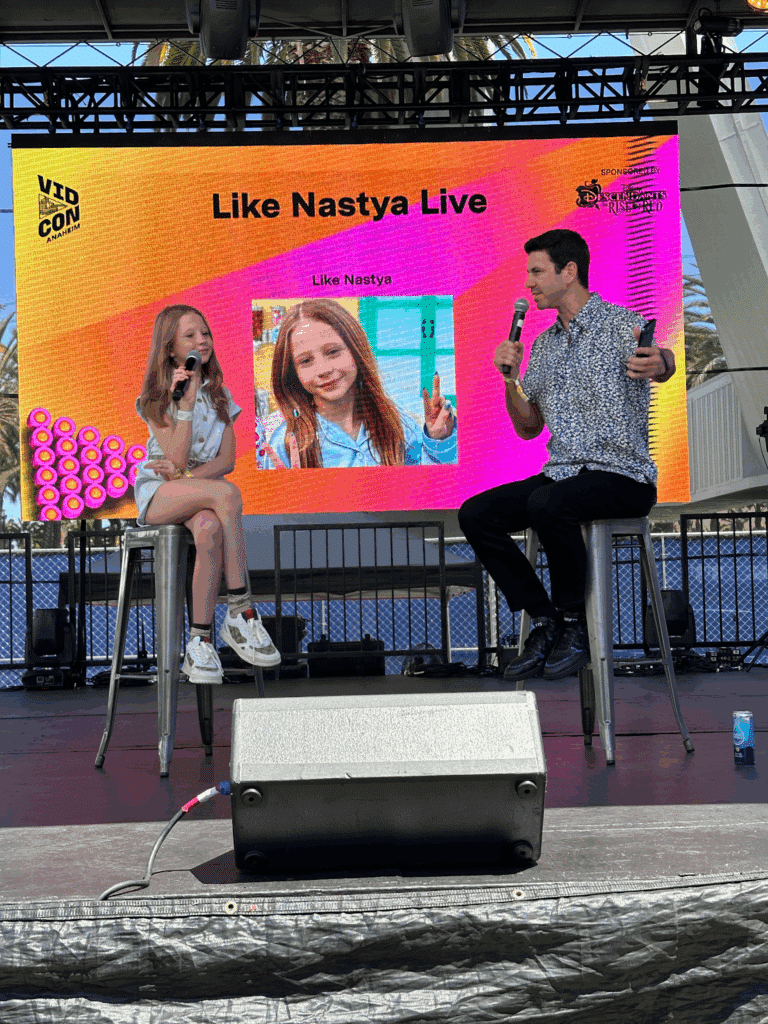
Like Nastya & Eyal Baumel
Inside the Franchise Blueprint
When Flywheel begins working with a creator, they implement a thorough strategic process that mirrors how entertainment conglomerates approach IP development, but with the creator maintaining ownership and creative control.
“Before we even start working with a creator, we take a big board and we put the name in the middle and we start mapping all the opportunities that we have around this IP from the content side to the product side to experiences,” Eyal explains.
This mapping process identifies both short-term opportunities that can be implemented quickly, such as distributing content on additional platforms like Roku or Spotify, and longer-term ventures, including developing animated shows or consumer products.
Eyal acknowledges that creator businesses must balance revenue generation with equity building. While many management companies focus exclusively on maximizing immediate returns through brand deals and sponsored content, Flywheel prioritizes developing assets with lasting value. This might include creating consumer product lines, building technology platforms, or developing entertainment properties that can exist independently of the creator’s personal content production.
The revenue model for these partnerships varies depending on the venture. In some cases, Flywheel works with creators on a traditional management basis, while in others, it establishes joint ventures for specific product lines or content initiatives.

Creator-Led Innovation
What distinguishes Flywheel from traditional entertainment industry models is the centrality of creator vision and genuine connection to its audience. Rather than imposing predetermined business extensions, Eyal works to identify opportunities that naturally emerge from the creator’s content, audience relationships, and personal passions.
The company’s creator-led approach has yielded new businesses that address market needs while maintaining real connections to the creator’s brand. Rebecca Zamolo’s fertility wellness venture exemplifies this.
“Rebecca and I started working together on one product,” Eyal recalls. “But then she told me about her journey to motherhood, her miscarriage, and how she worked with a fertility doctor in L.A. who gave her these formulas that helped her give birth. Then, she said her dream was to allow any woman who wants to become a mom to have access to those formulas. And this is when we started thinking about building the company.”
The resulting company, Molo, represents the kind of purpose-driven venture that emerges when creators approach business development from a place of genuine mission rather than merely as a revenue opportunity.
Eyal emphasizes that the strategy must be tailored to each creator’s unique audience and personal interests. “Sometimes, the talent comes with their own vision, and sometimes the talent says, ‘Listen, I’m not sure. What do you think?'” he says. “And then we start mapping the target audience of this talent. Once we know the target audience, then we can think about an interesting product that the talent would be part of.”
Multi-Platform for Global Reach
A cornerstone of Eyal’s Disney-inspired approach is expanding creator content beyond its original platform to build true cross-media franchises with global reach. This strategy addresses one of the most significant challenges in the creator economy: platform dependence.
“We live in a time where content globalization is at its best,” Eyal says. “I recommend that anyone I work with try to localize their content and distribute it in as many places as possible. And as long as there is no cannibalization, which means some people will choose to dub their content. Now, YouTube offers this technology, and there are a lot of other companies that allow you to dub your content.”
This global approach has driven notable growth for Flywheel’s creator partners. “Some of the biggest growth for creators like Nastya and MrBeast came when they started localizing their content,” Eyal says. The strategy extends beyond language localization to platform diversification, helping creators reach audiences who prefer platforms other than YouTube.
“Roku is a massive platform. A lot of parents and families prefer their kids to watch Netflix or Roku over YouTube because they can more efficiently control the content,” Eyal explains. “We want to be there. We want to be where the audience is, and it’s not always on YouTube.”
By establishing presence across multiple media channels, creators become less vulnerable to algorithm changes or policy shifts on any single platform, which embodies Eyal’s franchise mindset: “As I work with these creators, I see them as a franchise, and I want them to have the same mindset.”
The Selective Partnership Strategy
Flywheel’s business model deliberately contradicts the scaling mindset that dominates much of the creator economy infrastructure. While most management companies and MCNs aim to represent as many creators as possible, Eyal has chosen a boutique approach that prioritizes the depth of partnership over the breadth of the client roster.
“As entrepreneurs, we always want to scale the business. We want to have as many clients as possible to make as much money as possible,” Eyal says. “But I think that you lose your edge if you have too many clients. You just sometimes cannot scale things.”
This selective approach means Flywheel only partners with creators who meet specific criteria. “We want to partner up with creators that have an established format and audience, which means some creators are great, but they have more viral moments; they’re not consistent. We want to work with consistent people,” Eyal explains.
Beyond consistency, Flywheel looks for creators with entrepreneurial vision: “We want to work with creators that have the vision to build a franchise around their IP.”
The relationship between Flywheel and its creator partners resembles a joint venture more than traditional talent management. “If I’m becoming a partner with one of these creators, we will spend a few years together. This is a very close relationship,” Eyal says.
Current Ventures and Direction
Flywheel’s franchise-building approach is already producing results across its creator portfolio. “We are launching another two companies with two of my creators for hair products next month,” Eyal reveals. “We’re also launching a new brand with Nastya, which will be very interesting.”
The company has also developed a sneaker brand with Noah Schnapp from “Stranger Things,” demonstrating the model’s potential beyond traditional content creators.

Noah Schnapp & Eyal Baumel
Looking ahead, Eyal envisions more collaborations that further echo Disney’s approach to franchise building. “Our vision is to build something big with creators that hasn’t been tried before.”
The company operates with dedicated teams for different ventures and creator partnerships. “Under Flywheel, which is the holding company, we have different teams that work on different operations,” Eyal explains. “For example, while working on the Drifts sneaker venture, we brought on a team with experience in designing and developing shoes that helped us with sourcing the right factory and logistics.”
Eyal’s vision of creator businesses represents a notable departure from how the industry thinks about creator success and longevity.
“More and more people now understand the value and want to work with creators,” he says. The recognition of creator value creates opportunities for more extensive business development, but requires strategic partners who understand both content creation and traditional business models.
“I envision Flywheel as the Disney of the creator economy,” Eyal concludes. “Disney owns the IP. I don’t plan to own the IP, but I plan to help these creators to build their IP and their franchises. I want to do it with big creators, build big companies with them, and help them fulfill their dreams.”
Subscribe to Our Newsletter
Check Out Our Podcast