







Influencer
The Williams Fam Made Four Brothers Working Together Its Most Valuable Creator Asset

It was Christmas, and a dance challenge was making the rounds on Vine. Tag Williams rounded up his siblings, two of them barely roused from their dinner food comas, and pointed them toward the Christmas tree. “It’s gonna go viral,” he told them, entirely without conviction.
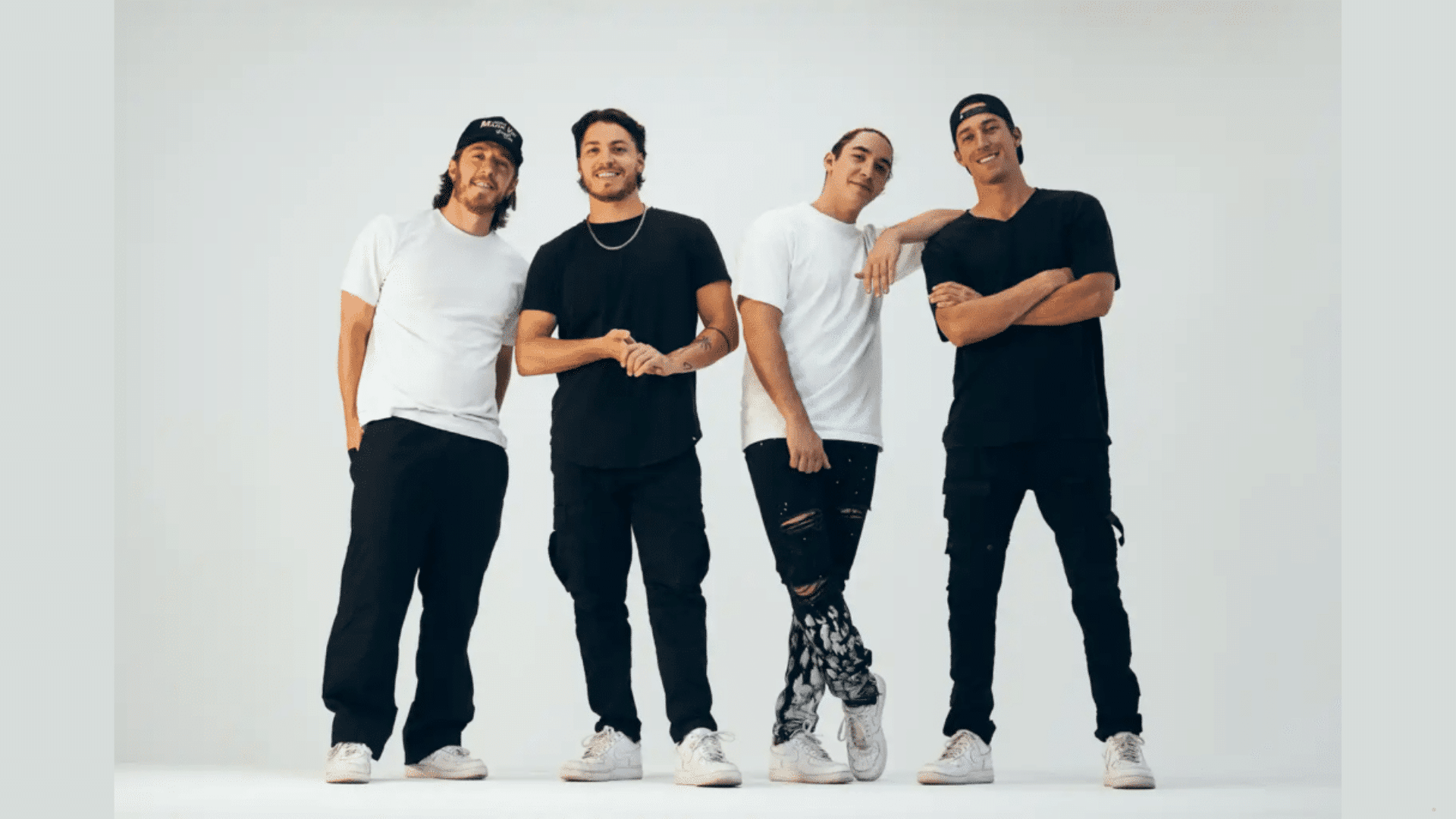
The clip went up on their sister’s Vine account, and it spread quickly. That was 2014. In the years since, Tag, Keene, Gage, and Rab Williams have built The Williams Fam into one of the most recognizable family dance crews on social media, accumulating more than 10 million followers across TikTok, Instagram, YouTube, and Facebook, performing on NBC’s “World of Dance” and “America’s Got Talent,” and winning Hip-Hop International USA. Brand partners have included Pantene, Charmin, and Lovesac.
The operation has a structure. Gage manages communications, scheduling, and editing. Keene monitors TikTok trends and handles the technical production setup. Rab posts content and writes captions across platforms. Tag, the eldest and original manager, now lives in Minnesota and makes the trip back to film about once a month. “I run point,” Gage says. “I chat with our management [Odyssey Entertainment Group], make sure we’re on top of exactly what we’re doing when we’ve got brand deals coming up, events, meetings.”
What the brothers have built together, across a decade of choreography and competition and platform growth, is more than a content catalog. It is an argument, delivered in real time, that families in their late 20s and early 30s can still run something together. That argument is what brands are paying for.
‘Influencer Wasn’t Really a Term Yet’
About two days after the first video spread, Keane and Rob, who had sat out the original, asked to join the next one. That one performed well too, and viewers began asking for more. A year later, around another Christmas, the brothers released a choreography to a different trending sound, and that one spread further still. Rappers began calling, offering a flat $400 for the brothers to start a challenge to a song. “That was our first goal,” Tag says: whether The Williams Fam could eventually support all four of them.
There was no template for what they were building. “Influencer wasn’t really a term yet,” Tag notes. Song promotions gave way to audience growth, which eventually made the case for brand partnerships. The full-time creator business emerged across several years and several revenue channels, not from a single breakthrough.
The Vine origin, the sister’s account, the food-coma brothers, the sarcastic prediction – these early conditions still shape how the brothers move. Ideas start small and get built up collectively. The group takes whatever arrives and tries to make something better than the original intention.
How Four Brothers Turn a Dance Trend Into Something Else Entirely
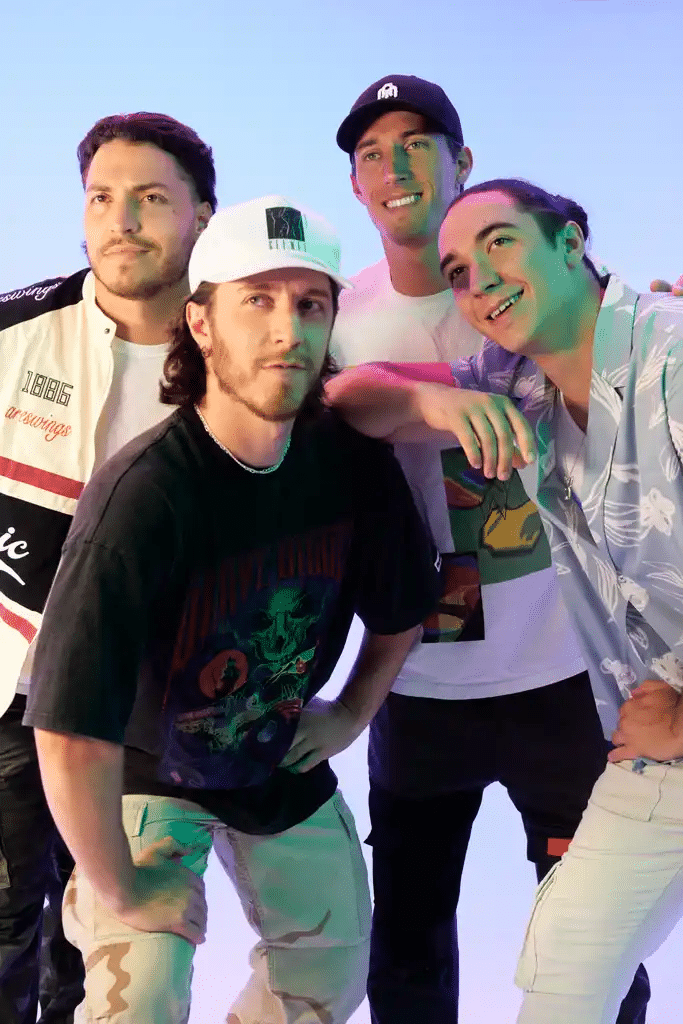
The Williams Fam’s creative process runs on collective iteration. A single idea surfaces, everyone adds to it, and the finished concept bears little resemblance to the original pitch. The brothers describe the result with an example: a video built around the “shoot” dance move, which started as a simple concept and ended up filmed at Hollywood Boulevard, the Hollywood sign, Malibu beach, and a Home Depot.
“Some person’s like, ‘We should do the shoot,’” Gage explains. “And then it’s like everyone else adds in, and before you know it, it’s very different from the original idea, but better.”
That process extends to deciding what not to post. The brothers work out whether a video is worth filming before anyone gets on camera, partly to protect editing time and partly to head off harder problems. “We try to be cognizant of that,” Tag says. “Is this sensitive? Are we going to make anyone too mad?”
The line they draw, the brothers explain, sits between content that is fun and quirky and content that could cross into territory that excludes or offends.
Six Years of Dance, and Nobody Had Heard Them Speak
After years of building a following around choreography alone, the brothers understood that their audience had never really met them. “When we first started streaming, we were realizing that people have been following us for six years, seven years, and they never heard us speak,” Rab says. The dance content had delivered scale, but the personalities had stayed behind it.
Adding lifestyle and comedy content now serves two purposes. It builds a more durable connection with an audience that might otherwise tune out of a diet of pure dance. “If we dance and then we do fun videos, make comedy stuff, make them laugh,” Keene says, “we’re more likely to have their attention more frequently because then they like us as people as well as dancers.”
The logic also runs in reverse: years of watching the same format, however skilled, has a ceiling. “If somebody’s watching us dance for seven years,” Gage says, “they’re probably not going to be watching us every single day.”
The transition is harder than it looks. Lifestyle trends are built for one or two people. Adapting them to four brothers requires formats that do not yet have an obvious template. “Most lifestyle trends are usually for, like, one or two people,” Tag observes. “I think we’re still experimenting with it and finding our lane.”
Four Brothers in Their Late Twenties, Still Choosing to Show Up
What brands are paying for when they sign The Williams Fam is not reach alone. Tag articulates the value proposition directly. “Most people don’t see their siblings that much when they’re in their late 20s, early 30s,” he says, “let alone run a business. All four together. That’s unique.”
Brand deals form the primary revenue stream. Platform monetization through Facebook and YouTube provides a supplementary layer, one the brothers characterize as reliable and growing. Music promotions, in which the brothers choreograph to a song to generate challenge content, sit at the lower end of the budget range but remain a natural fit. Story posts round out the mix.
The group’s next revenue strategy is what Gage describes as a reversal. “We’re trying to formulate how to post about a brand we would love to work with and then get a deal,” he says, “rather than getting the brand deal and then posting about it.”
What Comes Next?
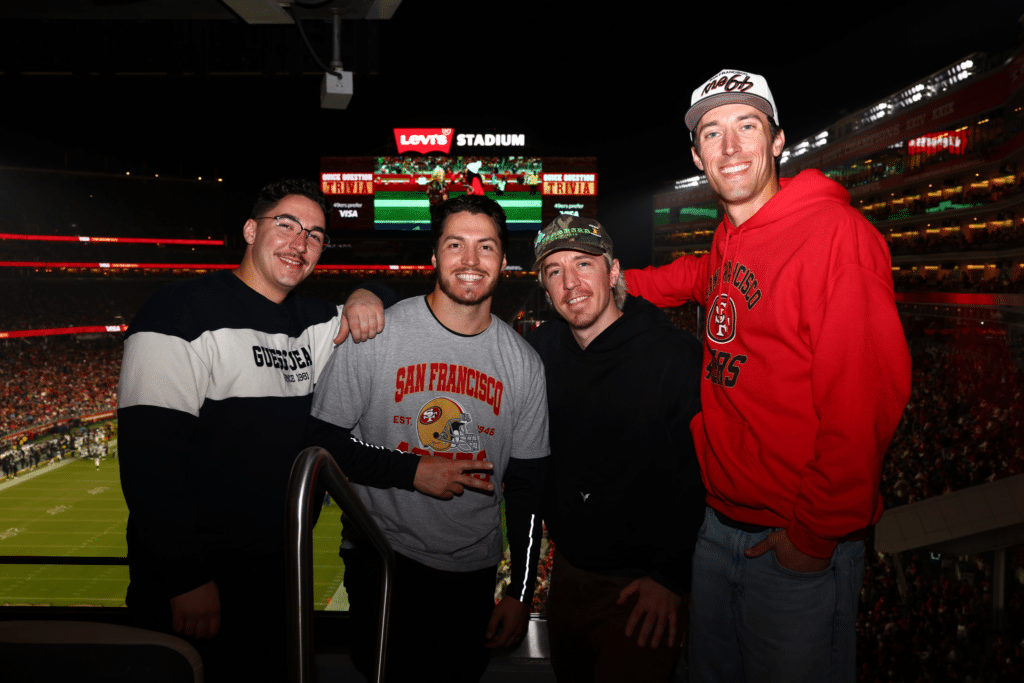
Merch is close. The brothers have been working through the specifics for a while: naming disagreements, investment decisions, manufacturing logistics. “We’re 95% of the way there,” Keene says. The audience has been asking for it.
The broader question, what The Williams Fam looks like in another decade, has a direct answer. The institution continues as long as at least two brothers are involved. If one steps back, the others carry on. The brand outlasts any particular lineup, and the logic extends: The Williams Fam name carries as long as someone bearing it is still showing up. “You have a family,” Rab says, “so it’s still The Williams Fam.”
What persists alongside the name is the original argument. “Dance can be for anyone, for any kind of person,” Gage says. “It’s open, it’s loving, it’s communicating.”
Subscribe to Our Newsletter
Check Out Our Podcast