







Strategy
Dr. Kellyann Is Heading to Social Commerce Summit to Argue Trust Beats Shelf Space Now

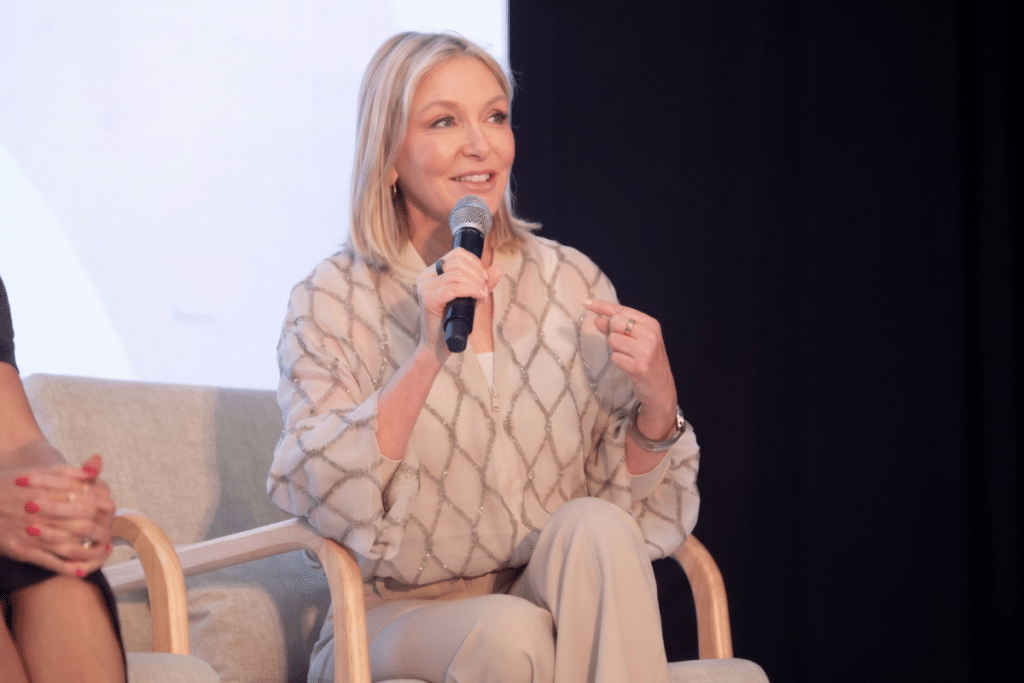
Dr. Kellyann Petrucci returns to the Social Commerce Summit in New York on July 16 to address the same problem she spent a decade and a half solving for herself: how to establish a category instead of competing inside one that already exists. Fifteen years before social commerce became an operating model instead of a buzzword, she built the bone broth category from a laptop in her basement.
Kellyann founded her eponymous brand, Dr. Kellyann, in 2010, building a direct-to-consumer business. “I help women about 35 to 65 become slimmer, younger, healthier, faster with bone broth, collagen, and all of the primal nutrition that we hear about today,” she says.
By the time she landed on bone broth as a category, Kellyann had already spent three decades in health and written five books in the Paleo market. She has since authored nine books published in 11 countries, she says, including “The Bone Broth Diet,” a New York Times bestseller, and has hosted multiple PBS specials on nutrition. That combination of clinical credentials and an existing readership is the backbone of the session she is bringing to the summit this month.
The decision to come back wasn’t automatic. Kellyann didn’t know what to expect walking into the Los Angeles Summit, and left calling it “one of the better rooms that I’ve been in,” surprised by how high-level the conversation stayed from panel to panel. She came away with what she calls pages and pages of notes and a clear sense of who fills the room. “They’re the builders, the ones that are making everything possible for everyone else that has an idea and ideation,” she says.
She Refused to Call It Soup
Before bone broth was a category, it was a fight over a word. Kellyann had already written five Paleo books when a chance seat next to a Rodale executive, the publisher behind Men’s Health and Women’s Health, turned into a new book deal. “This is the kind of stuff that can happen if you show up,” she says.
Rodale wanted the book but not the name. The publisher pushed for “super soup,” worried that the actual ingredient would turn off buyers. “They said no one is going to drink something called bone broth,” Kellyann recalls. “I was absolutely affirmed; I was unshakable that I was going to call this ‘bone broth,’” she says.
The bet paid off. “The Bone Broth Diet” became a bestseller, and the ingredient she fought to name is now standard grocery inventory. “I defy you to go to any market, a convenience store, a little store out in the middle of nowhere. It doesn’t matter, they have bone broth,” she says.
Her advice to founders trying to do the same thing today is less about naming and more about conviction under pressure. “You’ve got to know what battles to fight,” she says. “You’ve got to know when to put your stake in the ground.”

Trust Is Now the Top of the Funnel
Kellyann pushes back on the idea that social commerce has raised the ceiling for founder-led health brands. If anything, she argues, it removed the floor. “Before, all you had to do was come up with a good product and stick it on a shelf,” she says.
According to her, that old model is why legacy companies are now shopping for brands that already carry a relationship with buyers, rather than betting on product alone. “These legacy companies are looking to dial in their portfolio in a different way,” Kellyann says, describing acquirers hunting for what she calls a runway: evidence that a following will keep converting after a deal closes.
She has told her own business partner as much directly. “You just fell backwards into the luckiest thing in acquiring a personality brand,” she says. Her reasoning centers on what marketers describe as a know-like-trust relationship: an audience that already recognizes and vouches for a founder can absorb online criticism that would sink an unbranded product.
A hostile comment on TikTok lands differently when that relationship already exists, she argues. “It’s completely subconscious, but that’s how marketing works,” she says.
It’s also why she thinks founders benefit from rooms like the one in New York. “As a founder, you want these practical operating insights,” she says. “Whatever your goal is, whether it’s to have an exit event, build a strong, hearty company, penetrate the market, or improve your consumer experience, there’s somebody in that room that’s going to help you.”
A Following Isn’t the Same as a Buying Following
Kellyann draws a distinction between reach and what she calls a sticky following, the kind that converts and keeps converting. Her own following was built years before social platforms mattered, through nine books and multiple PBS specials.
“These were very intelligent customers,” she says. “They were already buying your book, they were already buying your program on PBS. So they already had a different mindset, a different cohort, a different avatar.”
That distinction matters more, she argues, once a brand’s growth strategy turns toward a sale. Buyers care less about audience size than about whether that audience keeps coming back. “When you go to sell a business, they want revenue, they want profit margin, they want ROAS, and that EBITDA is very aligned with your repeat buys,” she says. Continuity, in other words, is what gets priced into a deal, not follower count.
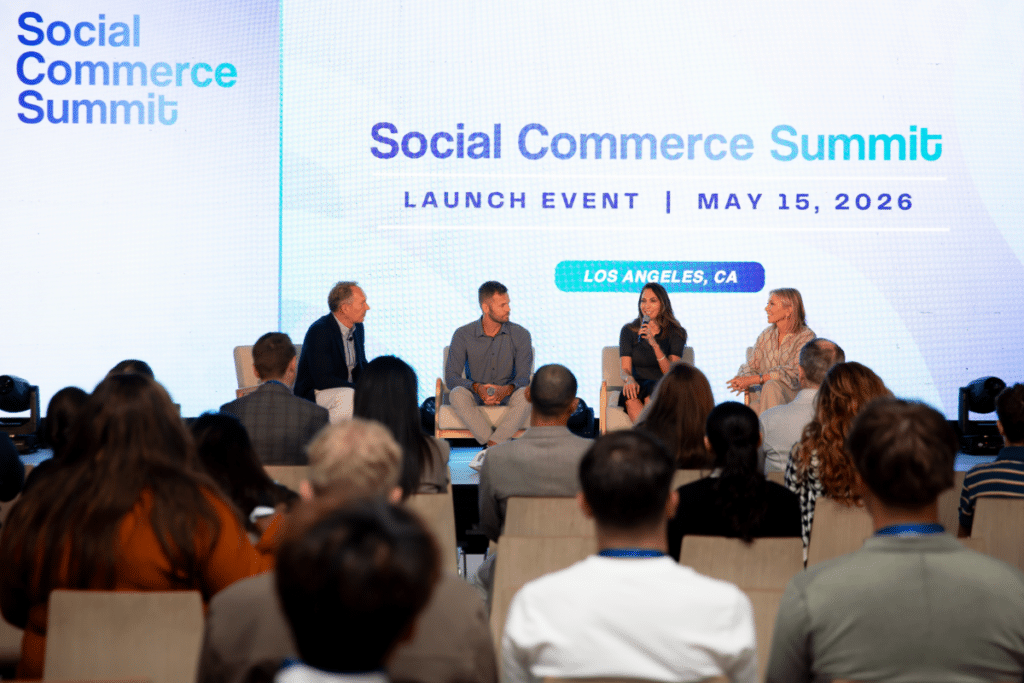
Photo: Social Commerce Summit, Los Angeles, California
Every Channel Has to Feed the Next One
For Kellyann, fragmentation across social commerce, creator commerce, affiliate, and DTC channels is a team problem before it is a channel problem. “It takes somebody at the helm who has done this before and can spot everything,” she says. Without an operator who can see the whole system, individual channels stop reinforcing each other and end up running as separate campaigns rather than one sequence.
She describes her own funnel as a chain of specific steps. A cold audience sees an ad tailored to a condition such as postpartum recovery or acne, which leads into long-form content that educates, followed by a subscription offer and finally a purchase. “They filter into everything else,” she says of the individual steps.
Amazon and TikTok, in her framework, are handled almost as separate disciplines. Amazon runs on video sales letters managed by a dedicated operator, while TikTok is “almost like ancillary; it almost stands on its own,” though both stay tied to the same underlying narrative.
That specialization is also why Kellyann says her own skill at generating revenue only goes so far. “It doesn’t matter if you don’t have the right team around you,” she says. “The team has got to be in place, all facets, and now it’s a lot because you have to be dialed in on all the platforms.”
AI Isn’t the Threat, Not Understanding It Is
Kellyann is unambiguously bullish on artificial intelligence, arguing that resistance to the technology, not the technology itself, is what puts founders at risk. “The only thing you should be afraid of with AI is if you don’t understand it and how to start using it to your benefit,” she says.
To illustrate where the technology is headed, she points to a recent biohacking conference where a fellow panelist, a physician, described early work on what he called AI twins: digital replicas built from a person’s DNA that could be used to test how a specific supplement or medication might perform in that person’s body before they take it. Kellyann offers this as an example of where personalized dosing may be headed, not as a claim about her own product line, and the concept is based on her account of one conversation rather than independently confirmed technology.
Even so, it fits her broader argument that founders who engage with AI early gain ground on those who wait. “It’s mind-blowing,” she says. “It’s actually happening.”
Her Advice to Founders: Set the Intention First
Kellyann’s advice heading into her session echoes the discipline behind her own break decades ago, at an industry function that put her next to the right person. She tells founders to arrive at events like the summit with a specific goal already defined, rather than treating the day as networking for its own sake. “You have to look at your own model, your own business model,” she says. “What is it that I need to have one plus one equal ten?”
That mindset carries into what she wants attendees to walk away with. “You have an opportunity to be in the know,” she says. “You’ve got these experts from every single platform. I haven’t seen this all in one place before.”
For Kellyann, the distinction is between attending for exposure and attending for information. “It’s not one of those events where you’re just sitting around and come back with a nice time away,” she says. “You’re actually going to learn some practicum. You’re going to learn things you can take back and put into practice.”
That same distinction, between exposure and information, is what Kellyann says separates the operators who last from the ones who don’t. Across three decades in health, she argues, the ones who win are rarely the ones with the best product, but the ones who pair conviction about their own category with the discipline to execute across every channel. Reach without retention, in her account, is not something a buyer will pay for.
Her closing advice to founders is less about tactics than about mistakes. “What saves you is making as few mistakes as you can along the way,” she says. She recalls asking a successful peer for his best advice and getting three words back. “Don’t screw up,” she says. “That’s it. Just don’t screw up.”
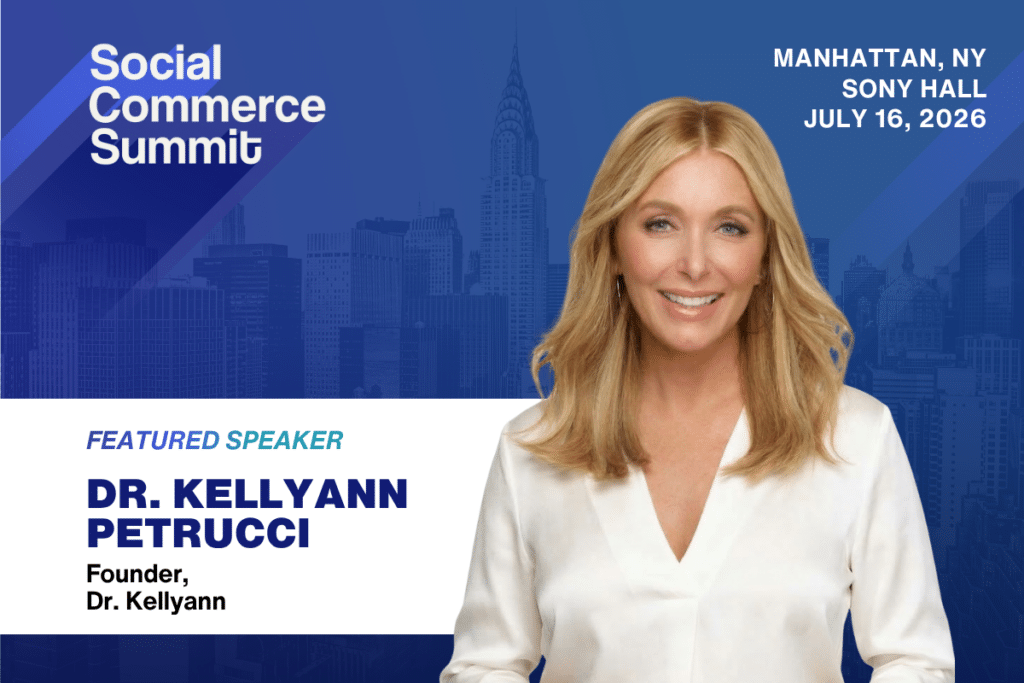
Kellyann’s session is scheduled for July 16 at Sony Hall in Times Square, where her spotlight talk will focus on how founders can build a category of their own rather than compete inside an existing one. The New York summit brings together senior leaders from brands, platforms, agencies, and commerce technology companies alongside operators working in AI, creator commerce, affiliate, live shopping, DTC, and marketplaces. Confirmed speakers include leaders from SKIMS, Amazon, Meta, Philips, Shopify, Alibaba, VaynerX, k2o by Sprinter, Blazendary, Outlandish, Single Grain, IM8, Activate Talent, and Zulay Kitchen. Registration is complimentary for qualified brand and agency operators at socommsummit.com.
Subscribe to Our Newsletter
Check Out Our Podcast