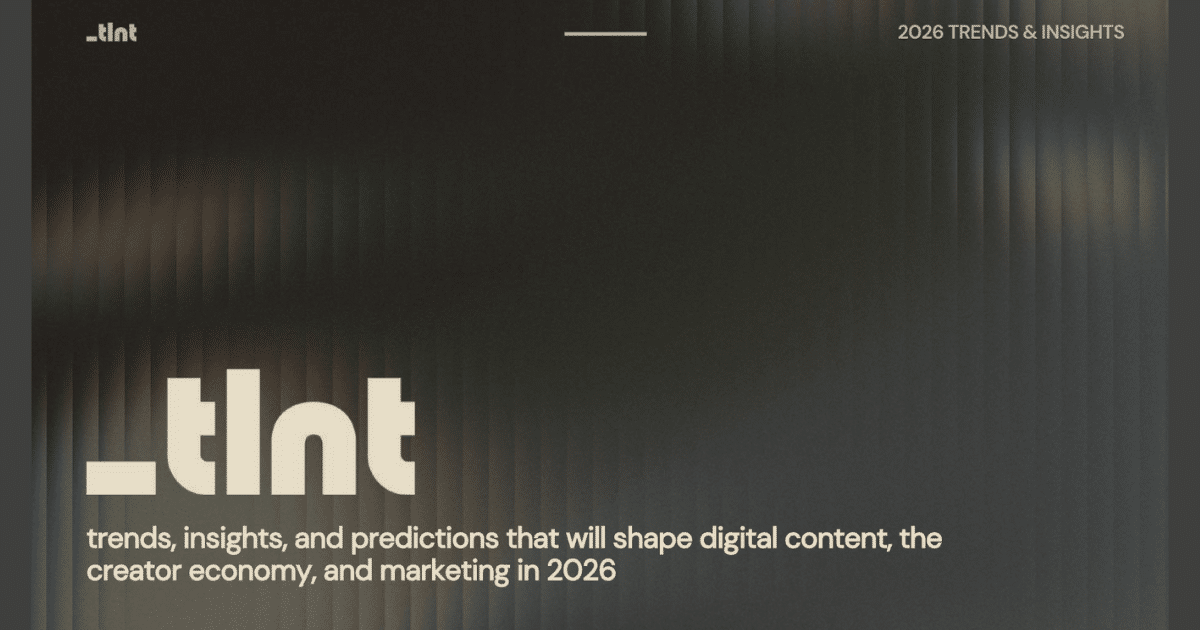
U.S. creator advertising more than doubled over a three-year period, rising from $13.9 billion in 2021 to $29.5 billion in 2024, according to figures cited in Underscore Talent’s “2026 Trends & Insights” report, with projections placing the category at $37 billion in 2025. The study draws on IAB (Interactive Advertising Bureau) data indicating that the growth reflects a measurable reallocation of marketing budgets toward creator-led media across retail, consumer goods, and entertainment categories.
The report frames this shift as structural, noting that creators now function as primary distribution channels for discovery-driven advertising across multiple platforms.
Gen Z Reduces Holiday Spending Despite High Reliance on Influencers
Consumer data in the report indicates a tightening spending environment, particularly among younger audiences. Deloitte’s 2025 holiday retail survey shows that 74% of Gen Z shoppers rely on influencers and social platforms for inspiration and product discovery, yet the same group expects to reduce holiday spending by 34% compared to the previous year.
Additional research from The Harris Poll’s QuestBrand study indicates that Millennial parents increasingly favor brands that provide dependability, trustworthiness, and good value. The combined data sets demonstrate a clear pattern: consumers continue to use creator-driven channels for guidance, but they allocate smaller budgets to discretionary purchases.
Serialized Content Drives Higher Uploads, Engagements, and Views
The report includes a performance analysis from Shorthand Studios that tracks serialized creator content across TikTok, Instagram, and YouTube. According to the analysis, platform charts show increases in upload activity, total engagements, and total views for creators producing episodic or repeatable content. While the report does not disclose specific numerical deltas, the trendlines reflect consistent upward movement across all three measured categories.
Creators who operated within highly recognizable formats, such as recurring characters, defined universes, or thematic series, produced more content and experienced higher audience interaction, indicating a measurable shift toward structured storytelling in short-form video.
YouTube Upload and View Share Shift Toward Long-Form Content
Platform-level consumption patterns also show change. Shorthand Studios’ analysis finds that videos 20 minutes or longer accounted for 22% of YouTube uploads in 2020, a figure that increased to 47% in 2024. During the same period, view share for those longer videos rose from 20% to 43%. These figures indicate a notable increase in long-form viewing on the platform.
According to Shorthand Studios’ analysis, YouTube is overtaking cable television in viewership among adults aged 18 to 49 and surpassing Netflix in total TV screen time. Together, these metrics indicate sustained audience migration toward YouTube for longer, TV-style programming.
Instagram Becomes the Lead Platform in Campaign Planning
Underscore Talent’s internal campaign data shows that Instagram emerged as the primary platform for brand partnerships in 2025. Although the report does not specify percentage splits, it states that most influencer marketing programs structured their first deliverable on Instagram, with TikTok and YouTube Shorts serving as secondary placements. This shift represents a measurable reordering of the platform hierarchy in creator marketing, with Instagram taking precedence in campaign sequencing and brand visibility.
Affiliate Commerce Expands as Retailers Build Proprietary Programs
The report documents the continued expansion of affiliate-driven commerce across major U.S. retailers. Companies such as Walmart, Sephora, and e.l.f. Beauty invested in or expanded proprietary affiliate programs designed specifically for creators. At the same time, creators continued to rely on established networks – Amazon Storefronts, LTK, ShopMy, and MagicLinks – to drive conversions and link-based revenue.
Although the report does not include transaction-level metrics, the presence of new retailer programs and the continued use of large affiliate networks indicate measurable growth in creator participation and retailer investment in performance-based media.
Gen X Accounts for 28% of TikTok Users and Holds Considerable Spending Power
The demographic data included in the study highlight a substantial market gap. Research cited in Axies indicates that 92% of Gen X users use social media daily, and this age group accounts for 28% of TikTok’s user base. In addition, the report cites Edelman’s findings projecting that consumers aged 55 and older will account for more than half of global spending by 2030, with an estimated $15 trillion in annual spending.
Despite this concentration of economic power, the report states that marketers allocate less than 10% of total budgets to campaigns targeting this demographic. The disparity between spending influence and marketing allocation is presented as one of the strongest quantifiable mismatches in the creator economy.
AI Use Expands Across Core Creator Production Workflows
The report outlines several areas where creators adopted AI tools during the measurement period. These include dubbing, editing, music composition, graphic design, clipping, and pre-visualization tasks. While the report does not provide adoption percentages or output metrics, it identifies a clear expansion of AI across production workflows that historically required manual labor or specialized contractors.
The document also notes the increased prevalence of AI-generated animation in children’s content on YouTube, though it does not provide viewership or revenue figures for this trend.
Creators Increase Use of Newsletters and Direct Communication Channels
Audience-ownership tools exhibit increasing adoption, as indicated by the data presented. Shorthand Studios’ analysis notes increased use of newsletters, Substack-style distribution, and Instagram broadcast channels as creators adopt mechanisms that allow direct access to audiences without reliance on feed-based algorithms.
Although the report does not quantify the growth rate, the shift represents a measurable diversification of how creators maintain audience relationships, with more activity occurring outside traditional social media feeds.
Offline Events Appear More Frequently in Campaign Delivery
The report presents data indicating an increase in offline activations in creator marketing programs. These include tours, fan meet-ups, marathons, and real-time brand activations embedded within live events. While the study does not report attendance figures or conversion metrics, it notes that brands are using in-person interactions more frequently in campaign execution, indicating greater integration of physical environments into creator-led marketing.
Image credits: Underscore Talent & Shorthand Studios The full report is available here
Cecilia Carloni, Interview Manager at Influence Weekly and writer for NetInfluencer. Coming from beautiful Argentina, Ceci has spent years chatting with big names in the influencer world, making friends and learning insider info along the way. When she’s not deep in interviews or writing, she's enjoying life with her two daughters. Ceci’s stories give a peek behind the curtain of influencer life, sharing the real and interesting tales from her many conversations with movers and shakers in the space.









U.S. creator advertising more than doubled over a three-year period, rising from $13.9 billion in 2021 to $29.5 billion in 2024, according to figures cited in Underscore Talent’s “2026 Trends & Insights” report, with projections placing the category at $37 billion in 2025. The study draws on IAB (Interactive Advertising Bureau) data indicating that the growth reflects a measurable reallocation of marketing budgets toward creator-led media across retail, consumer goods, and entertainment categories.
The report frames this shift as structural, noting that creators now function as primary distribution channels for discovery-driven advertising across multiple platforms.
Gen Z Reduces Holiday Spending Despite High Reliance on Influencers
Consumer data in the report indicates a tightening spending environment, particularly among younger audiences. Deloitte’s 2025 holiday retail survey shows that 74% of Gen Z shoppers rely on influencers and social platforms for inspiration and product discovery, yet the same group expects to reduce holiday spending by 34% compared to the previous year.
Additional research from The Harris Poll’s QuestBrand study indicates that Millennial parents increasingly favor brands that provide dependability, trustworthiness, and good value. The combined data sets demonstrate a clear pattern: consumers continue to use creator-driven channels for guidance, but they allocate smaller budgets to discretionary purchases.
Serialized Content Drives Higher Uploads, Engagements, and Views
The report includes a performance analysis from Shorthand Studios that tracks serialized creator content across TikTok, Instagram, and YouTube. According to the analysis, platform charts show increases in upload activity, total engagements, and total views for creators producing episodic or repeatable content. While the report does not disclose specific numerical deltas, the trendlines reflect consistent upward movement across all three measured categories.
Creators who operated within highly recognizable formats, such as recurring characters, defined universes, or thematic series, produced more content and experienced higher audience interaction, indicating a measurable shift toward structured storytelling in short-form video.
YouTube Upload and View Share Shift Toward Long-Form Content
Platform-level consumption patterns also show change. Shorthand Studios’ analysis finds that videos 20 minutes or longer accounted for 22% of YouTube uploads in 2020, a figure that increased to 47% in 2024. During the same period, view share for those longer videos rose from 20% to 43%. These figures indicate a notable increase in long-form viewing on the platform.
According to Shorthand Studios’ analysis, YouTube is overtaking cable television in viewership among adults aged 18 to 49 and surpassing Netflix in total TV screen time. Together, these metrics indicate sustained audience migration toward YouTube for longer, TV-style programming.
Instagram Becomes the Lead Platform in Campaign Planning
Underscore Talent’s internal campaign data shows that Instagram emerged as the primary platform for brand partnerships in 2025. Although the report does not specify percentage splits, it states that most influencer marketing programs structured their first deliverable on Instagram, with TikTok and YouTube Shorts serving as secondary placements. This shift represents a measurable reordering of the platform hierarchy in creator marketing, with Instagram taking precedence in campaign sequencing and brand visibility.
Affiliate Commerce Expands as Retailers Build Proprietary Programs
The report documents the continued expansion of affiliate-driven commerce across major U.S. retailers. Companies such as Walmart, Sephora, and e.l.f. Beauty invested in or expanded proprietary affiliate programs designed specifically for creators. At the same time, creators continued to rely on established networks – Amazon Storefronts, LTK, ShopMy, and MagicLinks – to drive conversions and link-based revenue.
Although the report does not include transaction-level metrics, the presence of new retailer programs and the continued use of large affiliate networks indicate measurable growth in creator participation and retailer investment in performance-based media.
Gen X Accounts for 28% of TikTok Users and Holds Considerable Spending Power
The demographic data included in the study highlight a substantial market gap. Research cited in Axies indicates that 92% of Gen X users use social media daily, and this age group accounts for 28% of TikTok’s user base. In addition, the report cites Edelman’s findings projecting that consumers aged 55 and older will account for more than half of global spending by 2030, with an estimated $15 trillion in annual spending.
Despite this concentration of economic power, the report states that marketers allocate less than 10% of total budgets to campaigns targeting this demographic. The disparity between spending influence and marketing allocation is presented as one of the strongest quantifiable mismatches in the creator economy.
AI Use Expands Across Core Creator Production Workflows
The report outlines several areas where creators adopted AI tools during the measurement period. These include dubbing, editing, music composition, graphic design, clipping, and pre-visualization tasks. While the report does not provide adoption percentages or output metrics, it identifies a clear expansion of AI across production workflows that historically required manual labor or specialized contractors.
The document also notes the increased prevalence of AI-generated animation in children’s content on YouTube, though it does not provide viewership or revenue figures for this trend.
Creators Increase Use of Newsletters and Direct Communication Channels
Audience-ownership tools exhibit increasing adoption, as indicated by the data presented. Shorthand Studios’ analysis notes increased use of newsletters, Substack-style distribution, and Instagram broadcast channels as creators adopt mechanisms that allow direct access to audiences without reliance on feed-based algorithms.
Although the report does not quantify the growth rate, the shift represents a measurable diversification of how creators maintain audience relationships, with more activity occurring outside traditional social media feeds.
Offline Events Appear More Frequently in Campaign Delivery
The report presents data indicating an increase in offline activations in creator marketing programs. These include tours, fan meet-ups, marathons, and real-time brand activations embedded within live events. While the study does not report attendance figures or conversion metrics, it notes that brands are using in-person interactions more frequently in campaign execution, indicating greater integration of physical environments into creator-led marketing.
Image credits: Underscore Talent & Shorthand Studios
The full report is available here
Subscribe to Our Newsletter
Check Out Our Podcast