Metricool’s “2026 Social Media Study,” analyzing 39,762,999 posts from 1,059,949 accounts, reveals declining per-post performance across major platforms despite surging content creation. The data suggest that the digital attention economy has entered a new phase in which simply increasing posting frequency no longer correlates with improved outcomes.
The Saturation Phenomenon
TikTok, despite maintaining its position as the leading platform for reach and engagement, experienced sharp year-over-year declines as posting frequency increased. Average views per post fell 17% from 34,311 in 2024 to 28,483 in 2025, while interactions dropped 32% from 1,380 to 944.9. During the same period, weekly posting frequency jumped 22% from 2.74 posts to 3.34 posts.
The pattern repeated across account sizes. Tiny accounts with fewer than 2,000 followers saw reach decline by 26%, while accounts with 100,000 to 1 million followers experienced a 35% drop, from 97,501 to 63,846. Small accounts with 2,000 to 10,000 followers experienced a 32% decline in reach, from 10,206 to 6,990, despite a 16% increase in weekly posting frequency.
Instagram demonstrated similar dynamics. Post reach fell 31% from 14,922 in 2024 to 9,689 in 2025, and Reels reach dropped 35% from 9,877 to 6,754. Post interactions decreased 39% from 731 to 446, while Reels interactions fell 44% from 1,113 to 624. These declines occurred as accounts connected to Metricool grew by 64%, total posts doubled, and the weekly posting frequency of standard posts increased by 21%.
LinkedIn showed the most dramatic content explosion paired with a performance decline. Total posts increased 97% year-over-year while impressions fell 23% from 1,057 to 813 per post. Interactions decreased 14% from 16.60 to 14.16. Accounts connected to the platform nearly doubled, growing 108% during the measurement period.
Engagement Rate Divergence
Several platforms showed increased engagement rates even as absolute reach fell, indicating that while fewer users saw each post, those who did engaged more actively.
LinkedIn’s engagement rate increased by 11%, from 1.57% to 1.74%, despite a 23% decline in impressions.
Pinterest demonstrated the most pronounced version of this pattern. Impressions decreased 59% from 913 to 375, and interactions fell 48% from 47.64 to 24.59. However, the engagement rate increased by 26%, from 5.22% to 6.57%. Weekly posting frequency increased 30% from 7.46 to 9.68 posts.
X showed modest increases in engagement alongside slight declines in reach. Impressions fell 5% from 2,865 to 2,711, while interactions increased 12% from 37.83 to 42.71. The engagement rate increased by 19%, from 1.32% to 1.58%. Video content interactions increased 35% from 81.15 to 110.01, while overall link clicks decreased 28% from 10 to 7 per post. Replies increased 21% from 2.10 to 2.56, and retweets rose 35% from 4.93 to 6.67. Profile clicks declined 31% from 8.29 to 5.68.
YouTube as Counterexample
YouTube presented a notable exception to the saturation trend documented across short-form video platforms. Average views per video increased 76% from 390 in 2024 to 687 in 2025, while interactions rose 11% from 4.54 to 16.09. Weekly posting frequency increased only 4% from 20.01 to 20.83 posts.
The platform surpassed 2.5 billion monthly active users. YouTube creators published content at higher frequencies than creators on other video platforms, with weekly posting rates 524% higher than those on TikTok and 1,007% higher than those on Instagram Reels.
Format Performance Variance
Within saturated platforms, specific content formats demonstrated substantial performance differences, suggesting that format selection affects visibility independent of posting frequency.
On Instagram, carousels generated 30,810 impressions and 794 interactions per post, compared to 10,885 impressions and 235 interactions for single images. Reels averaged 15,493 impressions and 624 interactions. Despite their superior performance, carousels remained the least-used format, averaging 1.13 posts per week, compared with 1.77 for images and 1.88 for Reels.
LinkedIn format performance varied by more than 500% between top and bottom performers. Surveys generated 2,864 impressions and 139 interactions per post. Carousels produced 1,252 impressions and 579 interactions. Single images generated 891 impressions and 53 interactions. Video posts produced 726 impressions and 51 interactions. Text posts averaged 531 impressions and 37 interactions.
Facebook video posts achieved 44% higher reach and 22% more interactions than in 2024. Video interactions increased from 1,004 to 1,225, while reach grew from 10,251 to 14,834. Video posting frequency increased by 71%, and 44% more accounts published video content in 2025 than in 2024.
Growth Rate Decline
Platform growth rates – defined as the percentage of accounts gaining enough followers to move up a follower category – declined across most platforms as saturation increased.
TikTok’s 17.33% growth rate led all platforms measured. The rate varied by account size: Tiny accounts grew by 17.69%, Small accounts by 29.16%, Medium accounts by 10.10%, Big accounts by 4.28%, and Huge accounts showed no measurable category advancement.
Instagram’s overall growth rate measured 8.87%, with Tiny accounts at 16.04%, Small accounts at 10.18%, and Medium accounts at 2.96%. LinkedIn’s 6.92% growth rate included Tiny accounts at 7.02% and Small accounts at 8.37%. Small accounts drove YouTube’s 4.36% growth rate at 11.39% and Medium accounts at 4.46%.
Facebook’s 3.86% growth rate, X’s 1.48% growth rate, and Pinterest’s 0.71% growth rate all indicated declining growth opportunities, particularly for accounts with more than 100,000 followers.
Facebook Performance Reversal
Facebook represented the primary exception to universal saturation patterns. Average reach per post increased 51% from 5,796 accounts in 2024 to 8,779 in 2025. Impressions rose 57% from 5,969 to 9,377, while interactions climbed 56% from 115 to 180. Weekly posting frequency increased only 4% from 4.17 to 4.37 posts.
Specific interaction metrics showed broad increases. Reactions rose 56% from 96.20 to 150.38. Comments increased 73% from 9.75 to 16.95. Clicks grew 47% from 402.56 to 593.20. Shares increased 44% from 9.02 to 13.05. The platform’s monthly active user base exceeded 3.07 billion.
Emerging Platform Performance
Threads, added to Metricool’s measurement in 2025, demonstrated early-stage platform dynamics distinct from mature platform saturation patterns. The platform averaged 1,536 impressions and 24.81 interactions per post across 6.46 weekly posts, surpassing 400 million monthly active users and achieving 127.8% year-over-year growth.
For accounts with 100,000 to 1 million followers, Threads generated 471.73 interactions compared to 224.76 on X, representing a 109% advantage. Impressions averaged 83,374 on Threads versus 12,031 on X, a 593% difference.
Bluesky, another emerging platform, showed 5.48 weekly posts and 16.38 interactions per post. For accounts with fewer than 100,000 followers, Bluesky generated higher interaction rates than X. Small accounts averaged 10.32 interactions on Bluesky versus 7.67 on X.
The data documents a fundamental transition in social media distribution from growth-oriented reach to zero-sum competition for finite user attention. Per-post performance declined across most major platforms as content volume increased, indicating that organic reach has become constrained by platform capacity rather than content availability.
Image credits: Metricool The full report is available here
Dragomir is a Serbian freelance blog writer and translator. He is passionate about covering insightful stories and exploring topics such as influencer marketing, the creator economy, technology, business, and cyber fraud.




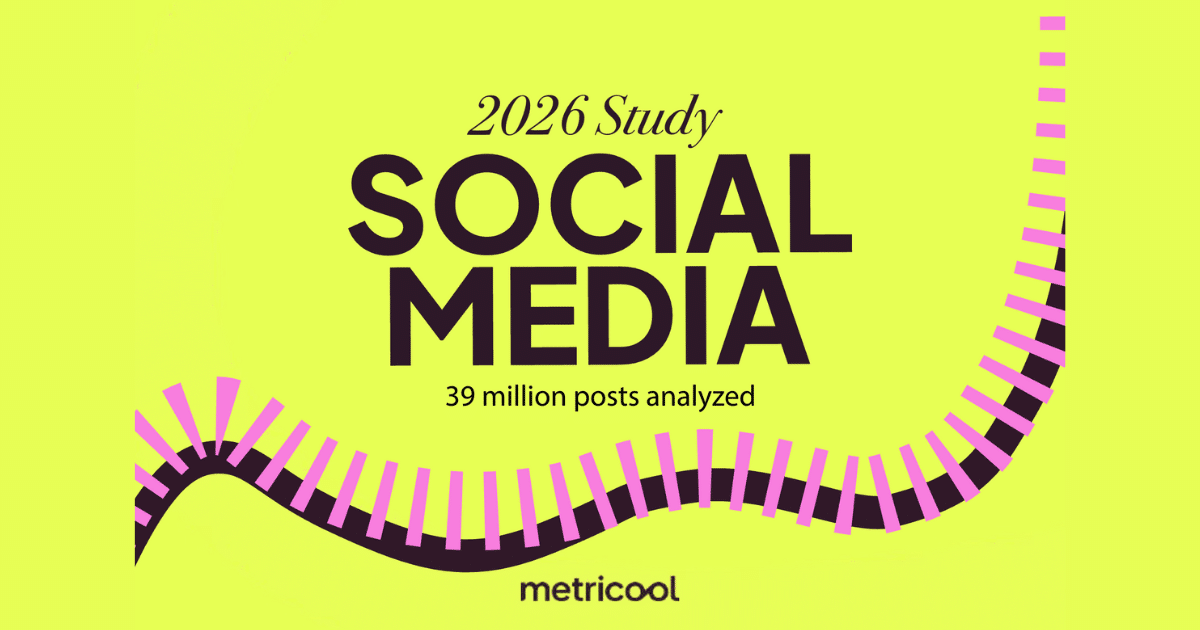












Metricool’s “2026 Social Media Study,” analyzing 39,762,999 posts from 1,059,949 accounts, reveals declining per-post performance across major platforms despite surging content creation. The data suggest that the digital attention economy has entered a new phase in which simply increasing posting frequency no longer correlates with improved outcomes.
The Saturation Phenomenon
TikTok, despite maintaining its position as the leading platform for reach and engagement, experienced sharp year-over-year declines as posting frequency increased. Average views per post fell 17% from 34,311 in 2024 to 28,483 in 2025, while interactions dropped 32% from 1,380 to 944.9. During the same period, weekly posting frequency jumped 22% from 2.74 posts to 3.34 posts.
The pattern repeated across account sizes. Tiny accounts with fewer than 2,000 followers saw reach decline by 26%, while accounts with 100,000 to 1 million followers experienced a 35% drop, from 97,501 to 63,846. Small accounts with 2,000 to 10,000 followers experienced a 32% decline in reach, from 10,206 to 6,990, despite a 16% increase in weekly posting frequency.
Instagram demonstrated similar dynamics. Post reach fell 31% from 14,922 in 2024 to 9,689 in 2025, and Reels reach dropped 35% from 9,877 to 6,754. Post interactions decreased 39% from 731 to 446, while Reels interactions fell 44% from 1,113 to 624. These declines occurred as accounts connected to Metricool grew by 64%, total posts doubled, and the weekly posting frequency of standard posts increased by 21%.
LinkedIn showed the most dramatic content explosion paired with a performance decline. Total posts increased 97% year-over-year while impressions fell 23% from 1,057 to 813 per post. Interactions decreased 14% from 16.60 to 14.16. Accounts connected to the platform nearly doubled, growing 108% during the measurement period.
Engagement Rate Divergence
Several platforms showed increased engagement rates even as absolute reach fell, indicating that while fewer users saw each post, those who did engaged more actively.
LinkedIn’s engagement rate increased by 11%, from 1.57% to 1.74%, despite a 23% decline in impressions.
Pinterest demonstrated the most pronounced version of this pattern. Impressions decreased 59% from 913 to 375, and interactions fell 48% from 47.64 to 24.59. However, the engagement rate increased by 26%, from 5.22% to 6.57%. Weekly posting frequency increased 30% from 7.46 to 9.68 posts.
X showed modest increases in engagement alongside slight declines in reach. Impressions fell 5% from 2,865 to 2,711, while interactions increased 12% from 37.83 to 42.71. The engagement rate increased by 19%, from 1.32% to 1.58%. Video content interactions increased 35% from 81.15 to 110.01, while overall link clicks decreased 28% from 10 to 7 per post. Replies increased 21% from 2.10 to 2.56, and retweets rose 35% from 4.93 to 6.67. Profile clicks declined 31% from 8.29 to 5.68.
YouTube as Counterexample
YouTube presented a notable exception to the saturation trend documented across short-form video platforms. Average views per video increased 76% from 390 in 2024 to 687 in 2025, while interactions rose 11% from 4.54 to 16.09. Weekly posting frequency increased only 4% from 20.01 to 20.83 posts.
The platform surpassed 2.5 billion monthly active users. YouTube creators published content at higher frequencies than creators on other video platforms, with weekly posting rates 524% higher than those on TikTok and 1,007% higher than those on Instagram Reels.
Format Performance Variance
Within saturated platforms, specific content formats demonstrated substantial performance differences, suggesting that format selection affects visibility independent of posting frequency.
On Instagram, carousels generated 30,810 impressions and 794 interactions per post, compared to 10,885 impressions and 235 interactions for single images. Reels averaged 15,493 impressions and 624 interactions. Despite their superior performance, carousels remained the least-used format, averaging 1.13 posts per week, compared with 1.77 for images and 1.88 for Reels.
LinkedIn format performance varied by more than 500% between top and bottom performers. Surveys generated 2,864 impressions and 139 interactions per post. Carousels produced 1,252 impressions and 579 interactions. Single images generated 891 impressions and 53 interactions. Video posts produced 726 impressions and 51 interactions. Text posts averaged 531 impressions and 37 interactions.
Facebook video posts achieved 44% higher reach and 22% more interactions than in 2024. Video interactions increased from 1,004 to 1,225, while reach grew from 10,251 to 14,834. Video posting frequency increased by 71%, and 44% more accounts published video content in 2025 than in 2024.
Growth Rate Decline
Platform growth rates – defined as the percentage of accounts gaining enough followers to move up a follower category – declined across most platforms as saturation increased.
TikTok’s 17.33% growth rate led all platforms measured. The rate varied by account size: Tiny accounts grew by 17.69%, Small accounts by 29.16%, Medium accounts by 10.10%, Big accounts by 4.28%, and Huge accounts showed no measurable category advancement.
Instagram’s overall growth rate measured 8.87%, with Tiny accounts at 16.04%, Small accounts at 10.18%, and Medium accounts at 2.96%. LinkedIn’s 6.92% growth rate included Tiny accounts at 7.02% and Small accounts at 8.37%. Small accounts drove YouTube’s 4.36% growth rate at 11.39% and Medium accounts at 4.46%.
Facebook’s 3.86% growth rate, X’s 1.48% growth rate, and Pinterest’s 0.71% growth rate all indicated declining growth opportunities, particularly for accounts with more than 100,000 followers.
Facebook Performance Reversal
Facebook represented the primary exception to universal saturation patterns. Average reach per post increased 51% from 5,796 accounts in 2024 to 8,779 in 2025. Impressions rose 57% from 5,969 to 9,377, while interactions climbed 56% from 115 to 180. Weekly posting frequency increased only 4% from 4.17 to 4.37 posts.
Specific interaction metrics showed broad increases. Reactions rose 56% from 96.20 to 150.38. Comments increased 73% from 9.75 to 16.95. Clicks grew 47% from 402.56 to 593.20. Shares increased 44% from 9.02 to 13.05. The platform’s monthly active user base exceeded 3.07 billion.
Emerging Platform Performance
Threads, added to Metricool’s measurement in 2025, demonstrated early-stage platform dynamics distinct from mature platform saturation patterns. The platform averaged 1,536 impressions and 24.81 interactions per post across 6.46 weekly posts, surpassing 400 million monthly active users and achieving 127.8% year-over-year growth.
For accounts with 100,000 to 1 million followers, Threads generated 471.73 interactions compared to 224.76 on X, representing a 109% advantage. Impressions averaged 83,374 on Threads versus 12,031 on X, a 593% difference.
Bluesky, another emerging platform, showed 5.48 weekly posts and 16.38 interactions per post. For accounts with fewer than 100,000 followers, Bluesky generated higher interaction rates than X. Small accounts averaged 10.32 interactions on Bluesky versus 7.67 on X.
The data documents a fundamental transition in social media distribution from growth-oriented reach to zero-sum competition for finite user attention. Per-post performance declined across most major platforms as content volume increased, indicating that organic reach has become constrained by platform capacity rather than content availability.
Image credits: Metricool
The full report is available here
Subscribe to Our Newsletter
Check Out Our Podcast