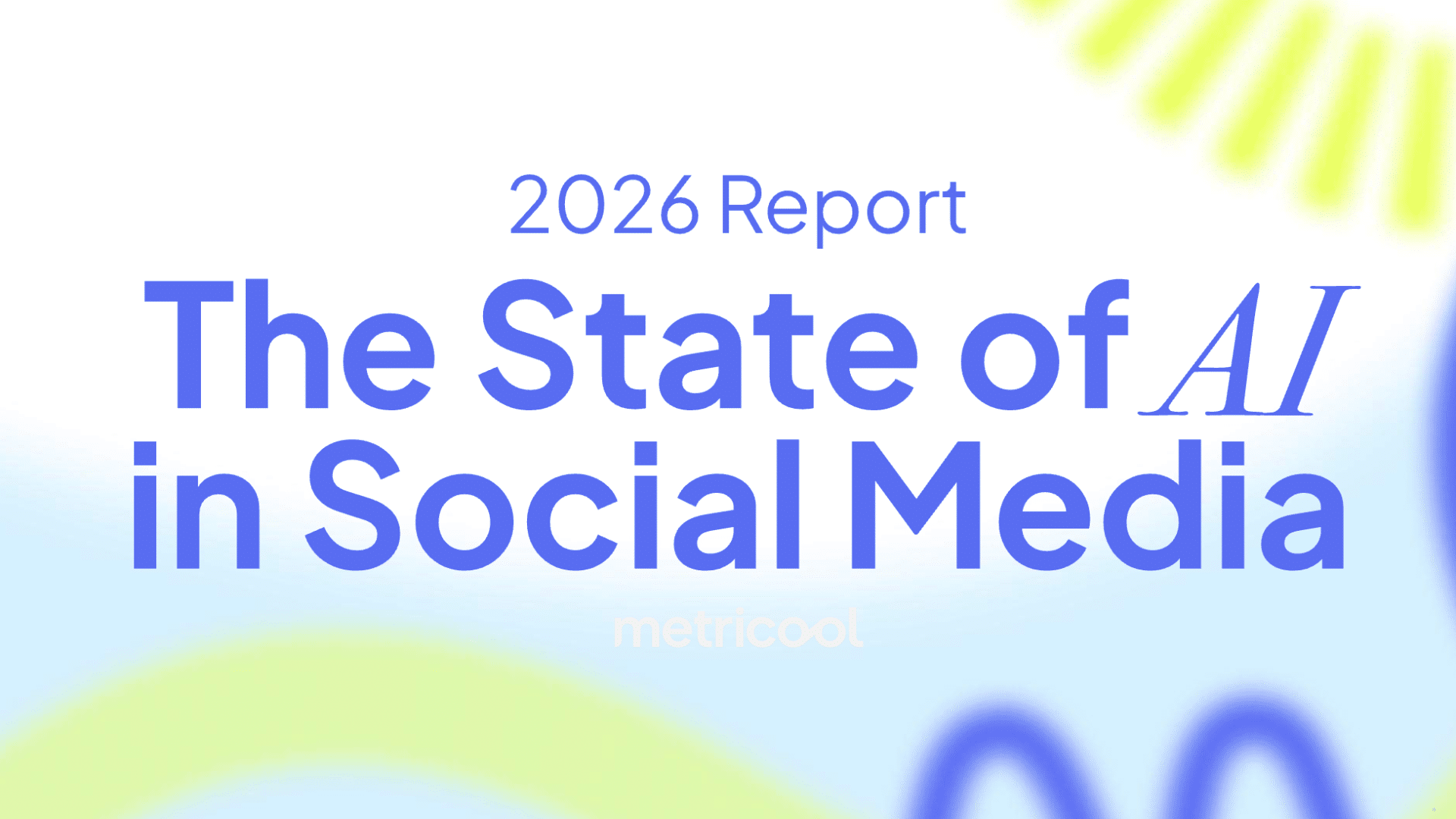
AI use among social media professionals has become near-universal, but a new report from Metricool shows the technology’s growth is now outpacing confidence in what it produces. According to the company’s 2026 “State of AI in Social Media” report, based on responses from more than 700 social media professionals, 95% now use AI tools in their work, and 75% use them daily. At the same time, the share of professionals who say AI-generated content performs worse than human-made content has nearly tripled, from 5% in 2025 to 14% in 2026.
Adoption Has Moved From Testing to Infrastructure
The report frames 2026 as the year AI stopped being an experiment. More than 59% of respondents have used AI in their work for over a year, and 37% now use more than four AI tools, up from just 14% in 2025. ChatGPT and Claude lead the tools cited, alongside Gemini, Grok, Midjourney, and Canva.
Spending has moved in the same direction. The share of professionals using only free AI tools fell by half since 2025, while the share spending more than $100 a month grew by over 400%. The $21-to-$50-per-month tier is now the most common spending bracket, and 42% of professionals plan to increase their AI budgets further this year, a figure that climbs to 58% among teams of six or more.
Use Is Shifting From Writing Tasks to Strategy
Writing copy (86%) and generating content ideas (84%) remain the most common uses of AI, largely unchanged from 2025. The bigger movement is in tasks professionals previously reserved for themselves. AI use for strategy design rose from 39% to 62% year over year, trend and topic research rose from 36% to 61%, and metrics analysis rose from 32% to 59%. Automating repetitive tasks more than doubled, from 20% to 43%.
Time savings remain the primary benefit professionals report, with 65% saving between one and six hours a week and 44% saving between four and ten hours. Far fewer credit AI with improving content quality (45%) or post performance, and only 4% and 2% respectively cite better performance or reduced costs as AI’s main benefit, a gap the report notes directly: “AI’s value is felt in the workflow before it shows up in the results.”
Creativity Is the Line Professionals Still Draw
Asked which parts of the job still require human judgment, 30% of professionals named creativity, ahead of customer relations (18%) and strategy (17%). Only 11% said AI has had no effect on their creative process, while 39% said AI helps generate ideas and 24% said the ideas AI produces tend to be generic. Editing habits reflect that caution: just 17% publish AI output with minimal changes, while 39% edit it for tone, facts, and brand voice, and 29% treat AI drafts as needing heavy rewriting.
Transparency about AI use remains inconsistent. Only 10% of professionals always disclose AI use in their content, and 33% say disclosure isn’t necessary at all. Governance is similarly loose: 62% of professionals working inside a company report no rules around how they use AI, and only 12% work under a clear written policy.
External Creative Services Are Feeling the Effect
The report finds early signs of budget reallocation. About a third of professionals have cut spending on external creative services since adopting AI tools, with stock image and video subscriptions (93%) and copywriters or editors (86%) taking the largest cuts, followed by designers and illustrators (65%) and video creators (52%).
Tool churn is also common: 39% of professionals canceled an AI subscription in the past year, most often because they found a better alternative (31%) rather than because of cost (16%).
What Comes Next?
Asked how AI will affect their roles going forward, 43% said it will transform the work while opening new opportunities, and 36% said it will become a core skill that separates top performers from the rest. Just 5% expect it to replace roles entirely, while 16% said they’re concerned it will diminish the value of their work.
Metricool describes the year-over-year pattern as AI moving “beyond execution and into strategy,” even as the professionals using it apply more scrutiny to what it produces than they did a year ago.
Image source: Metricool The full report can be found here
Dragomir is a Serbian freelance blog writer and translator. He is passionate about covering insightful stories and exploring topics such as influencer marketing, the creator economy, technology, business, and cyber fraud.






AI use among social media professionals has become near-universal, but a new report from Metricool shows the technology’s growth is now outpacing confidence in what it produces. According to the company’s 2026 “State of AI in Social Media” report, based on responses from more than 700 social media professionals, 95% now use AI tools in their work, and 75% use them daily. At the same time, the share of professionals who say AI-generated content performs worse than human-made content has nearly tripled, from 5% in 2025 to 14% in 2026.
Adoption Has Moved From Testing to Infrastructure
The report frames 2026 as the year AI stopped being an experiment. More than 59% of respondents have used AI in their work for over a year, and 37% now use more than four AI tools, up from just 14% in 2025. ChatGPT and Claude lead the tools cited, alongside Gemini, Grok, Midjourney, and Canva.
Spending has moved in the same direction. The share of professionals using only free AI tools fell by half since 2025, while the share spending more than $100 a month grew by over 400%. The $21-to-$50-per-month tier is now the most common spending bracket, and 42% of professionals plan to increase their AI budgets further this year, a figure that climbs to 58% among teams of six or more.
Use Is Shifting From Writing Tasks to Strategy
Writing copy (86%) and generating content ideas (84%) remain the most common uses of AI, largely unchanged from 2025. The bigger movement is in tasks professionals previously reserved for themselves. AI use for strategy design rose from 39% to 62% year over year, trend and topic research rose from 36% to 61%, and metrics analysis rose from 32% to 59%. Automating repetitive tasks more than doubled, from 20% to 43%.
Time savings remain the primary benefit professionals report, with 65% saving between one and six hours a week and 44% saving between four and ten hours. Far fewer credit AI with improving content quality (45%) or post performance, and only 4% and 2% respectively cite better performance or reduced costs as AI’s main benefit, a gap the report notes directly: “AI’s value is felt in the workflow before it shows up in the results.”
Creativity Is the Line Professionals Still Draw
Asked which parts of the job still require human judgment, 30% of professionals named creativity, ahead of customer relations (18%) and strategy (17%). Only 11% said AI has had no effect on their creative process, while 39% said AI helps generate ideas and 24% said the ideas AI produces tend to be generic. Editing habits reflect that caution: just 17% publish AI output with minimal changes, while 39% edit it for tone, facts, and brand voice, and 29% treat AI drafts as needing heavy rewriting.
Transparency about AI use remains inconsistent. Only 10% of professionals always disclose AI use in their content, and 33% say disclosure isn’t necessary at all. Governance is similarly loose: 62% of professionals working inside a company report no rules around how they use AI, and only 12% work under a clear written policy.
External Creative Services Are Feeling the Effect
The report finds early signs of budget reallocation. About a third of professionals have cut spending on external creative services since adopting AI tools, with stock image and video subscriptions (93%) and copywriters or editors (86%) taking the largest cuts, followed by designers and illustrators (65%) and video creators (52%).
Tool churn is also common: 39% of professionals canceled an AI subscription in the past year, most often because they found a better alternative (31%) rather than because of cost (16%).
What Comes Next?
Asked how AI will affect their roles going forward, 43% said it will transform the work while opening new opportunities, and 36% said it will become a core skill that separates top performers from the rest. Just 5% expect it to replace roles entirely, while 16% said they’re concerned it will diminish the value of their work.
Metricool describes the year-over-year pattern as AI moving “beyond execution and into strategy,” even as the professionals using it apply more scrutiny to what it produces than they did a year ago.
Image source: Metricool
The full report can be found here
Subscribe to Our Newsletter
Check Out Our Podcast