






Technology
Clue Labs Wants To End The Guesswork In Social Media Growth

What if social media growth no longer depended on guesswork at all?
That question underpins the work of Inge Hunter, founder of Clue Labs, an AI-powered strategy platform designed to help brands and creators understand what to post, why it matters, and when posting less can drive better results.
Founded in 2025 and based in Cambridge, England, Clue Labs positions itself as a counterweight to the dominant logic of the creator economy. While most social platforms and creator tools optimize for volume, encouraging users to post more frequently in pursuit of reach, Hunter believes that approach no longer reflects how modern algorithms actually distribute content.
“Every single other platform is designed to make you post more,” she says. “Clue Labs’ goal is to make you post less.”
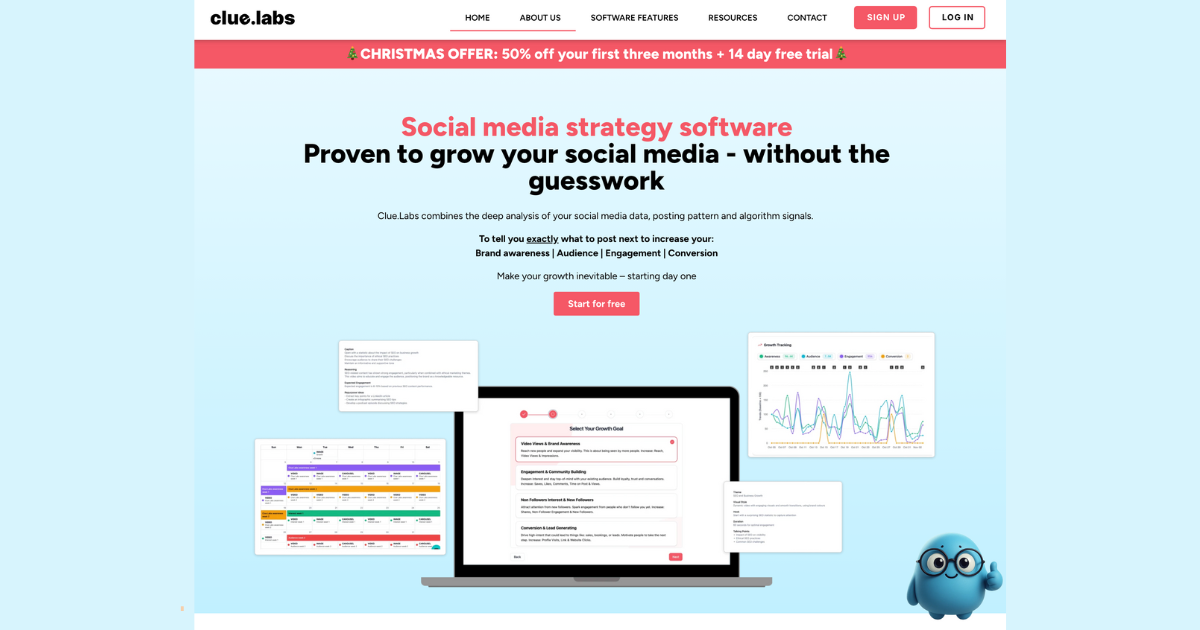
The platform analyzes long-term performance patterns across an account’s content history to generate prescriptive recommendations tied to specific growth goals, including brand awareness, follower acquisition, engagement, and conversion. Rather than reacting to daily metrics, Clue Labs focuses on identifying repeatable signals that indicate when content is likely to be amplified by discovery-driven algorithms.
This mindset responds to a broader movement in the creator economy, where creators, founders, and brands are grappling with declining reach, algorithmic opacity, and mounting pressure to publish at unsustainable speeds, often without clarity on what is actually working.
From Survival Entrepreneurship to Systems Thinking
Inge’s path to founding a social analytics company did not begin in tech. She started her first business at 17 while living in a homeless hostel, selling cocktails outside nightclubs to cover basic expenses. “I only had £4 a week to live on,” she recalls. “I needed to make some money. Make some magic.”
That improvised hustle turned into a mobile cocktail bar, then a full-scale events and wedding planning business serving high-end clients. Social media played a critical role in that growth. Inge relied heavily on Instagram to attract affluent customers, including families spending hundreds of thousands of pounds on multi-day weddings.
Consulting followed, then social media management. Inge recounts selling two £2 million properties for a developer through Instagram DMs alone, tracking the sales directly back to her content strategy. But the model frustrated her. “You can tell people what to do until you’re blue in the face,” she says. “Whether they actually do it, that’s the problem.”
The deeper frustration was philosophical. Inge became increasingly uncomfortable with the idea that business outcomes depended on educated guesses. “I remember thinking, ‘How is my whole livelihood based on my guess?’” she says. “That question obsessed me.”
With a family background in software engineering, Inge began experimenting with technology that could analyze social performance at a structural level. That work initially incubated inside her production company, Clue Content, before spinning out as Clue Labs.
Why Guesswork Breaks in the Discovery Era
Inge’s central thesis is that social media has undergone a fundamental architectural shift that many marketers still misunderstand. According to her, platforms historically operated on a social graph model: posts were shown first to followers, then gradually expanded outward based on engagement signals. Today, she argues, that system no longer exists.
“2026 is going to be the first year that the social graph doesn’t exist,” Inge says. In its place is what she calls a discovery engine, i.e., an AI-driven system that predicts how strangers will interact with content before it reaches followers.
In this environment, poor-performing posts do more than flop; they actively harm an account’s future distribution. Inge describes this as a relevance score, akin to SEO (Search Engine Optimization) rankings, but with harsher consequences. “If someone scrolls off your post, your relevance score goes negative,” she explains. “The more negative it goes, the less likely the algorithms are to use your content at all.”
This dynamic, she argues, makes constant experimentation risky. Volatile posting patterns introduce uncertainty into systems designed for predictability. Yet most creator tools still encourage A/B testing and high output.
“Everyone’s reacting to symptoms,” Inge says, “not understanding the system change.”
How Clue Labs Works
Clue Labs is currently focused on Instagram, with LinkedIn and other platforms slated for rollout. Users connect their accounts, and the platform begins ingesting historical performance data across dozens of variables (timing, format, visual style, language, and audience response) while tracking patterns over rolling 90-day periods.
Instead of dashboards optimized for daily monitoring, Clue Labs asks users to define a growth goal: brand awareness, follower acquisition, engagement, or conversion. The system then generates a campaign plan, recommending specific posts mapped to that objective.
“It’s like Whoop,” Inge says, referencing the fitness wearable. “You tell it what you want – better sleep, better performance – and it tells you what to do next.”
For each recommended post, users receive guidance on format, framing, hook language, length, talking points, and caption context, along with the reasoning behind the suggestion. Campaigns can run up to 60 days, with key dates layered in.
The emphasis is on efficiency. “You could post one post and have the same impact as posting ten,” Inge says.
Early Results and Client Outcomes
Inge cites several early customer examples to illustrate the platform’s impact. One fractional HR manager, posting just three times a week, grew her account by 258% after adopting Clue Labs’ recommendations. Within three months, the increased inbound demand led her to hire two additional staff members.
Another client reduced ideation time from four hours per week to 15 minutes while increasing output from six to twelve posts weekly – by choice, not necessity.
Across the platform, Inge claims users typically see between 200% and 250% growth within a month while posting as few as three times per week. Clue Labs also issues weekly performance reports, benchmarking accounts against peers of similar size and aggregating anonymized insights across industries.
Those aggregated insights are shared with Clue Labs’ broader audience via email reports tracking shifts in engagement rates, posting cadence, and seasonal behavior patterns.
A Different Incentive Model
A recurring theme in Inge’s critique of the creator tools ecosystem is incentives. She argues that platforms, schedulers, and ad-tech providers all benefit when users remain confused. “If people are guessing, they post more. If people are confused, they spend more on ads,” she says.
Clue Labs, by contrast, makes money by reducing activity. “I’m financially incentivized to optimize,” Inge explains. “The better I get at making you post less, the more people sign up.”
That positioning places Clue Labs at odds with much of the social media industrial complex. Inge openly discusses reading investor conference calls and technical documentation to understand where platforms generate revenue and why transparency remains limited. “If they told us how it worked, it would underwrite their whole commercial model,” she says.
Fundraising and the Long View
Inge plans to raise venture capital to expand Clue Labs’ engineering team and accelerate platform coverage. She is already in conversations with U.S.-based investors and sees aggressive market penetration as the next step.
Her long-term ambition is explicit. “I’ll be in a lift with Mark Zuckerberg one day and tell him I’m the reason your ad spend’s down,” she says, laughing.
She draws parallels to Urchin software, the analytics company acquired by Google and later rebranded as Google Analytics. “That’s my goal,” she says. “Spread the technology, then eventually get cut off or acquired.”
Rethinking Responsibility in the Creator Economy
Despite the technical depth of her analysis, Inge’s closing message to creators and marketers is personal. “It’s not your fault,” she says, referring to widespread burnout and declining reach.
Her advice is pragmatic: scrutinize the incentives behind the advice you follow. “If you can understand the commercial incentive of a company, you’ll understand whether their information is right for what you need,” she says. “Take advice from people who align with the same commercial goals.”
For Clue Labs, that alignment centers on a simple promise: fewer posts, clearer signals, and growth that no longer depends on guessing.
“Social media feels like a creator economy,” Inge concludes, “but it’s built by developers. If you can understand the structure, you can finally stop reacting and start operating.”
Subscribe to Our Newsletter
Check Out Our Podcast