Creator marketing is no longer experimental. The budgets are real, the teams are built, and the results are measurable. Yet most brands are still leaving money on the table by treating creators as channels rather than partners.
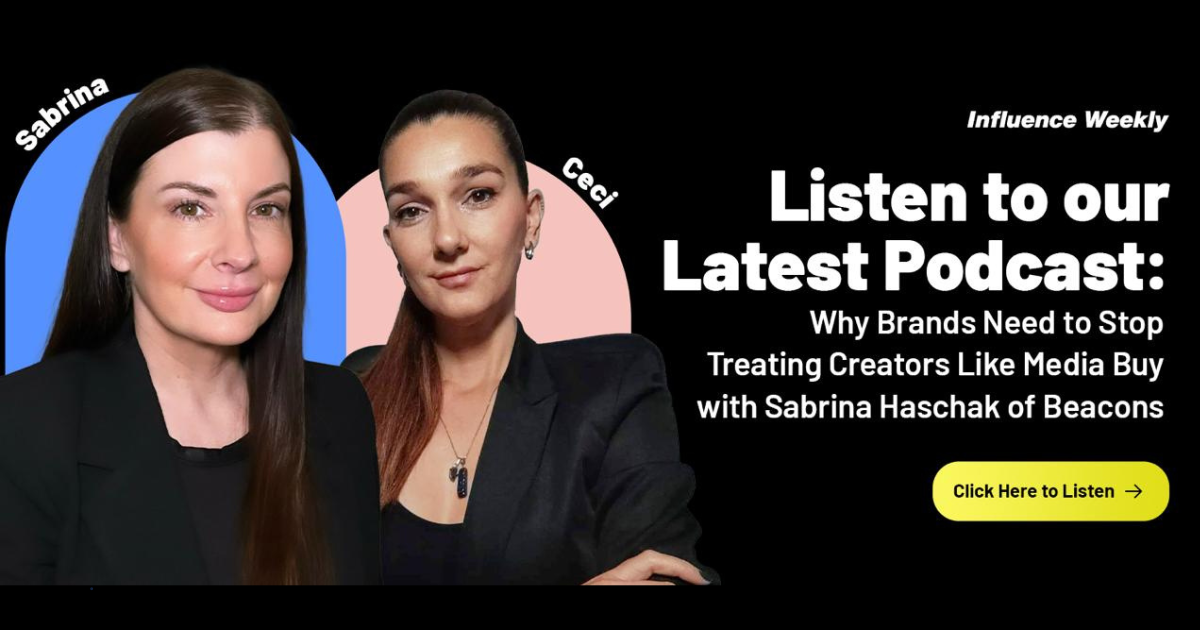
Sabrina Haschak, Head of Brand Partnerships at Beacons, sat down with Net Influencer Senior Editor Ceci Carloni to break down why brands still struggle to make creator marketing work, what the ones getting it right are doing differently, and why she’s ready to fight for Super Bowl-sized budgets.
Sabrina brings nearly two decades of integrated marketing experience, spanning traditional radio and digital media, influencer agencies, and creator tech. She’s spent her career in rooms where brand decisions are made, from iHeartMedia and GasBuddy to Obviously and Social Studies, and now at Beacons, an all-in-one platform built for creators.
1. Creator Marketing Graduated from Experiment to Infrastructure
When Sabrina started, most brands didn’t have a presence on TikTok. Their own marketing teams weren’t even using the platform.
“The mindset was very much like testing, kind of like a new media channel,” she said. “Now it’s actually in a real marketing plan, there’s real budgets.”
Almost every brand now has someone handling Influencer Marketing. Full dedicated teams exist where before, influencer was buried under another function. Partnerships are longer-term. Performance expectations are real. The infrastructure is built. The question is whether brands are using it correctly.
Creators have also changed roles. “They’ve become production as well,” Sabrina noted. “They’re not just promoters, but real creatives.” Brands are now using creator content across their owned-and-operated channels, not just as one-off posts.
2. The Biggest Mistake Is Still Measuring Creators Like TV Spots
Sabrina started her career selling radio. She’s watched the pattern repeat with every new channel. Brands measure what they already know, and creator marketing gets squeezed into the wrong framework.
“When you place a TV buy, and you know exactly the impressions you’re getting, it’s very different than when you are working with 50 creators across different verticals, across different platforms,” she explained.
The affiliate model has made things worse. Brands expect a creator to post a link and watch sales roll in. They forget the old rule of seven. “A consumer has to hear or see the message seven times,” Sabrina said. “But no one takes the same consideration when it comes to Influencer Marketing.”
The brands she’s seen succeed are the ones with patience. Hailey Bieber and Rhode is the benchmark. “She built a community of trust. She built a story around Rhode. By the time the product launched, everyone was ready for it.”
3. Prescriptive Briefs Kill Campaigns
Early Influencer Marketing meant handing every creator the same brief and hoping they followed it. That era is over, and Sabrina is relieved.
“That kind of prescriptive control over the creative doesn’t work anymore,” she said. “Now people are loosening up, and they’re tailoring it to the specific creator.”
Brands like Emko Beauty are taking it further. They’re bringing creators into strategy sessions and letting them co-produce mini-episodes. The result looks less like advertising and more like original content.
“If you hired a celebrity, you wouldn’t tell them exactly how to say something or how to look into the camera,” Sabrina said. The same logic applies to creators. The partnership works when brands get out of the way.
4. Where Long-Term Programs Actually Fall Apart
Every brand says it wants long-term creator relationships. Not every brand builds the infrastructure to support them.
Sabrina sees the breakdown happen in two places: misaligned strategy up front and misaligned measurement at the back end. “Sometimes the expectations are uneven,” she said. “It can fall apart in the measurement piece.”
Her fix is to front-load the collaboration. Bring creators into strategy sessions before the brief is finalized. Agree on what success actually looks like before the campaign runs. Failed campaigns, she argues, are still valuable if brands learn from them.
“Let’s look at the opportunity to figure out what we learned so we don’t make the same mistake again,” she said. “What did we learn about the audience that we didn’t know before the campaign started?”
5. Metrics That Actually Matter Are Behavioral, Not Volumetric
Impressions, CPMs, and engagement rates are still the default metrics. Sabrina thinks they’re often the wrong ones.
“If we got high engagement, what does that actually mean? What’s the quality of the engagement?” she asked. “What are people saying about your brand?”
The case she points to: a product launch event where her team drove a 300% month-over-month increase in social mentions. The real insight wasn’t which creator drove the most views. It was the product’s packaging and presentation that generated organic excitement.
“What caused all the excitement that drove that huge 300% increase?” That question, she argues, is more valuable than any impression goal. Creator marketing is a compounding channel. The ROI builds with repetition, not from a single post.
6. Brand Safety Is Still Unsolved, But Communication Is the Closest Thing to a Fix
The number-one fear brands bring to Sabrina is getting caught up in a creator controversy they had nothing to do with.
“You could partner with somebody for a really long time, and then they get online and start going on some crazy thing,” she said. “The brand didn’t have anything to do with it, but they get caught up in the backlash.”
There’s no perfect solution. Sabrina has navigated it by keeping the lines open. When a creator a brand loved started speaking out politically, the answer wasn’t to immediately cut ties. It was to have the conversation. “Figure out a way to come up with a solution,” she said. “You’re not always going to get there. But at least you’re having conversations.”
This is another reason long-term relationships matter. You can pick up the phone. You have the relationship to have the hard conversation before it becomes a crisis.
7. Creators Are Media Companies. Brands That Miss This Are Overpaying for Less.
The most common complaint Sabrina hears from brands is that creator rates are too high. Her response reframes the conversation entirely.
“The creator is your media company,” she said. When a brand runs a TV spot, it hires a full production team, a makeup crew, a director. Creators do all of that themselves. The rate reflects the labor, not just the post.
And the output is more versatile than most brands realize. Creator content can run across owned-and-operated social channels, paid media, digital streaming, and TV spots. DoorDash demonstrated this around the Super Bowl, shifting budget from a TV spot to creator activations with 50 Cent, reaching comparable audiences with greater efficiency.
“There’s so many other ways that you can work with them through the distribution of it,” Sabrina said. “You need to look at them as their own media company, not just a media channel.”
The brands winning in the Creator Economy aren’t the ones with the best influencer software or the biggest rosters. They’re the ones who decided to treat creators like strategic partners. That means co-creating a strategy, aligning on outcomes, and giving partnerships time to compound.
Sabrina’s ask for 2026 is direct: make creator marketing a core channel, not a line item. “I want your Super Bowl budget,” she said. “You can probably reach a larger audience through creator marketing than you can with the Super Bowl, and at a much more efficient rate.”
The infrastructure is built. The creators are there. The only question is when brands stop testing the channel and start treating it like the core marketing engine it already is.
Listen to the full conversation on “The Big Three” podcast.
David Adler is an entrepreneur and freelance blog post writer who enjoys writing about business, entrepreneurship, travel and the influencer marketing space.














Creator marketing is no longer experimental. The budgets are real, the teams are built, and the results are measurable. Yet most brands are still leaving money on the table by treating creators as channels rather than partners.
Sabrina Haschak, Head of Brand Partnerships at Beacons, sat down with Net Influencer Senior Editor Ceci Carloni to break down why brands still struggle to make creator marketing work, what the ones getting it right are doing differently, and why she’s ready to fight for Super Bowl-sized budgets.
Sabrina brings nearly two decades of integrated marketing experience, spanning traditional radio and digital media, influencer agencies, and creator tech. She’s spent her career in rooms where brand decisions are made, from iHeartMedia and GasBuddy to Obviously and Social Studies, and now at Beacons, an all-in-one platform built for creators.
1. Creator Marketing Graduated from Experiment to Infrastructure
When Sabrina started, most brands didn’t have a presence on TikTok. Their own marketing teams weren’t even using the platform.
“The mindset was very much like testing, kind of like a new media channel,” she said. “Now it’s actually in a real marketing plan, there’s real budgets.”
Almost every brand now has someone handling Influencer Marketing. Full dedicated teams exist where before, influencer was buried under another function. Partnerships are longer-term. Performance expectations are real. The infrastructure is built. The question is whether brands are using it correctly.
Creators have also changed roles. “They’ve become production as well,” Sabrina noted. “They’re not just promoters, but real creatives.” Brands are now using creator content across their owned-and-operated channels, not just as one-off posts.
2. The Biggest Mistake Is Still Measuring Creators Like TV Spots
Sabrina started her career selling radio. She’s watched the pattern repeat with every new channel. Brands measure what they already know, and creator marketing gets squeezed into the wrong framework.
“When you place a TV buy, and you know exactly the impressions you’re getting, it’s very different than when you are working with 50 creators across different verticals, across different platforms,” she explained.
The affiliate model has made things worse. Brands expect a creator to post a link and watch sales roll in. They forget the old rule of seven. “A consumer has to hear or see the message seven times,” Sabrina said. “But no one takes the same consideration when it comes to Influencer Marketing.”
The brands she’s seen succeed are the ones with patience. Hailey Bieber and Rhode is the benchmark. “She built a community of trust. She built a story around Rhode. By the time the product launched, everyone was ready for it.”
3. Prescriptive Briefs Kill Campaigns
Early Influencer Marketing meant handing every creator the same brief and hoping they followed it. That era is over, and Sabrina is relieved.
“That kind of prescriptive control over the creative doesn’t work anymore,” she said. “Now people are loosening up, and they’re tailoring it to the specific creator.”
Brands like Emko Beauty are taking it further. They’re bringing creators into strategy sessions and letting them co-produce mini-episodes. The result looks less like advertising and more like original content.
“If you hired a celebrity, you wouldn’t tell them exactly how to say something or how to look into the camera,” Sabrina said. The same logic applies to creators. The partnership works when brands get out of the way.
4. Where Long-Term Programs Actually Fall Apart
Every brand says it wants long-term creator relationships. Not every brand builds the infrastructure to support them.
Sabrina sees the breakdown happen in two places: misaligned strategy up front and misaligned measurement at the back end. “Sometimes the expectations are uneven,” she said. “It can fall apart in the measurement piece.”
Her fix is to front-load the collaboration. Bring creators into strategy sessions before the brief is finalized. Agree on what success actually looks like before the campaign runs. Failed campaigns, she argues, are still valuable if brands learn from them.
“Let’s look at the opportunity to figure out what we learned so we don’t make the same mistake again,” she said. “What did we learn about the audience that we didn’t know before the campaign started?”
5. Metrics That Actually Matter Are Behavioral, Not Volumetric
Impressions, CPMs, and engagement rates are still the default metrics. Sabrina thinks they’re often the wrong ones.
“If we got high engagement, what does that actually mean? What’s the quality of the engagement?” she asked. “What are people saying about your brand?”
The case she points to: a product launch event where her team drove a 300% month-over-month increase in social mentions. The real insight wasn’t which creator drove the most views. It was the product’s packaging and presentation that generated organic excitement.
“What caused all the excitement that drove that huge 300% increase?” That question, she argues, is more valuable than any impression goal. Creator marketing is a compounding channel. The ROI builds with repetition, not from a single post.
6. Brand Safety Is Still Unsolved, But Communication Is the Closest Thing to a Fix
The number-one fear brands bring to Sabrina is getting caught up in a creator controversy they had nothing to do with.
“You could partner with somebody for a really long time, and then they get online and start going on some crazy thing,” she said. “The brand didn’t have anything to do with it, but they get caught up in the backlash.”
There’s no perfect solution. Sabrina has navigated it by keeping the lines open. When a creator a brand loved started speaking out politically, the answer wasn’t to immediately cut ties. It was to have the conversation. “Figure out a way to come up with a solution,” she said. “You’re not always going to get there. But at least you’re having conversations.”
This is another reason long-term relationships matter. You can pick up the phone. You have the relationship to have the hard conversation before it becomes a crisis.
7. Creators Are Media Companies. Brands That Miss This Are Overpaying for Less.
The most common complaint Sabrina hears from brands is that creator rates are too high. Her response reframes the conversation entirely.
“The creator is your media company,” she said. When a brand runs a TV spot, it hires a full production team, a makeup crew, a director. Creators do all of that themselves. The rate reflects the labor, not just the post.
And the output is more versatile than most brands realize. Creator content can run across owned-and-operated social channels, paid media, digital streaming, and TV spots. DoorDash demonstrated this around the Super Bowl, shifting budget from a TV spot to creator activations with 50 Cent, reaching comparable audiences with greater efficiency.
“There’s so many other ways that you can work with them through the distribution of it,” Sabrina said. “You need to look at them as their own media company, not just a media channel.”
The brands winning in the Creator Economy aren’t the ones with the best influencer software or the biggest rosters. They’re the ones who decided to treat creators like strategic partners. That means co-creating a strategy, aligning on outcomes, and giving partnerships time to compound.
Sabrina’s ask for 2026 is direct: make creator marketing a core channel, not a line item. “I want your Super Bowl budget,” she said. “You can probably reach a larger audience through creator marketing than you can with the Super Bowl, and at a much more efficient rate.”
The infrastructure is built. The creators are there. The only question is when brands stop testing the channel and start treating it like the core marketing engine it already is.
Listen to the full conversation on “The Big Three” podcast.
Subscribe to Our Newsletter
Check Out Our Podcast