




Technology
Apple’s Former App Store Director Is Building Likeness Governance for the AI Age

When an AI-generated image of the Pope in a Balenciaga coat circulated in 2023 and convinced many people who saw it, Phillip Shoemaker recognized a problem that disinformation coverage had largely overlooked. Creators and public figures had no mechanism to govern, enforce, or profit from how their likeness moved through AI systems.
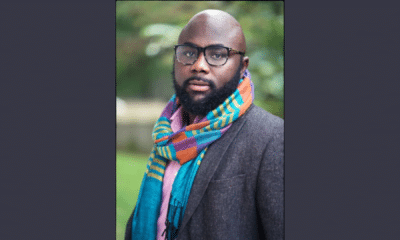
Few people have spent more time thinking about what happens when platform rules do not exist. As Senior Director of App Store Review at Apple from 2009 to 2016, Phillip built the team that governed what hundreds of millions of users could access, growing it from four employees to more than 300 and writing the guidelines that determined which applications were published and which were rejected. After leaving Apple, he founded Identity.org, a decentralized identity initiative, where he found that likeness, unlike legal identity, had no governance infrastructure at all.
“Content creators are on the front lines of this problem,” he says. “We have to fix it for them, and it will ultimately fix it for everybody.”
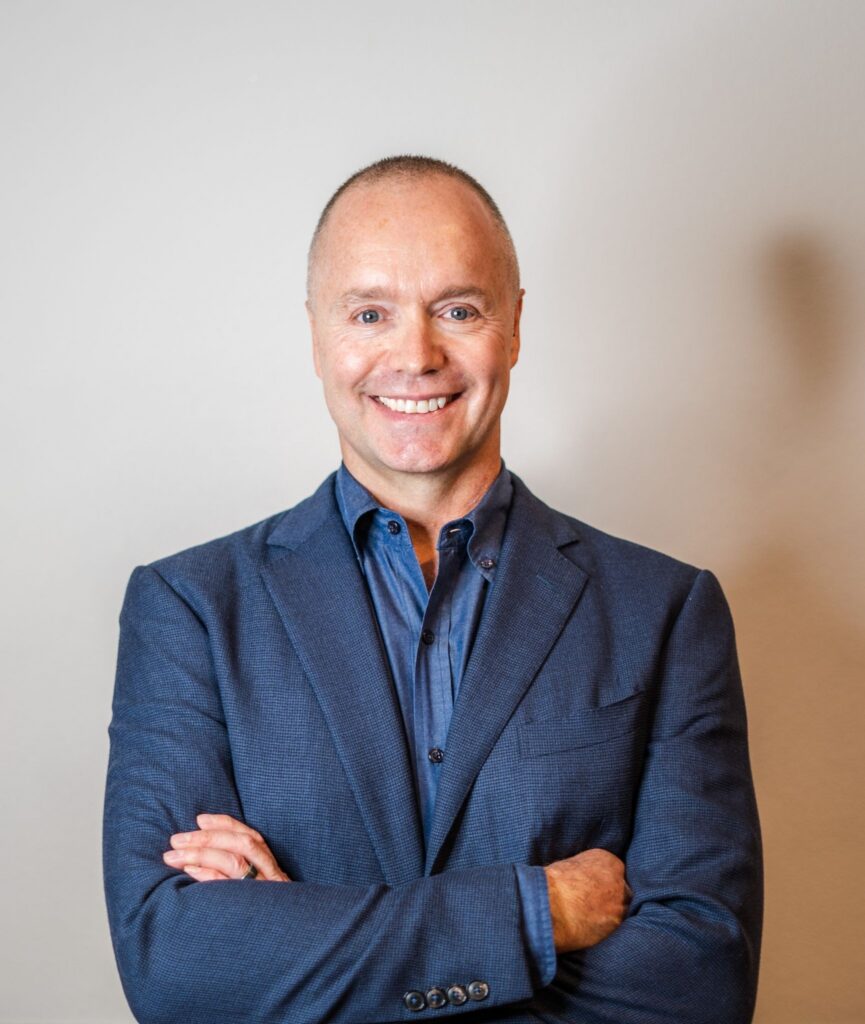
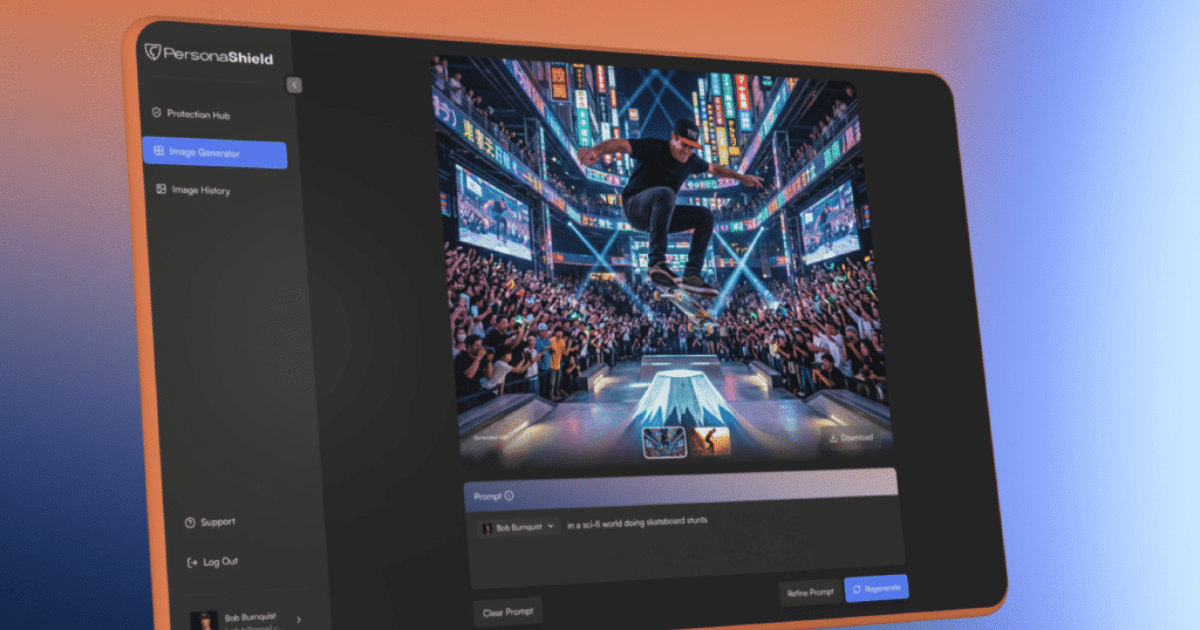
PersonaShield, founded in early 2026 and launched publicly in June, serves creators, influencers, and public figures who want to monitor unauthorized AI likeness use, automate takedowns, and earn revenue when fans pay for licensed AI-generated images. Bob Burnquist, a professional skateboarder and content creator, was among the platform’s first creators. His concern was not primarily reputational. It was contractual: an AI-generated image placing him in a competition without his sponsor’s logo could trigger a breach-of-contract dispute before he ever knew the image had been made.
When Deepfakes Turn Into Contract Breaches
Burnquist’s concern illustrates how likeness violations translate into financial consequences for working creators beyond reputational harm. His sponsorship arrangement with Banco do Brasil (Bank of Brazil) requires his logo to appear in competition imagery. A deepfaked image showing him competing without it creates an exposure he would have to disprove, against a sponsor who, as Phillip puts it, may not wait.
“Oftentimes sponsors don’t want to have an argument,” he says. “They’re just going to drop you.”
The example points to a category of likeness risk that creators and their legal teams have barely begun to account for: not the obvious harm of explicit or violent deepfakes, but the subtler contractual breach of imagery that conflicts with existing brand obligations. As AI image generation improves, Phillip argues, the production cost of that kind of violation approaches zero while the evidentiary burden on the creator stays constant.
CZ, the founder of Binance, was among the early cases that clarified Phillip’s thinking. CZ was consistently being deepfaked, his face appearing in promotions for products he had never endorsed. “I realized it’s not just content creators,” Phillip says. “Low-key business celebrities, especially in the crypto space, are being faked.” As AI image quality improved and obvious visual errors became rarer, the scope of the problem expanded.
Drawing the Lines That Users Will Test
PersonaShield’s protective layer begins with a customizable safeguard system. Creators log in, define what falls outside acceptable use – including drug references, violence, sexual content, political associations, unauthorized endorsements – before completing a liveness check with a facial scan confirming they are physically present rather than submitting a photograph. The platform then begins monitoring. Safeguards default to fully on during onboarding; creators can return to adjust individual parameters.

The granularity is designed to reflect the complexity of actual creator contracts and personas. Phillip cites a calibrated hypothetical: a famous musician may say, “Look, I don’t want images of me smoking crack, but smoking cannabis is okay.” The system accommodates that distinction. Violations surface in a dashboard showing both the images circulating and, in many cases, who is generating them.
The design philosophy traces directly to Phillip’s App Store experience. Developers and users repeatedly pushed toward content Apple had not approved, and when the review team moved toward allowing adult material, Steve Jobs returned from medical leave and shut it down.
“He said, ‘We are effing Disney,’” Phillip recalls. The experience reinforced a principle he now applies to PersonaShield. “Two percent of the population will try to do some really bad stuff with creators’ likenesses,” he says. “We need to protect for that.” At Apple, meeting that threshold meant 100% of developers absorbed requirements set to stop 2% of bad actors; PersonaShield operates on the same logic.
The enforcement model has acknowledged limitations. Context remains the hardest problem for AI image analysis, Phillip says. A real photograph of a creator standing in front of an unrelated billboard may surface as a false positive. Lookalikes present another structural challenge. “Every one of us has a doppelganger on earth,” he says, “and that’s going to be a problem.”
A Revenue Model Built Against a Zero Baseline
On the monetization side, creators who opt in can upload reference images, enabling fans to generate licensed AI likenesses within safeguard parameters. Each transaction pays the creator 80% of the purchase price on the Creator plan and 85% on Creator Pro. “We want the creator to make the majority of the money here,” Phillip says.
The baseline against which that percentage is measured matters. “Right now, when creators have images created on other platforms, they get zero,” Phillip says. The 50% floor is not positioned against what competitors pay; it is positioned against a market that currently pays nothing.
The model also draws a line around consent. Fan-generated images carry no commercial release rights. A fan who generates an AI image of a creator cannot use it in advertising or on product packaging. The platform is scoped as a licensed creative space. Creators can update their safeguard parameters at any time; images already generated under old parameters remain in existence but without transferable commercial rights.
Why Platforms Have No Incentive to Fix This
Phillip does not expect major social platforms to build likeness governance voluntarily. The reason is straightforward: controversial content, including unauthorized AI deepfakes, drives the engagement metrics platforms optimize for. “If controversial AI content from a creator drives significant views, they love that,” he says. “Controversy drives more views.”
He is equally direct about how platforms handle consent through terms of service. At VidCon, he took a crowd photograph and dropped it into an AI animation tool; the tool animated every person in the frame without their knowledge. “I realized right then and there that I can’t use that image,” he says. “That’s not asking those people for consent.” He argues that Meta’s approach of treating terms-of-service acceptance as consent for likeness use is structurally inadequate. “They say, ‘We already asked you through those terms of service that you didn’t read,’” he says. “Nobody reads them.”
That misalignment between platform incentives and creator interests, Phillip argues, is what makes a dedicated, creator-first infrastructure layer viable rather than redundant.
What Likeness Governance Looks Like at Scale
Phillip points to C2PA (Coalition for Content Provenance and Authenticity) as the eventual technical foundation for verifying whether an image originated from a camera or a generative engine. He expects regulatory pressure to eventually require something similar, driven by the same dynamics that have made synthetic media a recurring issue in elections. “Regulators are going to step in at some point and say, ‘All content that gets uploaded needs to have a private key associated with it,’” he says.
PersonaShield plans to extend monitoring beyond major social platforms to dating sites and other surfaces where creator likenesses are frequently misused. On the monetization side, Phillip sees AI-generated personalized messages as a likely next commercial category, a version of the cameo market where fans pay a fraction of the real-person price for content that functions similarly.
“If people can get a celebrity cameo for $500 or an AI version for $50, a lot of people will do that,” he says.
For Phillip, the long-term picture is less a defensive tool than an ownership infrastructure. A creator’s likeness becomes something registered, governed, and revenue-generating rather than raw material freely consumed by generation systems.
“Users will have a really good idea of what is real from this content creator and what is AI-generated,” he says, “and it should be relatively clean.”
Subscribe to Our Newsletter
Check Out Our Podcast